
The complete guide
Downpipe Guards Explained: Choosing and Fitting a Wire Gutter Balloon
The problem nobody notices until it rains hard
Gutter trouble is sneaky. For most of the year your gutters cope fine, even with a scattering of leaves in them. Then you get a long autumn downpour, the loose debris floats along the channel to the outlet, and it all arrives at the downpipe at once. The narrowest point in the whole system is the mouth of that pipe, which is why that is where things jam.
Once the pipe is plugged, rainwater has nowhere to go but over the front edge of the gutter. It runs down the wall, soaks the render, drips behind the fascia and pools at the base of the house. Damp patches on an internal wall often trace back to one blocked outlet at roof level. The repair bill is wildly out of proportion to the cause, which is usually a handful of wet leaves and a bit of moss washed off the roof tiles.
A wire gutter balloon is the cheapest answer to that specific problem. It does not try to keep your gutters spotless. It just makes sure the one spot that matters stays open.
How a wire gutter balloon works
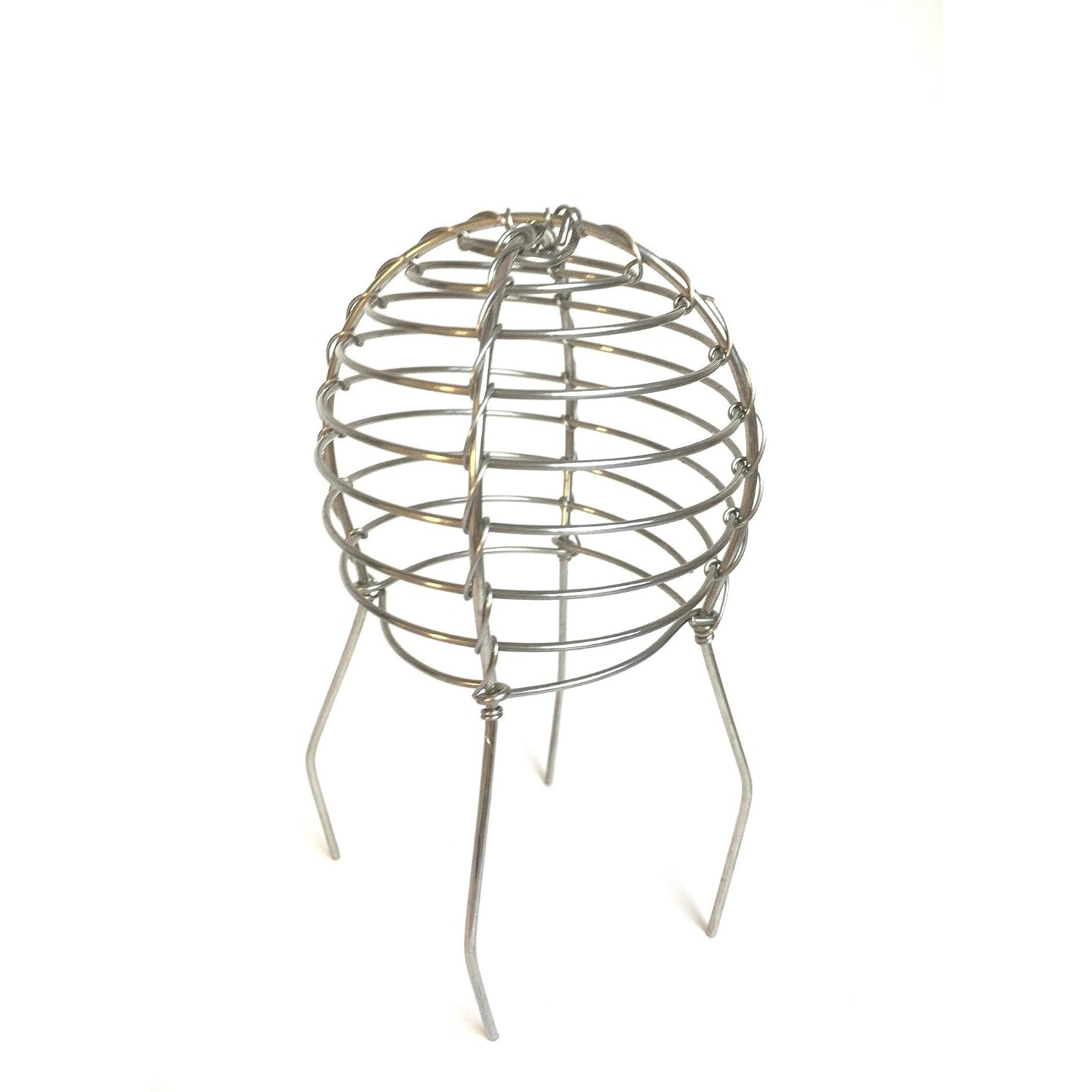
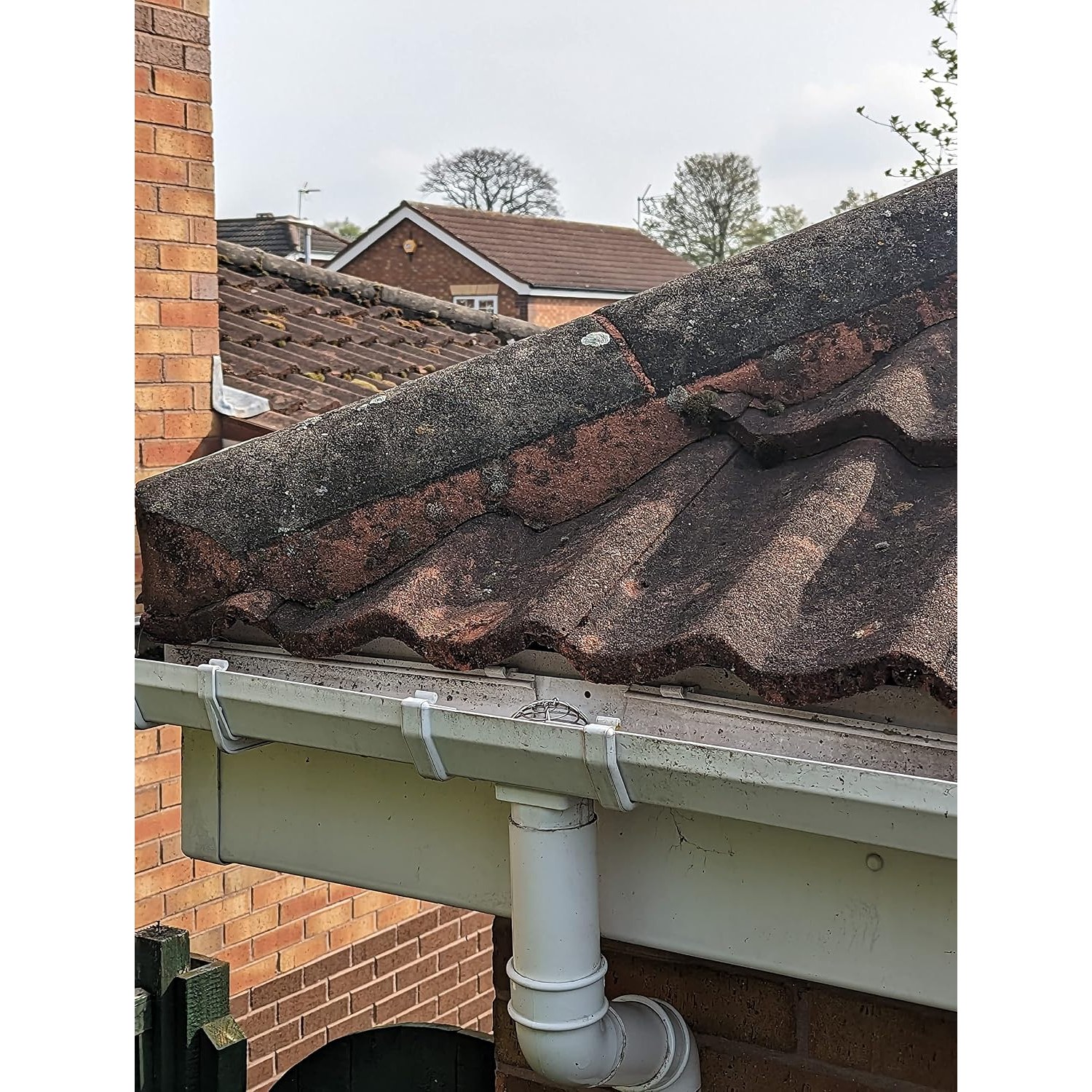
The guard is a length of galvanised steel wire wound into a loose, springy ball. It is not rigid. You squeeze it slightly, push it into the top of the downpipe or hopper outlet, and let go. The wire pushes back out against the pipe walls and that friction holds it in place.
Because the ball is open rather than flat, water can enter it from the top and from every side. That is the key difference between a balloon and a flat screen laid over the hole. A flat screen is a single surface. Cover it with wet leaves and it stops working entirely, so the gutter backs up along its whole length. A balloon sitting proud in the opening still has clear wire below the leaf layer, so the flow continues even when the top is partly covered.
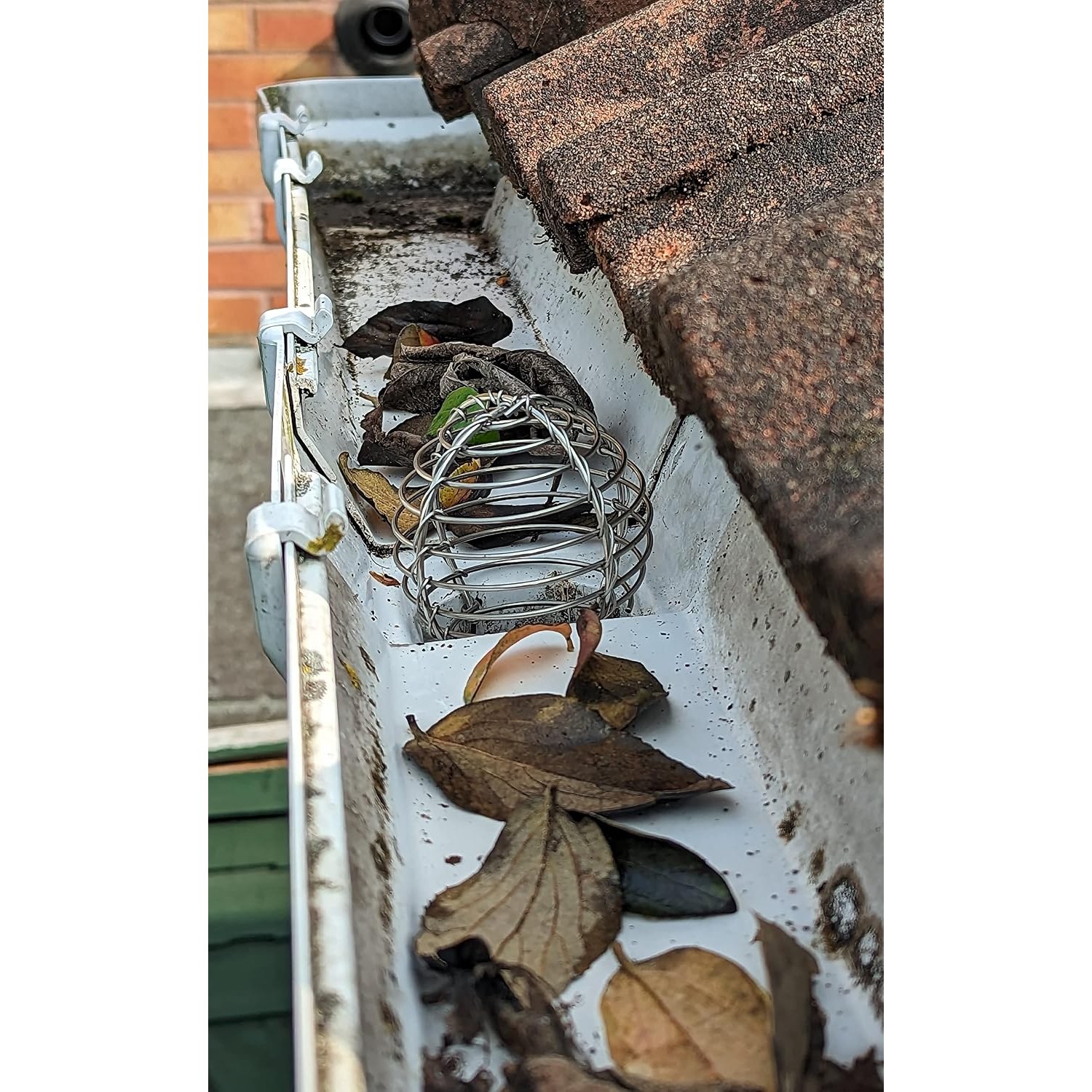
Debris that arrives at the outlet stacks up on the wire where you can see it. Wind usually dries it and blows some of it away. What is left lifts off in one handful when you next go up the ladder, instead of needing a hooked rod pushed down a packed pipe.
Why galvanised steel
Anything fitted to a gutter lives outdoors permanently, in sun, frost and standing water. Plain steel would be a rust stain within a season. Galvanising coats the steel so it holds up far better in those conditions, which is why it has been the standard finish for outdoor wire goods for a very long time.
There is a practical bonus too. Steel wire holds its shape. If a balloon gets squashed while you are cleaning it, you can open it back out with your fingers and refit it. Thin plastic mesh alternatives tend to go brittle after a few summers and crack when you flex them.
The one thing to be aware of is the cut ends of the wire. They can scratch, so wear gloves when you handle the guards, especially when you are pulling one out that is full of wet debris.
Checking the size before you buy
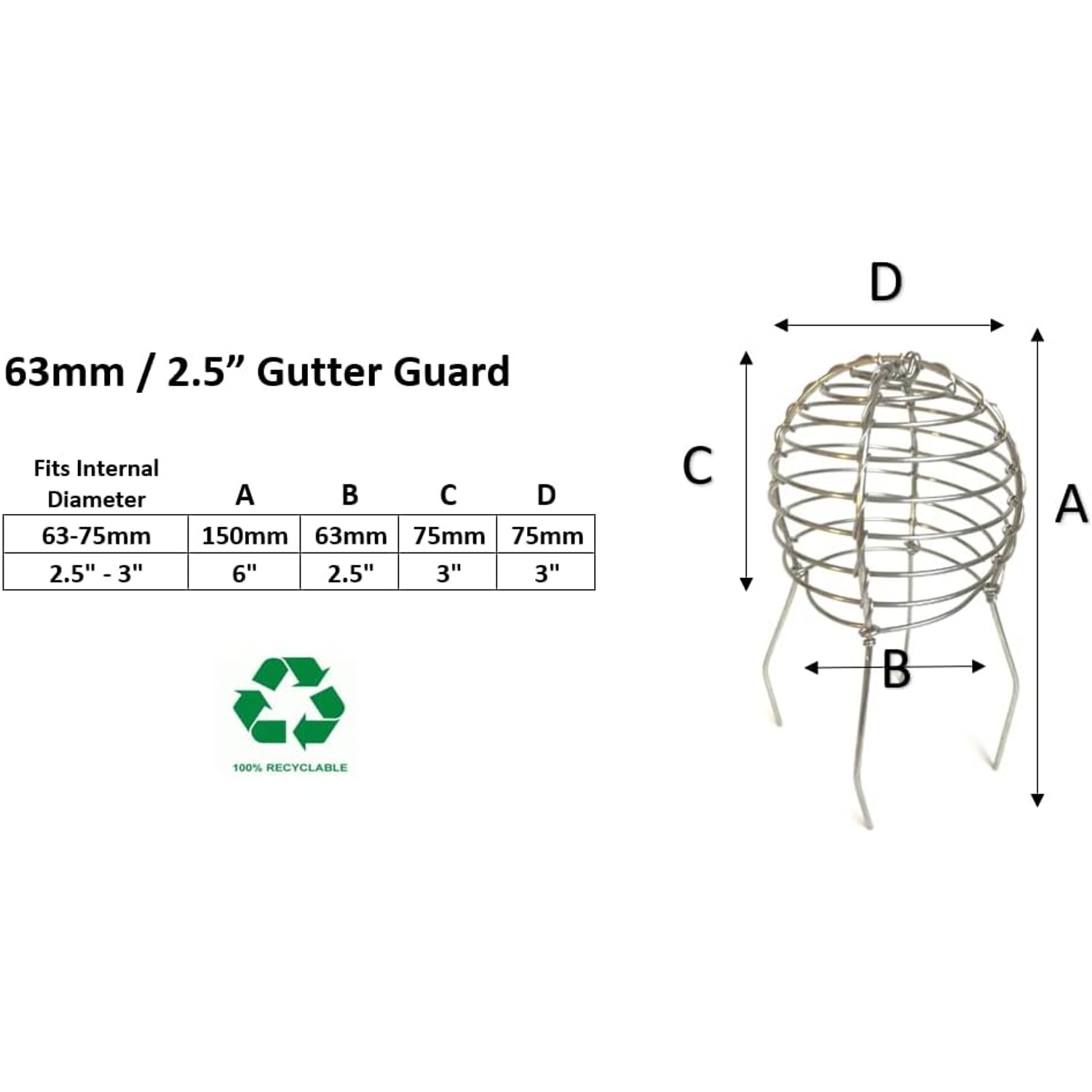
This guard is made for openings of 63 to 75mm, which is roughly 2.5 to 3 inches. That range covers a large share of domestic downpipes, but it is not universal, so spend thirty seconds measuring.
Put a tape across the inside of the downpipe opening at the gutter outlet, not around the outside of the pipe. The outside measurement includes the wall thickness of the plastic and will mislead you. If you have a square or rectangular pipe, measure the shorter internal dimension, since that is what will grip the ball.
If your opening measures inside the range, the balloon will seat and stay. If it is noticeably wider, the ball will drop through the pipe and do nothing useful. If it is much narrower, the ball will perch on top rather than sitting in the mouth, which works poorly and tends to get knocked off.
Who this suits
Houses with mature trees nearby get the most from a downpipe leaf guard. Anything that sheds, from sycamore and birch to pine needles, ends up on the roof and then in the gutter. The same goes for older slate and concrete tile roofs that shed moss and grit after a frost. That grit is the hidden culprit in a lot of slow blockages, because it settles and binds the leaf matter into a solid plug.
Flats and rental properties are another good fit, simply because access is awkward and a maintenance call out costs more than a year of guards. Fitting a strainer in the outlet reduces how often anyone needs to get up there at all.
It is also a sensible buy if you run a water butt. Leaf matter that gets into the downpipe ends up as sediment in the butt, where it rots and smells. Catching it at the top keeps the stored water cleaner.
Where a balloon is less suitable is a property that needs the gutters kept completely clear, for example a roof that sheds enormous volumes of needles. In that case a full length gutter cover that stops debris entering the channel in the first place is a better match, though it costs a great deal more and takes real installation work.
Fitting it
There is no clever technique. Set your ladder safely against a solid part of the wall or use a ladder stand off so you are not leaning on the gutter itself. Clear any debris already sitting in the outlet, because fitting a guard over an existing blockage just hides it.
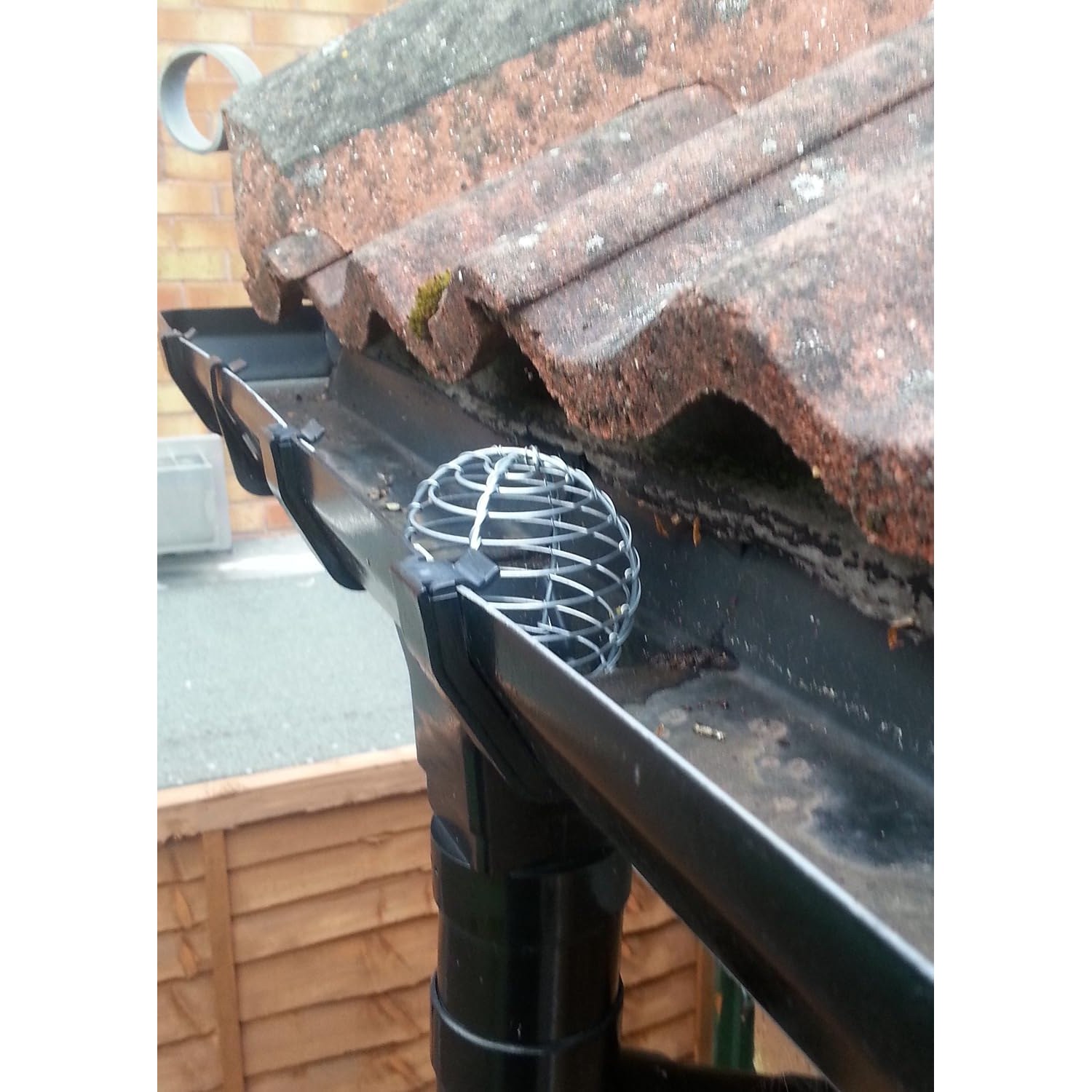
Hold the balloon over the opening, press it down with your palm, and wiggle it until most of the ball is below the rim with a little sitting proud. You want it seated enough that wind will not lift it, but not pushed so far down that the ball is buried inside the pipe where debris would collect on top of it out of sight.
That is the whole job. Repeat on the second outlet with the other guard from the pack.
Keeping it working
Two checks a year is a reasonable rhythm for most homes: one in late autumn when the leaves have finished falling, and one in spring after the winter weather. If you are directly under a big deciduous tree, make it a monthly glance through October and November.
Cleaning is a matter of lifting the ball out, shaking it over a bucket or a bag, and brushing off anything stuck in the wire. A hose rinse shifts moss and silt. Let it dry, reopen the ball with your fingers if it has been squashed, and push it back in. Skip harsh chemical cleaners, since they do the galvanised finish no favours and a rinse handles the job anyway.
While you are up there, have a quick look at the gutter itself. A guard keeps the pipe clear, but the channel still needs an occasional scoop out, and a joint that has started to drip is easier to fix early.
The short version
A wire gutter balloon is a small, cheap part that protects an expensive one. It drops into the mouth of your downpipe, catches the leaves and moss that would otherwise block it, and keeps water draining through from every side of the ball. Galvanised steel handles the weather, the sprung wire holds itself in place without fixings, and this pack gives you two.
Measure the inside of your downpipe opening first. If it lands between 63 and 75mm, fit one, clear it a couple of times a year, and the odds of water running down your wall in the next storm drop sharply.