
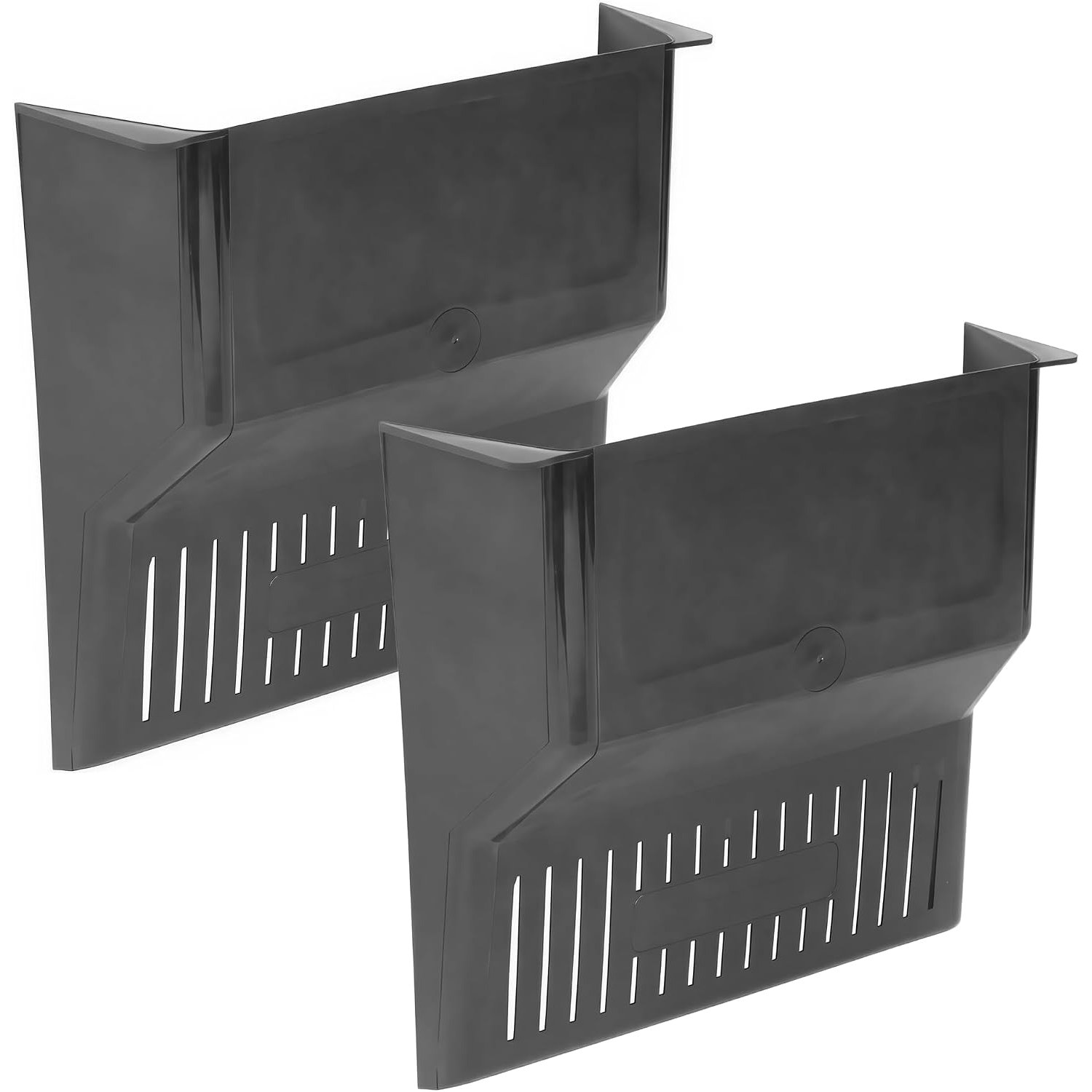
The complete guide
How to Choose an Outdoor Drain Cover That Actually Keeps Leaves Out
The problem starts with a handful of leaves
Blocked outdoor drains rarely announce themselves. One day the gully by the back door gurgles a bit. A week later there is a puddle that will not shift, and when you finally lift the grate there is a black, sodden mat of leaf pulp, moss and grit sitting in the trap.
That mat did not arrive all at once. It built up over weeks from a few leaves at a time, each one washed down by rain and packed tight by the next load. Once a trap is half full, it only takes a small amount of extra debris to stop the flow completely. Then you are out in the cold with a pair of gloves and a bucket, or paying someone to come and rod it.
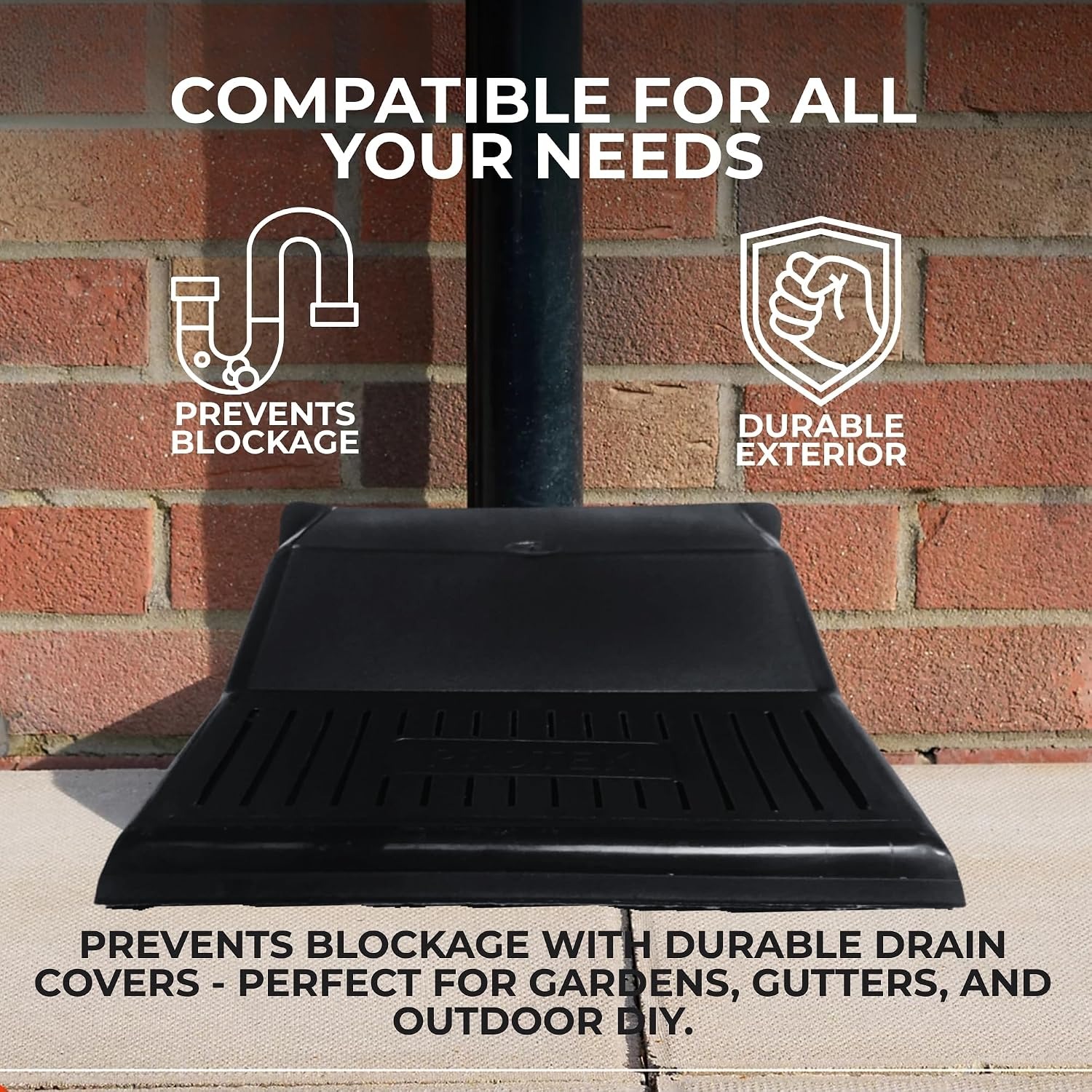
The simple fix is to stop the debris getting down there in the first place. A grid cover sits above the opening, water falls through, and leaves stay on top where a brush can shift them in seconds. It is not clever technology. It is just putting the mess where you can reach it.
How a grid cover works
The whole idea rests on a size difference. Rainwater passes through a narrow gap without hesitating. A leaf, a twig, a chunk of moss or a sweet wrapper will not. So you set an open grid at the surface and let gravity sort the two apart.
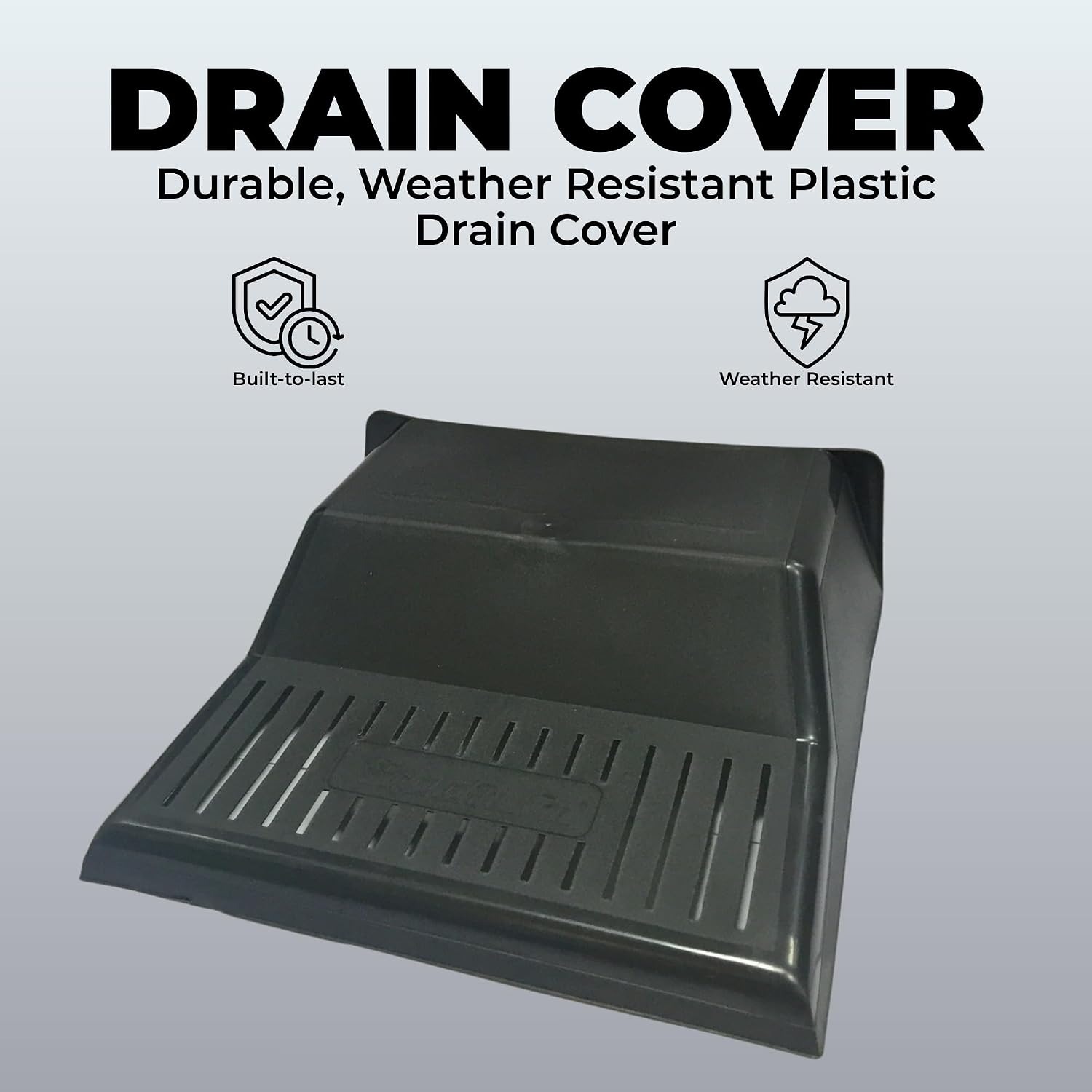
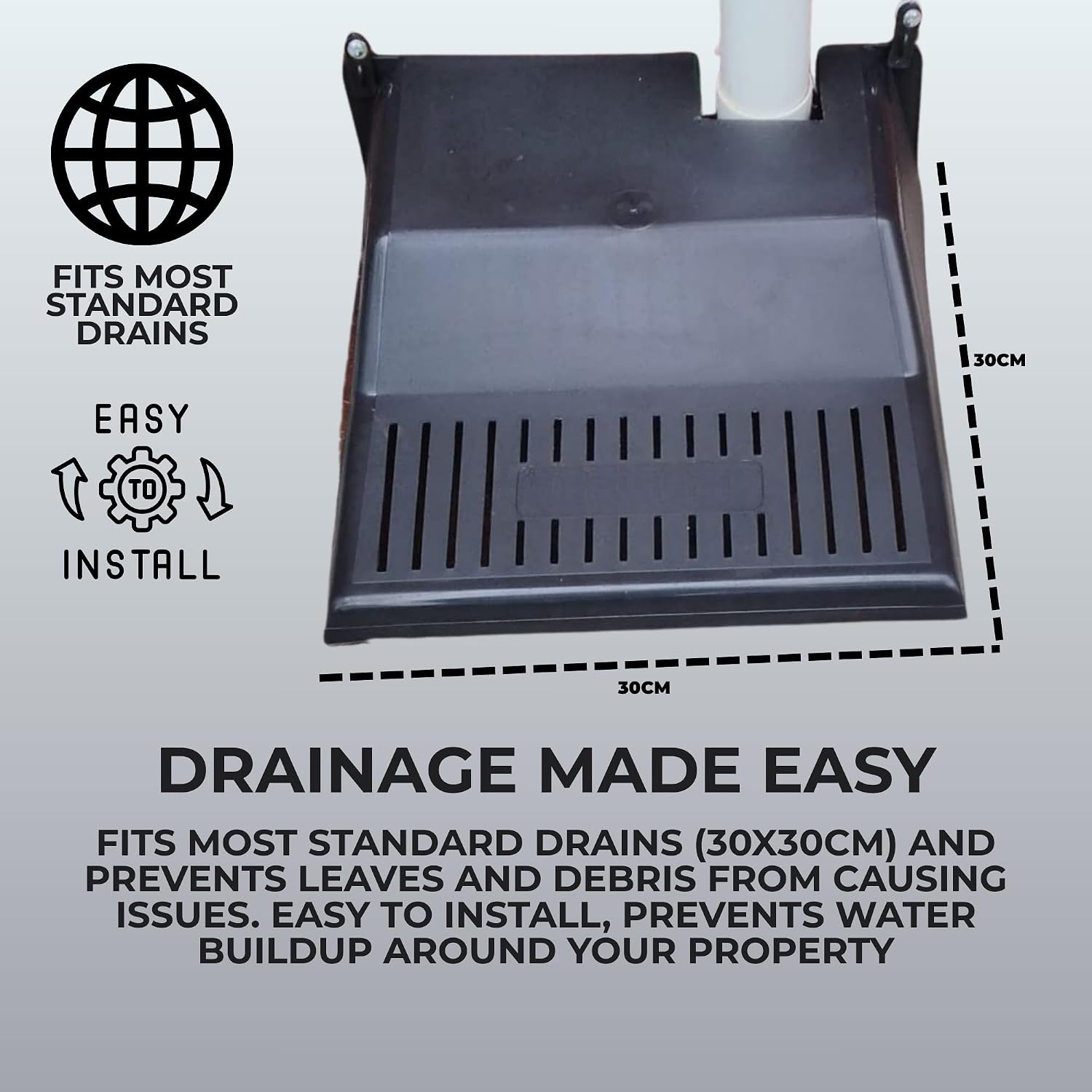
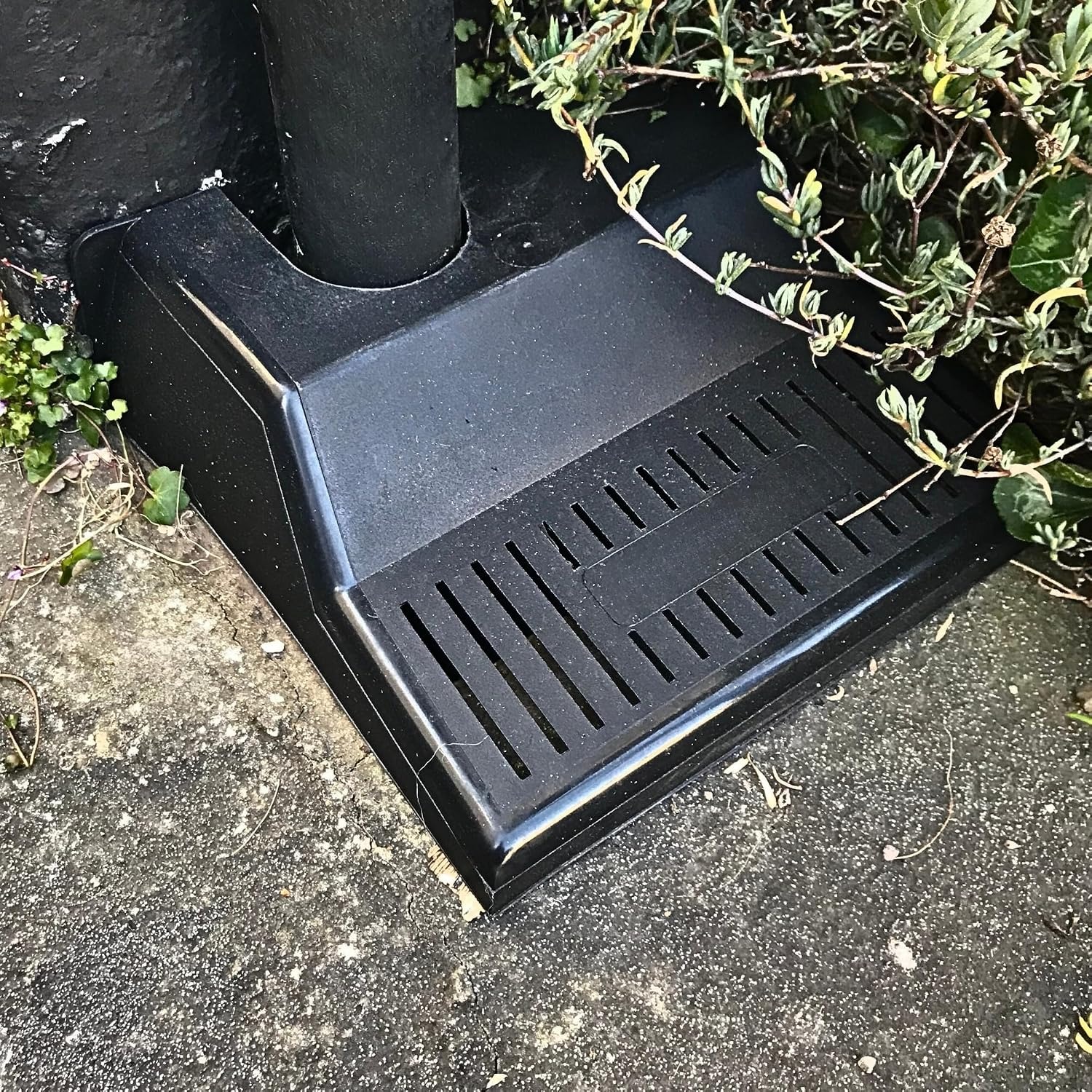
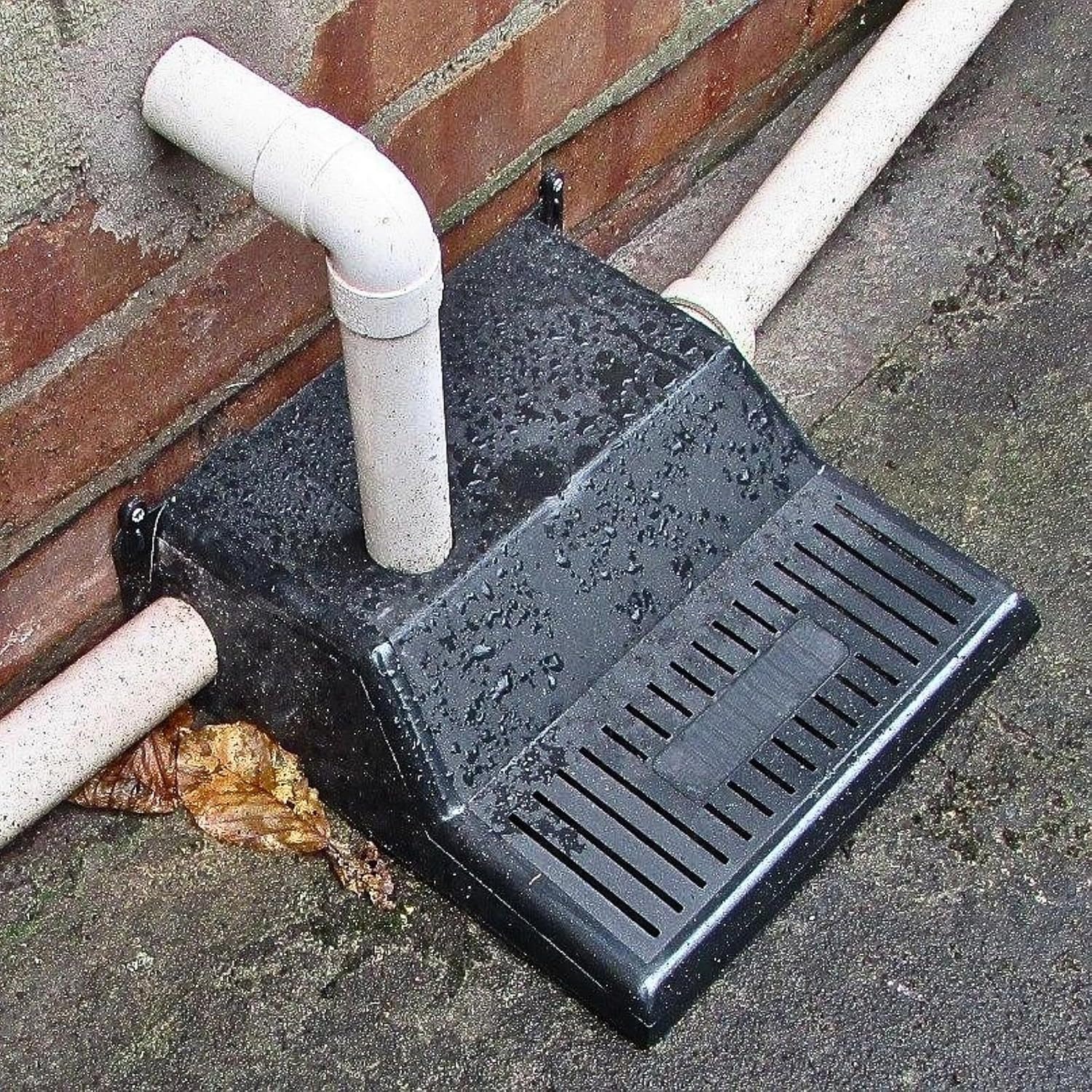
This cover is 30cm wide with a 9cm depth, which gives it enough profile to sit properly over a gully surround rather than skating about on top. The grid pattern is open enough that normal rainfall drains away without pooling. In a heavy downpour with leaves already collected on the surface, you may see water sit briefly before it finds the clear gaps. That is normal, and it is your cue to clear the top.
The material matters more than people expect. Outdoor plastic that has not been UV-stabilised chalks up, loses colour and turns brittle within a couple of hot summers. Step on it in year three and it cracks. These covers use UV-stabilised plastic with a painted black finish, which is the combination you want for something that lives outside permanently.
Who this suits
Think about where leaves gather on your property. The classic spots are a gully under a downpipe at the front, a drain at the bottom of a sloped path, and the one by the back door that catches everything blown across the patio.
If you have mature trees nearby, especially sycamore, lime or anything that drops small leaves in bulk, you are the ideal customer. Same if you are on a windy corner plot where rubbish blows in from the street. Houses with a flat roof or a long gutter run also tend to push a surprising amount of roof grit and moss fragments down the downpipe.
It is less relevant if your drains sit under a covered porch or are already fitted with a proper cast iron grate in good condition. And it is not the answer for a drain that takes vehicle weight. A plastic grid is not built for a car tyre, so for the drive itself stick with metal.
Renters and landlords get a particular benefit. Nothing is drilled, nothing is glued, and the cover lifts straight back out when you move. For anyone managing a property from a distance, a best garden drain cover that a tenant can clear in a minute is worth a lot of avoided phone calls.
Getting the fit right
Before anything else, measure. Take the widest point of your drain opening, including the concrete or plastic surround if the cover is going to rest on it. Anything up to 30cm across is in range.
If your gully is a touch smaller, trim rather than force. Tin snips work best, and strong garden shears will usually cope. Cut small amounts, offer the cover back up, and repeat. It is tedious for about two minutes and then it fits properly. Overcutting is the one mistake that cannot be undone, so go slow at the start.
Clear the drain before fitting. There is little point capping a gully that is already half blocked, and it is much easier to scoop it out now than through a grid later. Once it is clean, push the cover down until the edges sit flush and even.
In exposed positions, on a slope, or anywhere a strong gust funnels through, plastic gully fixings give extra hold. Most installations do not need them. If yours lifts in the wind, that is the time to add them.
With two covers in the pack, plan both drains before you start cutting. It saves getting halfway through and realising the second one needed the other size.
Keeping it working
A cover only helps if you clear it. The good news is that clearing it is the easy job, which is the entire point of fitting one.
Autumn is the busy season. While leaves are coming down, a weekly glance takes seconds and a quick sweep handles it. Outside leaf fall, once a month is plenty for most homes, with an extra check after any storm that strips the trees.
When debris cakes on, lift the cover out completely. Tip the mess into the garden waste bin, rinse the grid with a hose, and use a stiff brush with a little soapy water on stubborn mud or moss. Rinse and drop it back in. Skip solvents and strong cleaning chemicals, which can attack painted plastic over time.
Through winter, brush off heavy snow rather than letting it sit and melt into an ice cap. In spring, check that algae has not built up around the edges where the cover meets the surround.
A quick inspection twice a year is also sensible. Look for cracks, warping or a loose fit. A best plastic drain grate still has a working life, and spotting damage early is cheaper than clearing a blocked trap.
What to compare before you buy
Four things decide whether a drain cover earns its place.
Size and adjustability come first, because a cover that does not fit is useless no matter how good the plastic is. The ability to trim to shape is what turns a single product into one that works across different gullies.
Material quality comes second. UV stabilisation is the headline feature here, and it is the difference between a cover that lasts and one that crumbles.
Appearance is worth a thought too. Black disappears against concrete, block paving and dark gravel. A bright mesh basket does the job but announces itself every time you look out of the window.
Finally, count the units. A two pack costs less per cover than buying singly, and most homes have more than one drain worth protecting.
The short version
Leaves in a gully are a slow problem that turns into a sudden one. A 30cm grid cover intercepts them at the surface, lets rain through, and turns a drain rodding job into a thirty second sweep.
This pack gives you two UV-stabilised black plastic covers, each 30cm wide with a 9cm depth, trimmable with snips and fitted by push-fit in minutes. Measure your drain, cut carefully, clear the top now and then, and the gully underneath stays clear.