
The complete guide
How to Choose a Kitchen Sink Strainer That You Will Actually Use
The problem with a kitchen sink
Most kitchen plumbing problems start with something small. A few grains of rice. A spoonful of tea leaves. Half a teaspoon of coffee grounds rinsed out of a cafetiere. None of it seems like much at the time, and all of it goes down the plughole without you thinking twice.
Then one evening the water sits in the bowl a little longer than it should. A week later it is draining slowly enough to notice. By the time you are standing over the sink with a plunger or a bottle of drain cleaner, the scraps that caused it went down weeks ago.
A sink strainer is the cheapest fix for all of that, and it works because it stops the problem before it starts. The scraps never get into the pipe, so there is nothing to collect, nothing to rot, and nothing to clear out later.
Why the handle matters more than you think
Here is the honest reason most people stop using their sink strainer. The old flat dish type has no grip. To get it out you have to put your fingers into water that has gone cold, with bits of food floating in it, and pinch the rim. It is unpleasant. So you leave it, and then it overflows with scraps, and then you take it out altogether.
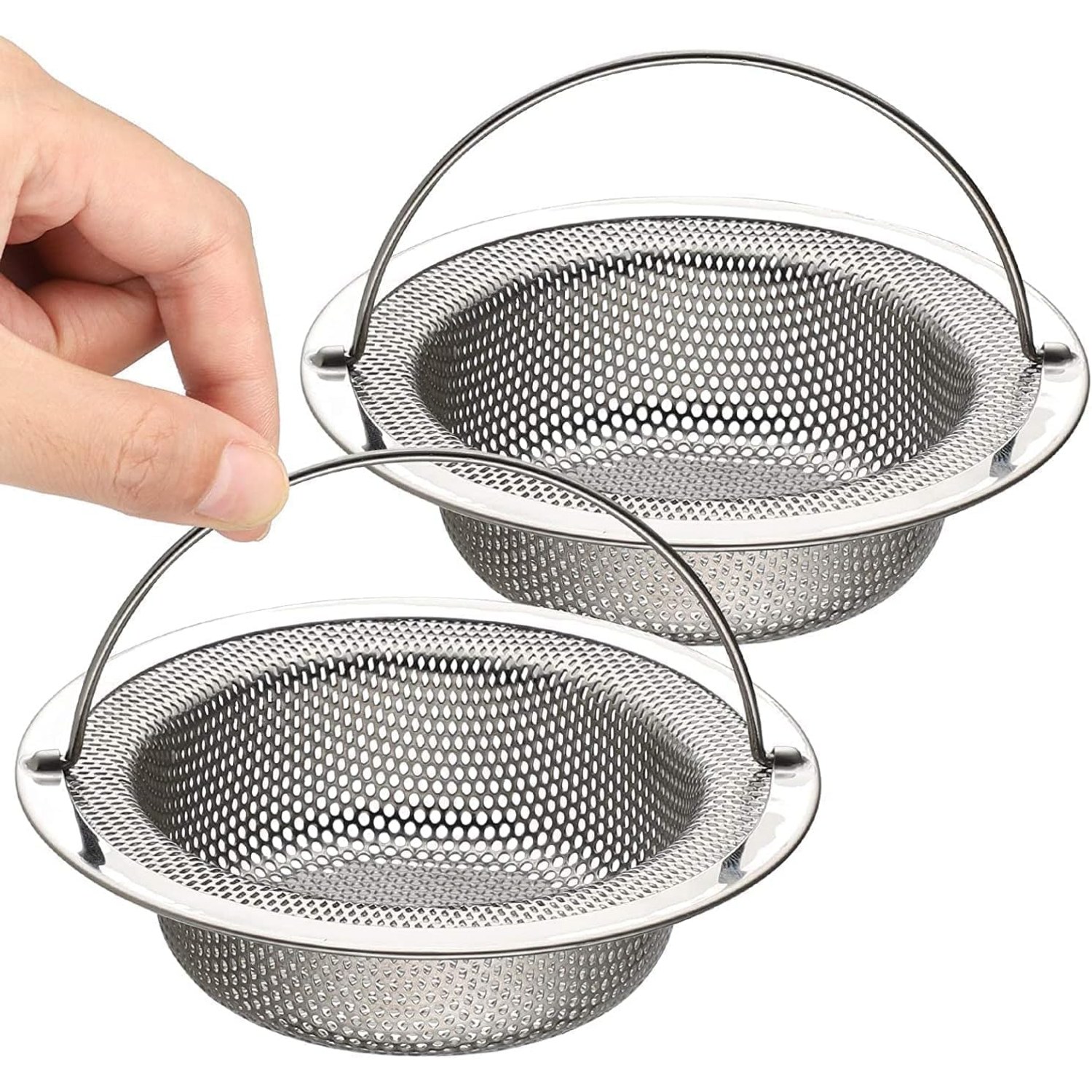
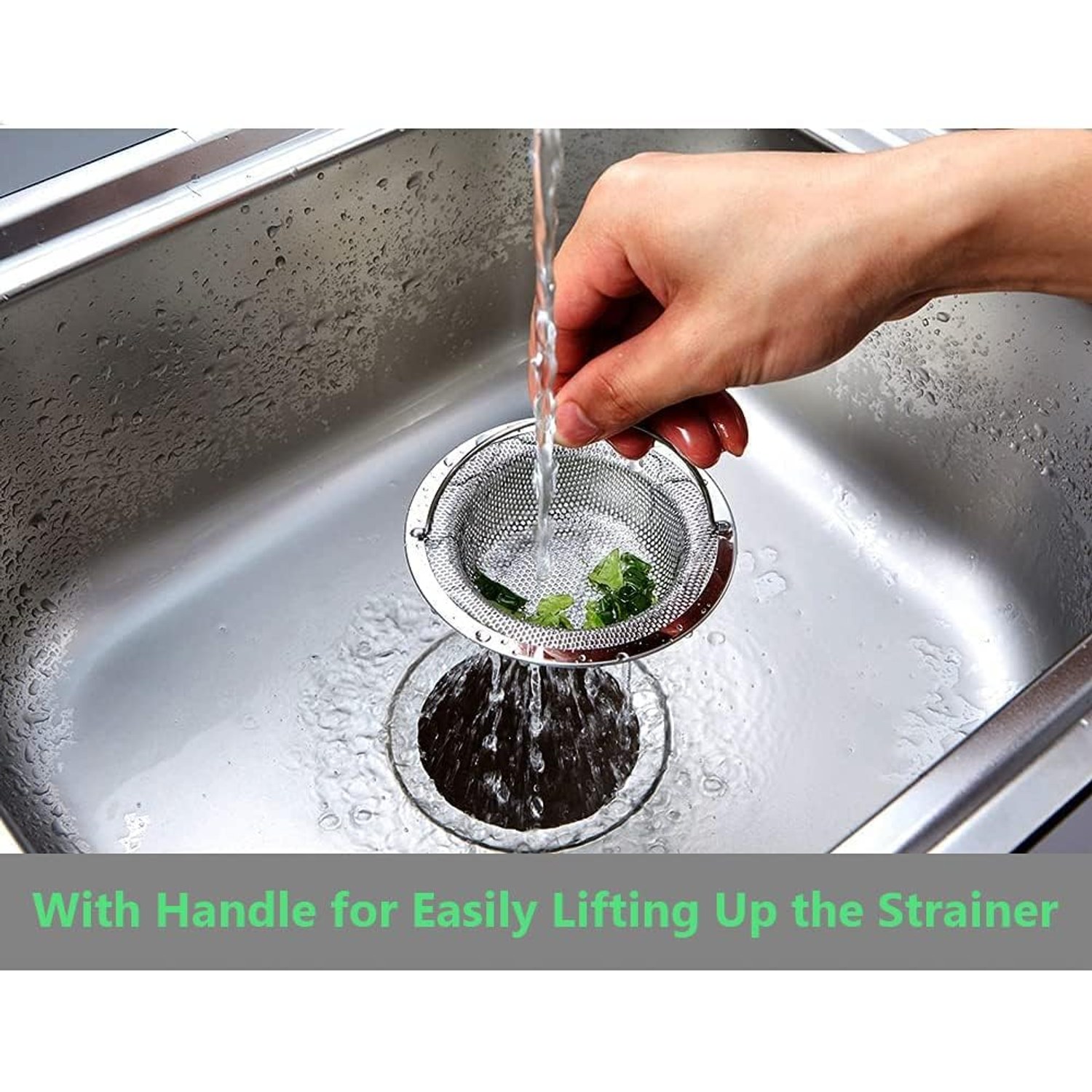
A strainer with a lift handle removes that excuse. You reach down, grab the handle, lift the basket straight out, and tip it into the bin. No fishing. No wet sleeves. It sounds like a tiny detail and it is, but it is the difference between a strainer that gets used every day and one that lives in a drawer.
This is the main reason to spend a little more on a sink sieve with handle rather than grabbing the first flat disc you see.
Perforated versus wire mesh
There are two common styles of basket and they behave very differently in practice.
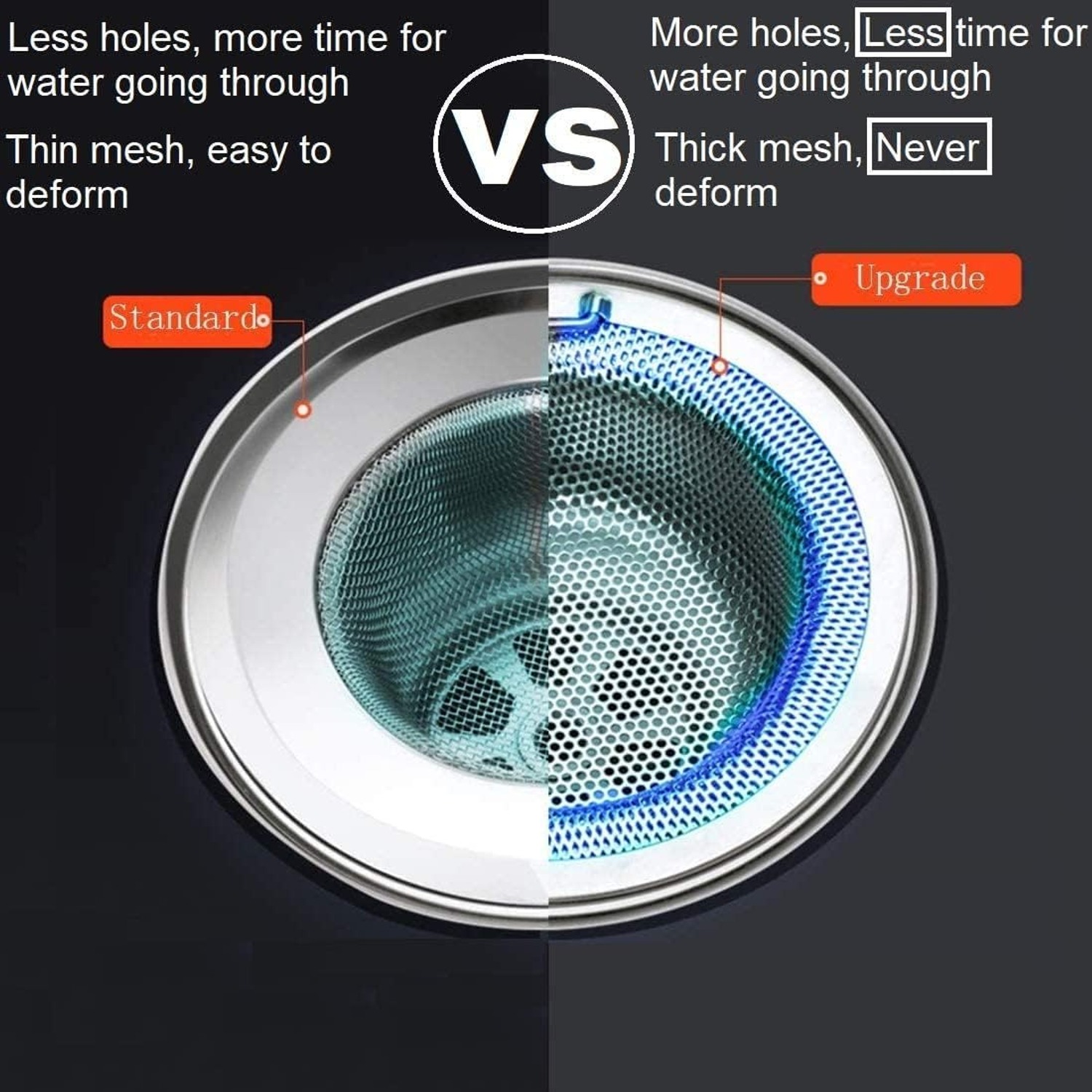
Wire mesh looks like it should be better, because the weave is fine and it catches everything. The trouble is what happens next. Tea leaves, coffee grounds and shreds of onion get pressed into the gaps between the strands and will not rinse out. You end up poking at it with a brush under the tap, which takes long enough that you start resenting the thing.
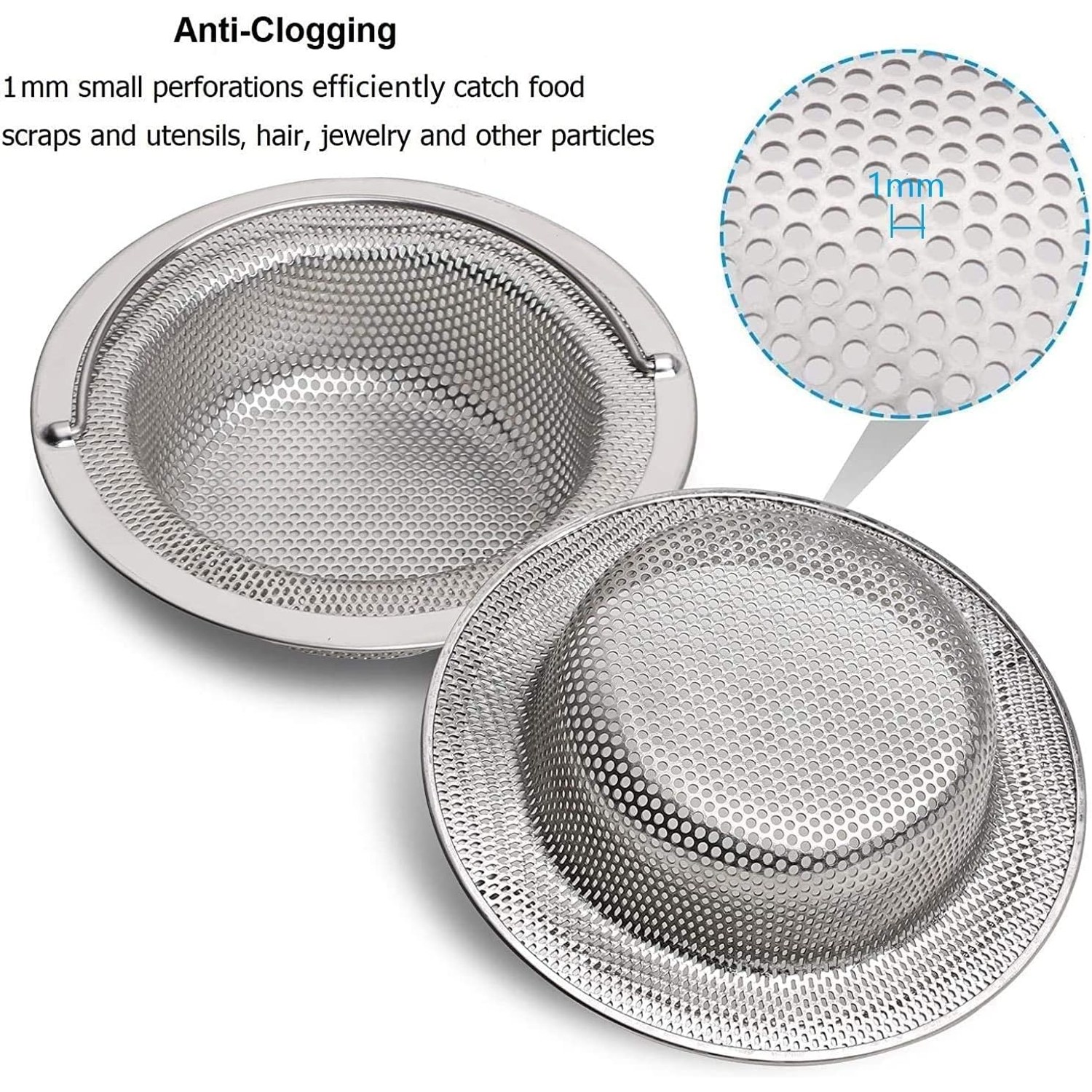
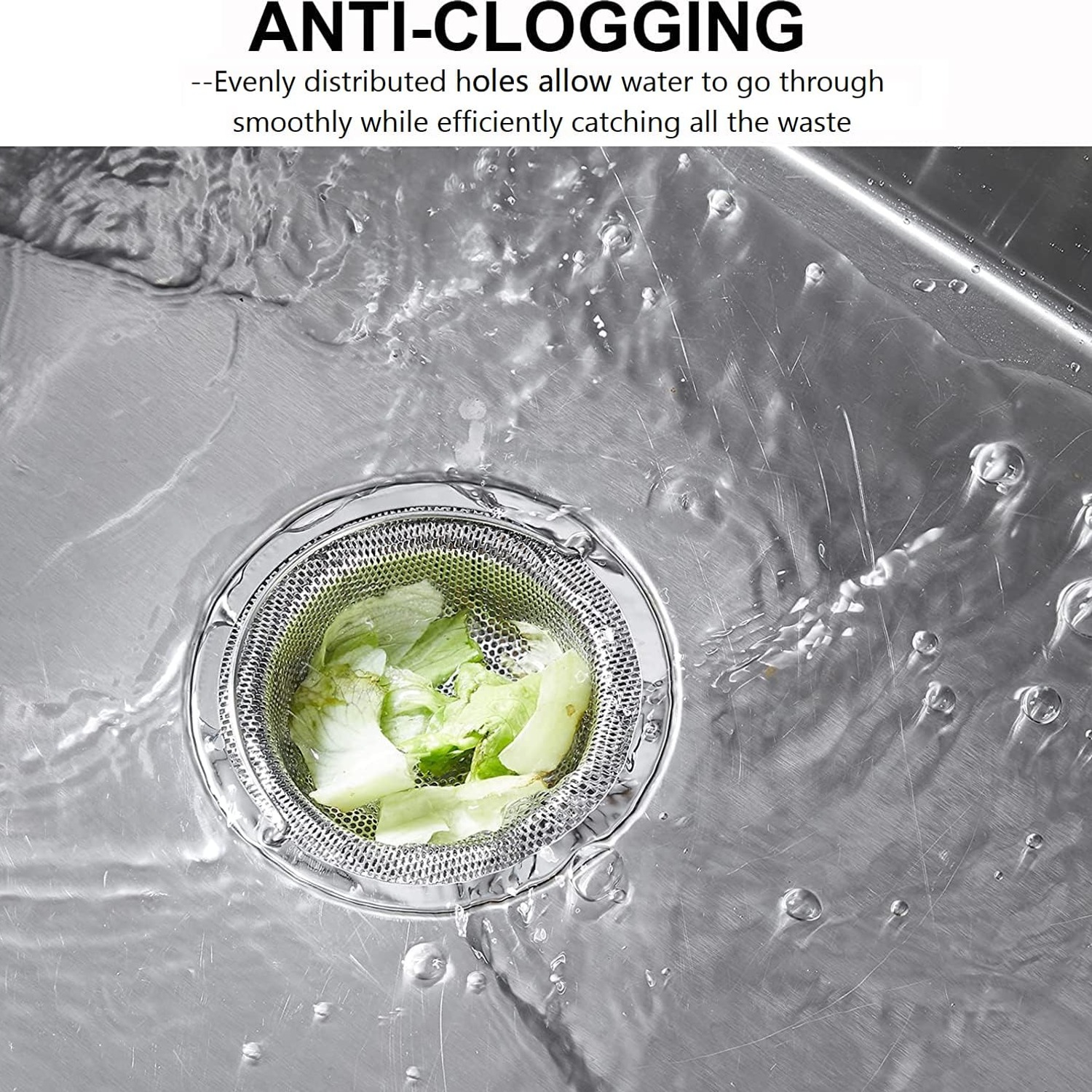
Perforated stainless steel takes the other approach. The basket is a solid wall with holes punched through it. Nothing can wedge into a weave because there is no weave. Tip it out, rinse it, wipe it, done. The strainers in this pack use 1mm perforations spread across the whole basket, which keeps the drainage rate up while still being fine enough to stop the kind of debris that causes blockages.
If you care about spending as little time as possible on cleaning, the perforated style is the better pick for a fine mesh sink strainer.
What 1mm actually catches
A 1mm opening sounds small on paper, so it helps to picture what it holds back in a real kitchen.
It stops rice, pasta pieces, tea leaves, coffee grounds, breadcrumbs, vegetable peelings, eggshell fragments and anything larger. Those are exactly the items that cause slow drains, because they swell, settle in the trap, or bind with grease into a mass.
What goes through is dissolved detergent, fine silt from washing vegetables, and liquid. That is fine, because none of those create a blockage on their own.
The one thing no strainer handles is fat. Cooking oil and melted fat pour straight through any mesh, then cool and set inside the pipe. Pour it into a jar or an old tin and bin it once it has hardened. The strainer deals with solids, you deal with grease, and between the two your drain stays clear.
Getting the fit right
This is the step people skip and then regret. A drop in strainer only works if it matches your drain opening.
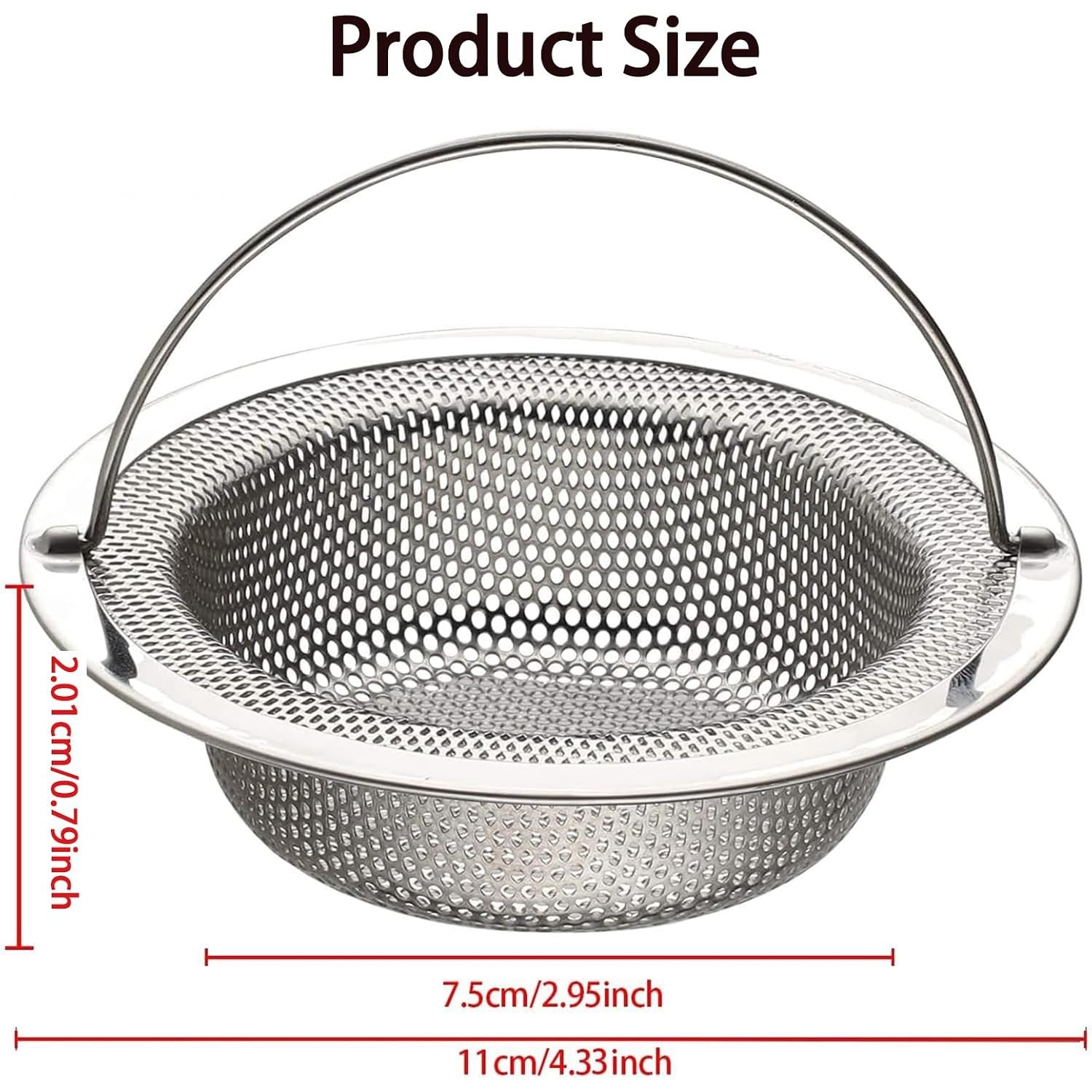
Take a tape measure and measure the inner diameter of the hole in the bottom of your sink, not the outer rim of the metal flange. Compare that with the 75mm dimension listed in the specifications on this page. If you are within a millimetre or two you are usually fine, because the basket sits down into the opening rather than clamping to it.
Two situations worth flagging. First, sinks with a fitted waste disposal unit normally use a much wider opening, so a standard drop in strainer will not sit correctly. Second, some integrated or designer sinks use a proprietary waste fitting with its own built in basket. In both cases, measure carefully before ordering.
Why two is the sensible number
A two pack is not just a way to sell more product. There are two real reasons it makes sense.
If you have a double bowl sink, you need one in each. Covering only one bowl means the other bowl is still sending scraps into the pipe, and in practice the uncovered bowl is where people rinse plates.
If you have a single bowl, the second strainer is your rotation. One is in the dishwasher, the other is in the sink. There is never a day where the drain is sitting open because the strainer is drying on the rack. That small bit of continuity is what turns it into a habit.
Living with it
Day to day, the routine is simple. After washing up, lift the basket by the handle, tip the contents into the bin or the compost caddy, and rinse it under the tap. Ten seconds, maybe fifteen if something is stuck on.
Once a week or so, give it a proper wash with warm soapy water and a soft brush, or put it through the dishwasher. The product is listed as dishwasher safe, so it can go in with everything else.
Keep harsh abrasives away from it. Steel wool and gritty scouring powder will dull the surface and leave scratch marks. Stainless steel resists rust and corrosion, but it responds best to a gentle clean and a dry off afterwards, which also stops water spots forming.
If you ever notice the sink draining more slowly with the strainer in, almost always the basket is simply full. Empty it and the flow comes straight back.
Who this suits
Households that wash up by hand, which is most households at least some of the time. Anyone who cooks from scratch and produces peelings, trimmings and rinse water with solids in it. Renters who want to avoid the awkward conversation about a blocked drain. People who compost, because the strainer becomes a neat collection point for scraps on the way to the caddy.
It is also a genuinely useful small gift for someone setting up a kitchen. It is not exciting, but it is the kind of thing that gets used every single day and nobody thinks to buy for themselves.
The short version
A kitchen sink food catcher does one job, and it does it before the problem exists. The things to look for are a basket you can lift without putting your hand in the water, perforations fine enough to catch the usual suspects, and stainless steel so it survives sitting wet without staining or rusting.
Check your drain opening against the 75mm figure, use one in each bowl or keep a spare in rotation, empty it after each wash, and pour fat into a container instead of down the sink. Do those few things and the slow drain you were heading for simply does not happen.