
The complete guide
The Honest Buyer's Guide to Pressure Washer Drain Jetting Hoses
The problem this solves
Blocked drains have a particular talent for timing. The gully outside the kitchen backs up on a Sunday evening, or the yard drain fills during the first real downpour of autumn and sits there like a small pond. You poke at it with a stick. You tip a bottle of caustic gel down it and wait. Maybe it clears for a week, then does the same thing again.
The reason the stick and the chemicals so often fail is that the blockage is rarely at the opening. It is five, ten, sometimes twenty metres down the run, sitting in a low spot or on the inside of a bend where silt and grease have been slowly building for years. You cannot reach it from the top, and chemicals thin out long before they get there.
Jetting works differently. Instead of dissolving the problem, you send water to it at high pressure and wash it away. A drain jetting hose carries that pressure down the pipe on a thin, flexible line and releases it exactly where the trouble is. Once you have done it once, the whole business of blocked drains stops feeling like a crisis and starts feeling like a thirty minute chore.
How a drain jetter actually works
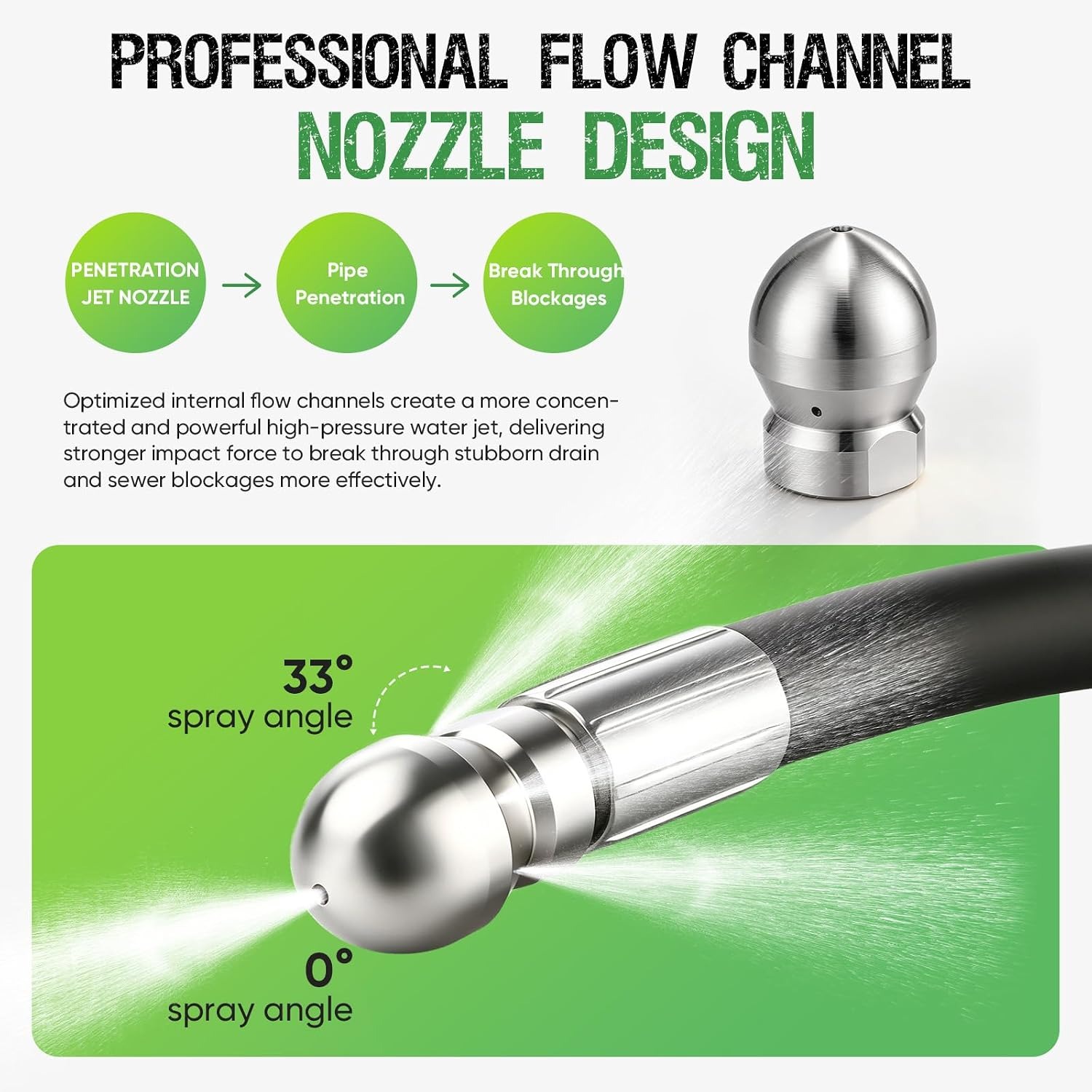
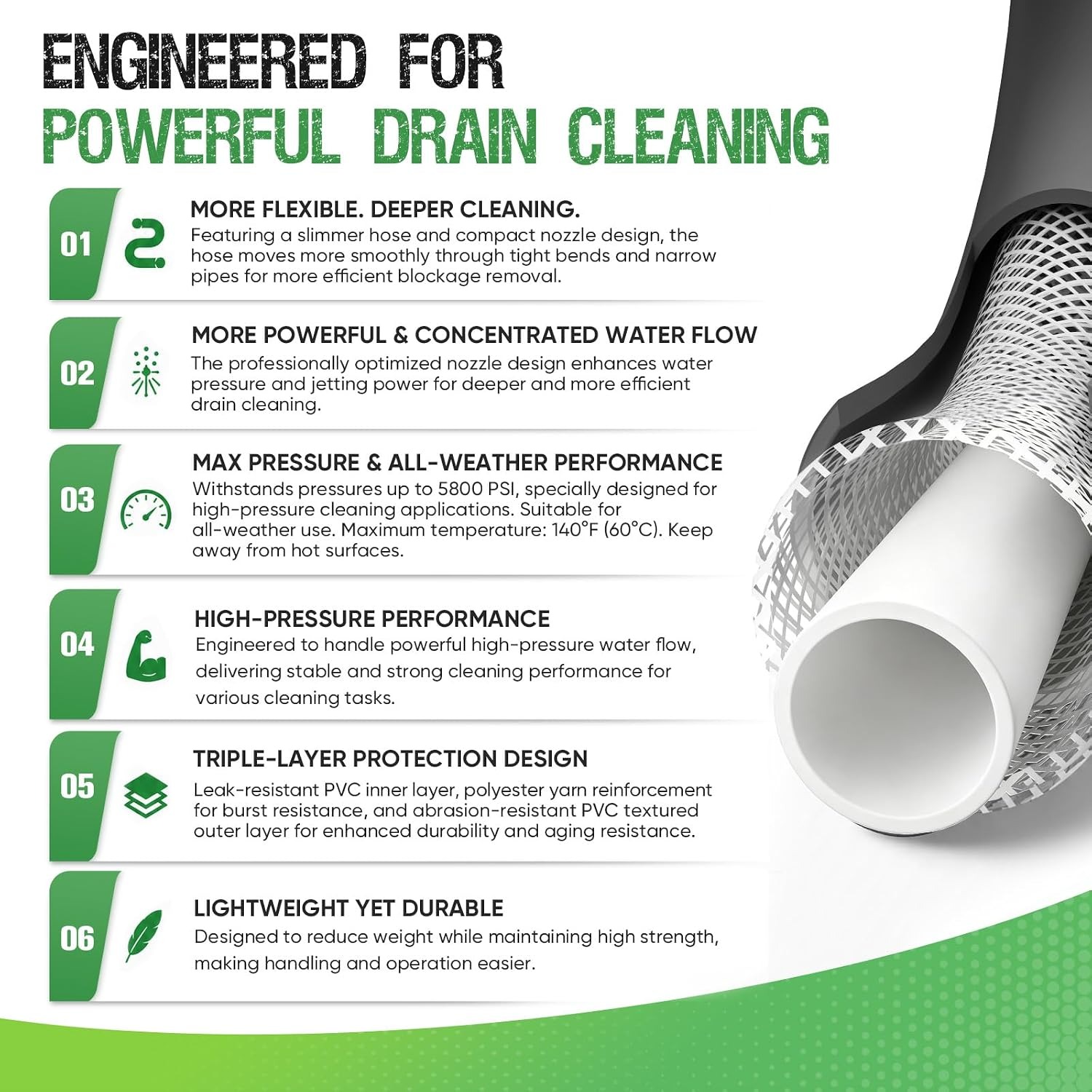
The clever part is the nozzle, not the hose. A penetration jet nozzle has one jet pointing forward and several pointing backward at an angle. When you pull the trigger, the forward jet drills into whatever is in the way. The backward jets do two separate jobs at once.
First, they create thrust. That thrust is what drags the hose along the pipe. You are not shoving thirty metres of hose down a drain with brute force, you are feeding slack while the water pulls it forward. Anyone who has tried to push a stiff rod round a bend will appreciate the difference.
Second, the backward jets scour the pipe wall on the way and wash loosened material back towards the opening. This matters more than people expect. A nozzle that only fires forwards can punch a hole through a blockage and leave the rest of it stuck to the pipe, which means you are back again in a month. Rear flushing strips the walls as you withdraw, which is why the return pass is as important as the push.
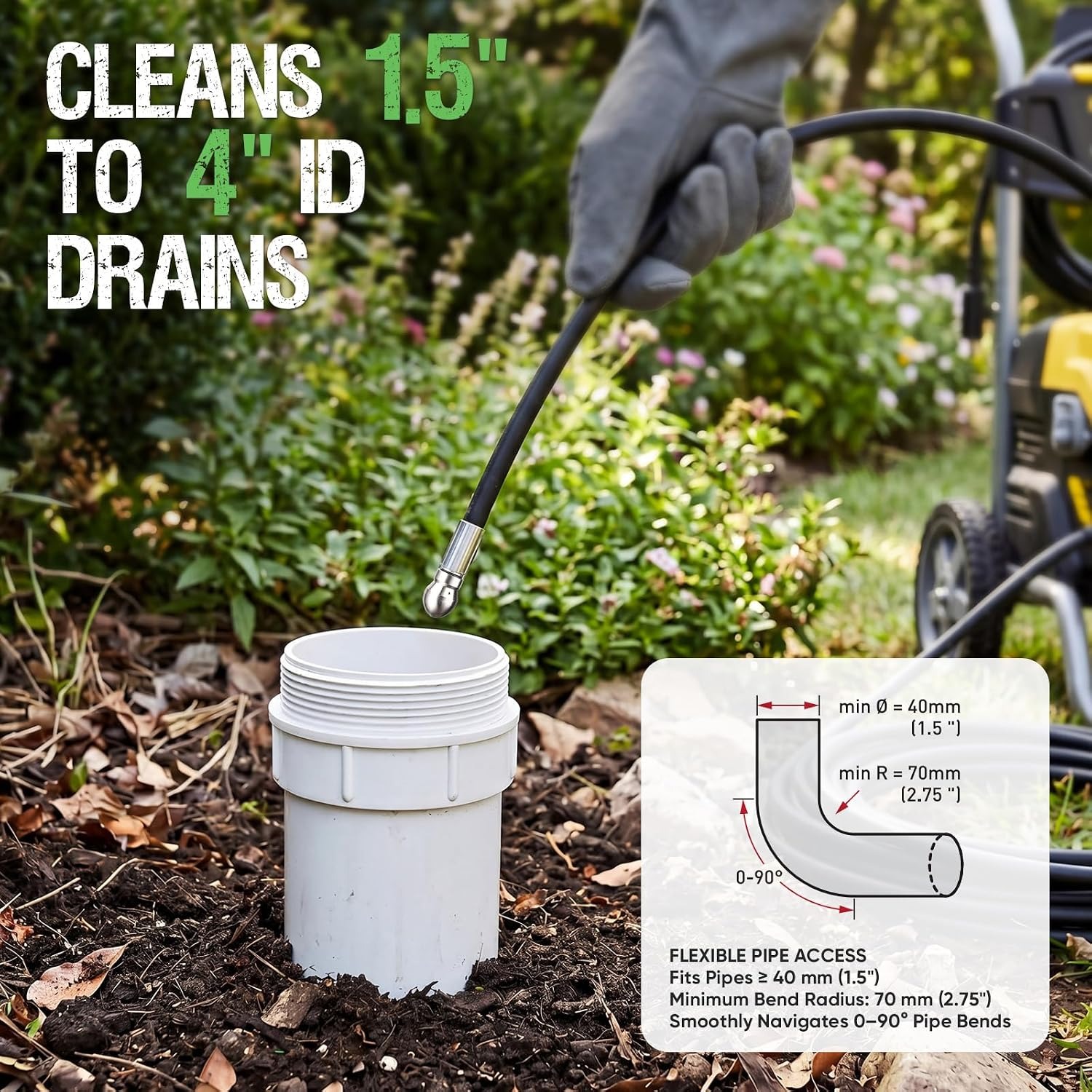
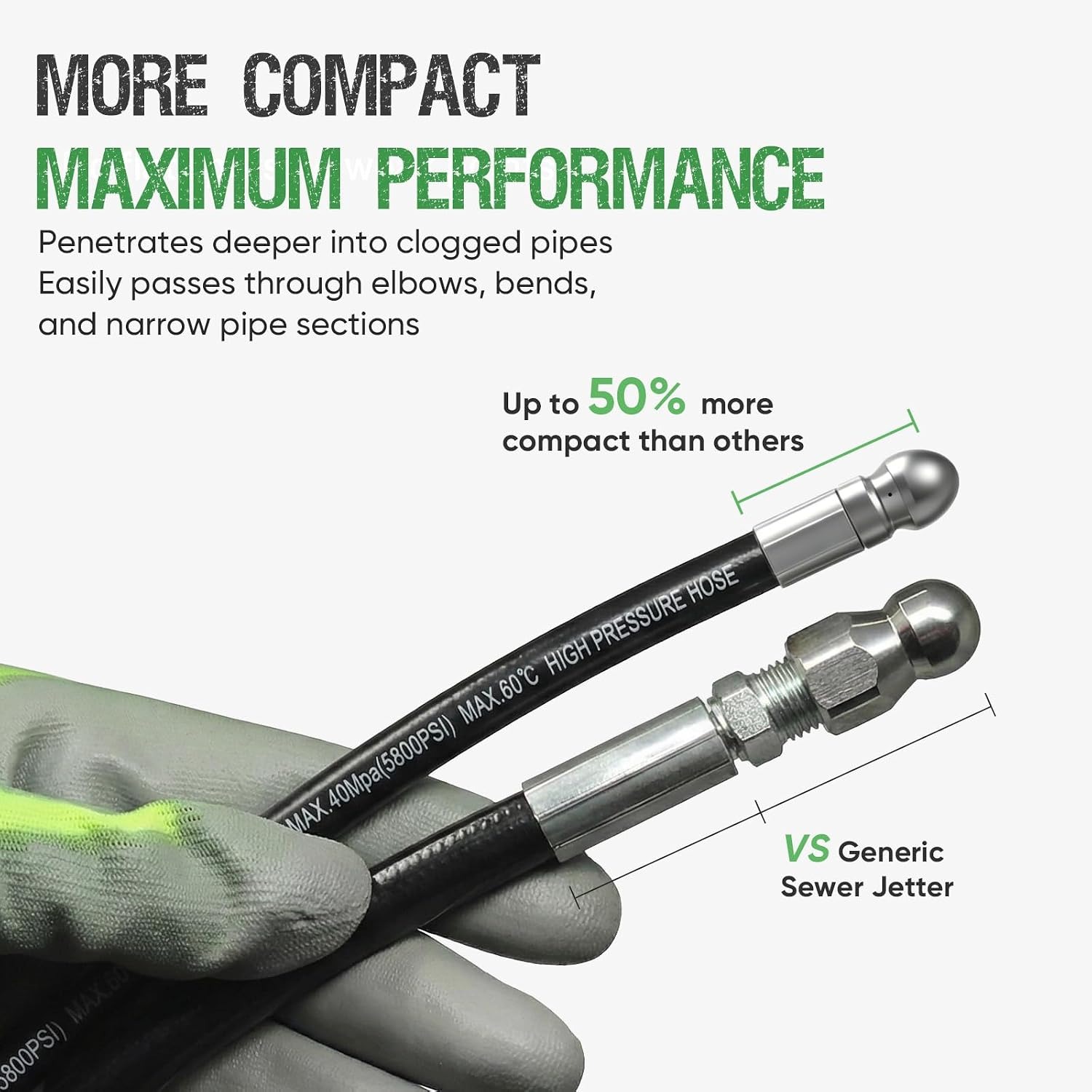
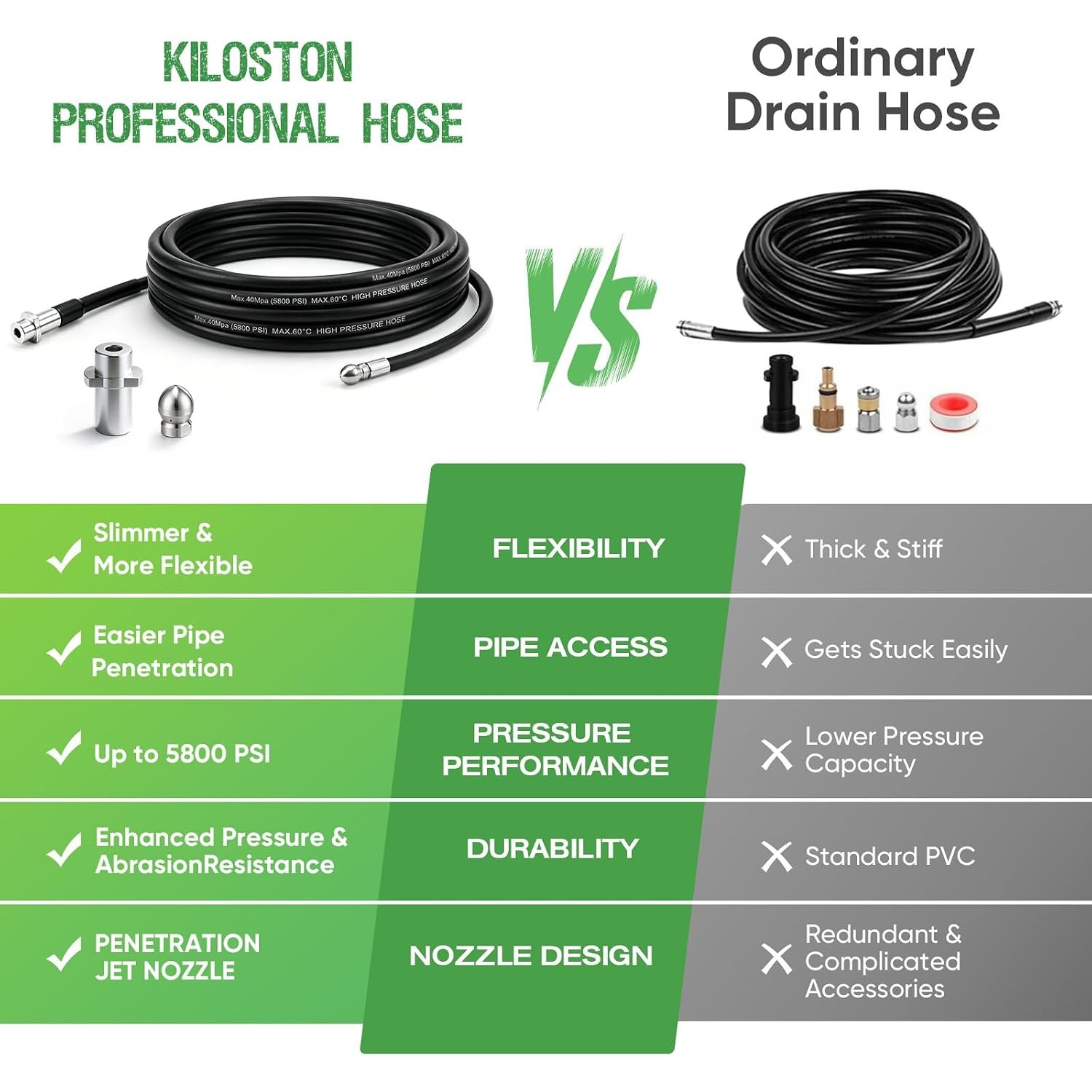
The hose itself has to do something less glamorous but equally important. It has to stay flexible enough to follow bends, slim enough to leave a return path for water, and tough enough to be dragged through grit without wearing through. This one uses three layers to balance those demands. A PE inner tube holds the water, a polyester fibre braid takes the pressure, and a matte PVC jacket takes the abuse on the outside.
Who this kit suits
It suits anyone who already owns a pressure washer and has outside drainage they are responsible for. That includes most homeowners, plenty of landlords, people who run small holiday lets or caravan sites, and anyone with a long driveway drain or a yard that collects leaves.
It is particularly worth having if your property has any of the usual warning signs. Gullies that drain slowly after rain. A kitchen waste line that gurgles. A downpipe that overflows at the top in heavy weather. Mature trees near the drain line, which means annual leaf wash-in even if the roots behave themselves.
It is less suitable if you do not own a pressure washer, since the hose is useless on its own. It is also the wrong tool for structural problems. If a pipe has cracked, dropped out of alignment or been crushed by a vehicle, no amount of water will fix it, and jetting may simply confirm what you already suspected. Likewise, serious root intrusion needs mechanical cutting rather than a plain jetting head.
Matching it to your pressure washer
The two things to check before ordering are the connection and the pressure.
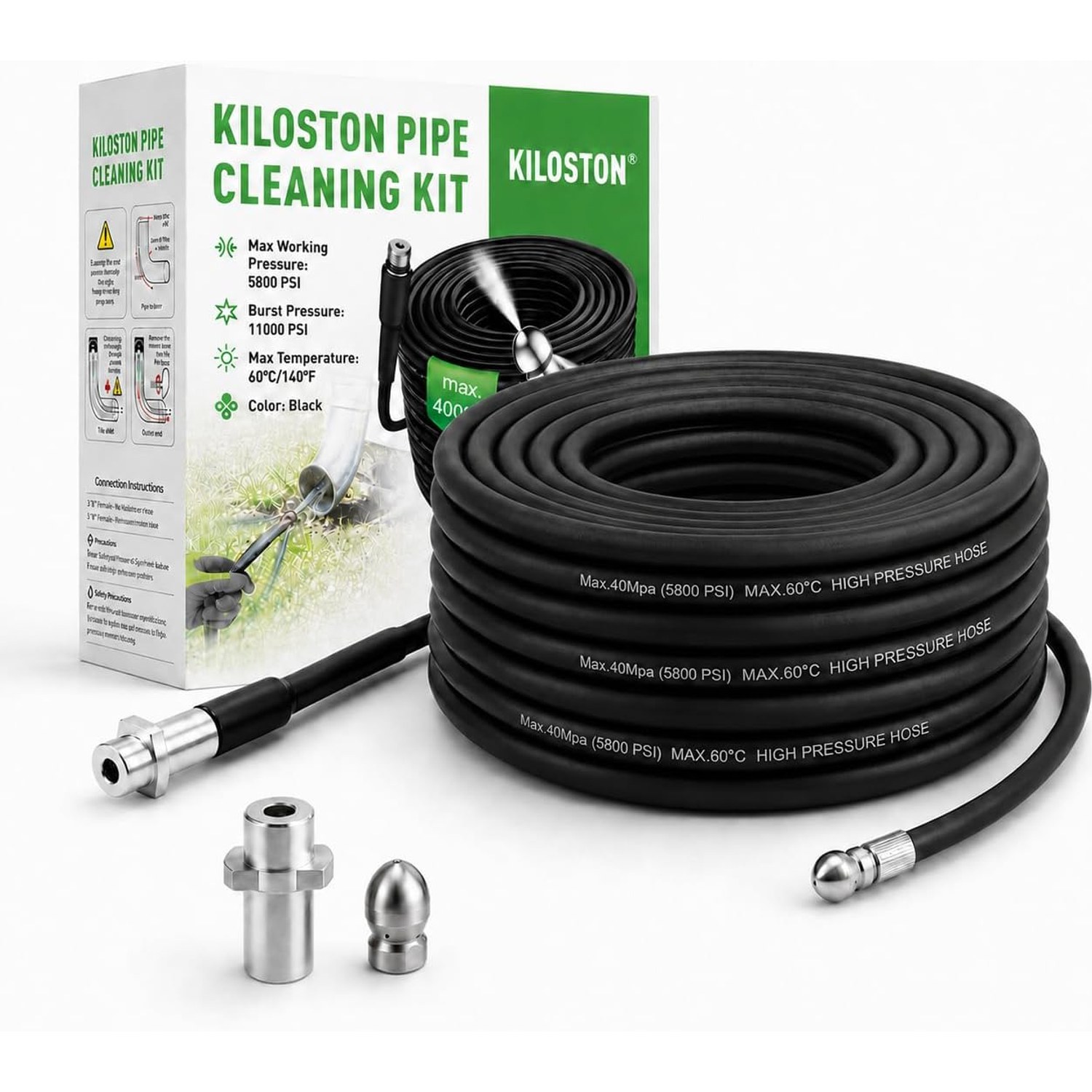
Connection first. This kit comes with a K-Series adapter, which tells you the design target. If you run a K-Series machine, you plug the adapter in and go. If you run something else, look at the thread on your gun or lance outlet and compare. Many brands share common fittings, but plenty do not, and older guns in particular often use a different arrangement to current models. A two minute check saves a return.
Pressure second. The hose carries a 400 bar maximum rating. That is well above the output of a normal domestic washer, so the hose is not the limiting factor for most people. What matters more in practice is flow rate rather than headline pressure. A machine that pushes a decent volume of water will clear a drain faster than one that produces a higher pressure but a thin trickle, because you need volume to carry debris away.
If you have a choice of machines, use the one with the better flow. If you only have a small electric unit, the job will still work, it will just take longer and you may need a few passes.
Doing the job without making a mess of it
Set up before you start. Lay the hose out straight so it feeds cleanly, because a coil that tangles at the wrong moment will snatch the nozzle out of the pipe. Put on eye protection. Jetting throws water and bits of whatever was in the drain straight back out of the opening, and it does it fast.
Feed the nozzle at least a metre into the pipe before you touch the trigger. This is the single most important habit. A jetting nozzle fired in the open air is a loose end with thrust behind it, and it will thrash about. Release the trigger before you pull the nozzle back out of the opening, for the same reason.
Work in stages. Push in a few metres, let the water do its work, then draw back a metre before pushing on again. That in-and-out rhythm scrubs the pipe rather than simply boring a channel through the middle of the blockage. When you reach the far end of what you can access, withdraw slowly with the water still running so the rear jets wash the walls on the way out.
Flush at the end. Run plenty of clean water down the line to carry away everything you have loosened, then run clean water through the hose itself before you coil it up.
Looking after it
A high-pressure hose does not die of old age, it dies of kinks. The habits that keep it working are simple. Never store it folded sharply. Never drive over it. Never hang it on a thin hook that creates a hard bend at one point.
After each job, flush it, lay it out to drain, and coil it in big loose loops. Store it out of direct sunlight, because UV is hard on PVC over the years. Check the fittings for weeping before each use, and keep the supplied sealing tape handy for making a connection watertight.
The nozzle needs occasional attention too. Grit finds its way into the orifices and a partly blocked jet gives you a lopsided spray and less thrust. Back-flush it with clean water and clear any stubborn hole with a fine pin, carefully. Never drill or ream a jet out, because the hole size is what determines the pressure and thrust balance.
The short version
A 30 metre pressure washer drain jetting hose takes a machine you probably already own and turns it into something that solves a genuinely expensive problem. The penetration nozzle pulls itself down the pipe, cuts into the blockage and scours the walls on the way back out. The three-layer hose handles the pressure and the dragging.
Check that the K-Series adapter suits your gun before you order. Wear eye protection. Get the nozzle properly into the pipe before you pull the trigger. Flush it, dry it and coil it loosely afterwards.
Do that, and the next time the gully fills up you will deal with it yourself in half an hour instead of waiting two days for someone to arrive with a van and an invoice.