
The complete guide
How to Choose and Use a Drain Rod Set
The problem nobody plans for
Blocked drains have terrible timing. It is always a Sunday, always raining, and always the week you had something else booked. The first sign is rarely dramatic. A sink drains a bit slower. The toilet burps when the washing machine empties. Then you go outside, lift the gully grid, and find standing water that should have gone somewhere days ago.
At that point you have two options. You can pay for a call-out, which for a straightforward blockage often costs more than the tool would have, or you can rod it yourself. Rodding is not glamorous work, but it is not complicated either. It is mostly patience, gloves, and knowing which head to put on the end.
What a drain rod set actually does
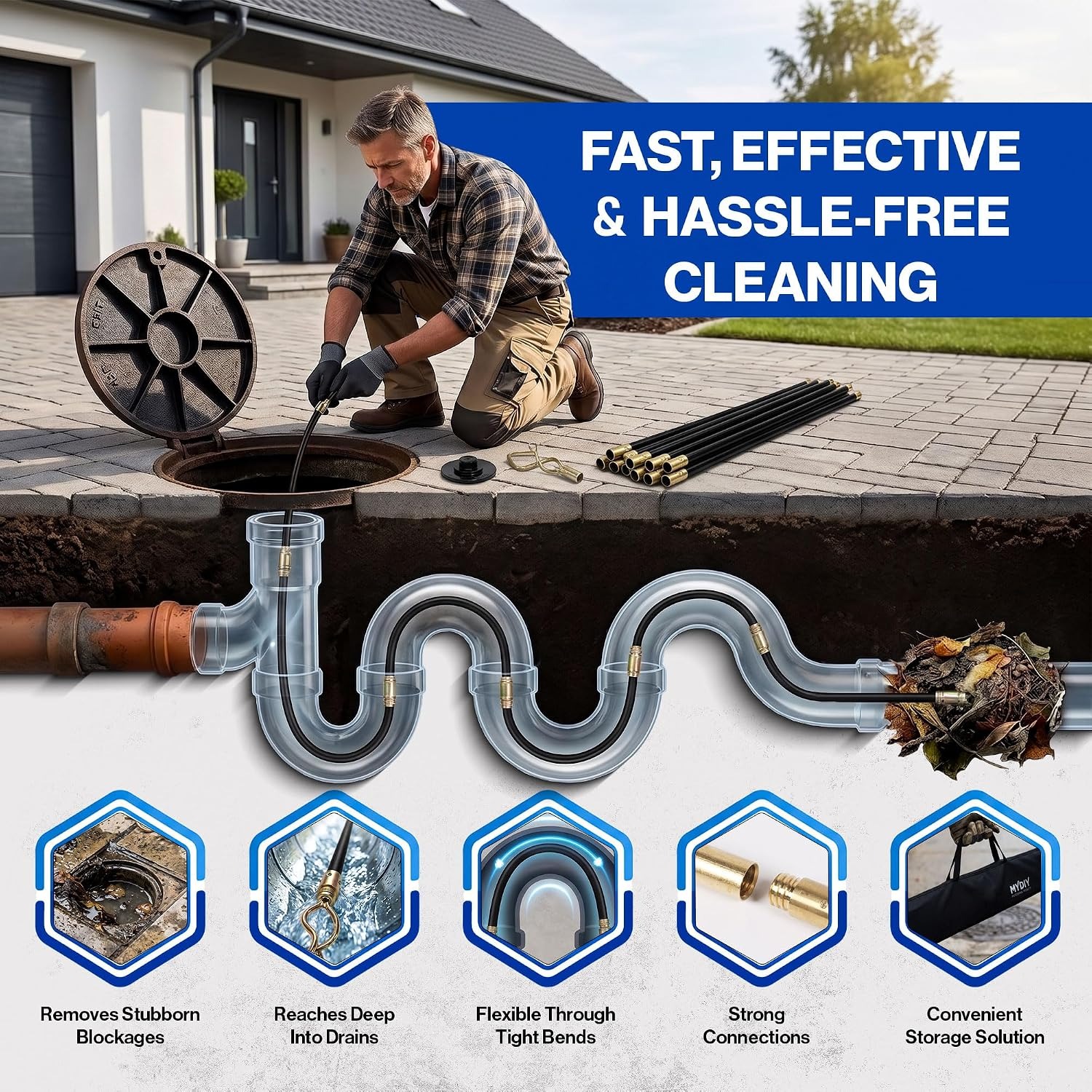
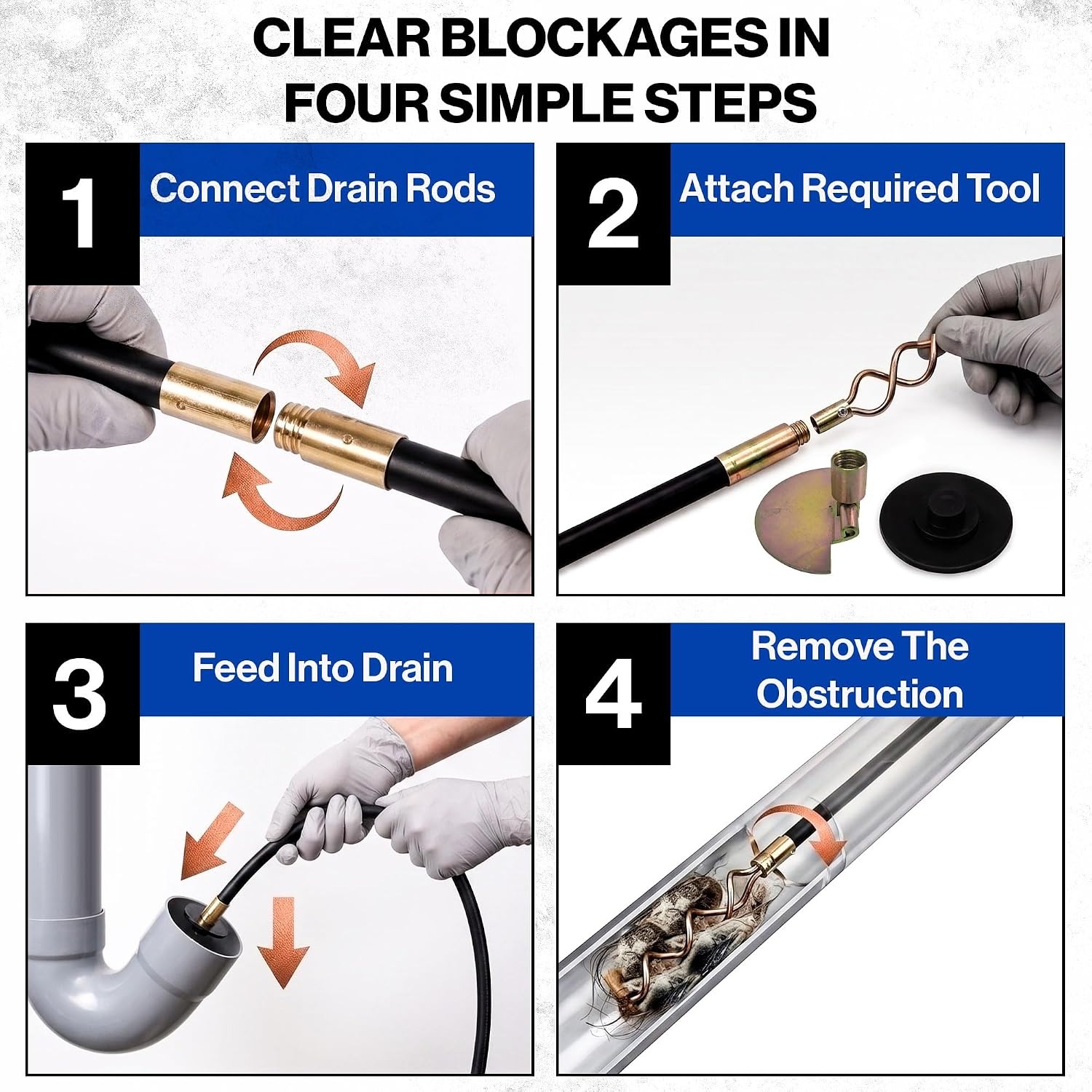
A drain rod set is a series of short rods that screw together into one long, flexible shaft. You put a working head on the end, feed it into the drain, and add rods as you push further. The flexibility is the clever part. Drain runs bend, step down into chambers and meet junctions, and a rod that can flex will follow those curves rather than wedging at the first turn.
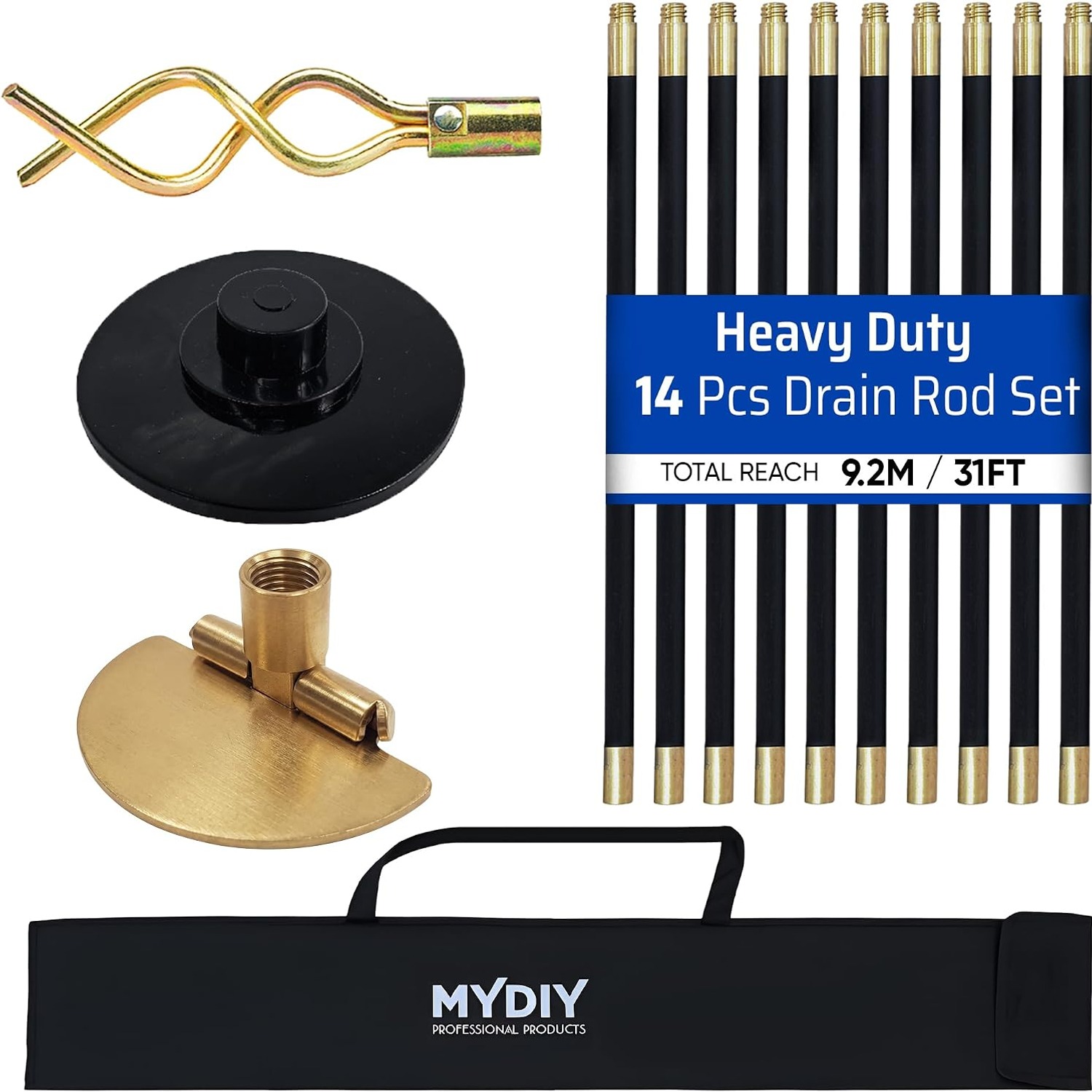
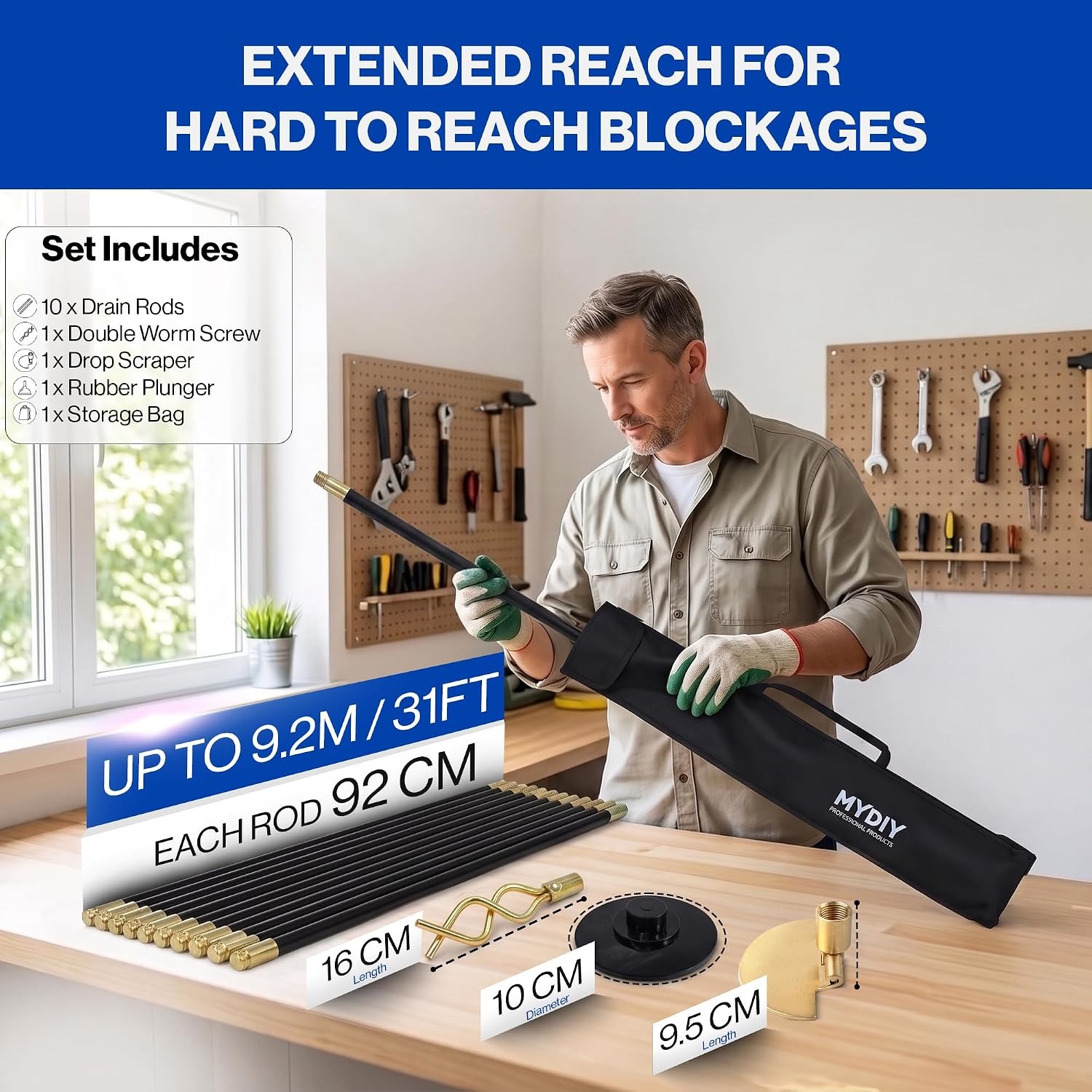
This set includes ten rods, which is more length than most domestic jobs need. That is deliberate. You would rather have a couple spare than find yourself a metre short with the blockage just out of reach. You only connect what you need, so the set never feels unwieldy.
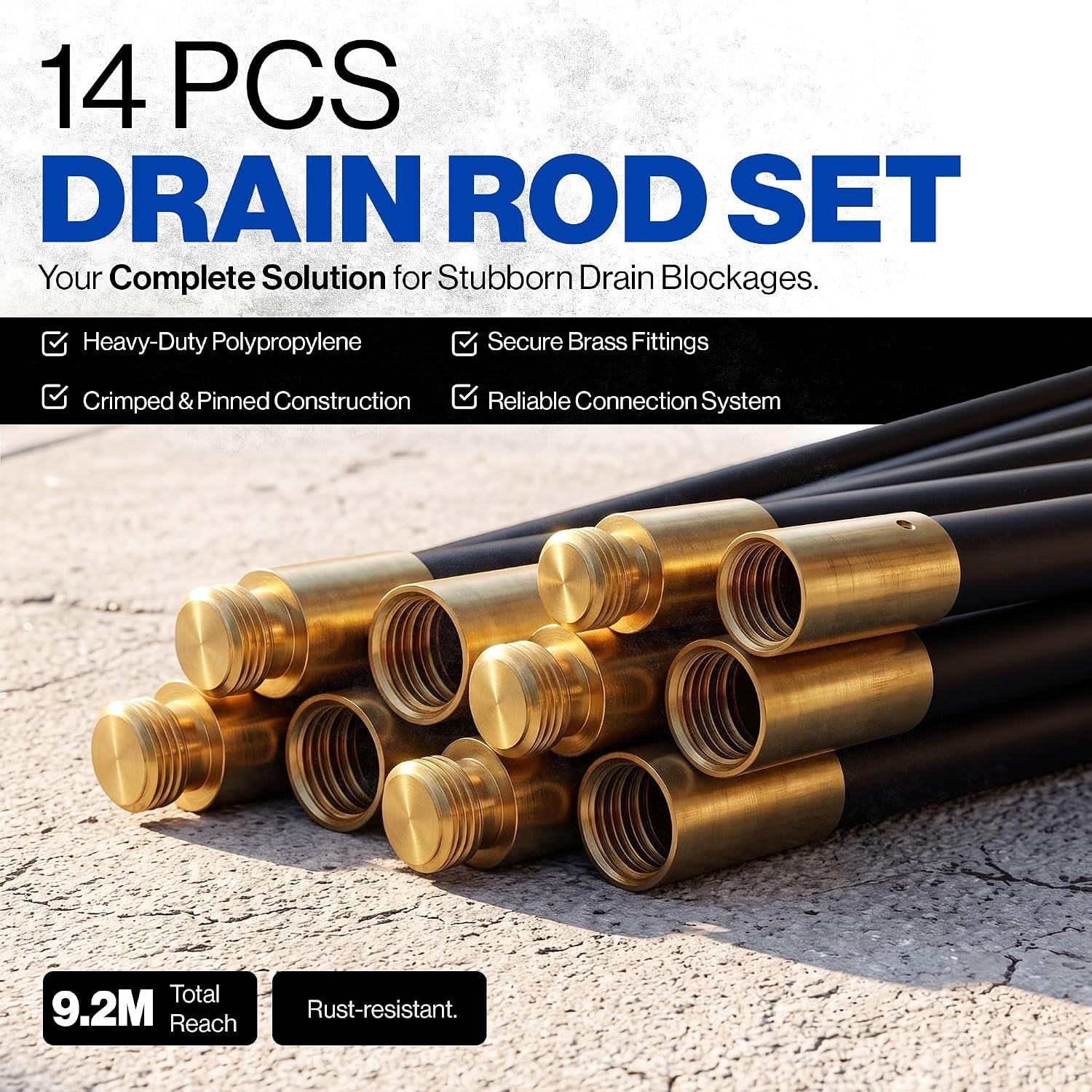
The brass fittings are worth a mention. Threads take a beating on this kind of tool, mostly from grit working into the joint. Brass handles repeated tightening better than plastic and gives a clearer feel when the joint is properly seated, which reduces the chance of a rod separating mid-push.
The three attachments and when to use each
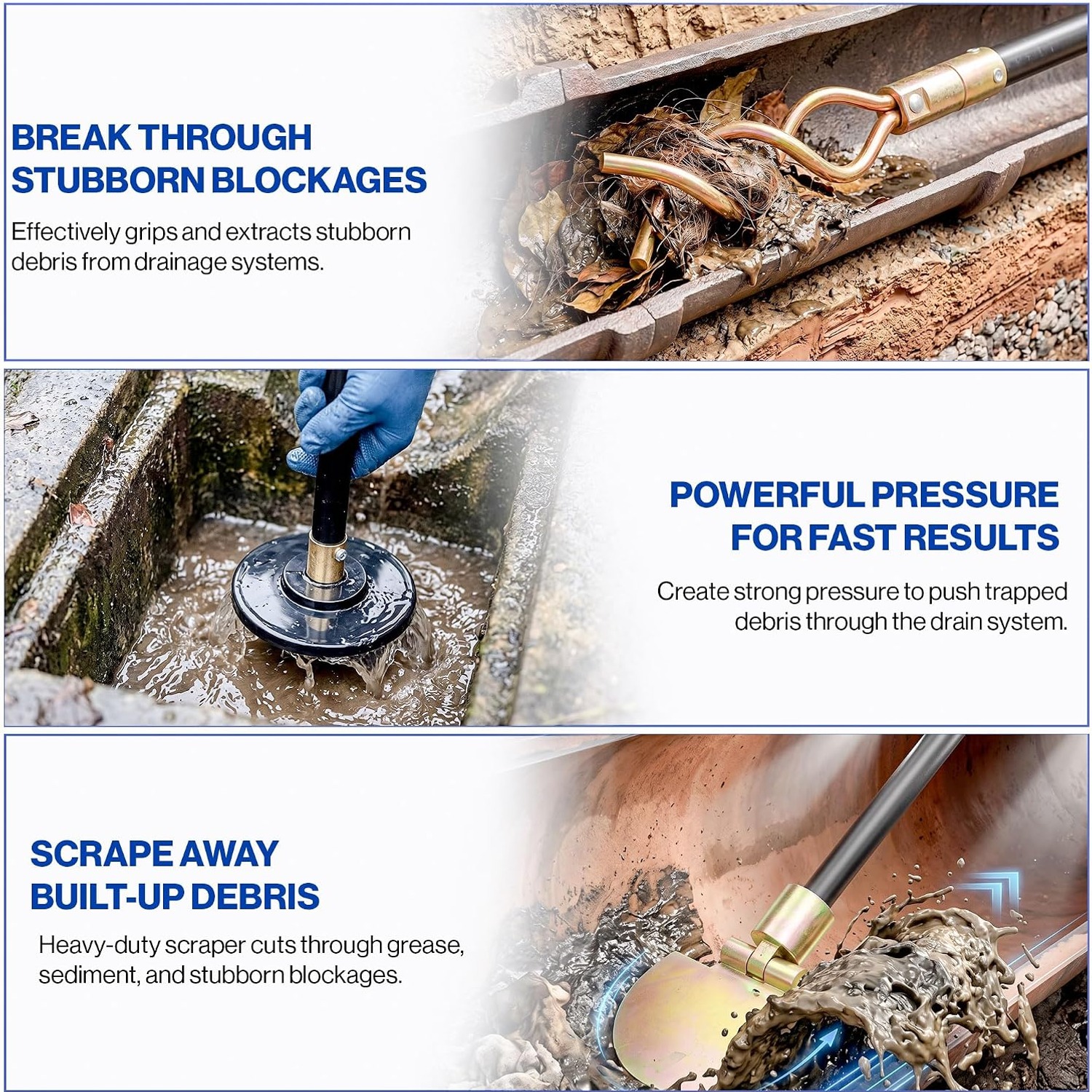
The rubber plunger. This is your opening move when the pipe is holding water. You are not really hitting the blockage with the rubber, you are using the water in front of it as a ram. Short, firm pushes work better than one long shove. Soft blockages of grease, paper and food waste often give way within a few minutes.
The double worm screw. When the blockage is fibrous, the plunger just compresses it. Hair, rag, wet wipes and fine root growth all need something that bites. The worm screw twists into the mass so you can draw it backwards instead of compacting it further down the pipe. This is the attachment people are usually hunting for when they search for the best worm screw drain attachment, and it is the one that saves the day on older properties.
The drop scraper. Last in, and often the one that stops the problem coming back. Silt, sand and leaf mulch settle along the bottom of a pipe and gradually narrow it. The scraper drags that material back towards an open chamber where you can lift it out. Clearing a blockage without scraping the run often just buys you a few months.
The one rule you must not break
Always rotate clockwise. Every time, on the push and on the pull.
The rods screw together, so turning anticlockwise unscrews them. Do that halfway down a run and you have left a rod and an attachment in the pipe, which turns a simple job into a long one. Get into the habit from the first rod and it becomes automatic. It is the single most common mistake first-time rodders make.
Finding the blockage before you start
Do not just push rods into the first opening you find. Lift your chamber covers in order, starting nearest the house, and look at what is in each one.
A chamber full of standing water means the blockage is somewhere after it. An empty chamber means everything upstream is flowing fine, so the trouble is between there and the last full one. Two covers is usually all it takes to pin the problem to a single run of pipe. That saves you rodding fifteen metres in the wrong direction.
Lift covers carefully. Older cast covers are heavy and the edges can be sharp. A manhole key makes it far easier, and a sturdy screwdriver will do at a pinch.
Working the job
Put on waterproof gloves and old boots. This is messy work and there is no clean way to do it.
Start with the plunger, feed the first rod in, and add rods one at a time as you advance. Keep that clockwise twist going. When you meet resistance, resist the urge to charge at it. Short, controlled pushes with constant rotation do more than brute force, and they are far kinder to the pipe.
If the plunger stops making progress, draw everything back, swap to the worm screw, and go again. You will often feel it catch, which is a good sign. Pull back steadily and see what comes with it. Expect something unpleasant.
Once flow returns, run plenty of water through and then go back in with the scraper to clean the run properly. Finish by flushing from the house with hot water for a few minutes.
Who this kit suits
Homeowners are the obvious group, particularly anyone with an older property, a long drain run, or mature trees near the line. If your drive has a gully that collects leaves every autumn, you will use this set.
Landlords and anyone managing a couple of properties get good value from it too, since one tenant call-out avoided usually covers the cost. Rural properties with septic systems benefit, as the run from house to tank is often long and prone to silting. And allotment holders and smallholders tend to find uses for long flexible rods that have nothing to do with drains at all.
It is a domestic kit rather than professional contractor equipment. For daily commercial use you would want heavier gear and probably a jetter. For a household that needs the job doing two or three times a year, this is the right level of tool.
Care, because it decides how long it lasts
Drain rods fail at the threads, almost without exception. Grit gets into the joint, the thread binds, and eventually something strips.
So rinse everything properly when you finish. Pay particular attention to the brass fittings and run water through the threads. Let it all dry before it goes back in the bag, because bagging wet metal is how corrosion starts. If a joint feels stiff next time out, a light smear of grease sorts it.
Store the set in its carry bag somewhere dry and off the floor. The bag is not just packaging, it stops the small attachments wandering off to the back of a shelf, which is where half of all drain rod sets go to die.
A few honest limits
Rods clear blockages. They do not repair pipes. If you clear the same run every few weeks, something structural is wrong, usually a cracked pipe, a dropped joint, or roots that have found a way in. At that point a camera survey is money well spent, because rodding is only buying you time.
Rods are also not the answer for a collapsed section or a saturated soakaway. Clearing the pipe into a flooded soakaway will not help if the soakaway itself has nowhere left to drain.
Knowing when to stop is part of using the tool well.
The short version
A drain rod set is one of those tools you buy once and are glad of for years. This one gives you ten screw-together rods with brass fittings, a plunger for soft blockages, a worm screw for anything fibrous, and a scraper for the silt left behind, all in a bag that keeps the set together.
Find the blockage first by lifting covers in order. Turn clockwise, always. Start with the plunger, move to the worm screw if it will not budge, and finish with the scraper and a good flush. Rinse, dry, bag it.
That is the whole job. Most of the time it takes less than an hour, and you will have done it yourself.