
The complete guide
How to Choose and Fit a Washing Machine Drain Hose Extension
The problem nobody mentions when you buy an appliance
A washing machine arrives with a drain hose roughly 1.2 to 1.5 metres long. That is enough if the standpipe sits directly behind the machine. In a lot of real kitchens and utility rooms it does not. The waste outlet is under the sink three cabinets away, or behind the dryer, or on the other side of a doorway because that is where the plumber found a convenient soil connection twenty years ago.
So you end up with a machine that cannot sit where it fits. People solve this badly. They stretch the hose until it is taut, which puts a steady pull on the pump outlet. They push the machine in at an angle. They run the hose into a bucket and empty it by hand, which is fine exactly once. None of these last.
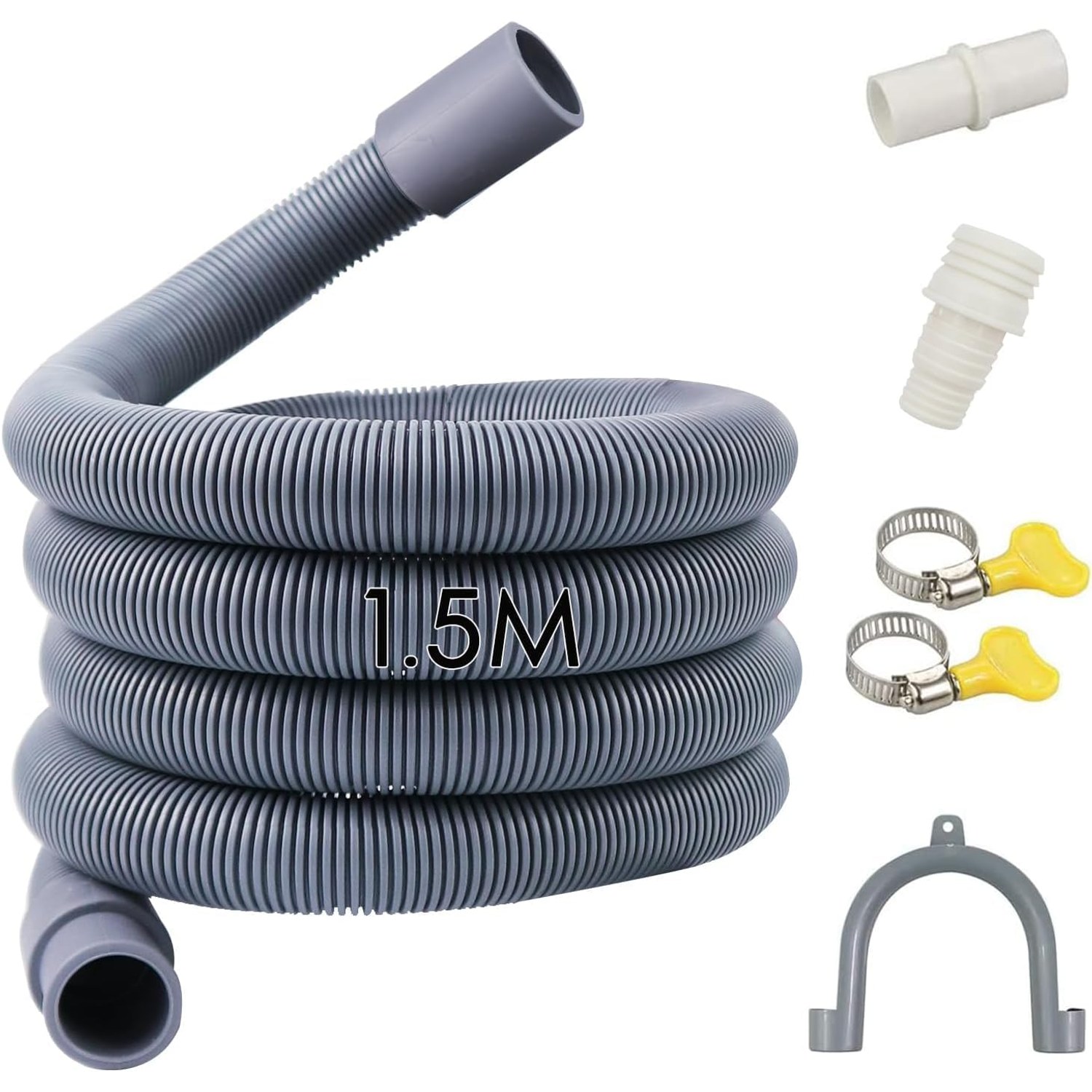
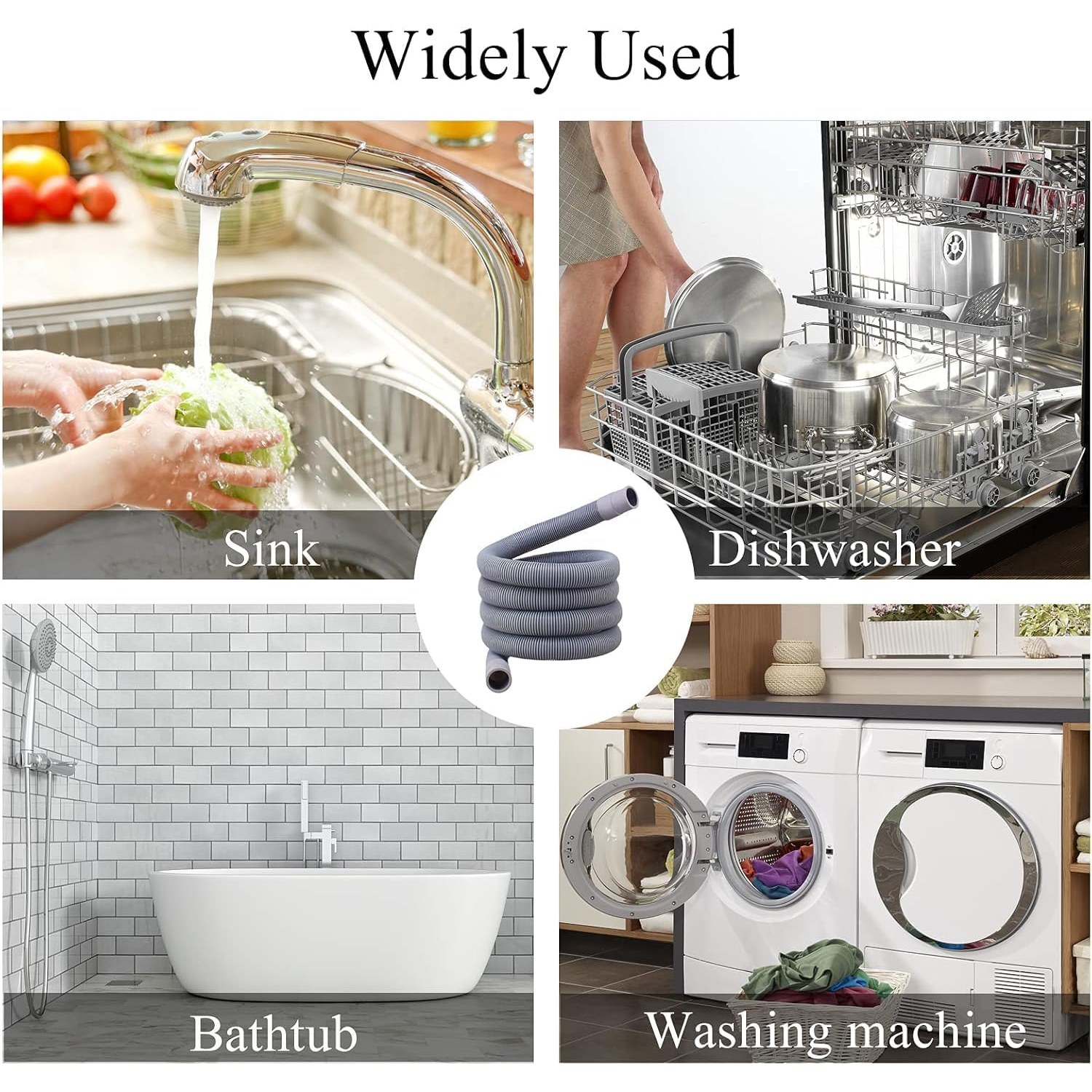
An extension kit is the boring, correct answer. It adds a known length of hose, joins it properly with a clamp, and holds the outlet end at a safe height. This one gives you 1.5 metres of extra reach and the small parts needed to connect it.
What is actually in the box and why each bit matters
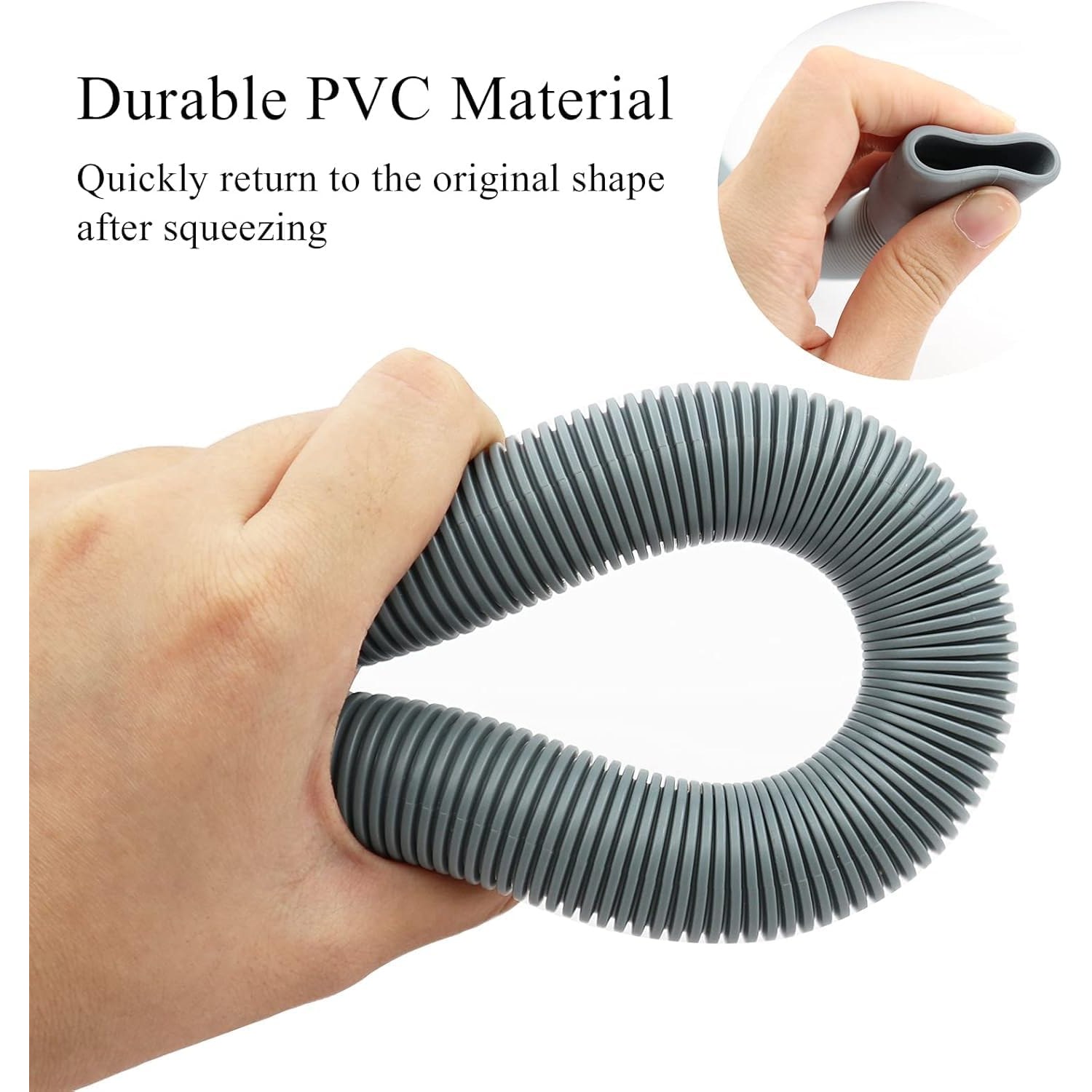
The hose is the obvious part. It is corrugated polypropylene with a 30 mm outside diameter and a 2 mm nominal wall. The corrugation is not decoration. A thin smooth tube bent around the corner of a cabinet flattens and chokes off the flow. Ribbed walls let the tube curve while keeping the bore open, which is why nearly every appliance waste hose you will ever see is made this way.
The extension connector is the double-ended sleeve that joins your existing hose to the new one. It pushes onto the moulded outlet at the end of the tube. That is the detail worth noticing, because it means you do not have to disconnect anything at the back of the appliance. Pulling the original hose off a machine that is wedged into a gap usually means dragging the whole unit out and mopping up whatever drains out of the sump.
Two hose clamps hold the joints. They slide over the connection and tighten down on the thicker moulded section at the hose end. A clamp sitting on a thin corrugated section can crush the ribs, so always position it over the solid part.
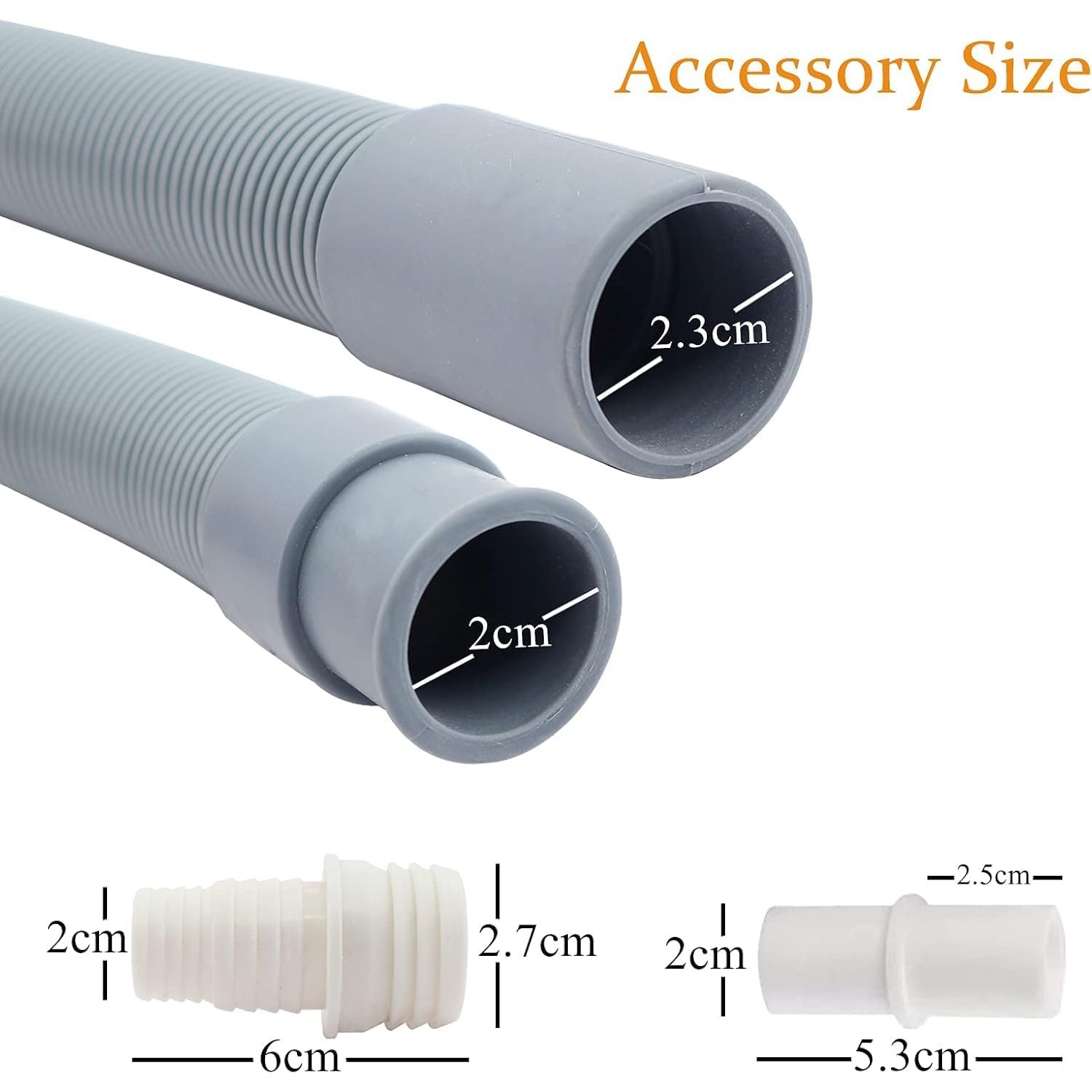
The 30 mm adapter handles a common mismatch. Plenty of built-in waste plumbing runs at 30 mm while appliance hoses run narrower. The white adapter measures 2.1 cm across and is made for a 20 mm internal diameter. If your pipework is 30 mm, this is the piece that joins the two worlds.
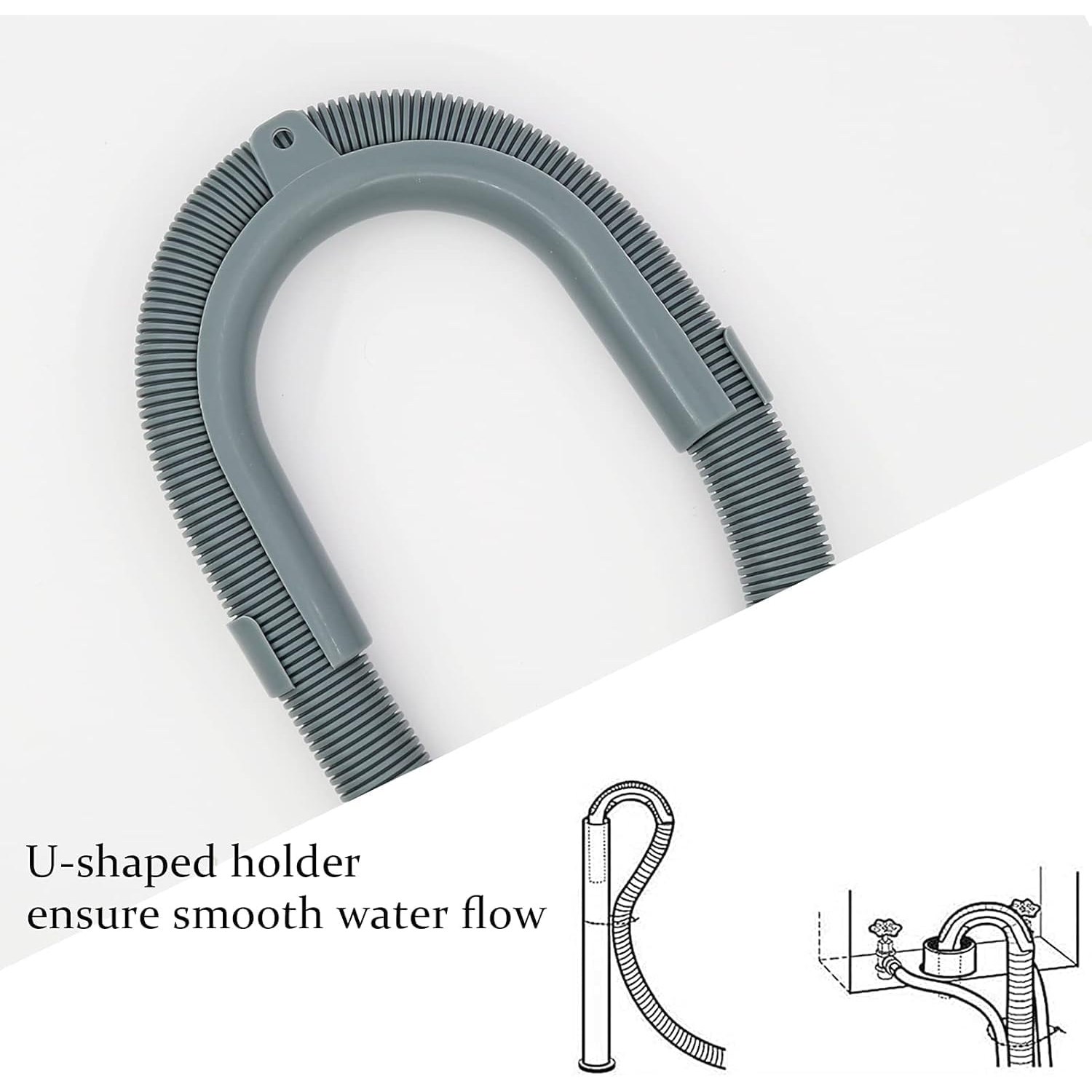
Last is the U-shaped bracket, the plastic hook that holds the hose end over the lip of a sink, tub or standpipe. It is the cheapest item in the set and arguably the most important. A loose hose end can slide down into the drain and start a siphon, quietly pulling water out of the drum mid-cycle, or it can pop out onto the floor during a fast spin.
Measure before you order
Two numbers decide whether this kit works for you.
First, the internal diameter of your existing hose end. This kit has 20 mm at one end and 23 mm at the other, which covers most domestic washing machines and dishwashers sold in the last couple of decades. Push a tape or a vernier across the opening and note the figure.
Second, the distance from the machine's current hose end to the drain. Measure along the actual route the hose will travel, around the back of units and up to the outlet height, not the straight line across the floor. People routinely underestimate this by half a metre. The extension adds about 1.5 metres, so if your gap is 1.3 metres you have a comfortable margin.
Also check the drain height. Every machine has a maximum discharge height in its manual, commonly around a metre. Below that the pump copes easily. Above it, you get slow drains and error codes. The hose does not change what the pump can do.
Fitting it, step by step
Switch the machine off at the socket and turn off the water supply. Slide the appliance forward just enough to reach the end of the existing hose.
Have a towel and a shallow tray ready. Even a machine that has finished its cycle holds some water in the hose and sump, and it will find your floor if you give it the chance.
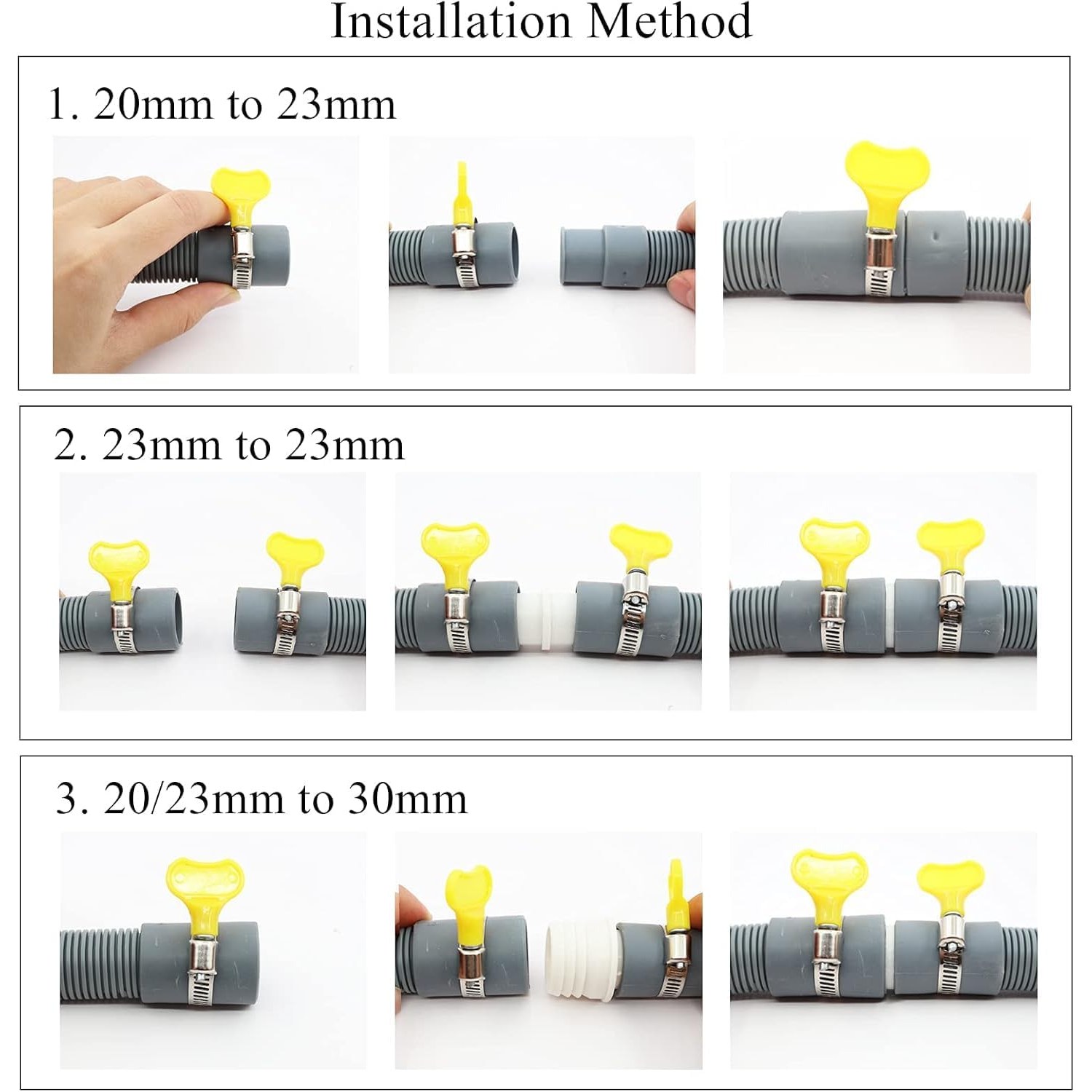
Push the extension connector onto the moulded end of the existing hose until it seats fully. A gentle twist as you push helps. Slide a clamp over the join and tighten it evenly, positioned on the thicker section rather than the ribbed middle.
Repeat at the other end if you are using the 30 mm adapter to meet fixed pipework. If you are hooking into a sink or standpipe instead, fit the U-shaped bracket to the hose end and hook it over the edge at the height your manual specifies.
Route the hose with gentle curves. No hairpins, no running it under a machine foot, no trapping it against a hot pipe. Push the appliance back slowly and watch the hose rather than the machine so you can see if anything is about to pinch.
Run a short rinse cycle with a dry tissue tucked under each joint. The tissue tells you about a slow weep that your eyes would miss. Check the clamps again a week later, since plastic settles slightly under the first few cycles.
Who this suits, and who should look elsewhere
This is the right part if your appliance hose works fine and you simply need more reach. It is also useful if the original hose has been shortened by a previous installer, or if you are rearranging a utility room and the machine is moving two cabinets along.
It is not the right part if the existing hose is split, perished or leaking along its length. In that case you want a full replacement hose rather than an extension joined to a failing tube. It is also not a supply hose, and should never be used to carry pressurised mains water. Supply hoses are reinforced for a reason.
If your pipework sits outside the 20 mm to 30 mm range covered here, you need a different adapter. Those are common parts and easy to source, but check first rather than hoping.
Keeping it working
Waste hoses are low maintenance, not no maintenance. Detergent residue and lint settle at low points and bends, and over a few years that narrows the bore enough to slow drainage.
Once or twice a year, disconnect the hose and flush it through from the appliance end with clean water until it runs clear. While it is off, look at the inside of the ends for cracking and check the clamps are still tight.
Keep the run free of permanent kinks. If you have spare length, coil it loosely behind the machine rather than folding it. A fold eventually becomes a crease, and a crease eventually becomes a restriction.
The short version
This kit adds 1.5 metres of corrugated polypropylene waste hose, plus a connector, a 30 mm adapter, two clamps and a U-shaped bracket. It pushes onto your existing hose without tools, so the appliance connection stays untouched. Ends are 20 mm and 23 mm internal diameter, outside diameter is 30 mm, and the whole thing weighs 0.12 kg.
Measure your hose end and your route, check your machine's maximum drain height, fit the clamps on the thick moulded sections, and run a test cycle with tissue under the joints. Do that and the machine goes where you want it, and stays there.