
The complete guide
Drain Strainers Explained, How To Choose One That Actually Works
The problem nobody notices until it is too late
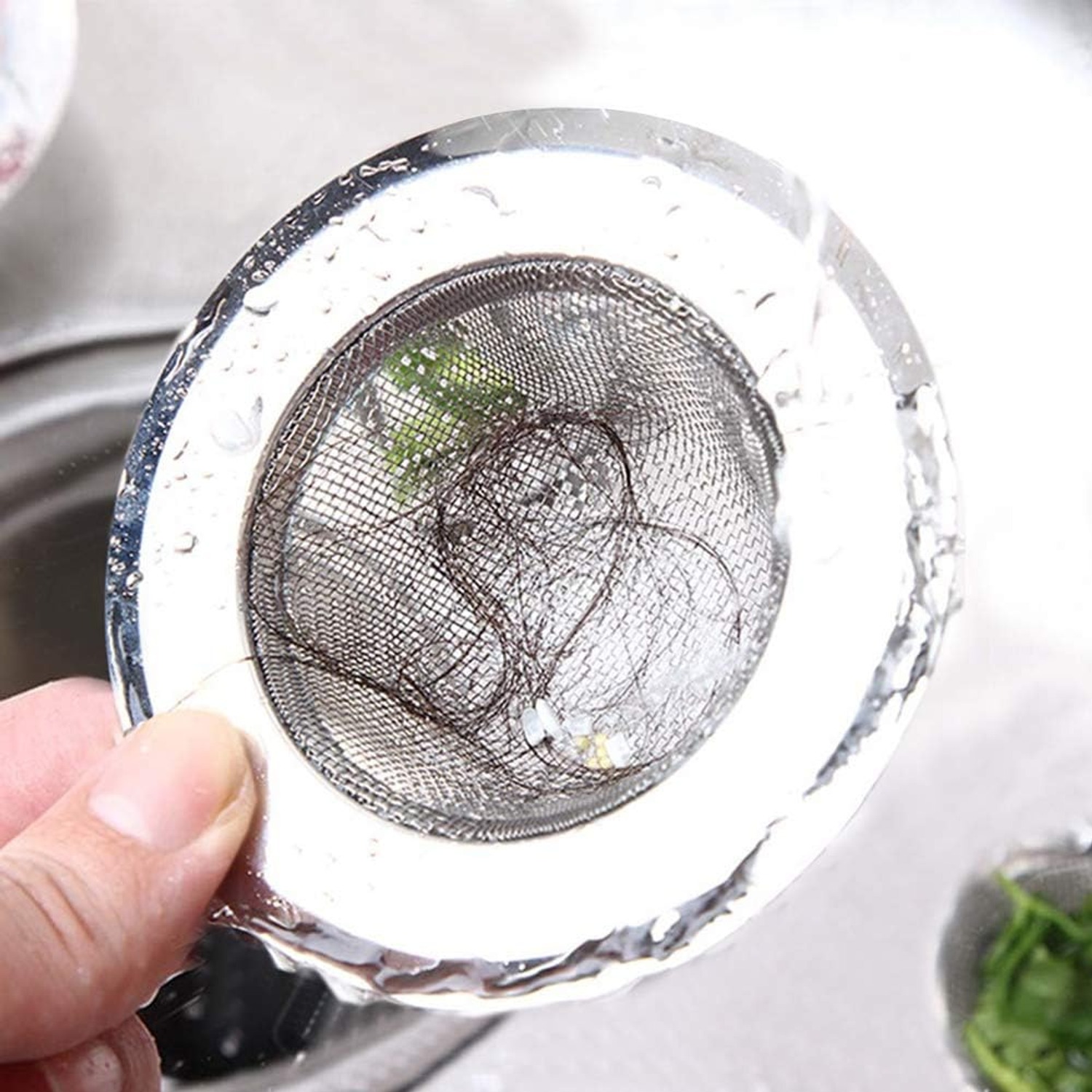
A blocked shower drain never announces itself. One week you are standing in a shallow puddle by the end of your wash. A fortnight later the water is over your ankles and taking five minutes to clear. By then the blockage has had months to form, and it is almost never one dramatic thing. It is hair, bound together with soap scum and the oily residue from conditioner, slowly knitting itself into a mat inside the trap.
Kitchen sinks follow the same pattern with different materials. Rice, coffee grounds, tea leaves, bits of vegetable peel, a scrap of pasta that slipped off the plate. None of it seems like much. All of it ends up in the same place.
The frustrating part is that this is one of the easiest household problems to prevent. A flat piece of perforated steel sitting over the drain opening catches the material before it has a chance to go anywhere. It costs less than a bottle of drain unblocker and it does not need replacing every few months.
How a drain strainer actually works
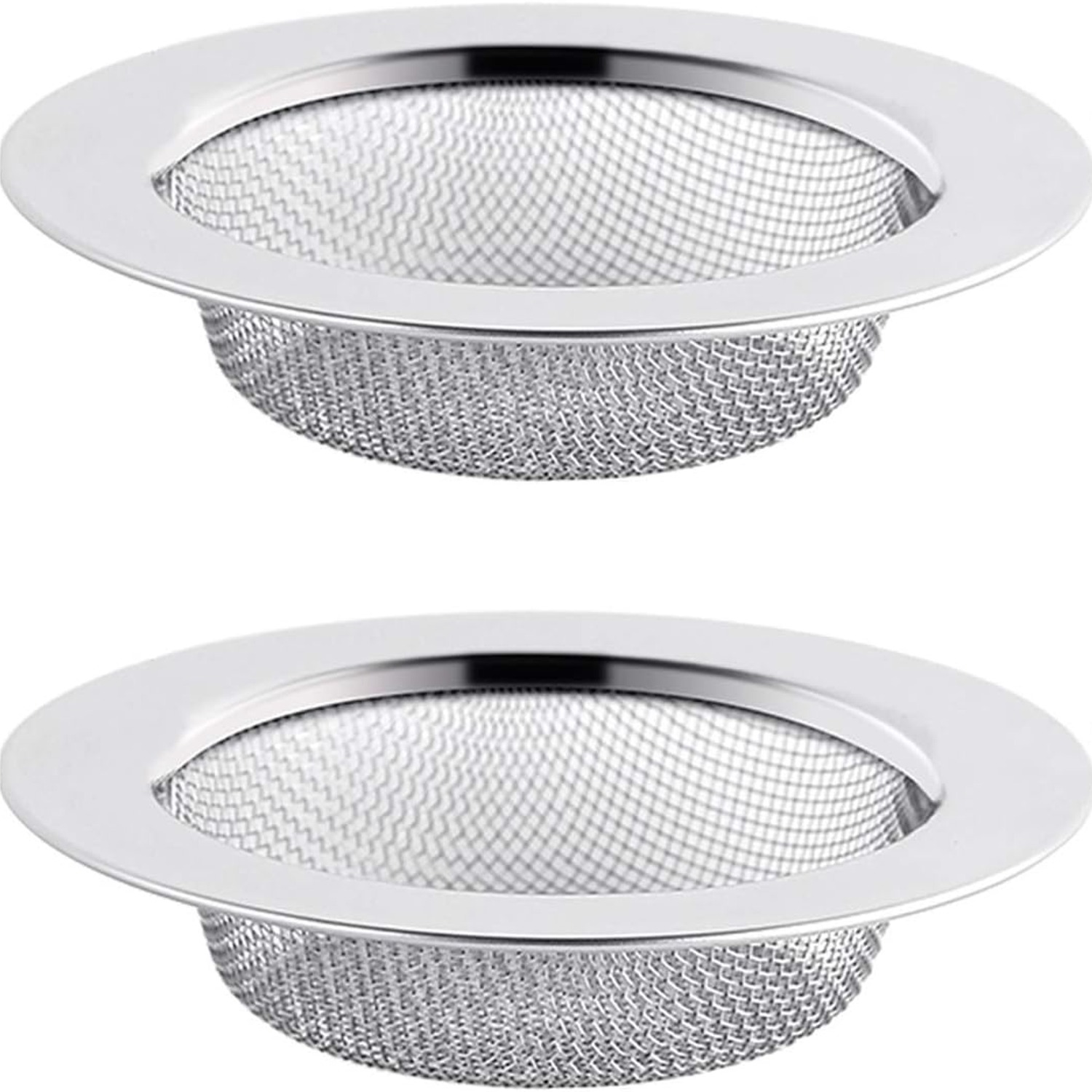
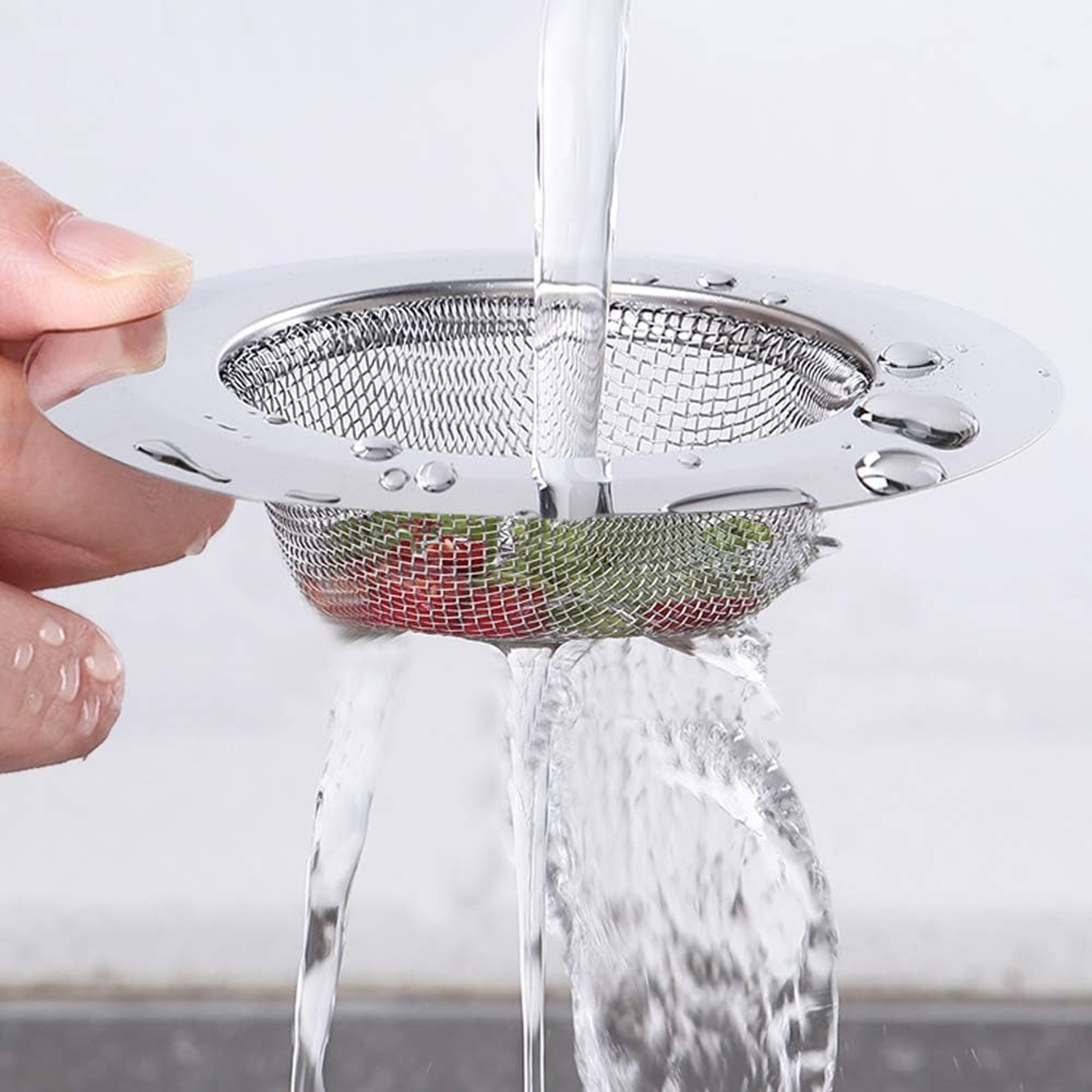
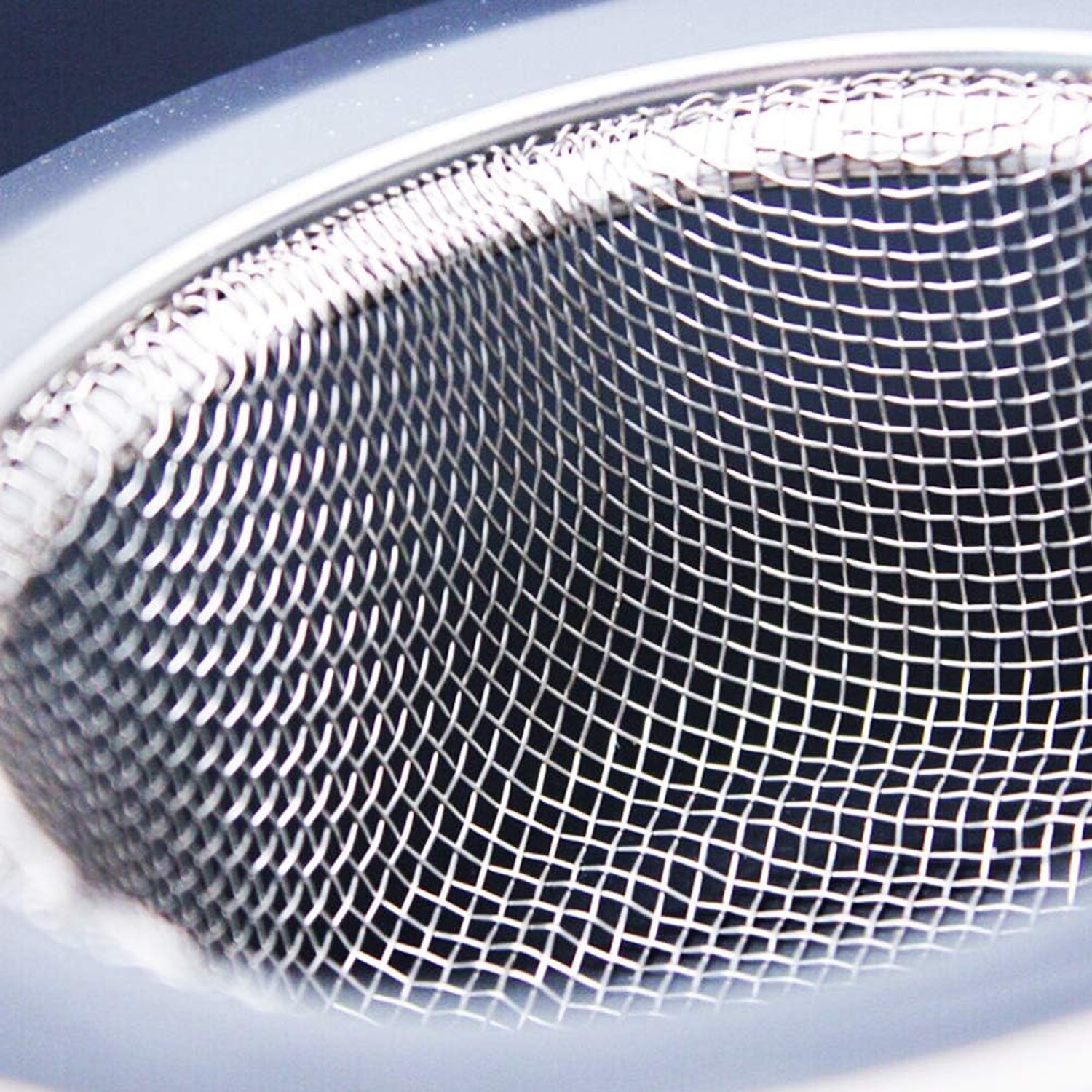
There is no clever mechanism here, and that is a good thing. The strainer is a shallow dish of stainless steel with holes punched through it. Water passes through the holes. Anything larger than the holes stays on top.
The engineering question is the size of those holes. Make them too large and hair slips straight through, which makes the strainer decorative rather than useful. Make them too small and they clog with soap film within a week, turning your sink into a slow draining basin and defeating the whole point.
This strainer sits in the middle of that range. The holes hold hair and food particles while still letting water run at a normal rate. When you see water starting to pool, the usual cause is a full strainer, not a design fault. Lift it, empty it, rinse it, put it back.
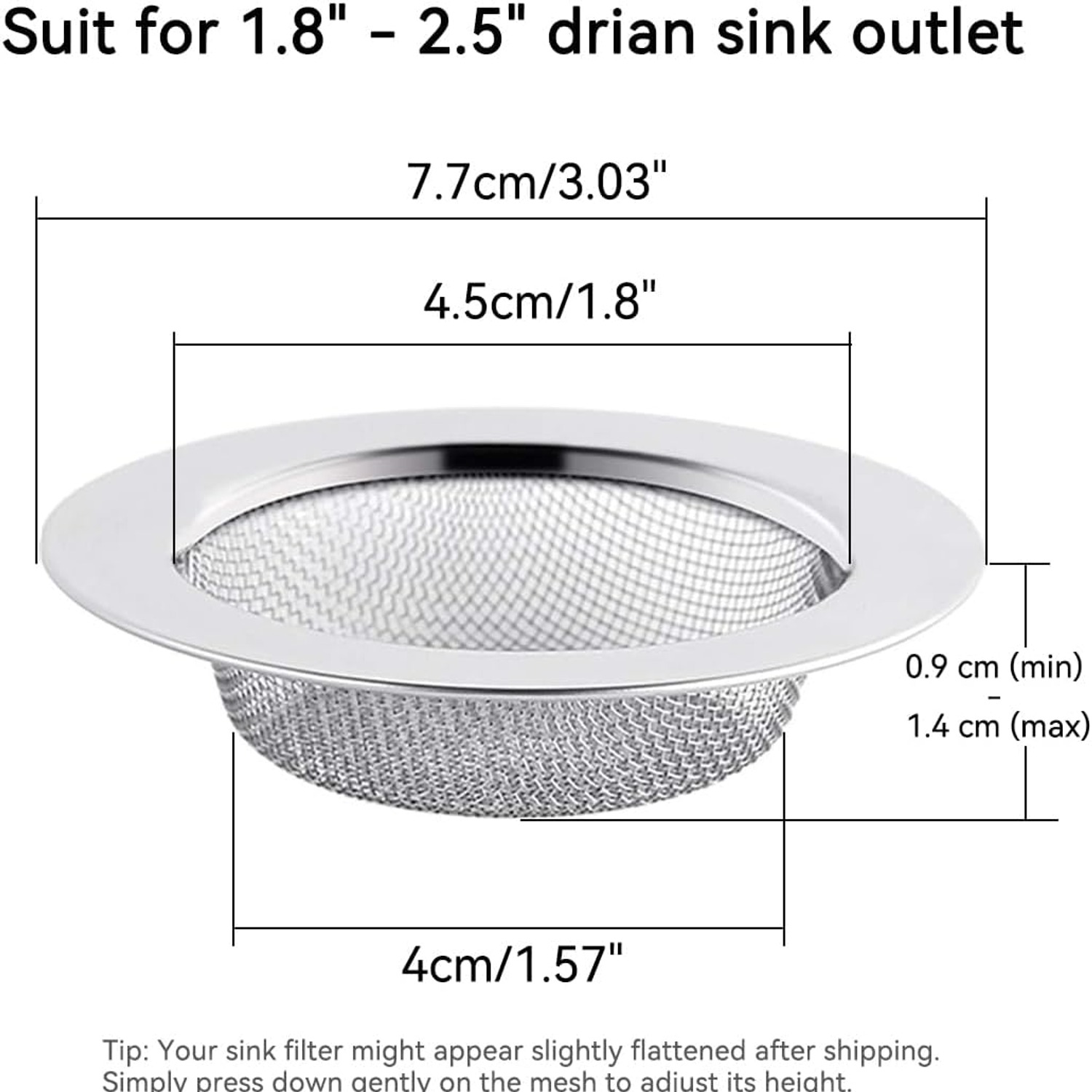
The second design factor is profile. This one is about 1.4cm high with an item depth of roughly 0.55 inches, which means it sits low in the drain rather than standing proud of the floor. In a shower that matters, because a tall strainer is something you feel underfoot and eventually kick loose.
Why stainless steel instead of plastic or silicone
Walk through the bathroom aisle of any hardware shop and you will see three common materials for this job. Each behaves differently over time.
Plastic mesh is cheap and it works at first. The trouble is that repeated hot water and cleaning products make it brittle. Within a year the edges crack and it starts discolouring to a yellowish grey that no amount of scrubbing shifts.
Silicone is soft and seals well, but it attracts a greasy film that bonds to the surface. It also tends to trap hair in the material itself, so cleaning becomes a proper chore rather than a quick tip into the bin.
Stainless steel sidesteps both problems. It does not absorb anything, hair lifts off cleanly, and it handles hot water without any change. This strainer is listed as rust resistant with a brushed finish, and the brushed surface is a sensible choice for a wet room because it disguises water marks far better than a polished one. If you are hunting for the best shower drain hair catcher for a drain that is visible, a brushed metal disc looks like part of the fitting rather than an afterthought.
Getting the size right before you order
This is the one step worth two minutes of your time. Take a tape measure to your drain and measure the opening across its widest point.
The compatible groove diameter listed for this strainer is 1.8 inches, and the supplier describes it as suiting drains from roughly 1.8 to 2.5 inches. The strainer itself is 7.7cm across, so it overlaps the opening and sits on the surrounding surface rather than dropping inside.
A few things to watch for. If your drain has a raised grille or a domed cover that cannot be removed, the strainer will not sit flat. If the opening is square or rectangular, a round strainer will cover the middle but leave corner gaps. And if you have a very wide floor gully in a wet room, this is likely too small for the job.
For standard basins, baths, shower trays and kitchen sinks in most homes, the size works out fine.
Who gets the most out of one
Households with long hair are the obvious group. One person with hair past their shoulders can shed enough in a month to meaningfully narrow a pipe. A bath plughole hair trap is cheap insurance against a call out.
Renters are another good fit, because there is nothing to install and nothing to undo when you leave. You lift it out and take it with you.
Pet owners who wash dogs in the bath will find it useful too, since animal fur binds into mats even faster than human hair.
And anyone who cooks a lot will appreciate a sink waste strainer in the kitchen. Catching rice and coffee grounds at the surface is far less unpleasant than fishing them out of a trap later.
Living with it day to day
The routine is quick enough that it barely registers. After a shower, glance at the strainer. If there is a visible clump, pick it up by the edge, tip it into the bin and run it under the tap for a second or two. That is it.
Once a week or so, give it a proper wash. Warm water, a drop of washing up liquid, a soft brush worked over the holes to shift any soap film that has settled in them. Rinse it, dry it with a cloth, and put it back.
Avoid two things. Do not use steel wool or scouring pads, which will put fine scratches across the brushed finish. And do not soak it in strong chemical drain cleaner, because those products are formulated to attack organic matter and are not kind to metal finishes.
Because there are two strainers in the pack, you have a sensible option here. Keep the second one in the cupboard, and when you deep clean the first, swap it in so the drain is never left unprotected while one dries.
A few honest limitations
A strainer prevents problems, it does not fix them. If your drain is already slow, clearing the existing blockage comes first. Fitting a strainer over a clogged pipe just means you now have a clean strainer sitting on a blocked drain.
It also blocks the plug. If you like a bath, you will need to lift the strainer out to let the plug seat, then drop it back in before you pull the plug. That is a small habit to build, but it is a habit.
Finally, it does not stop everything. Very fine grit, soap residue itself and dissolved fats all pass straight through. A strainer handles the bulk material that forms the core of most clogs, which is the majority of the problem, but it is not a filter.
The short version
A stainless steel hair strainer is a small, cheap, no install fix for a problem that gets expensive if you ignore it. This one is a pack of two, roughly 7.7cm across and 1.4cm high, made from rust resistant brushed stainless steel, sized for drain openings in the 1.8 to 2.5 inch range.
Measure your drain first. If it is in range, set one over the shower drain and one over the kitchen sink, empty them when they look full, and give them a soapy wash now and then. That is the entire commitment, and it is the difference between a drain that runs clear and one you end up taking apart on a Sunday afternoon.