
The complete guide
How to Choose and Fit a Drain Hose Extension
The problem nobody plans for
Appliances almost never sit where the plumbing is. You buy a washing machine, push it into the cupboard, and find the drain hose is 30 cm short of the standpipe. Or you rearrange a kitchen, move the dishwasher two cabinets along, and suddenly the factory hose is pulled tight like a guitar string.
A tight hose is not just awkward. It pulls on the pump outlet every time the machine vibrates, and that join was never designed to take a sideways load. Over months, it can work loose. Worse, a hose stretched into a sharp bend will fold flat at the bend and restrict flow, so the machine takes longer to empty and occasionally throws a drain error.
A drain hose extension solves all of that for a small amount of money and about five minutes of work. It adds slack, lets the appliance sit square, and lets you route the waste line around corners instead of through them.
What this kit actually is
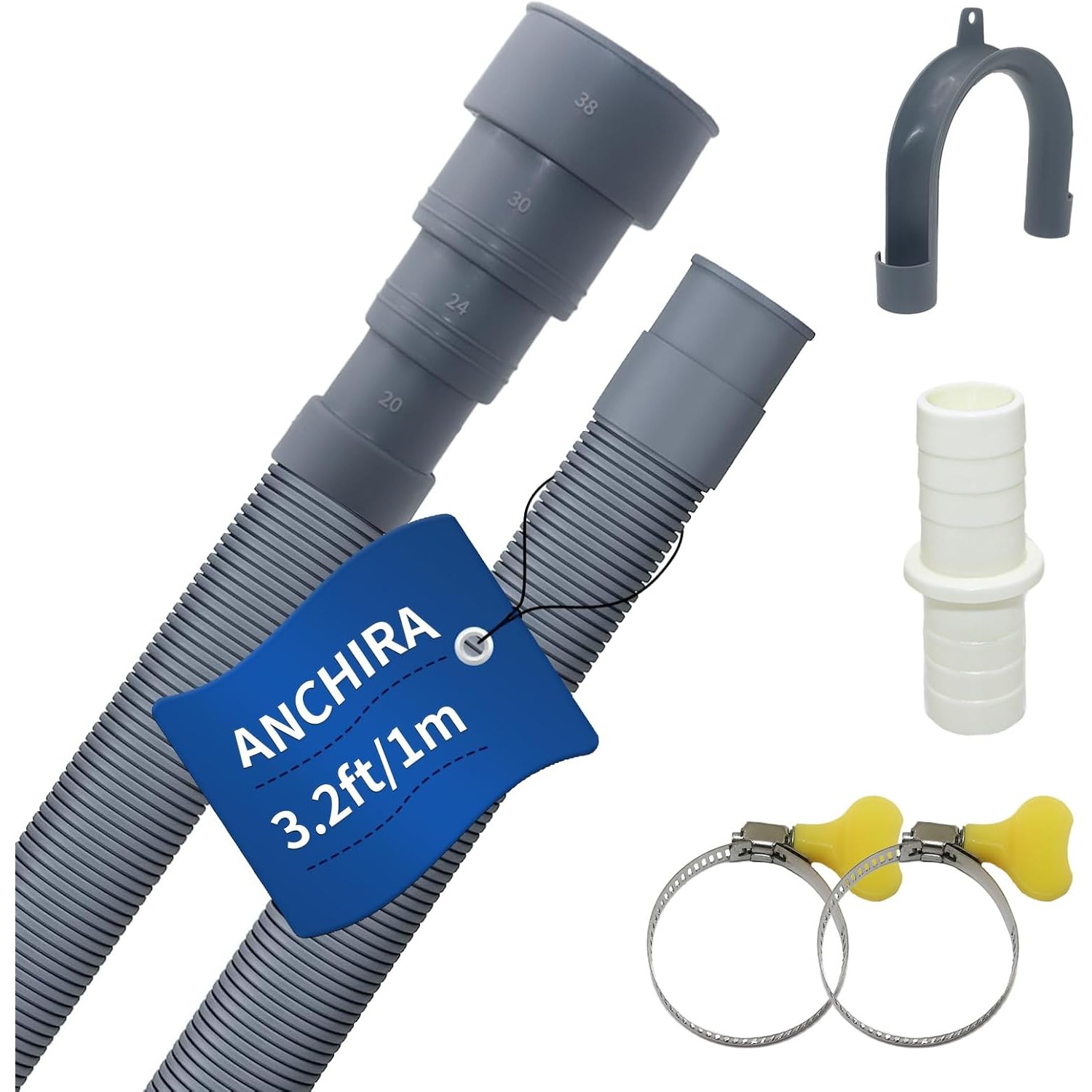
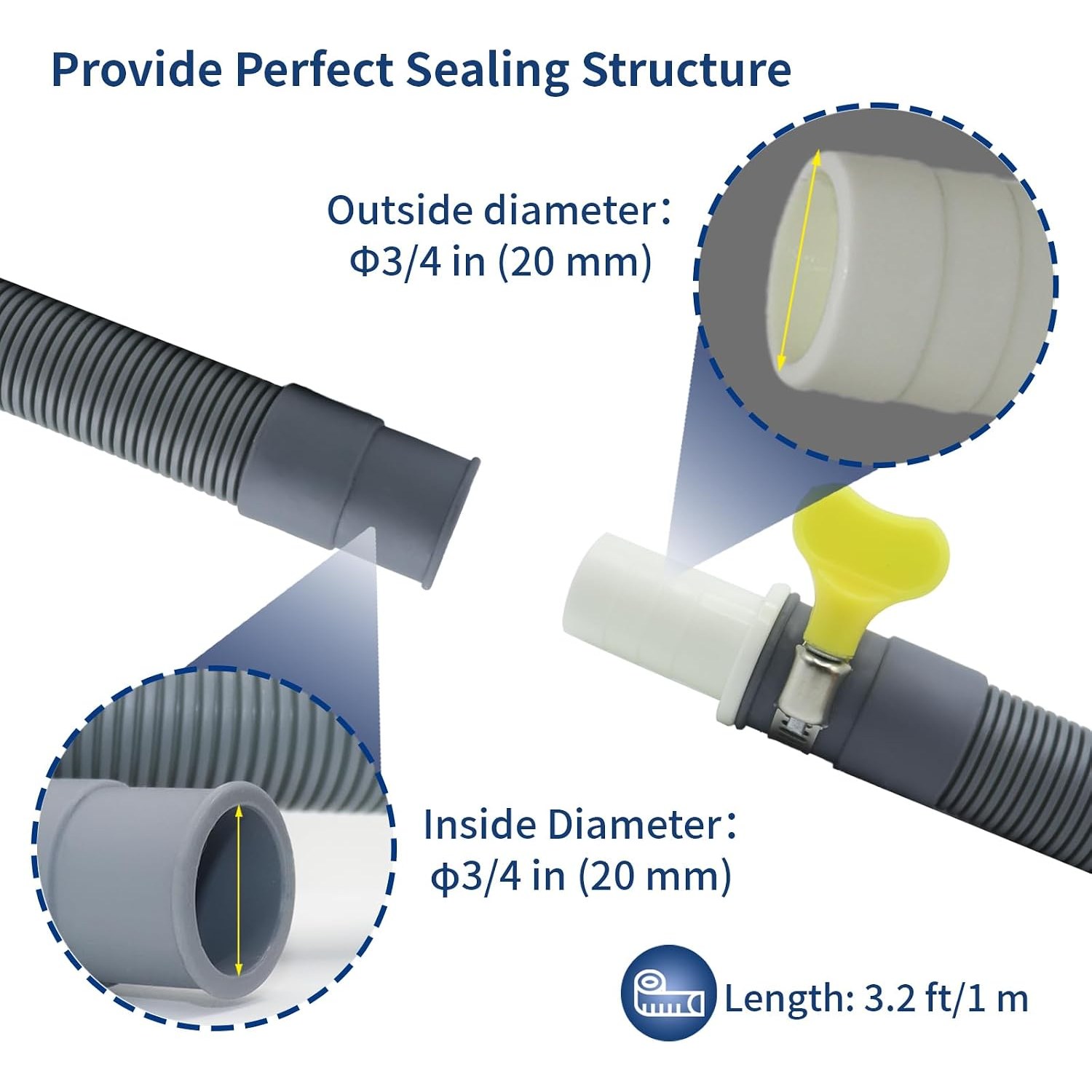
This is a 1 metre length of corrugated polypropylene hose with a 20 mm outside diameter connector. It comes with a barbed adapter, two hose clamps and a U-bend hose holder.
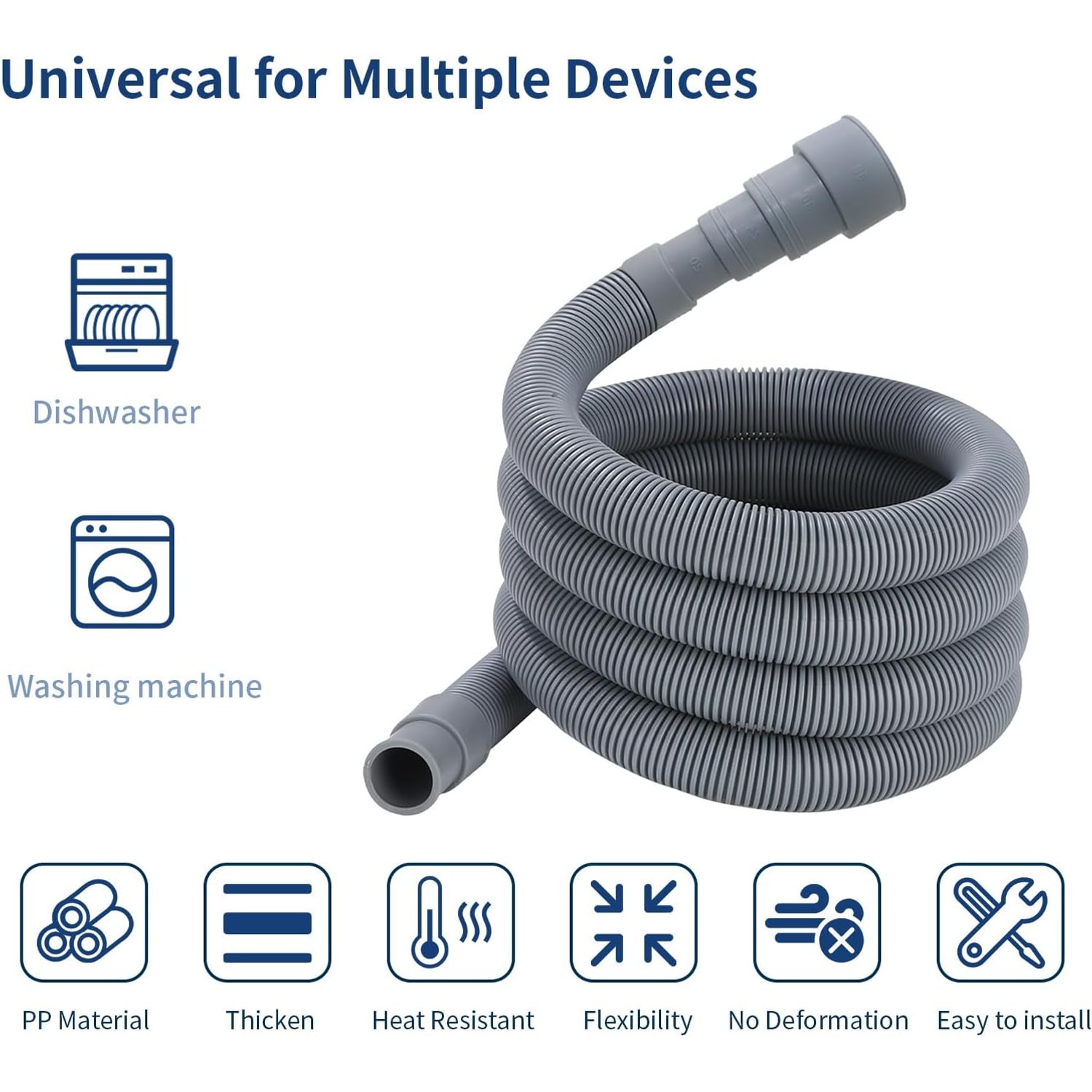
The corrugation is the important design detail. A smooth-bore hose of this diameter folds flat the moment you bend it past a certain radius. A corrugated wall, in this case around 3 mm thick, behaves more like a concertina. It takes a curve without closing up and springs back if something presses on it. That matters behind a machine, where the hose often gets squashed against a wall.
The polypropylene is rated for water up to 95 degrees Celsius. That covers a hot cotton wash and a dishwasher drain cycle with room to spare. Cheap PVC hose can go soft at those temperatures and slowly sag out of shape.
How the connection works
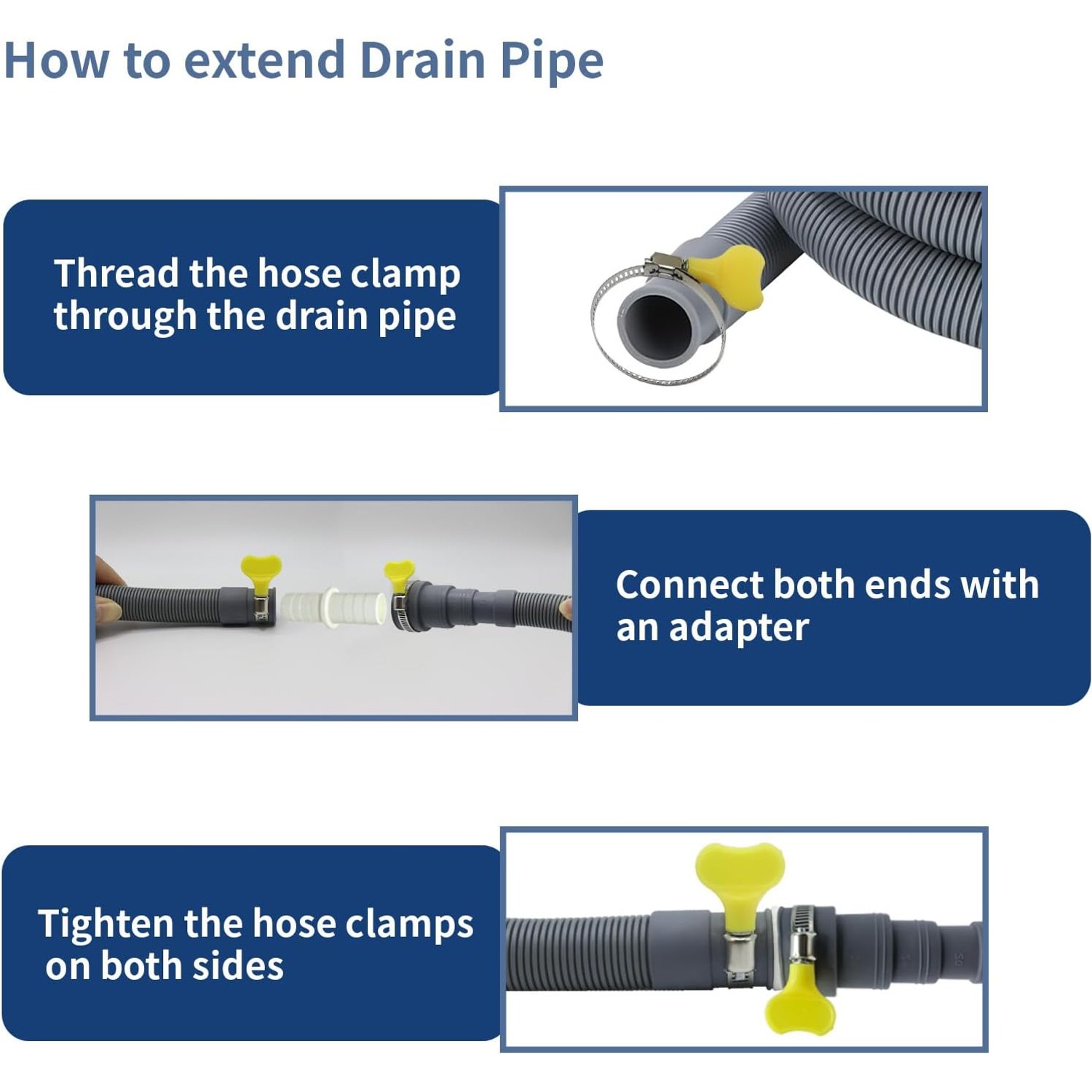
The adapter is barbed, meaning it has raised ridges along its length. You push it into the open end of your existing drain hose and the ridges grip the inner wall. Then you slide a clamp over the outside and tighten it down, which squeezes the hose into the valleys between the barbs.
That combination is what stops the join creeping apart. Vibration from a spin cycle is surprisingly good at loosening a plain push-fit connection over a year or two. The barb plus clamp arrangement resists it.
Repeat the same process on the other side with the new hose, and the two lengths behave as one.
The U-bend holder
This is the plastic hook at the outlet end. It holds the last stretch of hose in a fixed curve so it stays hooked over a sink rim, laundry tub or standpipe instead of flopping out mid-cycle.
It does a second job too. By holding the outlet above the water line, it keeps an air gap between the drain and the waste. That gap stops dirty water siphoning back into the machine. If you have ever found a drum of grey water at the start of a wash, a missing or badly positioned air gap is a common cause.
Hang it so the hose end sits above the trap but not so high the pump struggles. Check your appliance manual for the maximum drain height it specifies.
Who this suits
Anyone extending a washing machine, dishwasher or condenser dryer drain line to a 20 mm waste fitting. That covers most home laundry and kitchen setups.
It is particularly useful in a few situations. Flat renovations where the plumbing stays put but the appliance moves. Holiday lets and rentals where you cannot touch the pipework. Garage or outhouse laundries where the machine ends up further from the drain than ideal. Portable machines that get wheeled to a sink and back.
It is less suitable if your existing hose has a much larger bore, or if you need to cross a long distance. For runs well beyond a metre or two, it is usually better to move the plumbing than to keep adding hose. Long runs make the pump work harder and give water more chance to sit and go stale.
Measuring before you buy
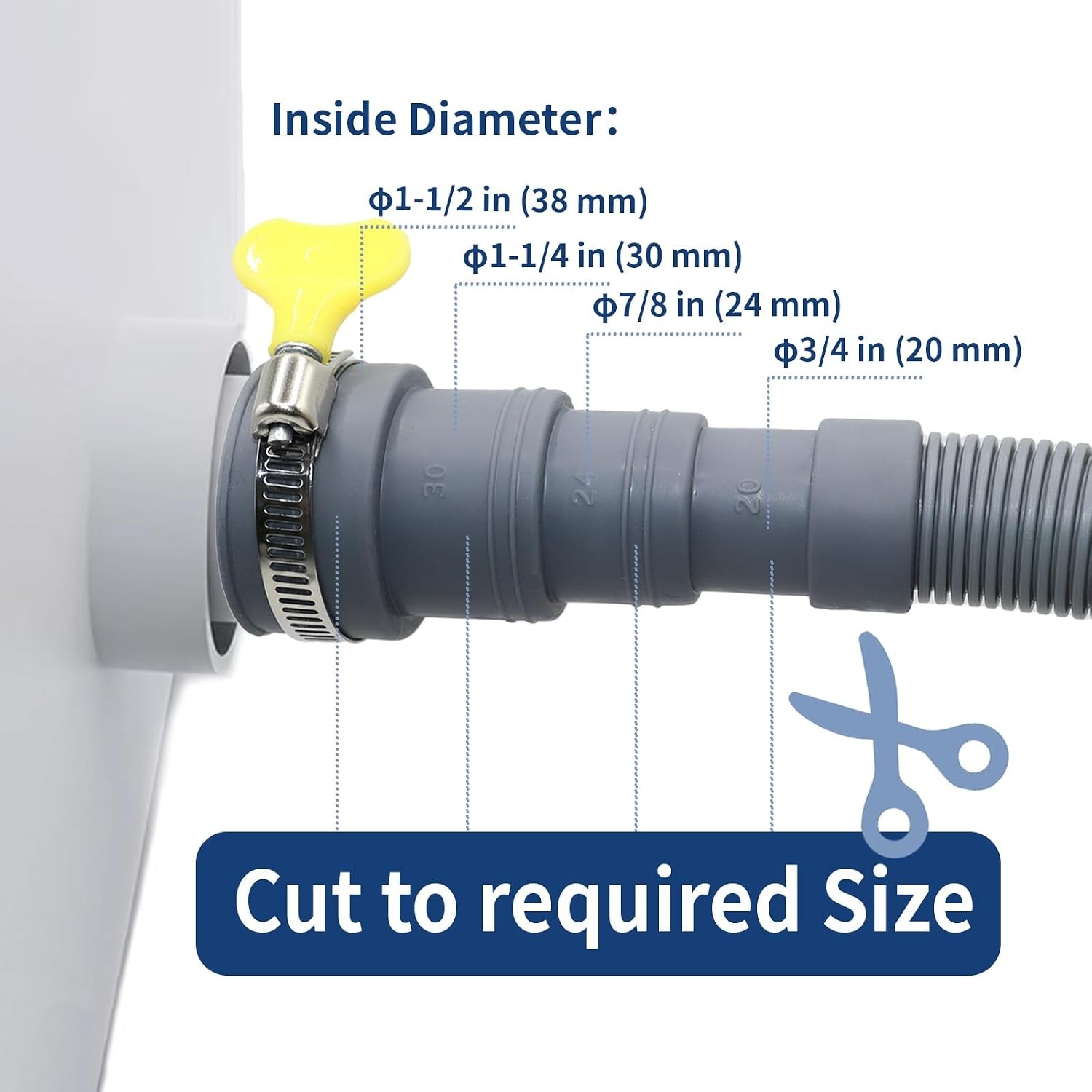
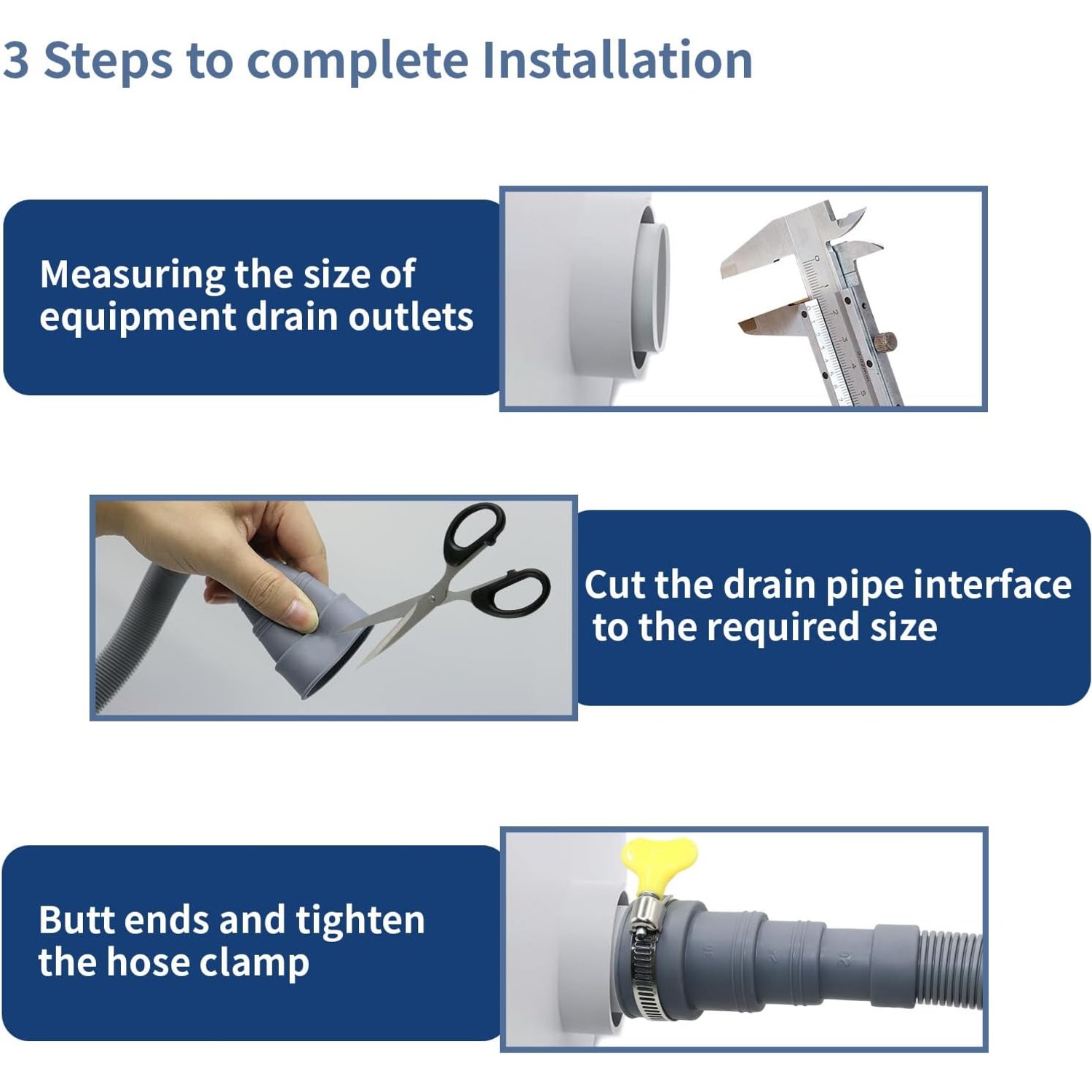
Two numbers decide whether a drain hose extension fits. The first is the inner diameter of your existing hose end, measured across the opening. This kit is built for 20 mm. The second is the distance you actually need to cover.
Measure the gap with the machine in its final position, then add a bit of slack. You want the hose to curve gently, not to stretch. A good rule is to allow enough that you can pull the appliance forward 20 cm for cleaning without the hose going tight.
If the gap is only 40 cm, buy the metre and cut it down. Trimming is easy with a sharp knife, and a shorter run is tidier and drains faster. Cut square across a corrugation so the adapter seats evenly inside.
Fitting it step by step
Turn off the appliance at the wall and pull it forward enough to work behind. Have a towel ready, because the old hose will hold some water.
Unhook the existing hose from the drain. Push the adapter into its open end until the barbs are fully seated, then slide a clamp over and tighten. Push the new hose onto the other half of the adapter and clamp that side too.
Fit the U-bend holder to the free end and hook it over the standpipe or sink. Push the appliance back, leaving the hose in an easy curve rather than a fold.
Run a short rinse cycle and watch both joins. Any seepage usually means a clamp needs another half turn. This is the cheapest insurance you will ever buy.
Keeping it working
Drain hoses are low maintenance, but they are not zero maintenance. Lint, detergent and grease build up on the inside over time, particularly if you wash mostly cool. An occasional hot empty cycle clears a lot of it.
Check the clamps every six months or so. Thermal cycling and vibration can let them relax slightly. A quarter turn is usually all they need.
Keep the hose out from under furniture feet and storage boxes. The corrugations recover well from a squeeze, but constant crushing in one spot will eventually weaken the wall.
If you ever disconnect the hose, flush it with clean water and let it dry before storing. A damp coiled hose in a cupboard is a smell waiting to happen.
Common mistakes
Running the hose too high is the most frequent one. Pumps have limits, and exceeding them leaves water in the drum and triggers error codes.
Pushing the hose too far down the standpipe is another. It needs an air gap, otherwise the waste system can siphon water back out of the machine.
Coiling leftover hose into a tight spiral behind the machine is a third. Spare length should lie in a gentle loop, not a tight one, and if you have more than you need, cut it off.
Finally, forgetting the clamps. The push-fit join feels solid when it is dry. It is far less solid when hot water is pulsing through it at 3am.
The short version
This kit adds a metre of flexible, hot water rated drain hose to a washing machine, dishwasher or condenser dryer. It includes the adapter, the clamps and the U-bend holder, so there is nothing else to buy. It fits 20 mm drain hose, takes about five minutes to fit, and can be trimmed if you need less.
Measure your existing hose, allow a little slack, clamp both joins properly and keep the outlet at a sensible height. Do those four things and the extension will quietly do its job for years.