
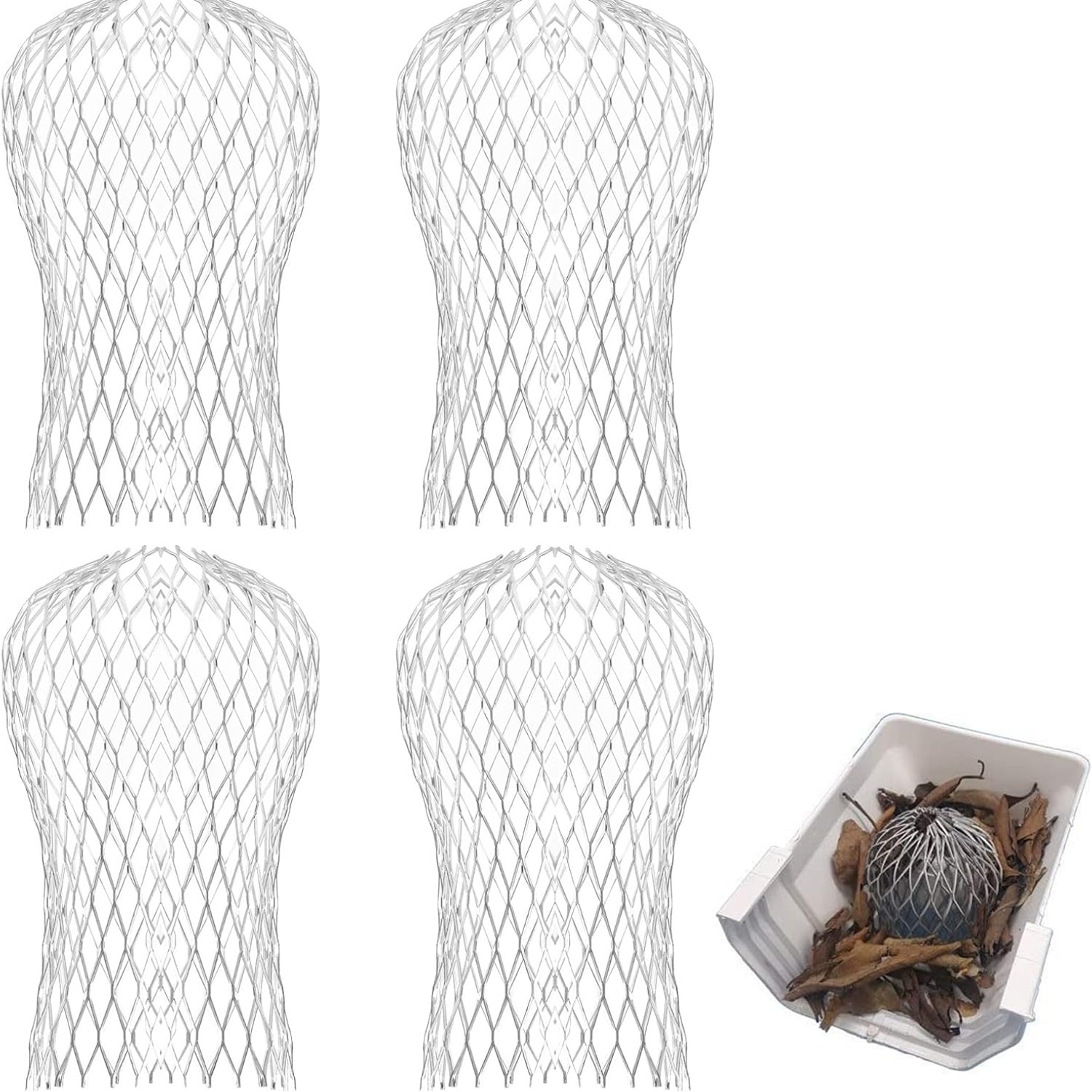


The complete guide
Downpipe Leaf Guards, A Practical Buyer's Guide
The small blockage that causes big problems
Nobody notices a downpipe until it stops working. Water goes in the top, comes out the bottom, and that is the end of the relationship. Then one autumn you get a week of wind, a few hundred leaves land in the gutter, and they all drift towards the one place they can go. The outlet. They pack down, the first proper rainstorm arrives, and now the gutter is a shallow trough with nowhere to drain.
What happens next costs money. Water sits in the gutter and adds weight to brackets never designed for it. It overflows at the lowest point and runs down the wall. Render stains. Timber fascia soaks. In cold weather the standing water freezes and the expansion opens up joints. None of that is dramatic on day one, which is exactly why it gets ignored until the damage is visible from the street.
A downpipe leaf guard is the cheapest intervention available. It does one job at the one spot where the trouble starts.
How a mesh strainer works
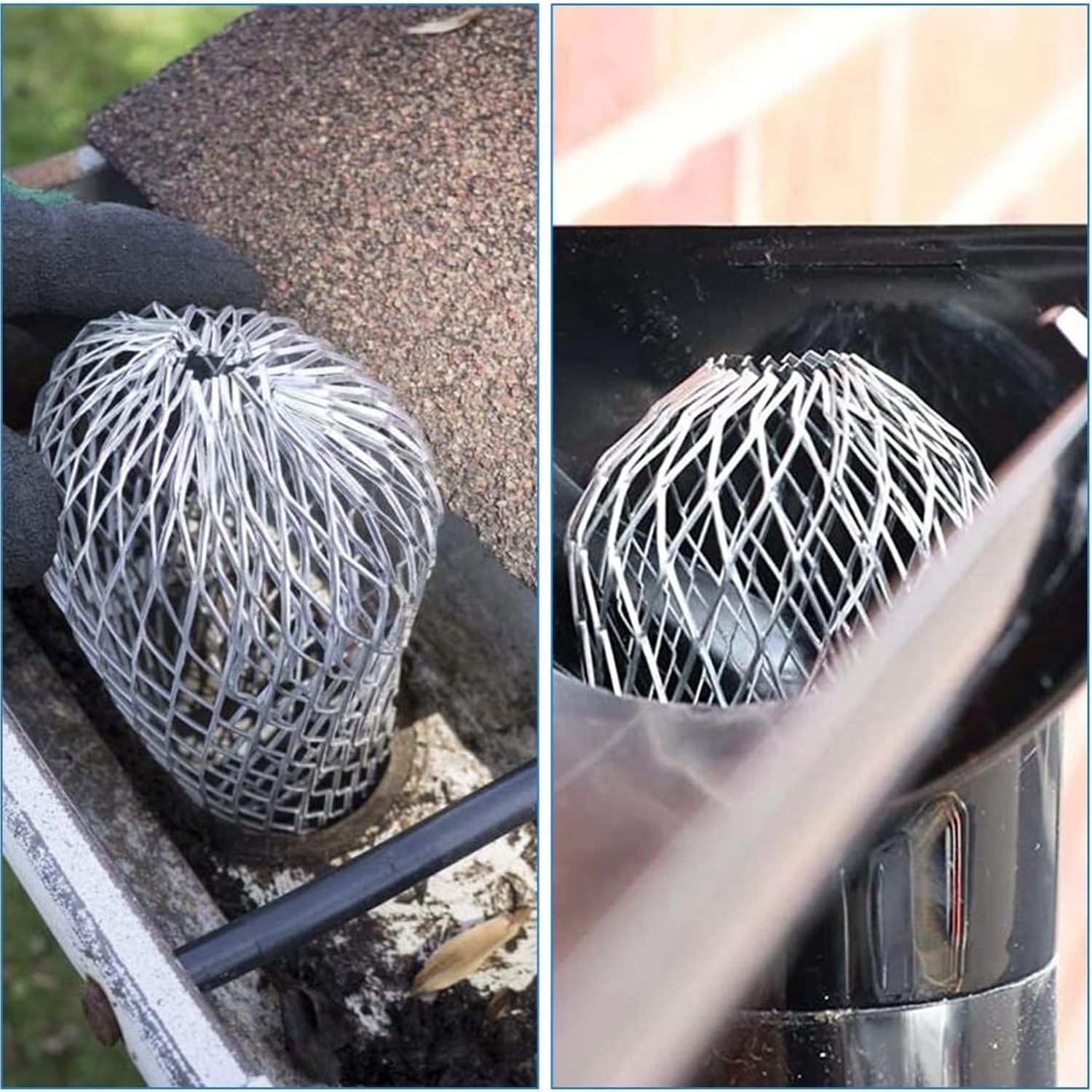
Picture the outlet hole in the base of your gutter. Normally it is an open mouth, and anything that floats or washes along the channel eventually finds it. A mesh strainer sits in that mouth like a small basket or dome. Water flows through the mesh and carries on down the pipe. Solid debris stays on the surface.
That is the whole mechanism. There are no moving parts, nothing to wear out, nothing to power. The only maintenance is lifting the guard out and emptying it before the pile on top gets deep enough to slow the water.
The reason this works better than a plug or a foam insert is that the guard keeps the debris where you can see it and reach it. A pipe blockage is hidden three metres below. A heap of leaves sitting on a strainer in the gutter is obvious from the ground on a clear day, and it comes out in one handful.
Why aluminium matters here
Plastic guards exist and they are cheaper. The problem is ultraviolet light. A plastic part spends every summer baking in direct sun and every winter in freezing water, and after two or three seasons it goes chalky and brittle. You reach up to clean it, it snaps in your hand, and now you have plastic fragments in the downpipe you were trying to protect.
Steel mesh has the opposite problem. It is strong, but unless it is properly treated it rusts in exactly these conditions, and rust stains run down painted gutters and brickwork.
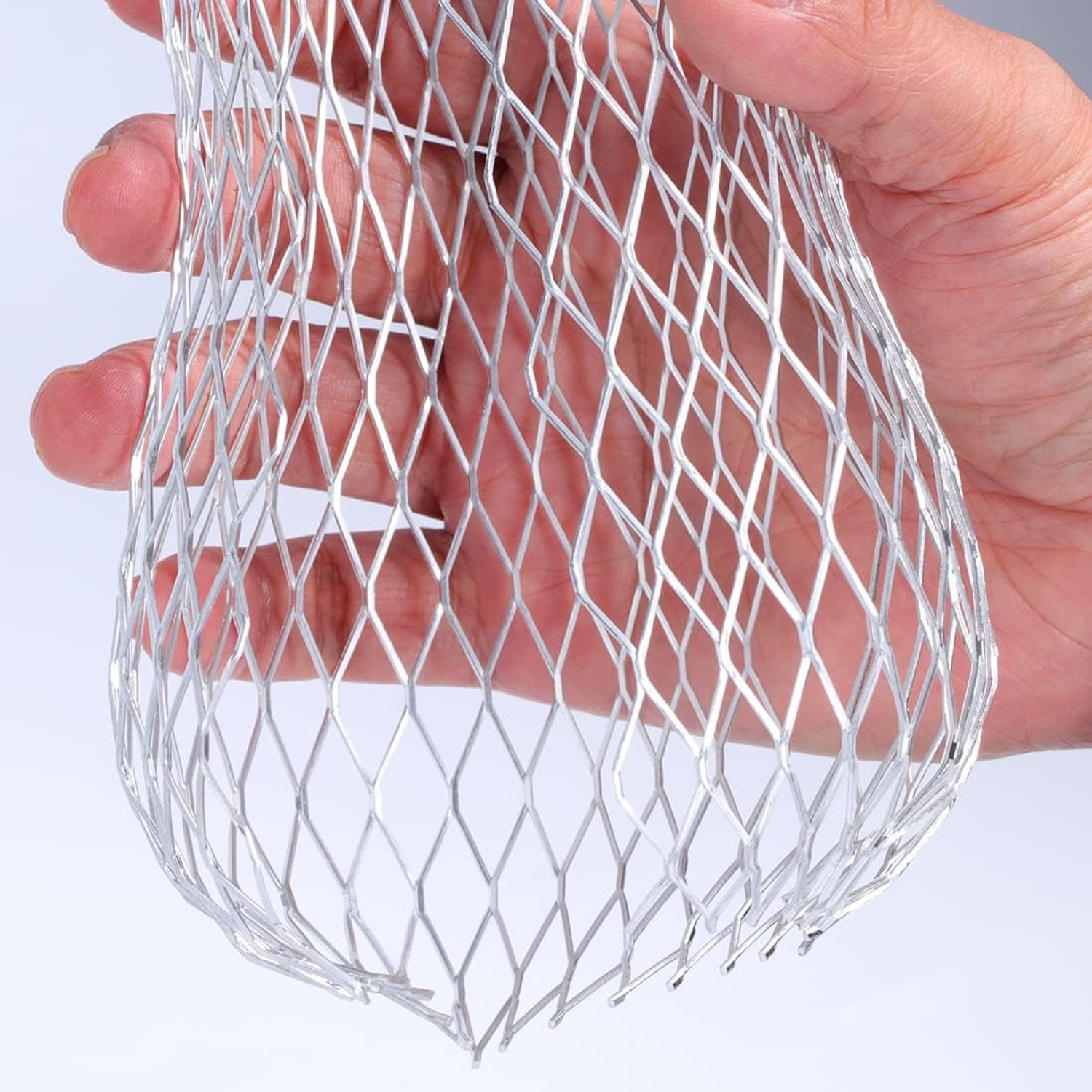
Aluminium sits in the middle. It will not rust, it holds its shape, and it is soft enough to bend to a new diameter without tools. Over years it may dull to a flat grey as a surface oxide forms, but that layer actually protects the metal underneath. For anyone comparing the best aluminium downpipe guard options, that durability is the main argument.
These guards weigh 90 g each, which is light enough that you can carry all four up a ladder without thinking about it.
Getting the fit right
This is the part people get wrong, so it is worth being clear. The guards are expandable, meaning you shape the mesh by hand rather than buying a fixed size. The supplier lists the diameter as extendable up to 7.5 cm.
Measure your outlet first. Not the downpipe's outside diameter, the hole in the bottom of the gutter. Then work the mesh until the guard is a touch smaller than that hole, so it can drop in and spring out slightly against the sides. Too wide and it will not go in. Too narrow and it sits loose, then floats or tilts the first time a heavy flow hits it.
Wear gloves. Cut mesh edges are sharp, and the shaping stage is when your fingers are most exposed.
Before fitting, clear the outlet. Scoop out whatever sludge and leaf mulch is already in there, because dropping a strainer on top of an existing blockage just hides it. A trowel or a cheap plastic gutter scoop does the job, and a quick flush with a hose confirms the pipe is running free.
Who these suit
Houses with trees nearby are the obvious case. Deciduous trees in autumn, pines all year, or anything that drops seeds, catkins or blossom in spring. If you have cleared a blocked pipe more than once, you already know whether this applies to you.
Older roofs are the second group. Tile and slate roofs shed grit and moss as they age, and that material washes into the gutter with every rainfall. Moss is particularly bad because it holds water and packs into a dense mat. A strainer catches it at the outlet instead of letting it compact in the pipe.
Anyone with awkward roof access benefits most of all. If your gutters involve a long ladder, scaffolding, or a call to a contractor, anything that cuts the number of visits is worth more than the hardware costs. The best gutter blockage prevention is the kind that reduces how often you need to go up.
A four pack also suits people with more than one structure. Garage, shed, carport, porch. Smaller roofs often have smaller outlets that block faster, and they are usually the ones nobody checks.
Choosing between the options
When you compare downpipe guards, look at four things.
Material and how it ages. Covered above, and it is the single biggest factor in whether you are buying this once or every few years.
Whether it adjusts. Fixed size guards only help if your outlet happens to match. An expandable downpipe filter works across different properties and different outlet shapes, which is why a four pack of adjustable guards makes more sense than four fixed ones you have to size individually.
How easily it comes out. A guard that needs a screwdriver to remove will not get cleaned. Lift out and drop back in is the right design.
Mesh opening size. Very fine mesh catches more, but it clogs fast and turns into a dam. A medium opening catches leaves and twigs while letting water and fine silt through, which is the practical balance for a gutter.
Keeping them working
Set a rhythm rather than waiting for a problem. Twice a year as a minimum, spring and late autumn. If you have heavy leaf fall, add a check mid autumn when the trees are halfway through dropping.
The routine is quick. Lift the guard, shake it out over a bucket, hose it down, check the outlet below is still clear, refit. Five minutes per downpipe. If the mesh has packed with fine grit, a stiff nylon brush shifts it. Avoid wire brushes, which scratch the surface and give dirt something to grip.
If a guard loses its shape after a few seasons, reshape it by hand. That is a feature of soft aluminium, not a fault.
Ladder safety matters more than the gutter does. Footing on firm level ground, three points of contact, and do not lean sideways to reach the next outlet. Move the ladder.
The short version
Blocked downpipes start at the gutter outlet, and that is where this four pack of mesh strainers goes. Each one is aluminium, so it will not rust out over a few winters. Each one bends by hand to match your outlet, up to 7.5 cm across, so you are not guessing at sizing. They fit in seconds without tools, lift out for a thirty second clean, and go back in.
Four guards covers a typical house with something left over for the shed. Wear gloves when you handle them, clear the outlet before you fit, and give them a look twice a year.
It is a small piece of hardware doing a job that saves you from much larger repairs later. That is usually the best kind of thing to buy.