
The complete guide
Sink Strainer Buying Guide, How To Stop Blocked Drains Before They Start
The problem nobody notices until it is too late
A blocked kitchen drain almost never happens overnight. It builds. A few grains of rice today, a spoonful of coffee grounds tomorrow, a bit of fat that cools and sticks to the inside of the pipe, a strand of hair in the bathroom basin. Each one is harmless on its own. Together, over months, they form a soft plug that slows the water, then stops it.
By the time you notice, you are standing over a sink full of grey water with a plunger in your hand. Or worse, you are paying for a call-out.
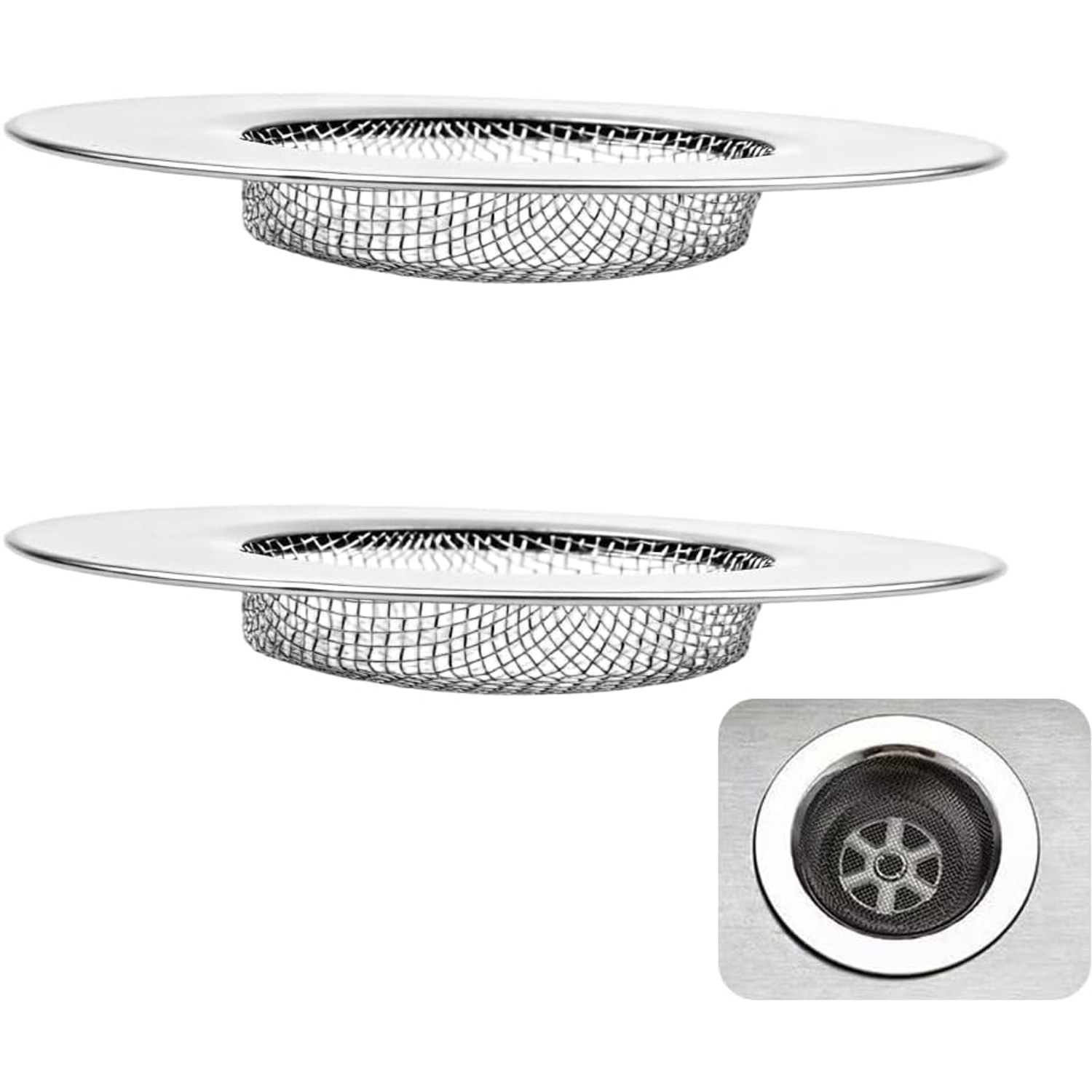
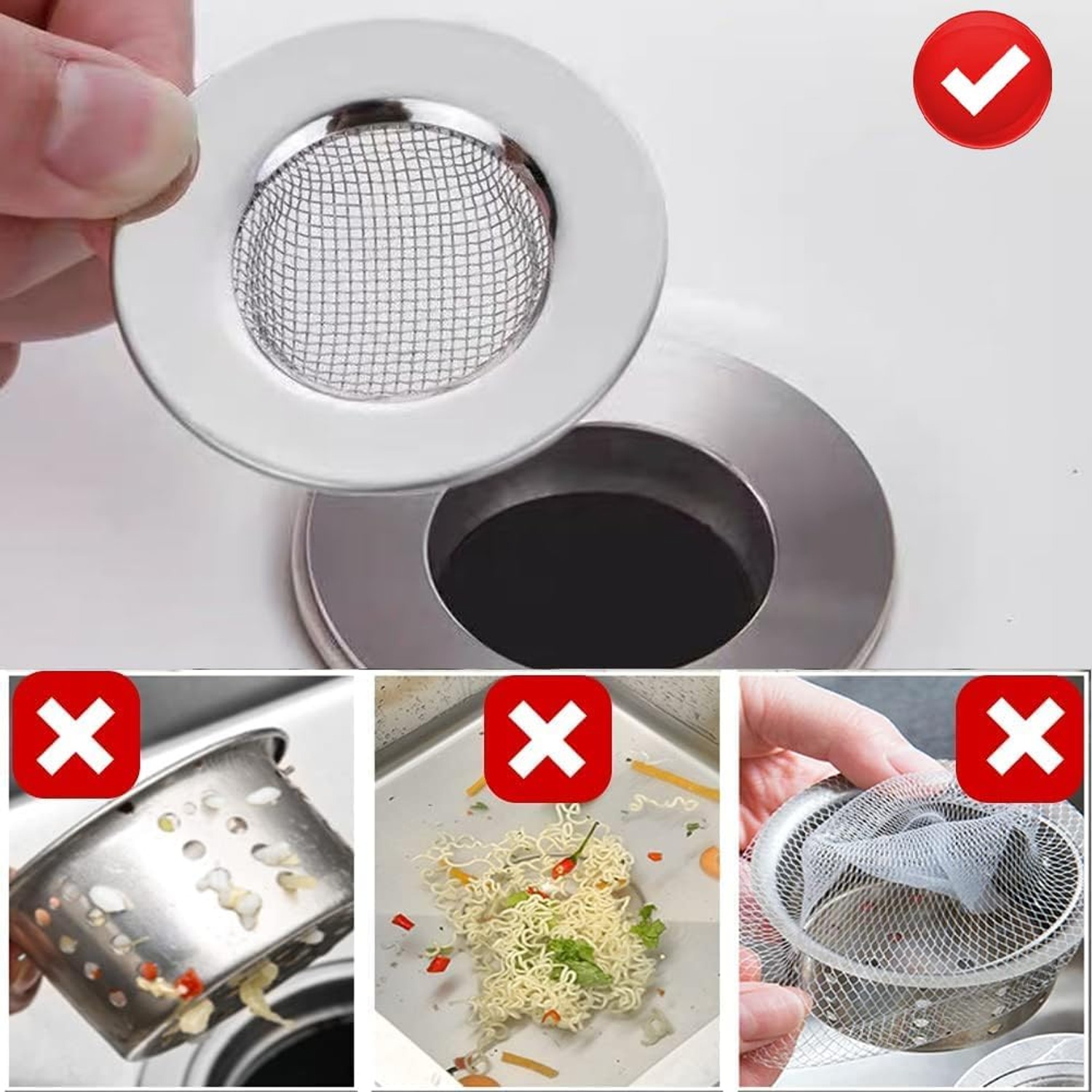
A sink strainer is the cheapest way to break that cycle. It is a small mesh disc that sits in the drain opening and catches the solids before they go anywhere near the pipe. There is no mechanism, no maintenance schedule and no installation. You drop it in, and it does one job well.
How this one works
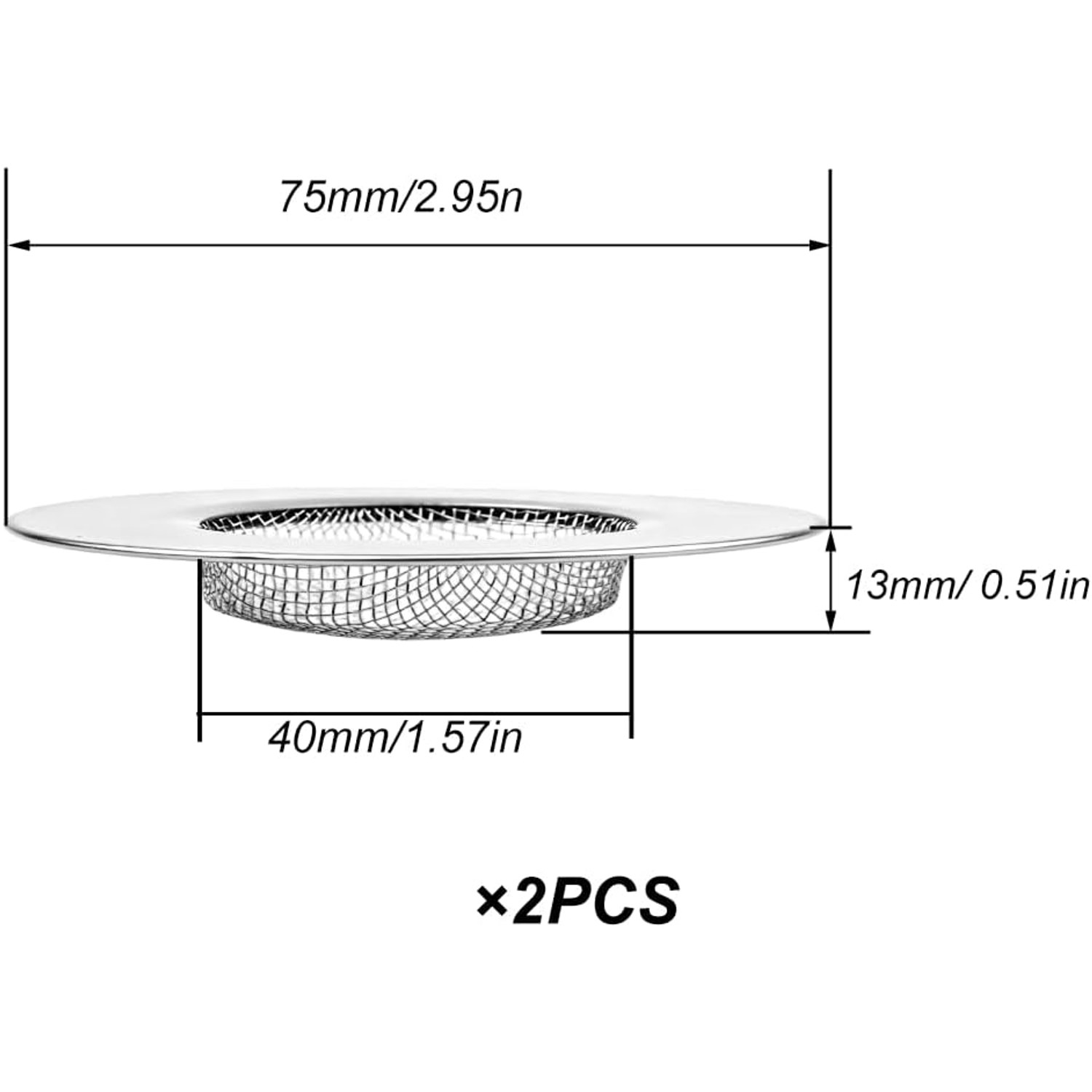
This is a 2 pack of stainless steel strainers. Each has an outer diameter of about 7.5cm and a height of about 1.5cm, so it sits low in the drain opening rather than standing proud of the sink floor. The surface is a dense mesh screen.
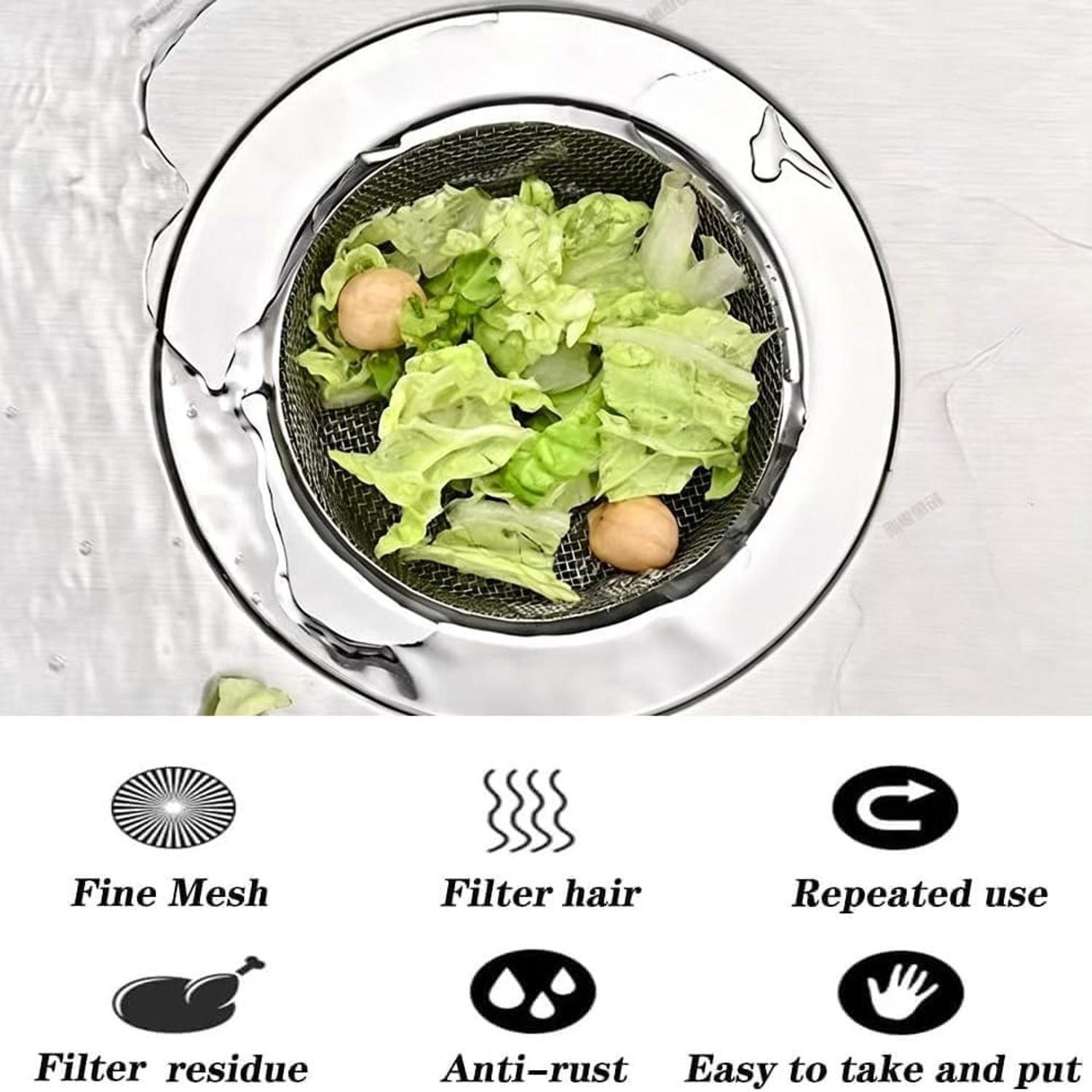
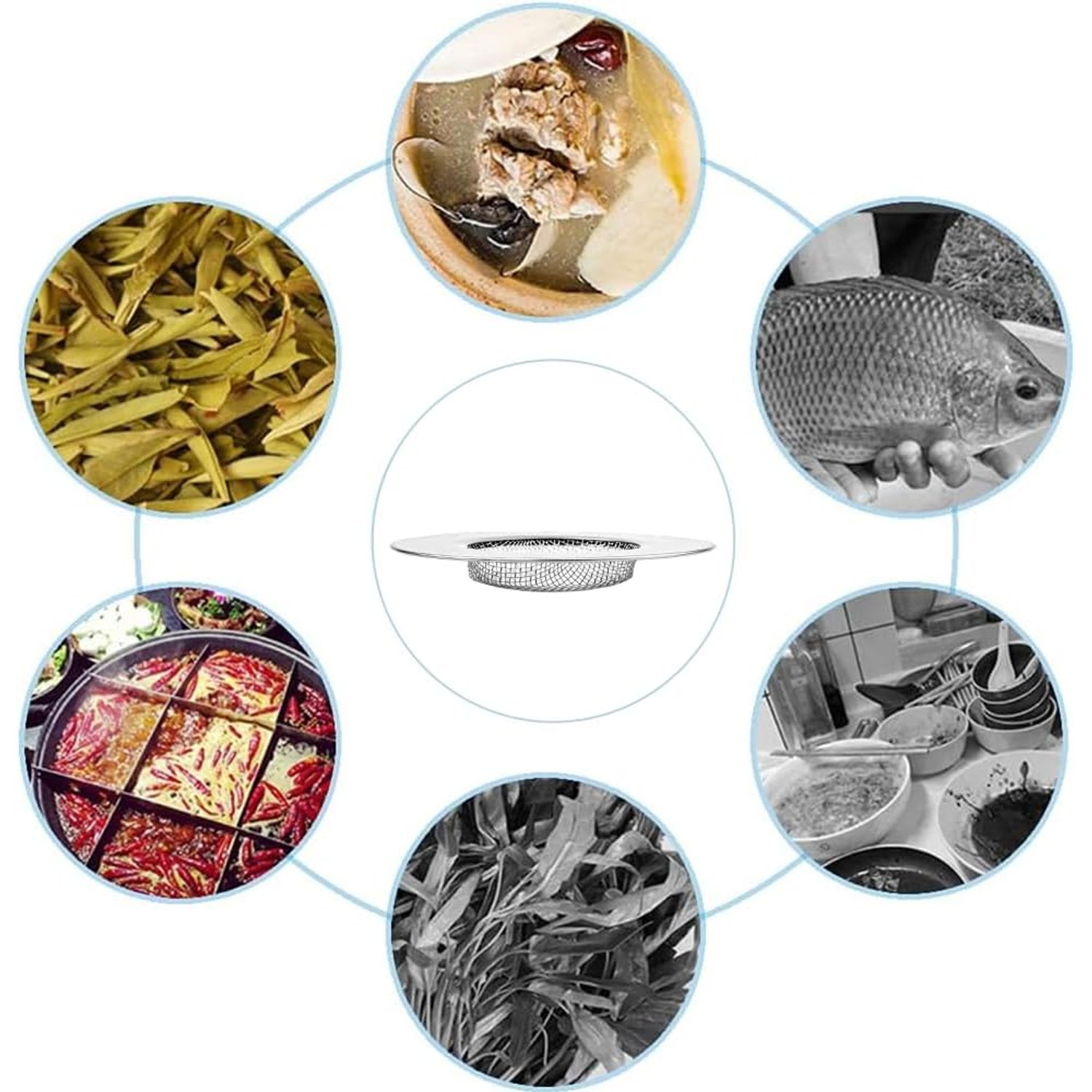
Water runs down, hits the mesh and passes through the holes. Anything solid, peelings, pasta, tea leaves, hair, stays on top. When you finish washing up, you lift the strainer out by its rim, tip the contents into the bin or compost caddy, rinse the mesh under the tap and set it back in place. The whole routine takes about ten seconds.
That is the entire system. There are no moving parts to seize and no rubber gasket to go hard and crack after a year.
Why stainless steel matters here
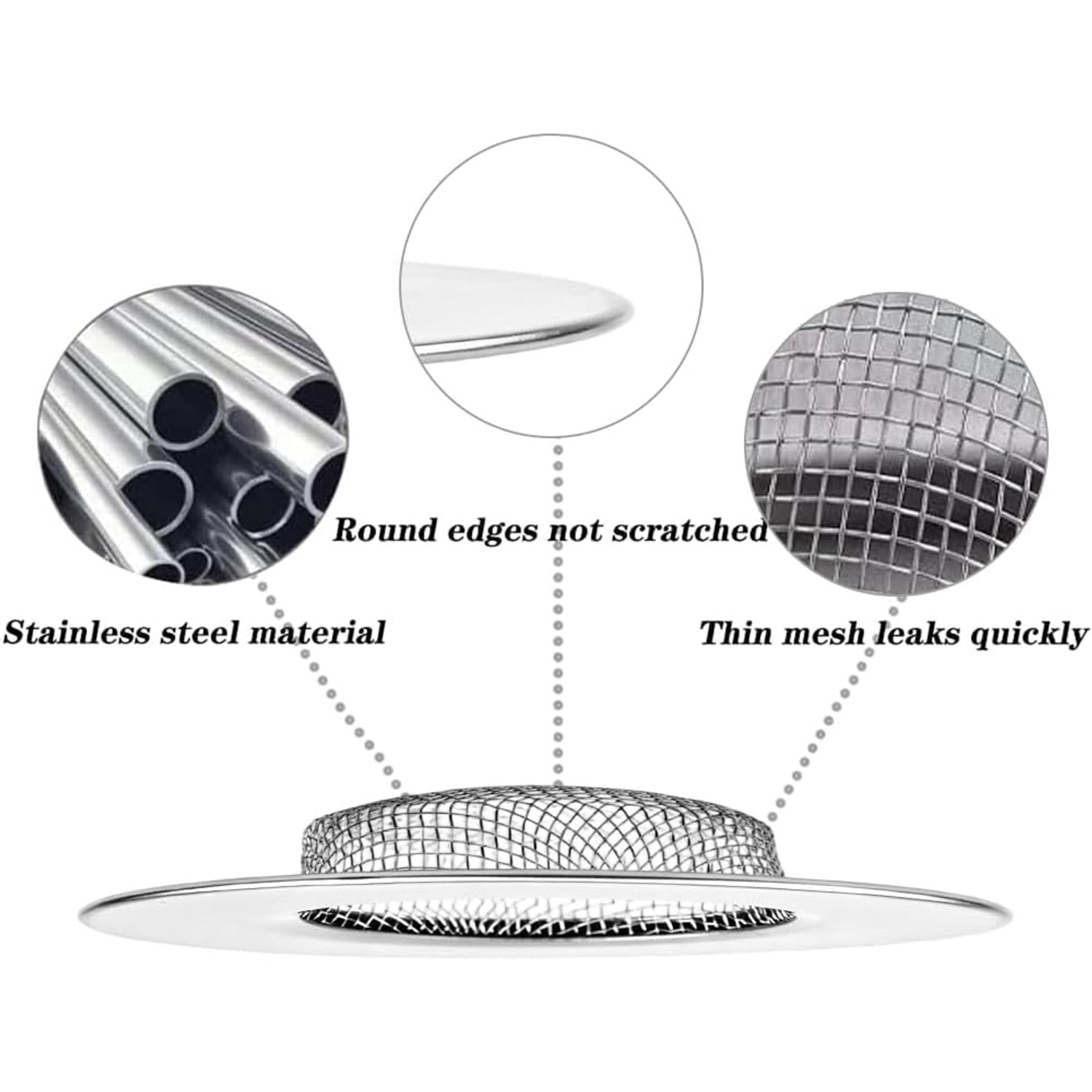
A sink is a punishing place for a small object. It gets soaked several times a day, hit with water hot enough to hurt, splashed with detergent, and occasionally whacked by the base of a heavy pan. Plated steel and painted metal do not last long in that environment. The coating chips, water gets underneath and rust starts creeping out from the edges, leaving orange marks around the drain.
Stainless steel does not have a coating to lose. The product details list stainless steel for both the material and the finish. It also keeps its shape. A thin, soft metal strainer gets bent the first time someone leans a saucepan on it, and once the rim is out of round it never sits flat again. Water then finds the gap at the edge and carries scraps straight past the screen, which defeats the point.
Who gets the most out of it
If your kitchen has no waste disposal unit, you are the obvious candidate. Without a disposal, every scrap that goes down the plughole travels through the trap as it is. A kitchen sink mesh filter stops that at source.
Renters are another good fit. You cannot change the plumbing in a rented flat, and you really do not want to be the tenant who blocked the drain. A strainer needs no permission and leaves no trace when you move out.
Then there is hair. Bathroom basins and shower wastes clog for a different reason than kitchen sinks, and hair is almost always the culprit. It tangles around the inside of the trap and catches soap scum until the water barely moves. A stainless steel drain strainer used as a hair catcher stops most of that before it starts.
Households that cook a lot benefit too. Chopping vegetables, draining pasta and rinsing rice all send small solids towards the drain, and a screen catches the bulk of it.
How to choose the right size
This is the part people skip, and it is the only part that really matters. Sink strainers are not one size fits all.
Take a ruler or tape measure and measure straight across the top of your drain opening, rim to rim. Write the number down. These strainers are about 7.5cm across the outside, so they are designed for openings close to that measurement. If your opening measures 7cm or 8cm, you are likely fine. If it measures 9cm or 6cm, look for a different size instead of hoping.
Also look at the shape of the drain area. The strainer needs a reasonably flat seat to rest on. Some sinks have a recessed collar or a fixed basket already fitted, in which case you may need to remove the existing part first.
Height is worth a glance as well. At roughly 1.5cm, this one is shallow. That keeps it unobtrusive and easy to lift, but it also means it is a screen rather than a deep collection basket. If you regularly peel vegetables straight over the sink, expect to empty it mid-task.
Getting two of them
The pack contains two, and there are a few sensible ways to use that.
The simplest is one per room. Put one in the kitchen sink where food waste is the issue, and the other in a bathroom basin or laundry tub where hair and lint are the problem. Two different jobs, two strainers, one purchase.
The other approach is rotation. Keep one in use and one in the cupboard. When the working strainer needs a proper scrub rather than a quick rinse, swap in the spare and let the first dry fully. People who like a tidy sink tend to prefer this.
Keeping it clean
Cleaning is simple but it does need doing. A mesh screen that is never scrubbed eventually gets a film of grease and fine particles that slows the flow, and then people blame the strainer for the slow drain.
Empty it after each use. Once or twice a week, give it a proper wash in warm soapy water with a soft brush or an old toothbrush, working from underneath to push trapped bits back out the way they came. Rinse, dry it with a cloth and put it back.
Skip the harsh stuff. Steel wool scratches the finish, and leaving stainless steel sitting in bleach or strong drain chemicals is not kind to it. Warm water and washing-up liquid handle nearly everything a sink throws at it.
If the mesh ever looks greasy, a short soak in hot water with a squirt of detergent loosens the film before you brush it.
A few honest limits
A strainer is not a miracle. It will not fix a drain that is already blocked, so clear any existing blockage first. It does not stop grease, because grease is liquid when it goes down and solid when it cools in the pipe. Pour fat into a jar or a bin, not the sink, and the strainer handles the rest.
It also is not a plug. Water flows straight through the mesh, so you still need a stopper to fill the basin.
And it only works if it is actually in the drain. The main reason people end up with a blockage despite owning a strainer is that it got taken out one evening and never went back.
The short version
This is a two pack of stainless steel mesh sink strainers, about 7.5cm wide and 1.5cm high, with a silver stainless steel finish. They drop into a standard drain opening, catch food scraps and hair on the screen, and lift out for emptying.
Measure your drain opening before you order. If it is close to 7.5cm, you are in the right place. Keep the mesh clean, empty it after washing up, and keep grease out of the sink entirely. Do that and the small stuff that quietly builds into a blockage ends up in the bin instead of your pipes.