


The complete guide
How To Choose A Shower Drain Hair Catcher That Actually Works
The slow drain problem nobody deals with early
Almost everyone waits too long. The water takes a few seconds longer to clear, then a few seconds more, and eventually you are standing in an inch of soapy water with wet hair stuck to your ankles. By that point the blockage is no longer on the surface. It is a wad of hair bound up with soap scum and conditioner, wedged somewhere in the trap, and clearing it means a drain snake, a bottle of caustic cleaner or a call to someone who charges by the hour.
The irritating part is how avoidable it is. Hair does not sneak into your pipes. It goes in through an opening you look at every single day. A cover that sits on top of that opening stops the whole chain of events before it starts, and the only maintenance it needs is thirty seconds of your attention a couple of times a week.
A silicone shower drain hair catcher is the simplest version of that idea. No tools, no fitting, no plumbing knowledge. You put it down and you clean it.
How a silicone drain cover works
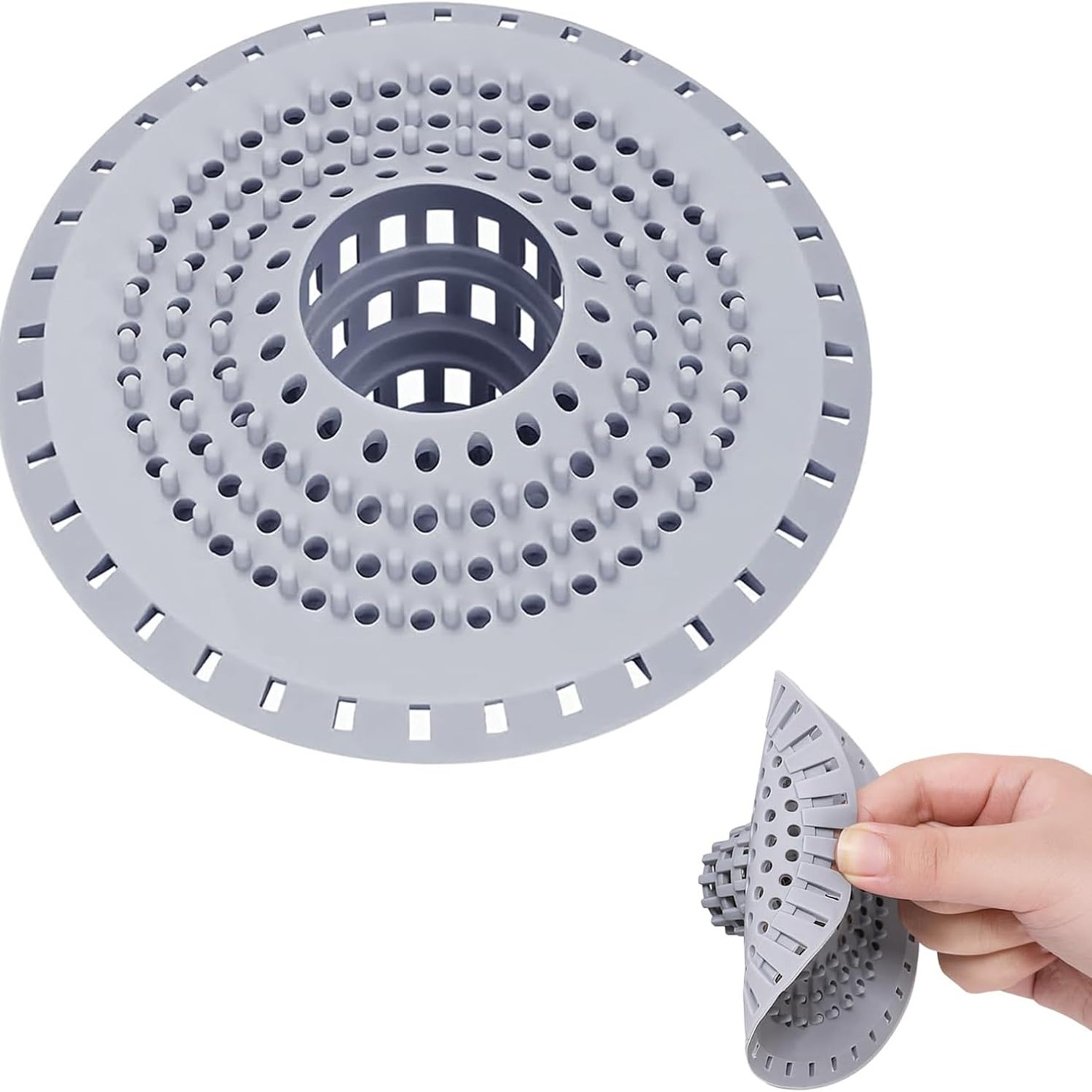
The design logic is straightforward. A flexible silicone disc sits over the drain opening with a raised, basket-like centre. Water flows in across the whole surface and down through perforations. Hair, being long and stringy, cannot pass through those openings, so it collects on top where you can see it.
This particular cover uses two sizes of opening working together. Larger gaps around the basket catch hair strands as they arrive. Finer perforations below handle smaller material, the sort of thing that would otherwise slip straight through a chunky metal grate. Crumbs in a kitchen sink, grit tracked in from outside, lint shed from towels: that second level of filtering is what separates a proper filter from a decorative grate.
The raised shape matters more than people expect. A completely flat cover gets smothered quickly. Once a layer of hair settles over the top, water has nowhere to go. A raised profile keeps part of the filtering surface clear of the pile, so drainage carries on even when the centre is loaded. The same raised, foldable form also gives the cover body, which stops it skating around the tray when someone turns under the water.
Silicone is the right material for this job for boring but practical reasons. It does not rust. It does not absorb water or hold smells. It flexes to sit against a shower floor that is not perfectly level, and it is soft enough that it will never scratch acrylic or enamel. Metal strainers are rigid and will only ever suit the exact shape they were pressed into.
Getting the size right
This is where most disappointing purchases happen. People order by eye and end up with a cover that rattles around on a drain twice its size.
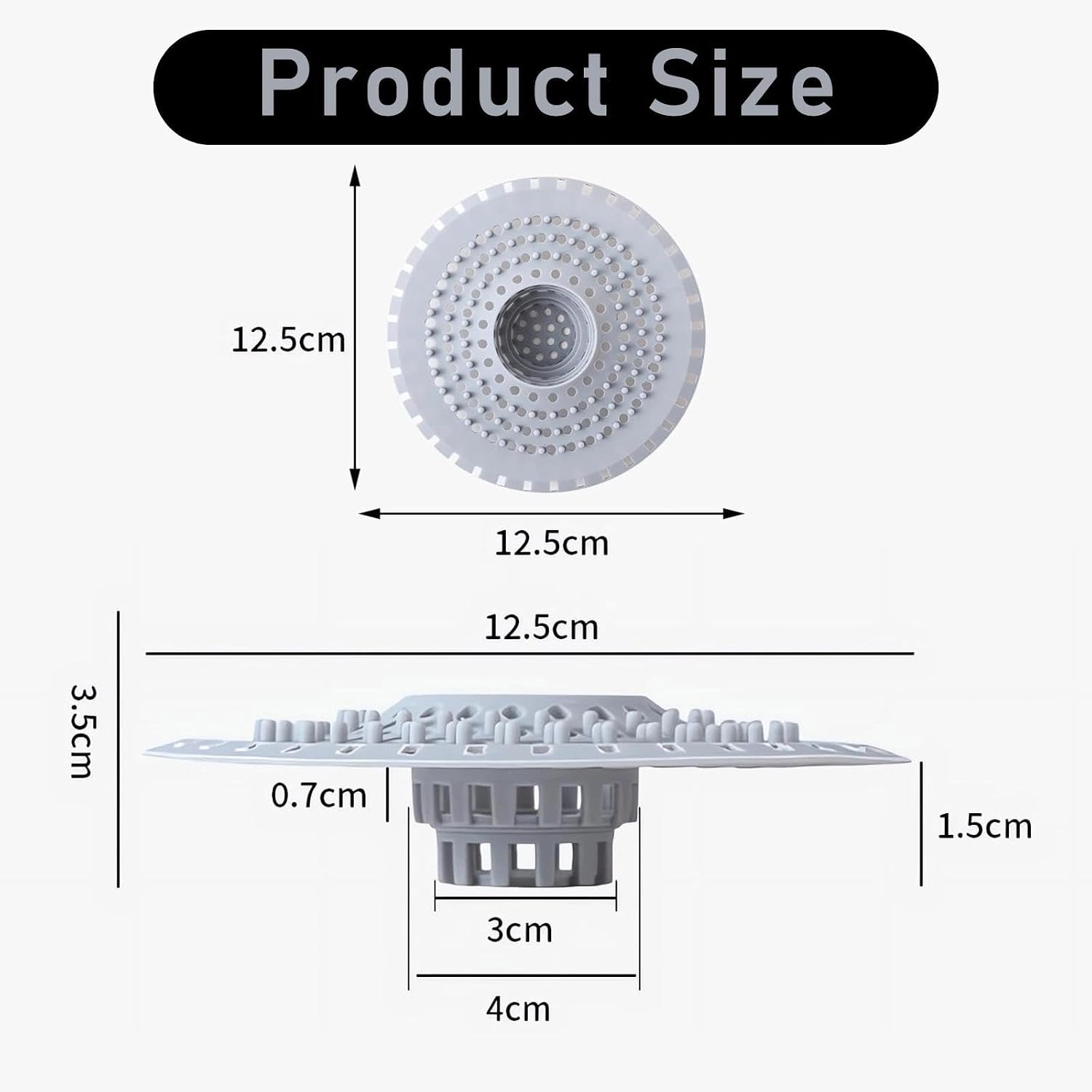
This cover is 12.5 cm wide by 12.5 cm high and is listed for a compatible groove diameter of 12.5 cm. Before you order, take a tape measure and measure straight across your drain opening at its widest point. If that figure is at or below 12.5 cm, the cover has enough surface to span it and sit on the surrounding floor. If your opening is noticeably wider, you need a bigger cover, because a catcher that sinks into the hole is worse than no catcher at all.
Also look at what is already in the drain. If you have a pop-up plug or a lift-and-turn mechanism that stands proud of the floor, a flat-sitting cover will perch on top of it rather than settle properly. A flush or near-flush drain gives you the clean fit you want. Where there is an existing removable grate, many people take it out and use the silicone cover in its place, which is usually easier to clean anyway.
One last check. Some shower trays have a textured anti-slip finish right around the drain. Silicone grips best on smooth surfaces, so on heavy texture expect to press it down firmly and accept that it may shift occasionally.
Who this suits
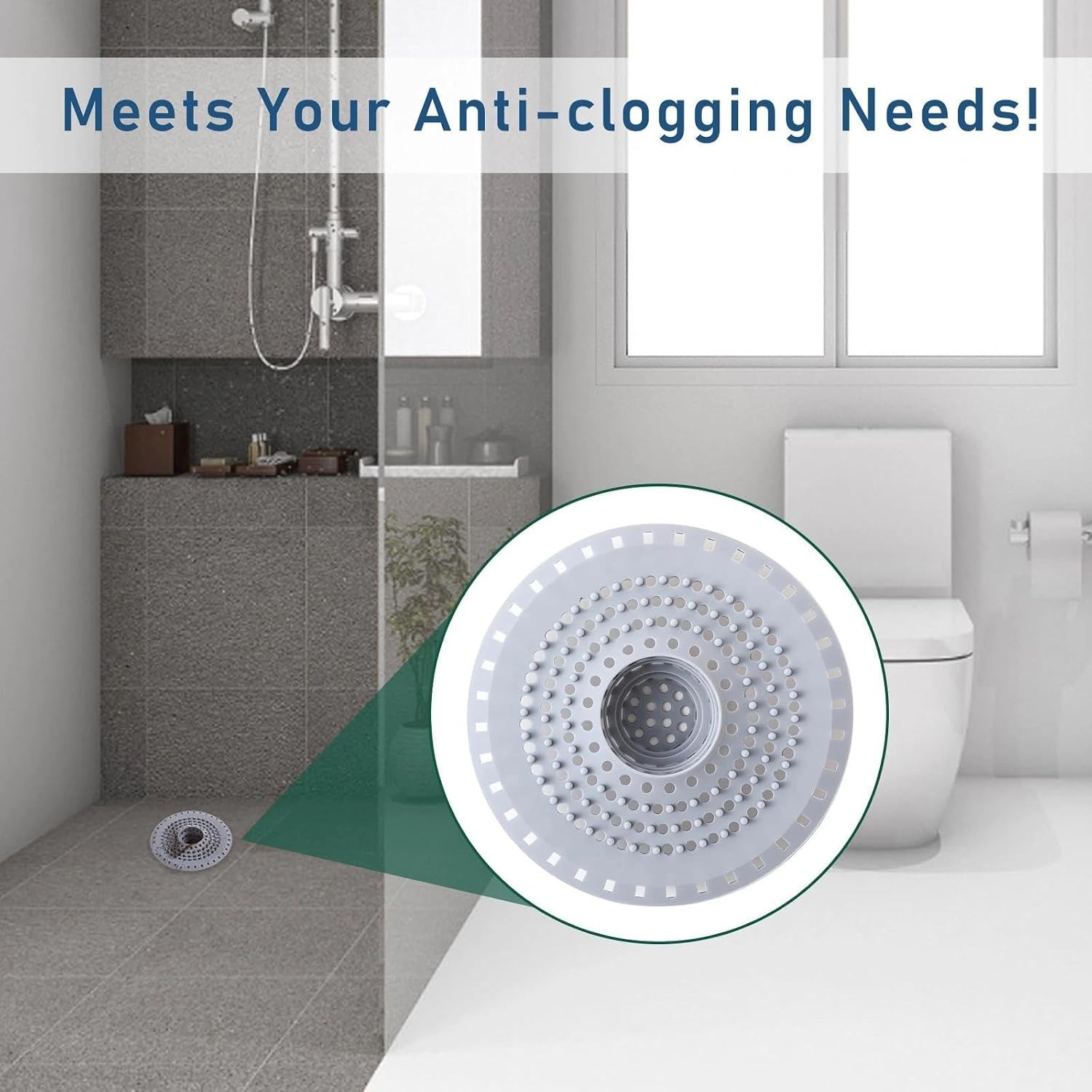
Households with long hair get the most obvious benefit. Two or three people with shoulder-length hair sharing one shower will block a drain surprisingly fast, and a round plughole hair trap on the surface turns that from a plumbing issue into a bin-emptying issue.
Renters are another good fit. You are not drilling, gluing or modifying anything. The cover sits there, does its job, and leaves with you. Landlords tend to appreciate it too, because the alternative is a chemical-stained trap and an awkward conversation about who caused the blockage.
It also earns its place beyond the bathroom. A kitchen sink hair catcher sounds odd until you see what actually goes down a kitchen plughole: rice grains, tea leaves, peelings, the fine debris that rinsing never quite removes. Laundry sinks collect lint. Balcony and utility floor drains collect leaves and grit. One cover, several possible homes.
Who might want something different? If you have a very wide floor gully, a linear channel drain, or a fitting with a tall protruding mechanism, a 12.5 cm round-footprint cover will not seat properly. In those cases a purpose-made strainer for your specific drain type is the better buy.
Living with it day to day
The honest truth about any drain filter is that it only works if you clear it. A cover left to clog for a month is just a slower version of the same blockage, sitting a few centimetres higher up.
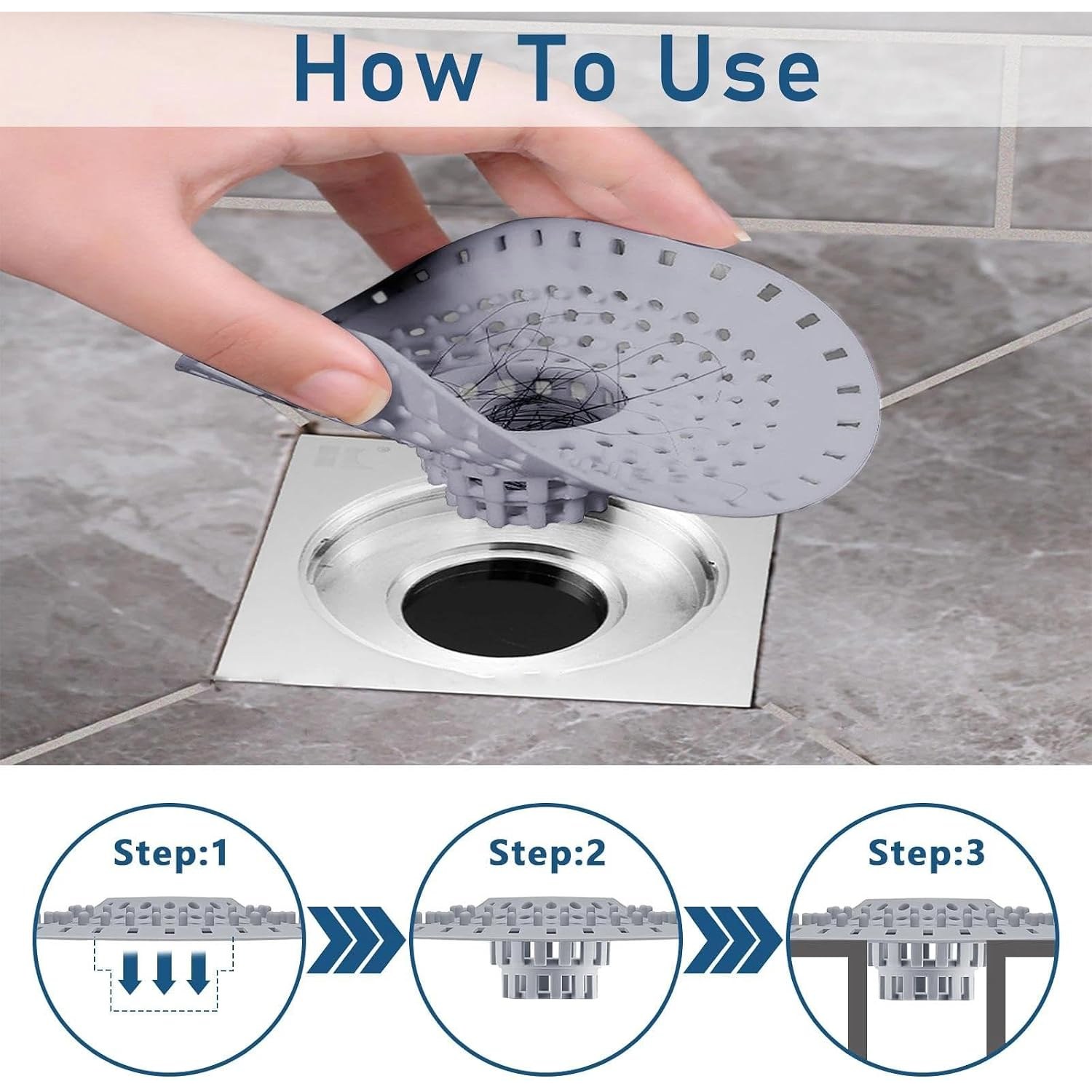
The good news is that clearing it is barely a task. Lift the cover, peel the hair off with your fingers or a bit of tissue, drop it in the bin, rinse the cover under the tap, press it back down. Thirty seconds, two or three times a week for most households. Whatever you do, do not rinse the hair down the drain you just protected.
Every week or two, give it a proper wash. Warm water and a drop of washing-up liquid is all you need to shift the soap film that builds up on silicone and makes it feel slippery. Skip bleach, scouring pads and anything sharp: they can mark or tear the material over time. Occasionally lift it and rinse the floor underneath as well, since a small amount of residue always finds its way under the edge.
Air drying now and then keeps everything fresh. Silicone does not hold odour by itself, so if you ever do notice a smell, it is coming from trapped hair or from the trap further down the pipe, not the cover.
A few honest limitations
It is a filter, not a plug. It does not seal the drain, so it will not hold water in a bath and it is not an odour blocker. If smells are rising from your drain, that usually points to a dry trap or an existing build-up deeper in the system, and the cover will not fix either.
It also cannot catch what it is not under. If you wash hair in a sink with no cover on it, the drain there is still exposed. Covering every drain in the house gets expensive; covering the shower and the kitchen sink handles most of the real risk.
And it will not rescue a drain that is already blocked. Clear the existing blockage first, then fit the cover to keep the drain clear from then on. That order matters.
The short version
Hair blocks drains, and hair goes in through a hole you can see. A 12.5 cm silicone cover with coarse openings for strands and fine perforations for smaller debris stops it on the surface, where cleaning takes under a minute.
Measure across your drain before you order and check that 12.5 cm will cover it. Make sure nothing protrudes from the drain that would stop the cover lying flat. Then put it down, clear it a couple of times a week, and give it a proper wash every so often.
It is not an exciting purchase. It is just one of those small items that quietly removes a recurring household annoyance, and most people wish they had bought one earlier.