
The complete guide
Choosing a Round Drain Cover: A Practical Buyer's Guide
The puddle that should not be there
You know the spot. After rain, there is a patch of standing water sitting next to the drain instead of going down it. Maybe the paving has gone slippery, or the water creeps towards a door threshold. Nine times out of ten the cause is not a collapsed pipe or anything expensive. It is a gully packed with leaves, moss and grit that has slowly filled up over a season.
Drains outdoors are open invitations. Wind pushes leaf litter into corners, and corners are exactly where drains sit. Sweep the patio and the dust goes somewhere. Trim the hedge and the clippings scatter. Over a few months, all of it ends up in the same small hole in the ground, and then the hole stops working.
A round drain cover is the cheapest piece of prevention you can buy for this problem. It does not clear a blockage you already have, but it stops the next one forming, and it turns a messy job with a trowel into a thirty-second lift and shake.
How a drain grid actually does its job
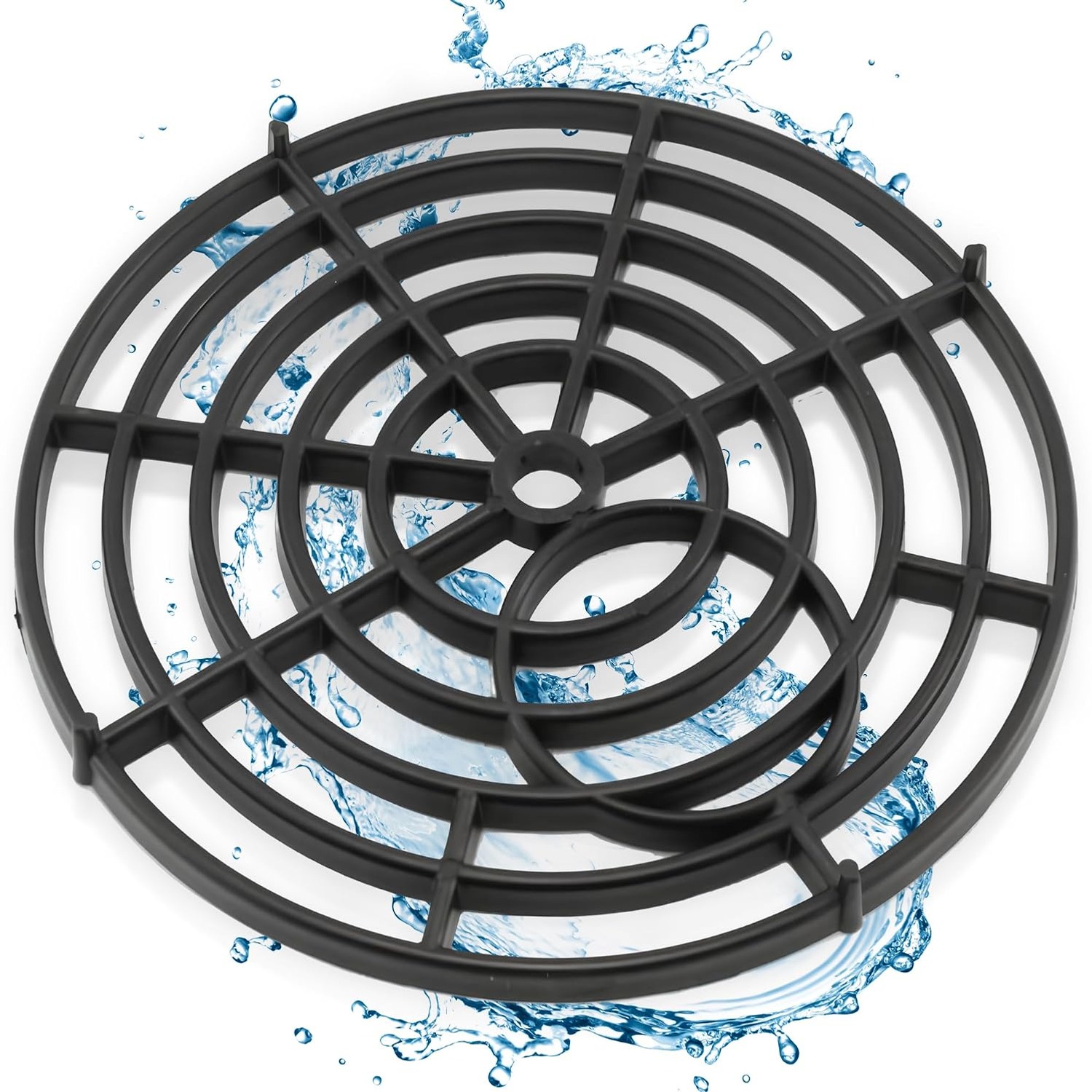
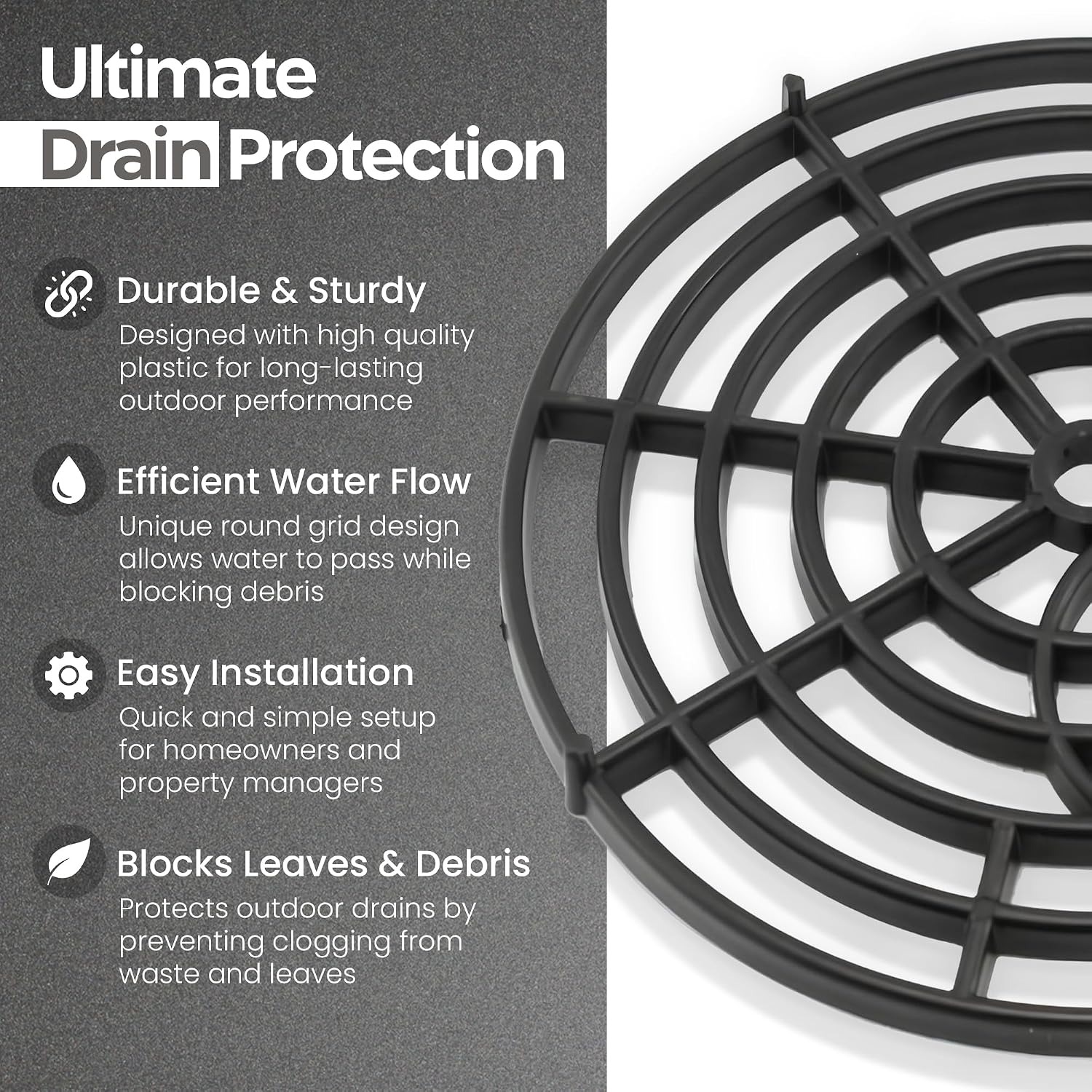
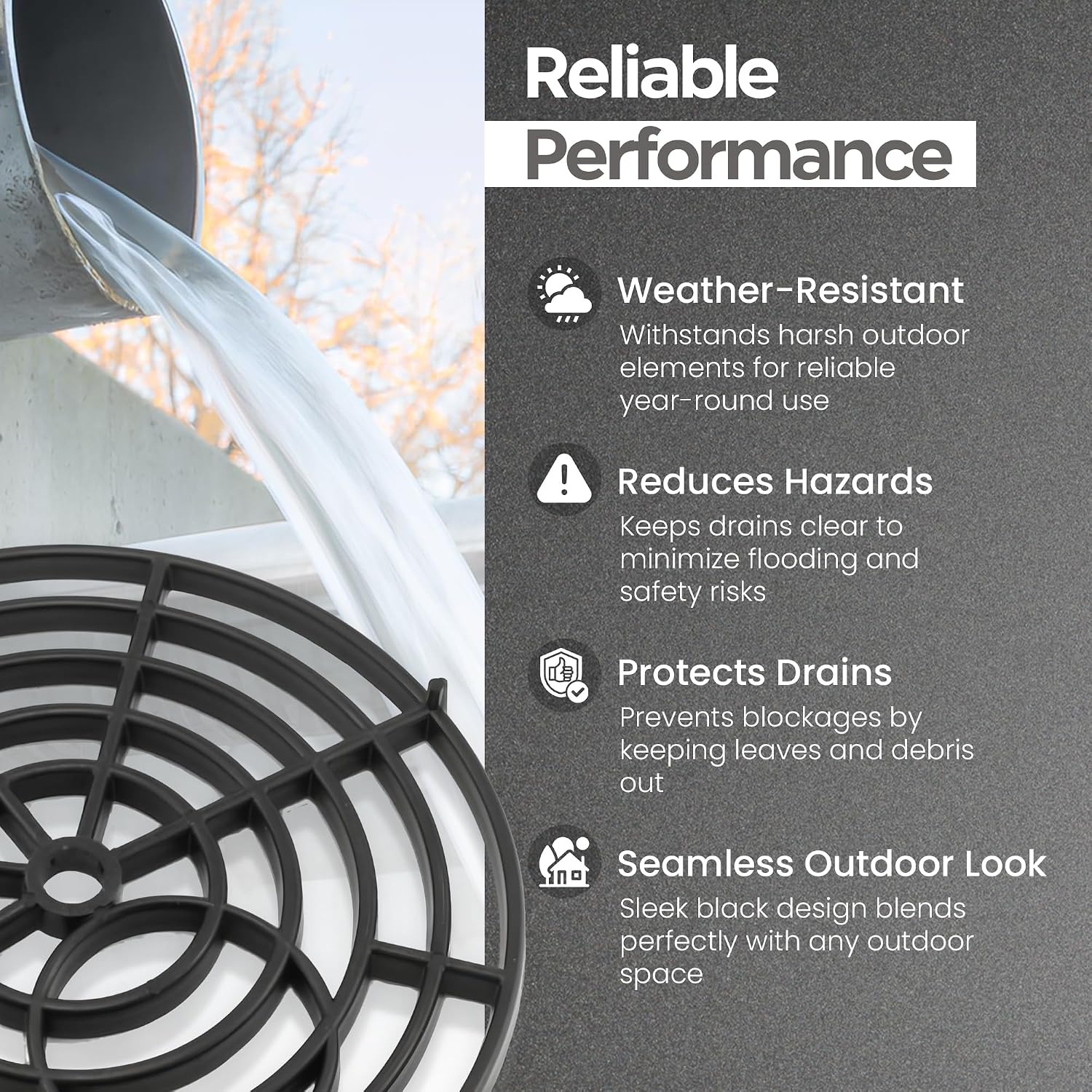
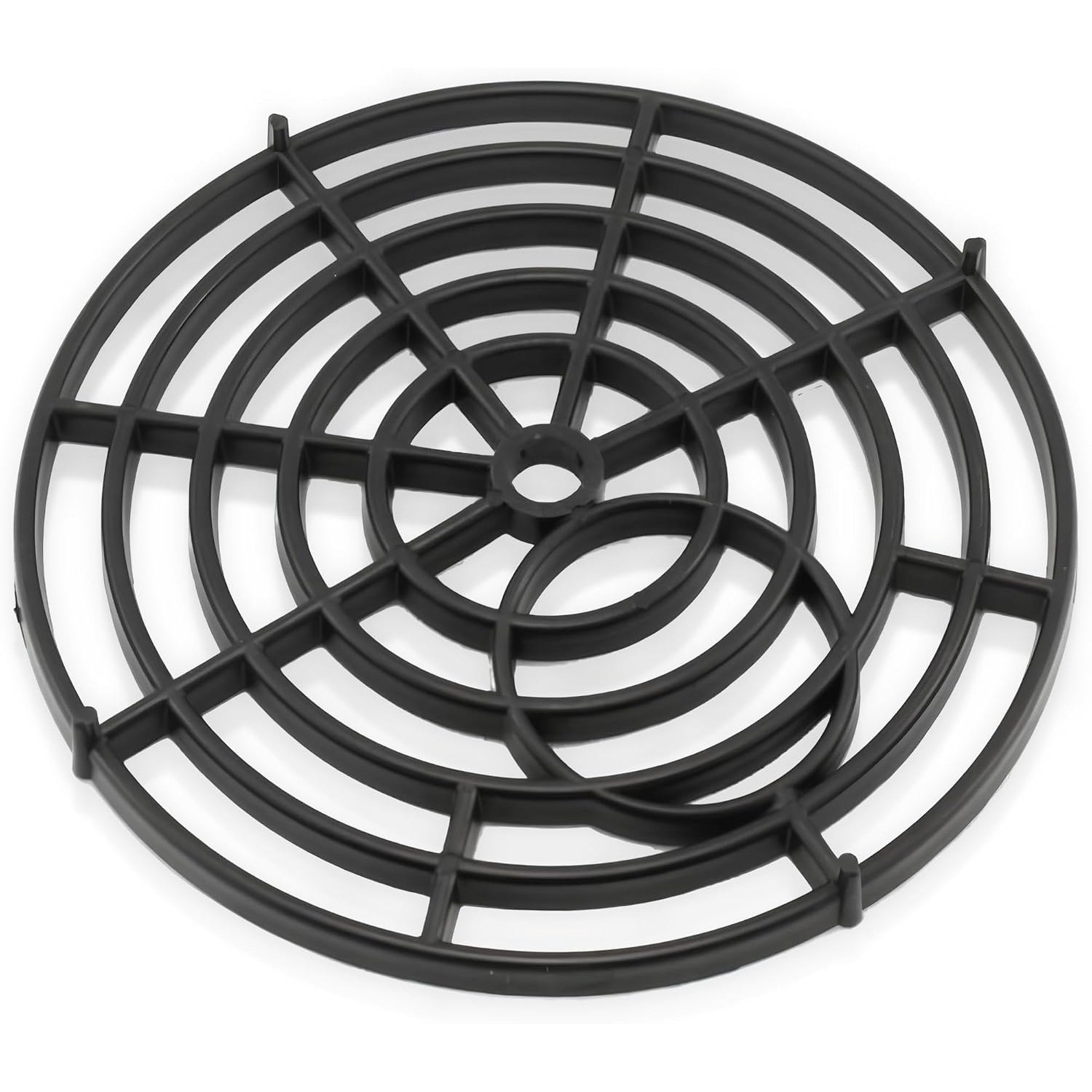
The design is simple on purpose. A plastic grid sits over the opening with gaps moulded between solid ribs. Rain hits the surface, runs through the gaps, and drops into the gully. Anything bigger than the gaps stays on top.
That sizing is the clever part. If the gaps were tiny, the cover would act like a filter and clog with silt almost immediately, and then water would run across your paving instead of through the drain. If the gaps were huge, leaves would slip straight through and you would be back where you started. A proper gully grid aims at the middle, big enough to keep flow fast, small enough to hold back the bulk of what falls on it.
The other thing it does is make maintenance visible. With an uncovered drain, the debris is down in the dark where you forget about it. With a grid on top, you can see at a glance that leaves have built up, and clearing them takes seconds rather than a bucket and a pair of gloves.
Why plastic makes sense outdoors
Metal grates look solid, and in some settings they are the right answer, particularly where vehicles run over them. But for the ordinary garden and patio drain, plastic has a few quiet advantages.
It does not rust. That matters more than people expect, because a rusting grate will bleed orange staining into pale paving slabs and concrete, and that staining is very hard to remove. Plastic sits in water all winter and comes out the same colour it went in.
It is also light. This cover weighs 60 grams, which means an older person or a child can lift it without any struggle. A heavy cast grate is a different proposition when your hands are cold and wet, and the easier a job is, the more often it actually gets done.
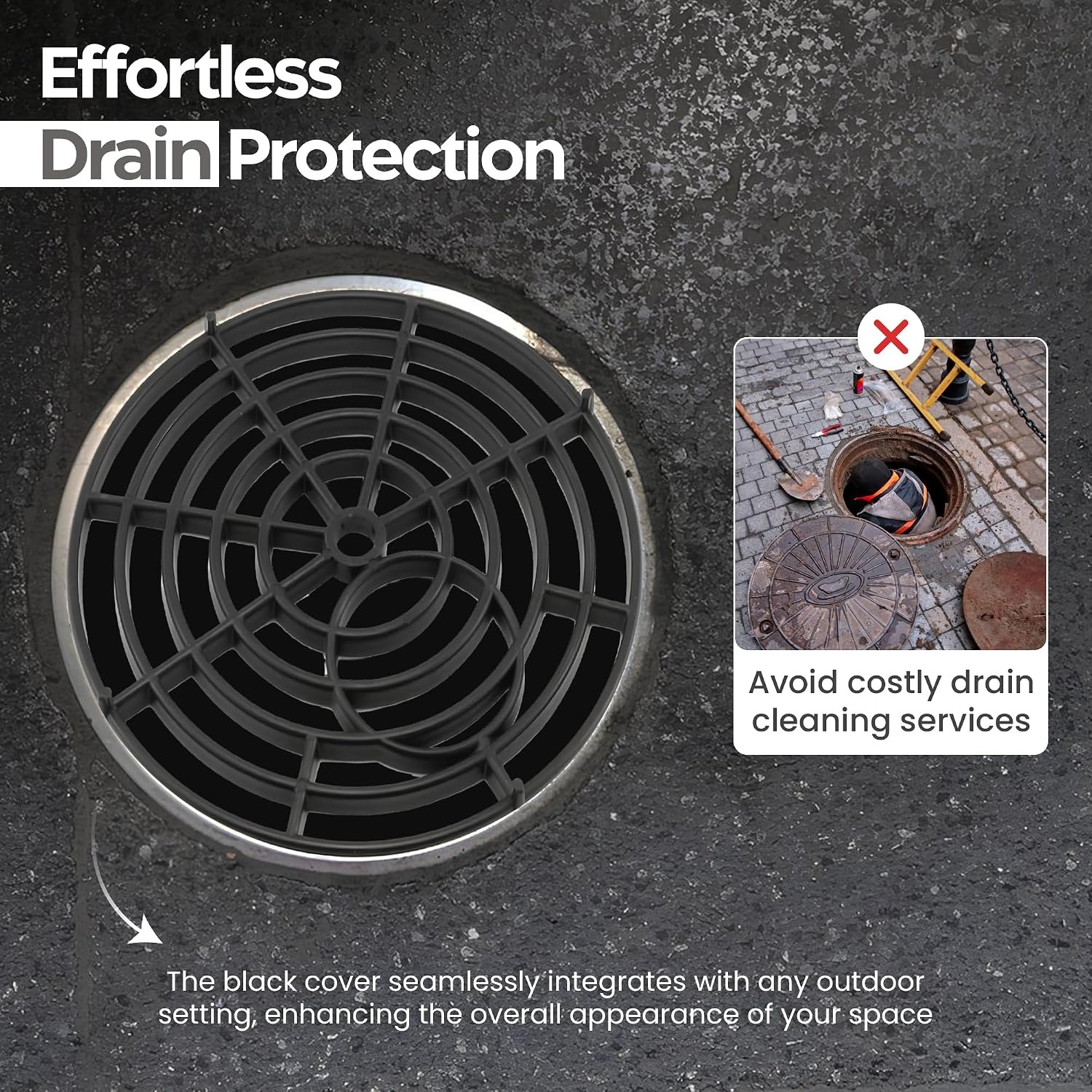
Finally, the black painted finish keeps it low key. Against dark block paving, gravel or wet concrete, a black grid reads as part of the drainage rather than an accessory sitting on top. If you have spent money on your paving, you do not want the drain to be the first thing people notice.
Measuring before you buy
This is where most returns come from, so take two minutes over it.
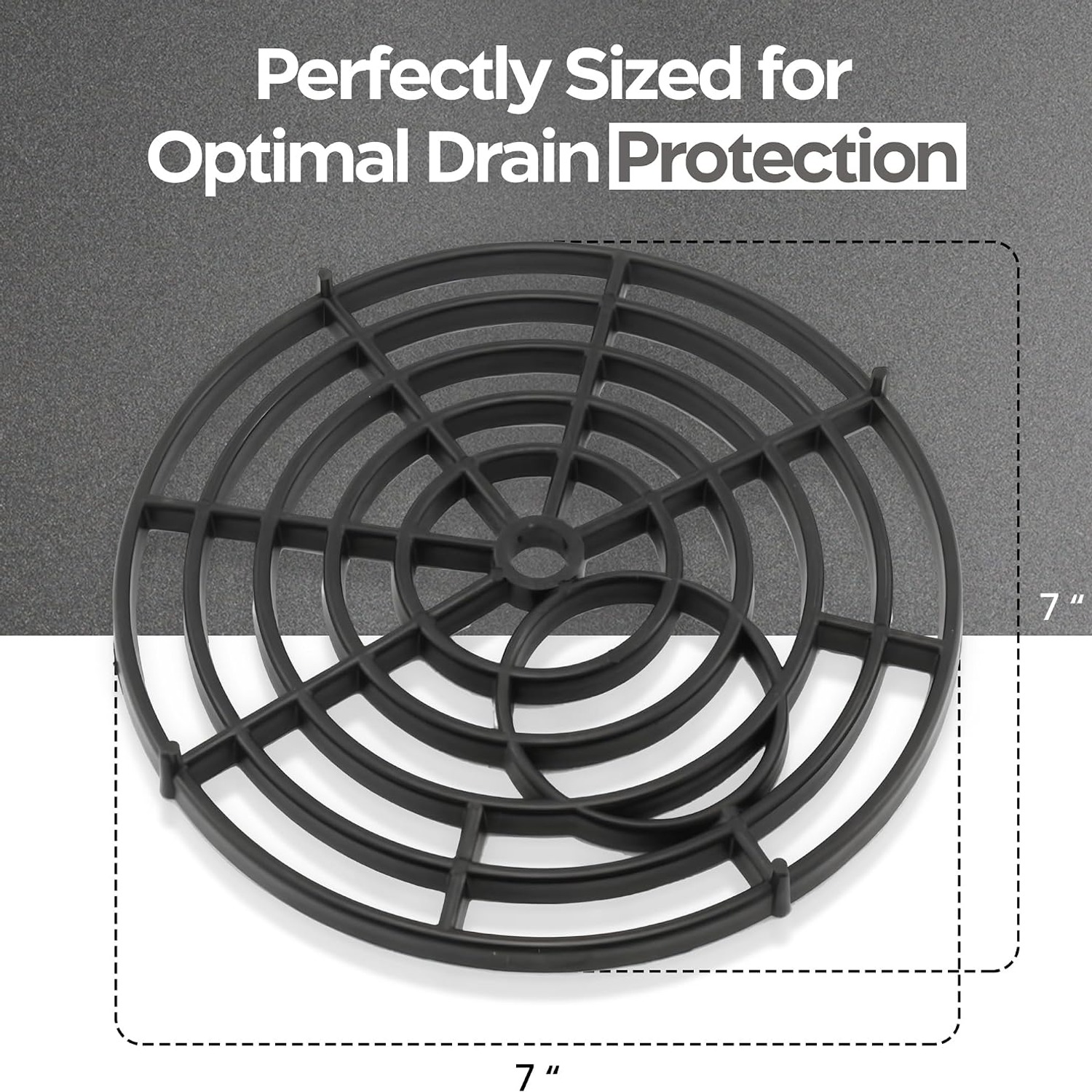
Lay a tape across the widest part of your round drain opening and write the number down in millimetres. If there is an existing grate in place, lift it and measure that too, both the overall width and the width of the part that drops inside the opening. Those two figures are often different, because many covers have a lip that rests on the rim with a narrower section below.
Check the shape as well. Round covers do not sit properly on square gullies, and a square grate will leave gaps on a round one. If your opening is square or rectangular, you want a different product entirely.
One more thing worth noting. Some drains have a rebate or recess around the rim, and some are flush with the surface. A recessed opening will hold a drop-in cover more securely, while a flush opening leaves the cover sitting proud, where a boot or a wheelbarrow can catch it. Knowing which you have helps you place it sensibly.
Where these covers earn their keep
Downpipe gullies are the classic spot. Rainwater from the roof carries moss, grit from the tiles and anything the gutters missed, and it all arrives at one small opening. A grid on top catches the solids and lets the water carry on.
Back doors and side passages are another. These are low traffic corners where leaves pile up and nobody looks until there is a problem. A cover means the debris stays on the surface, and you can brush it away on the same trip as the rest of the sweeping.
Patios and courtyards benefit for the same reason. Enclosed spaces trap blown litter, and the drain is usually the lowest point, so everything gravitates towards it. Garden and yard drainage points, and drainage along the side of a driveway, round out the list. The one place to be careful is anywhere a car wheel will pass directly over the cover, since a lightweight plastic grid is not built to take that kind of load.
Keeping it working
Maintenance is deliberately boring, which is the point.
Every few weeks, lift the cover and tip the contents into your garden waste. In autumn, or if you have trees overhead, make it weekly. Leaves that sit wet for too long mat together into a layer that blocks the grid surface, and once that happens the water starts running off instead of through.
Give the cover a rinse under a hose while it is out. If moss or slime has built up on the ribs, a stiff brush and warm soapy water will shift it. Let it dry before putting it back if you can, though it is not critical.
While the cover is off, look down into the gully. If you can see silt building up, scoop it out with a trowel or an old kitchen spoon. Catching that early is far easier than dealing with a full blockage later, and it is the main reason a drain cover pays for itself.
Avoid harsh solvents on the plastic, and avoid using the cover as a step. Treat it as a screen rather than a surface and it will keep doing its job for years.
When a grid is not enough
Be honest about what a cover can and cannot do. If your drain is already blocked, fitting a grid will not clear it. Rod or jet the pipe first, clear the gully properly, then fit the cover so the problem does not come back.
Likewise, if water is pooling because the paving falls away from the drain, or because the pipe has dropped, no cover will fix that. Those are groundwork jobs. The way to tell the difference is to pour a bucket of water straight into the open gully with the cover removed. If it drains away quickly, your problem is debris and a grid will help. If it sits there, the issue is further down.
The short version
A round drain cover 175mm is a small, cheap part that prevents a recurring nuisance. It screens leaves, twigs and grit out of your gully while letting rainwater through, it drops in without tools, and it lifts out in one hand for cleaning.
Measure your opening first, check it is round, and position it where foot and vehicle traffic will not catch it. Then give it a shake-out every few weeks, more often in autumn. That is genuinely the whole routine, and it is a lot less effort than digging out a packed gully in the rain.