
The complete guide
How to Choose and Fit a 5m Drain Hose Extension Kit
The problem nobody mentions until moving day
Appliances come with a short drain hose. Usually a metre and a half, sometimes two. That is fine if your waste pipe is right behind the machine, which it is in showrooms and almost nowhere else.
Then you move. Or you renovate. Or you finally admit that the washing machine would be far better in the back room than wedged next to the oven. And suddenly a hose that was just long enough is nowhere near long enough, and the whole plan stalls over about three metres of plastic tubing.
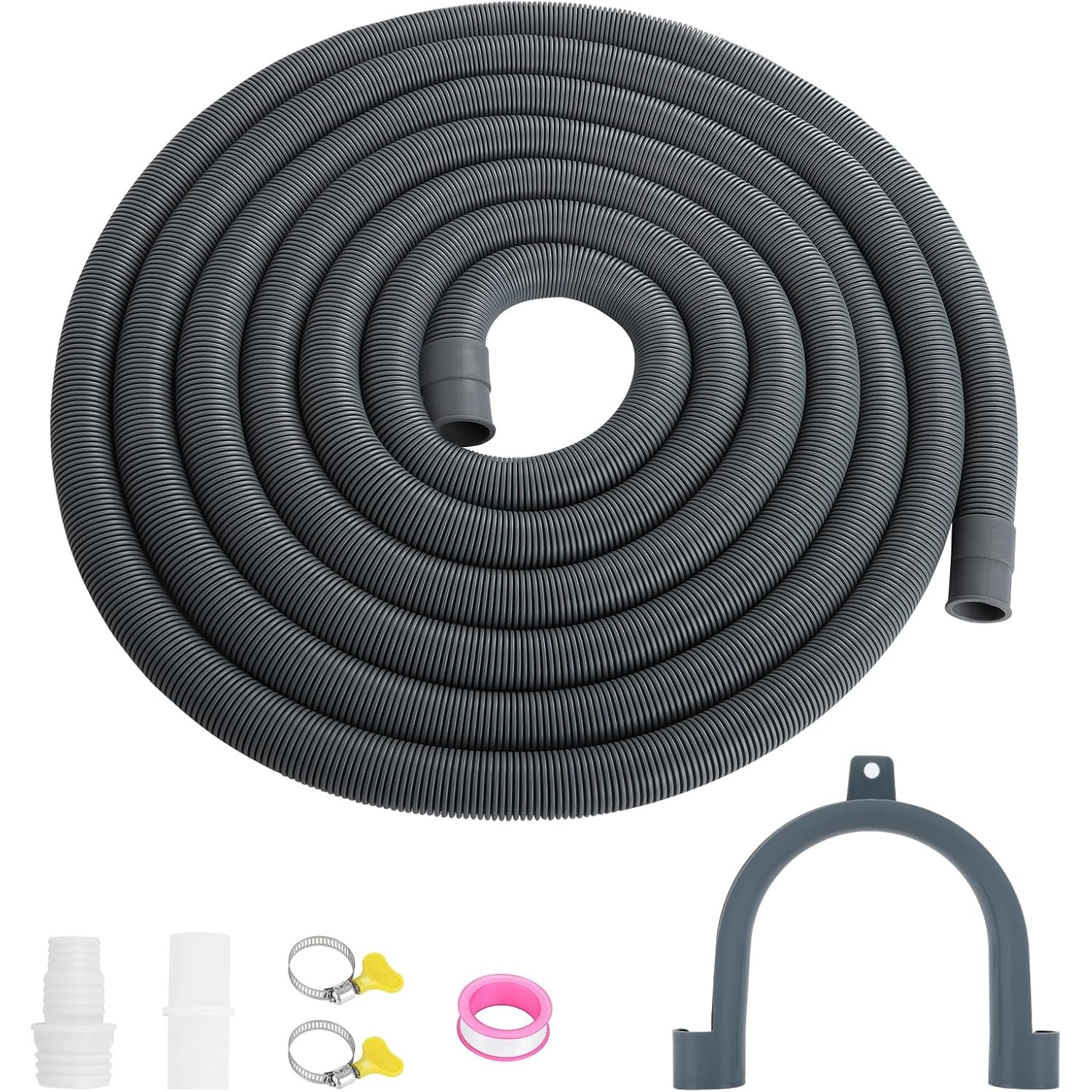
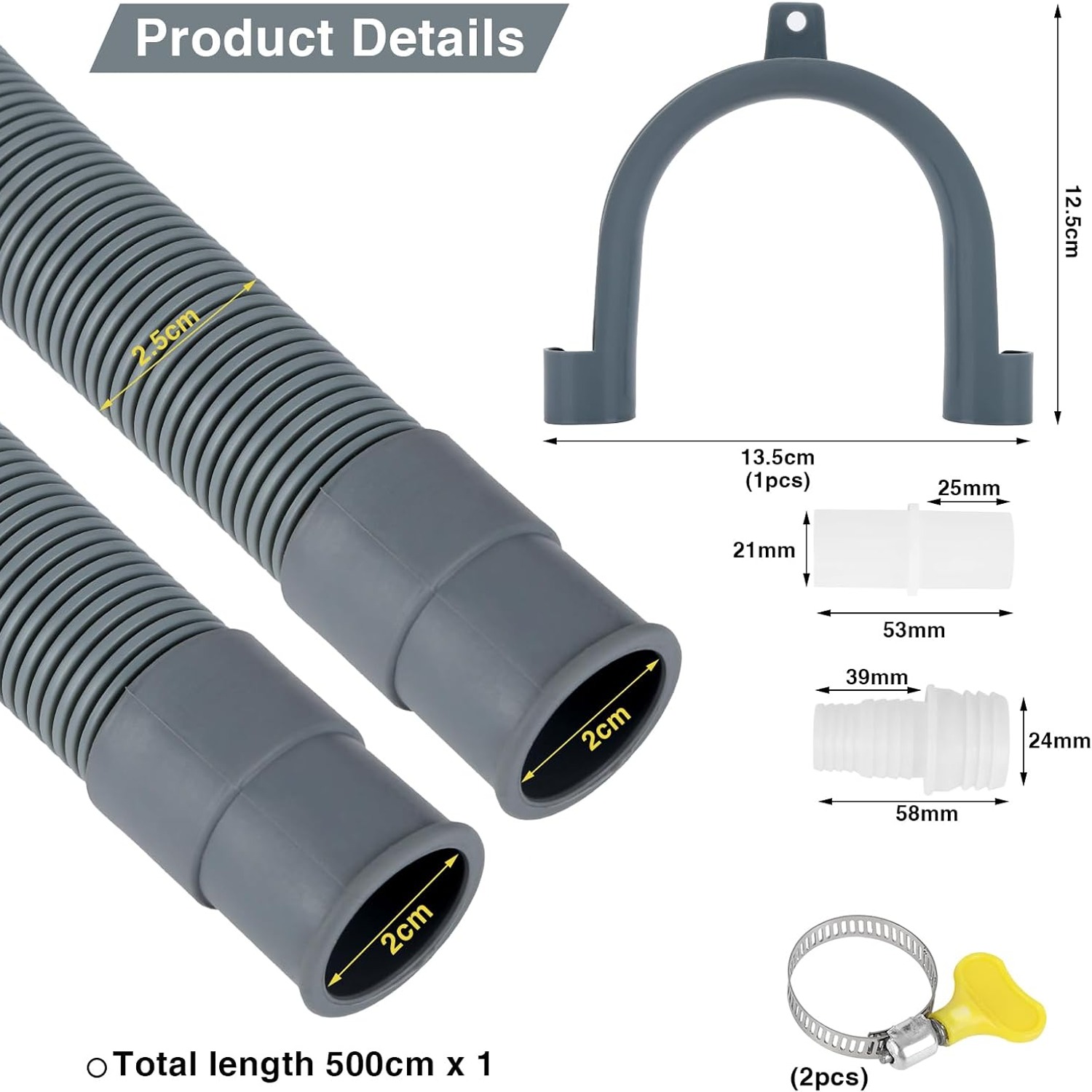
That is the gap this kit fills. Five metres of corrugated hose, a connector to join it to what you already have, clamps to hold the joint, and a hanger to keep the outlet where you put it. It is not glamorous. It is the part that decides whether your layout works.
How a drain hose actually works
Your washing machine or dishwasher does not drain by gravity. It has a pump. The pump pushes waste water up and out in short, hard bursts at the end of a cycle, which is why the hose jumps a little when the machine empties.
Two things follow from that. First, the hose has to stay open along its whole length. A pump can push water through a bend, but it cannot push it through a flattened section. Second, the joints have to hold against pressure, not just against a trickle. That is why clamps matter more than they look like they should.
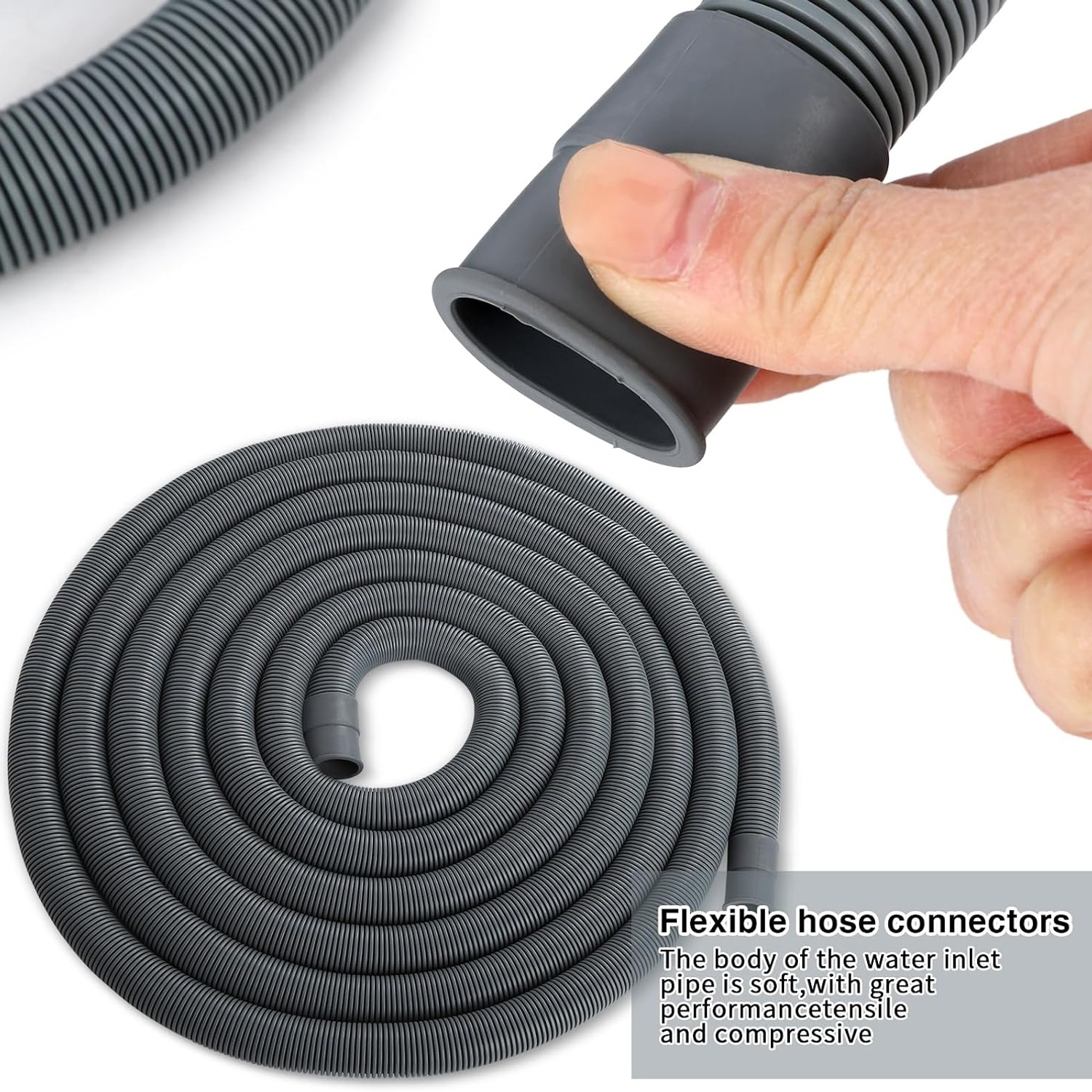
The corrugated shape is the clever bit. Those ribs let the wall compress on the inside of a curve and stretch on the outside, so the tube bends without pinching shut. The thicker the wall, the better it holds that shape when something presses on it. This hose has a 2 mm nominal wall, which puts it on the sturdier end of what you find in a consumer kit.
The last piece is the outlet height. Appliance makers set a maximum discharge height because the pump can only lift water so far. They also set a minimum, because if the hose end sits down in standing water, the machine can siphon dirty water back in while it fills. The U-tube hanger exists to hold the end in the band between those two limits.
Who this suits
Anyone extending a run rather than replacing one. The white push-fit connector means you leave the original hose attached to the pump, which is the fiddly end, and simply add length to the free end. If you have ever tried to get at the back of a drain pump with the machine half out of its slot, you will appreciate not doing it.
It also suits people fitting out a flat or a rental where the plumbing is where it is and will not be moving. Five metres covers most awkward layouts: across a utility room, through a cabinet to a sink trap, or around an island to the far wall.
It works for either appliance. Washing machine and dishwasher drain outlets are broadly similar, and the kit is sold for both. If you are chasing the best dishwasher drain hose extension and the best washing machine drain hose at the same time, one kit covers the thinking.
Who it does not suit: anyone who needs a fixed, buried, permanent waste line. That is pipe work, not hose work. And anyone whose appliance manual caps drain hose length well below five metres, which some compact models do.
Measuring before you buy
Run a tape from the appliance outlet, along the path the hose will actually take, to the standpipe or sink spigot. Not the straight line. The real route, around the back of the machine, along the skirting, up to the waste.
Add about a metre. You want slack so the hose is not stretched tight, and you want enough left to pull the machine out for cleaning without disconnecting anything. Tight hoses fail at the joints first.
Then check two numbers in your appliance manual. The maximum drain hose length, and the maximum discharge height. If the manual says four metres total and you already have two metres fitted, you have two metres of headroom, not five. Going over the limit does not usually cause an instant failure, it causes a tired pump and intermittent drain errors a year later.
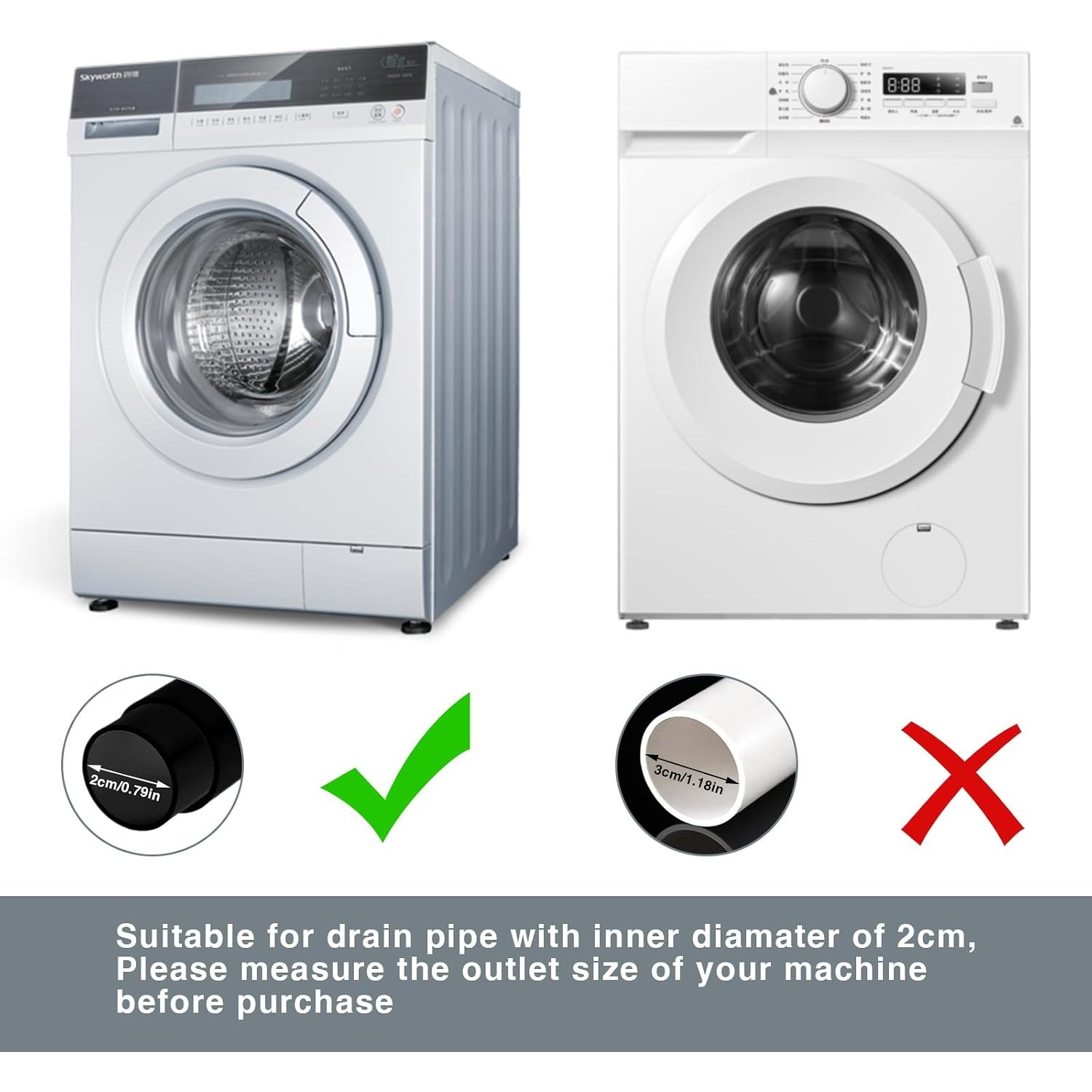
Finally, measure the outlet. Most are in the same size range, but older or imported machines sometimes are not. The internal diameter of this hose is not listed by the maker, so if yours looks unusual, ask before ordering.
Fitting it, step by step
Switch off and unplug the appliance. Turn off the water while you are at it. Put a towel down, because there is always a bit left in the hose.
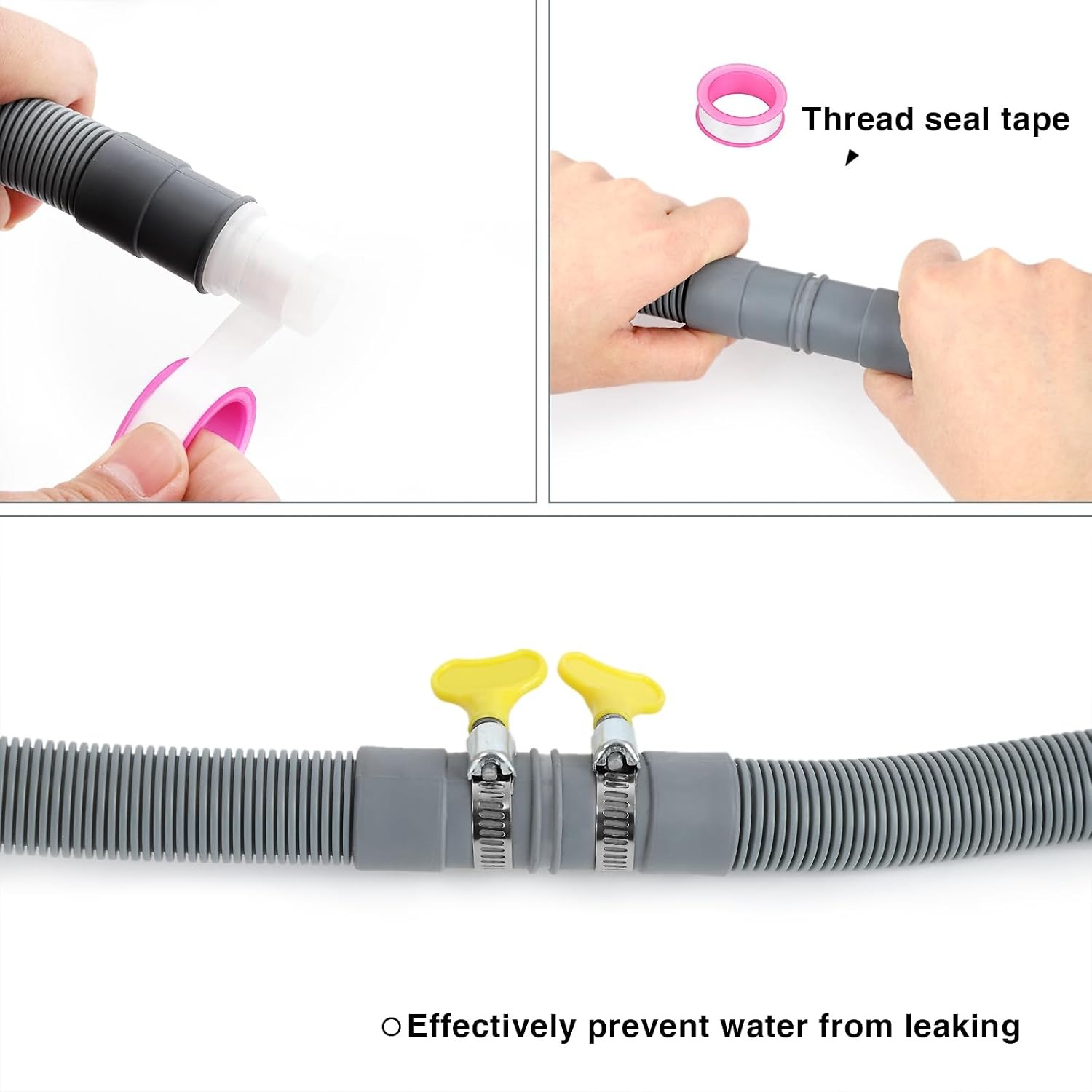
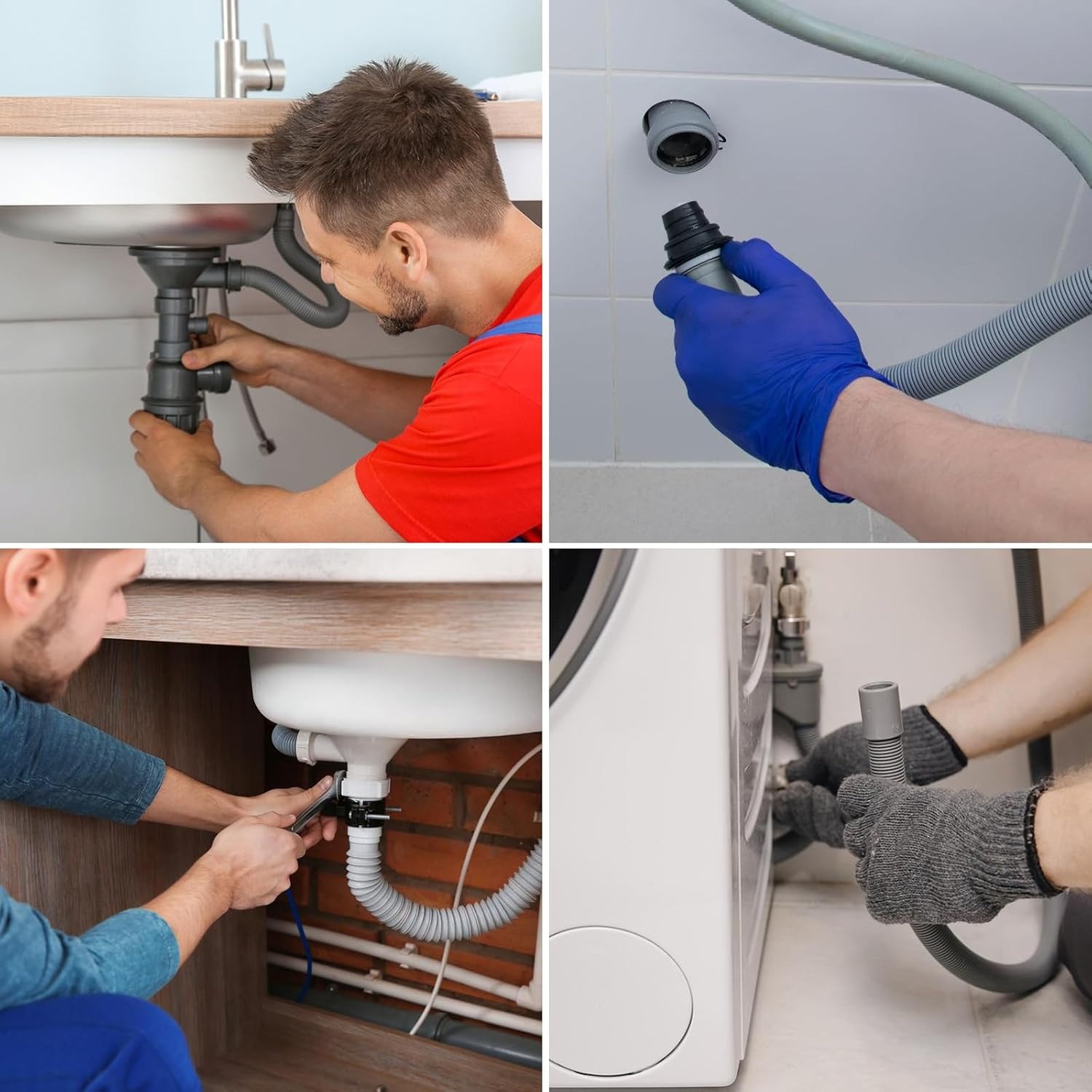
Slide a clamp loosely over the end of your existing hose. Push the white connector firmly into that hose end until it seats. Slide the clamp over the overlap, centre it, and tighten it with a screwdriver. Even pressure, snug but not crushing the plastic.
Do the same at the other side with the new hose. Second clamp, same method. The two stainless steel clamps in the box are one per joint, so use both.
Now route the hose. Gentle curves only. Keep it clear of anything hot, anything sharp, and anything the machine will roll onto when you push it back. If there is excess, loop it loosely rather than coiling it tight.
Hook the U-tube hanger over the standpipe or sink edge, slide it along the hose until the outlet sits at the height your manual asks for, and make sure the end points down into the pipe rather than resting against the side. Clamp or tie the hose so it cannot move when the pump kicks in.
Run a short cycle. Stand there and watch the joints, both of them, for the whole drain phase. This is the moment to find a weeping clamp, not three weeks later when the floorboards have gone soft.
Looking after it
Drain hoses ask for very little. Check the clamps once or twice a year by hand. If one turns easily, nip it up. Look along the hose for splits, white stress lines, or a section that has gone hard and shiny from being crushed.
If the machine starts draining slowly, the hose is worth checking before anything else. Pull the appliance out and look for a flat spot where the hose has been pinned against the wall. That is the usual culprit, and it is a five minute fix.
Flush the hose with clean water if the appliance sits unused for a long stretch. Standing water goes stale and the smell migrates back into the drum. Do not pour solvent-based drain cleaner through the line, as it is harder on plastic than people expect.
If you store a spare, keep it loosely coiled somewhere cool rather than folded in a box. Hoses take a set from being stored badly, and a hose with a memory of a hard fold will try to kink in that spot forever.
The short version
This is five metres of thick-walled corrugated polypropylene hose with the small parts you need to fit it: two stainless steel clamps, a push-fit connector, and a U-tube hanger. It extends or replaces the drain line on a washing machine or dishwasher, and it does it without cutting into anything or calling anyone.
Measure the real route and add slack. Check your appliance manual for maximum length and discharge height. Clamp both joints and watch one full drain cycle before you push the machine back.
Get those four things right and the hose will sit there quietly doing its job for years, which is exactly what you want from it.