
The complete guide
How To Choose And Use A Bellows Toilet Plunger
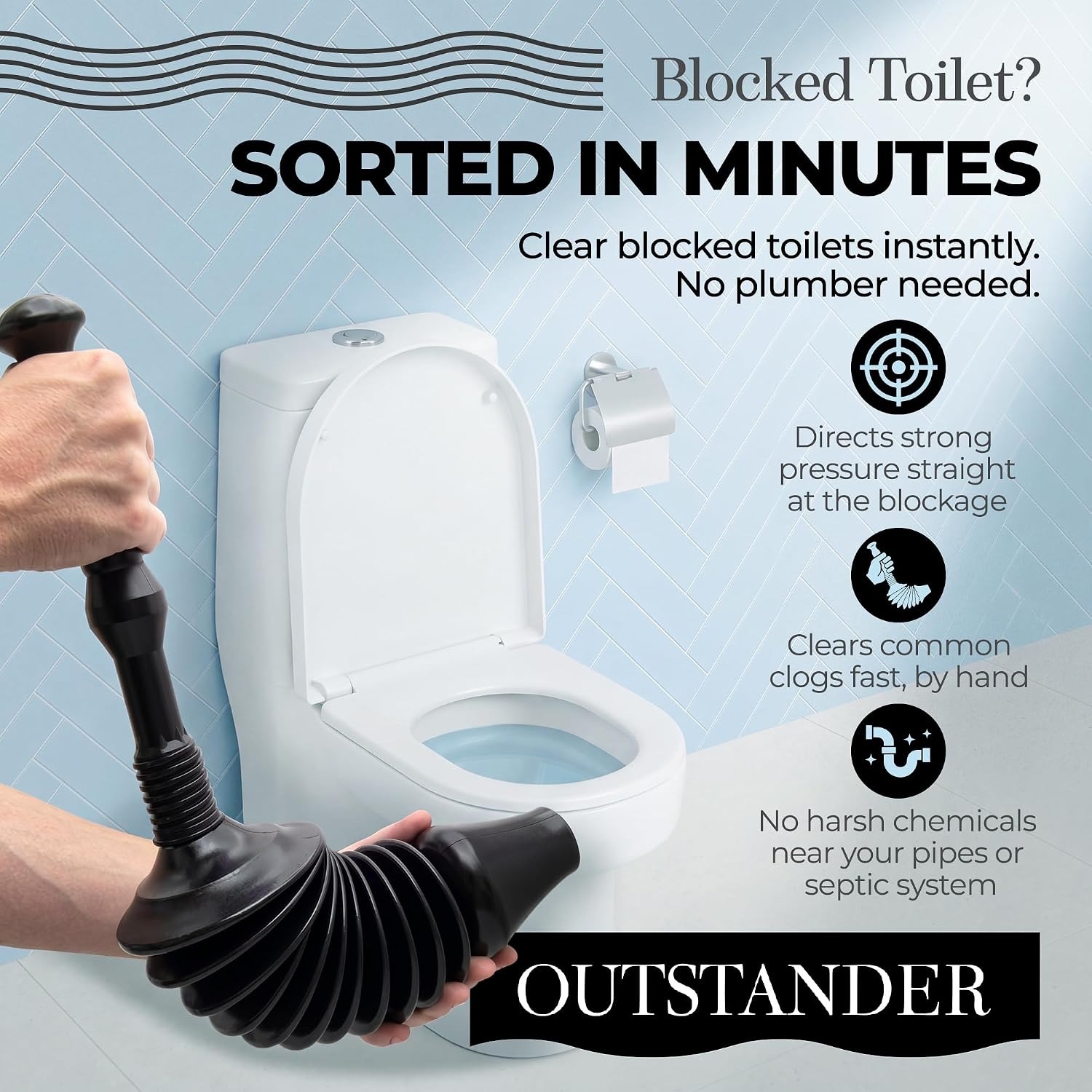
The problem with a blocked toilet
It always happens at the worst time. Late at night, or ten minutes before guests arrive, or on a bank holiday when nothing is open. The water sits there, swirling slowly, and the longer you look at it the worse it gets.
The instinct is to flush again. Do not. Each flush sends another few litres into a pan that is already full, and that is how a blocked toilet becomes a wet floor. The better move is to stop, let the level settle, and reach for a tool that actually shifts water.
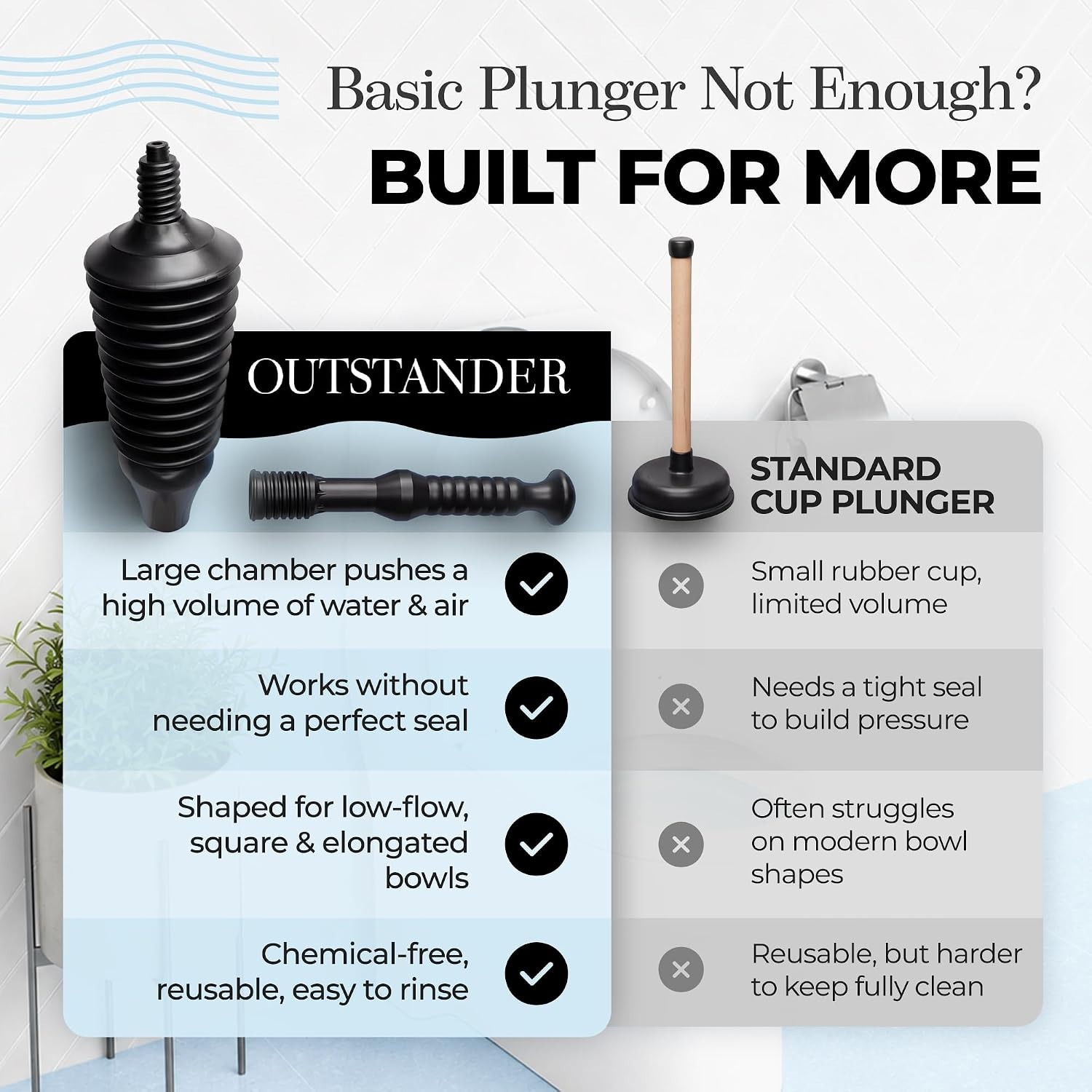
Most homes own a plunger that does not. The classic red rubber cup on a wooden stick is fine for a basin, but it was designed for a different job and a different era of toilet. You push it down, the rubber squashes, air compresses, and most of your energy disappears into that squash. You get noise and movement and not much pressure where it counts.
How a bellows plunger actually works
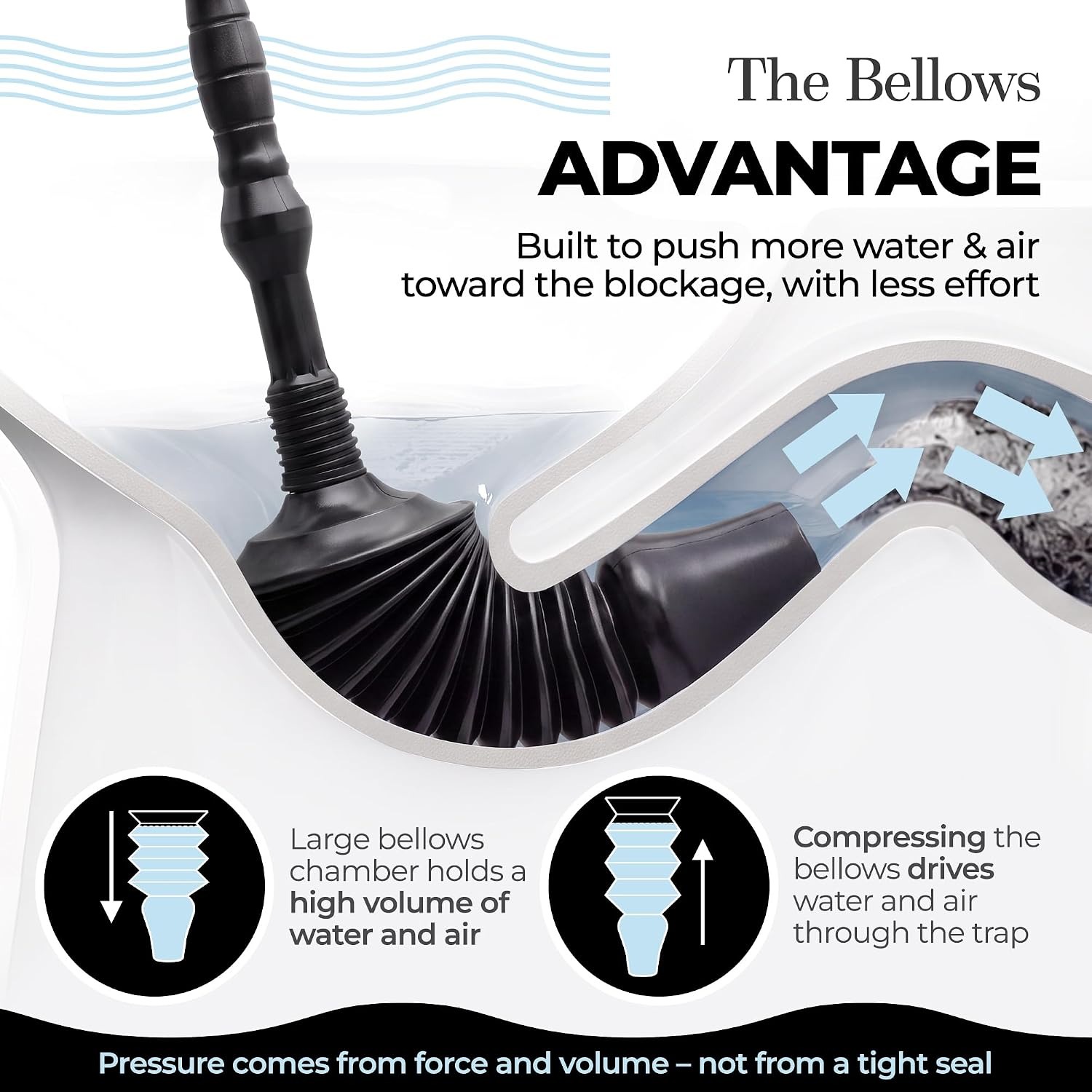
A bellows toilet plunger works on a simple bit of physics. Water does not compress. Air does.
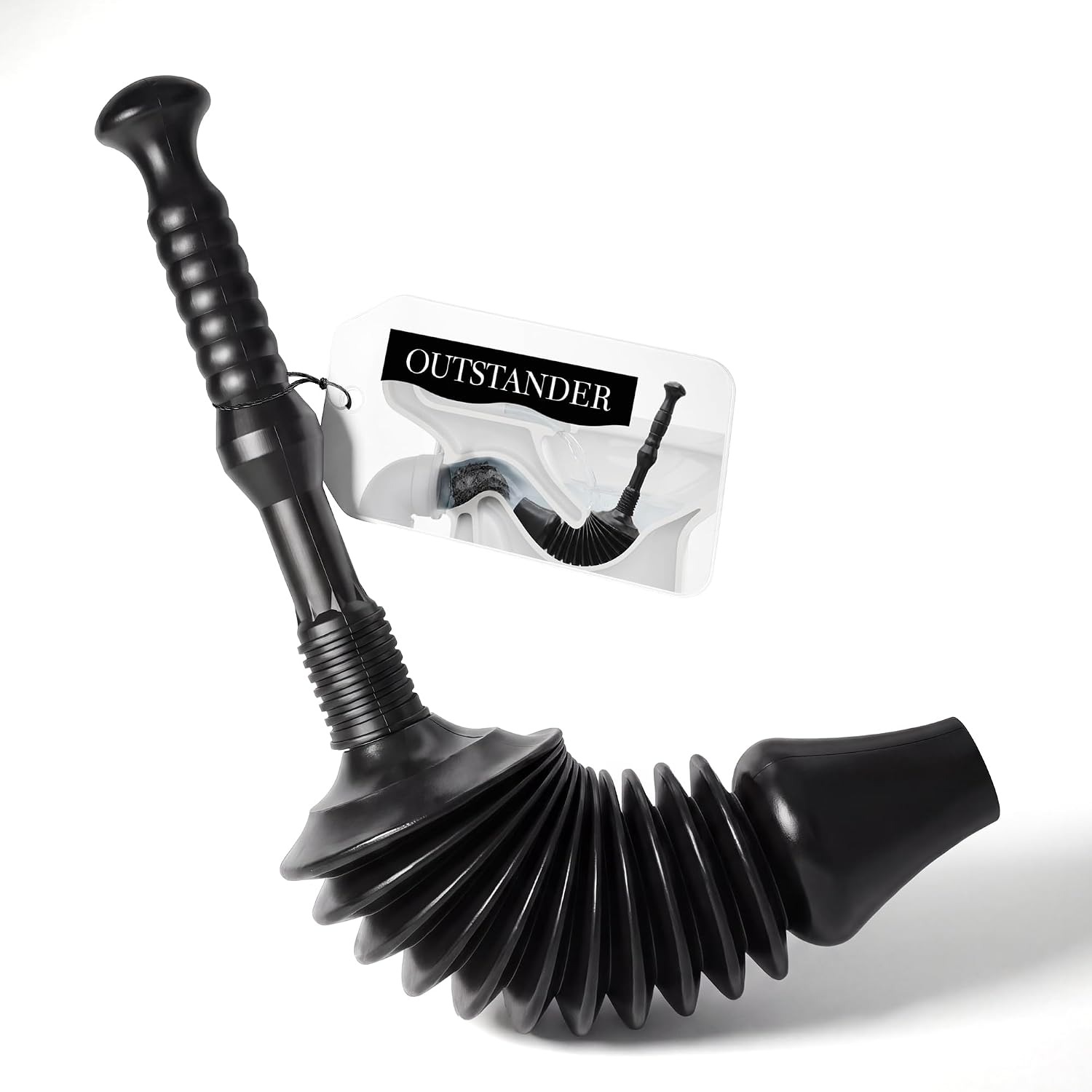
The accordion-style PVC body fills with the water already sitting in the bowl. When you push the folds together, that water has only one place to go, down through the trap and into whatever is stuck there. Instead of cushioning the blow, the water transmits it. Every bit of effort you put in arrives at the clog.
The concertina shape matters too. It collapses a long way in a short, easy stroke, so one firm push moves a decent volume. Then it springs back open and refills ready for the next one. You end up working in a rhythm rather than wrestling with the thing.
That rhythm is the trick most people miss. Short, repeated pushes break a blockage apart far more reliably than one enormous shove. Paper and waste come apart in layers. Hit them five or six times in quick succession and they give way.
Why modern toilets broke the old plunger
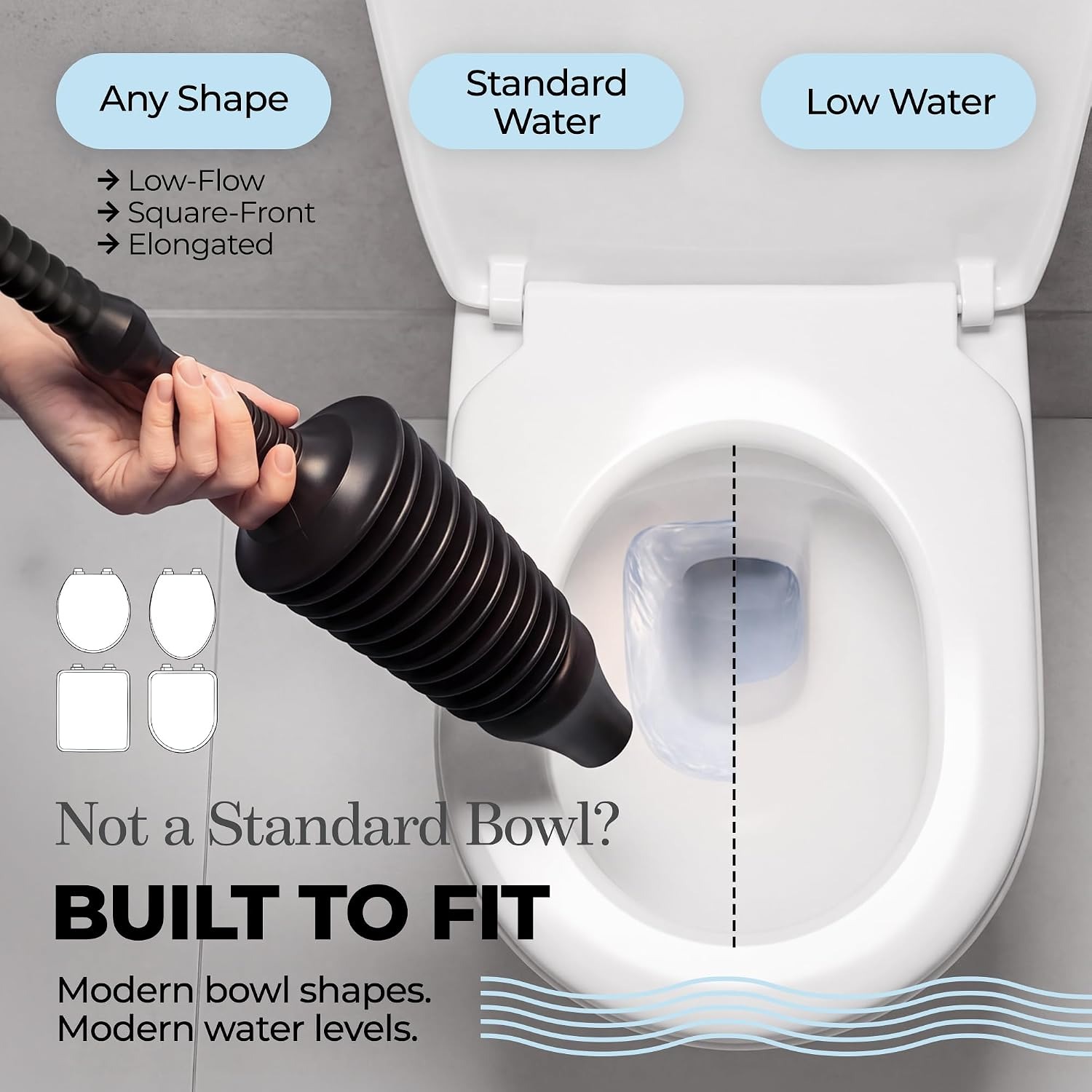
Toilet design has changed a lot. Low-flow pans use less water per flush, which is good for the bill and the environment but means less force available to move waste along. Square-bottom pans and elongated bowls look sleeker but offer no neat round rim of porcelain for a rubber cup to clamp onto.
A traditional plunger lives or dies on that seal. No seal, no pressure. You can spend five minutes pumping while air whistles out of the gap at the side.
This plunger is designed to work even when the fit around the bowl is not perfectly sealed. Because the pressure is created inside the bellows by compressing water, it does not depend entirely on an airtight ring around the outlet. If you have a square-bottom pan and have given up on plungers altogether, that is the specific problem being solved here.
Who it suits
If your household blocks the toilet more than once or twice a year, this is worth owning. Families with young children, houses on older pipework, homes with low-flow pans and shared rentals all tend to hit the same issue regularly.
It also suits anyone who would rather not keep caustic drain products in the cupboard. Those chemicals sit in the bowl, can be hard on seals and older pipes, and leave you with a pan full of something nasty if they fail. A manual toilet unblocker has no such downside. If it does not work, you just try again.
People who struggle with grip or strength sometimes find the bellows easier than a stiff rubber cup, because the folds collapse without needing you to force rubber against porcelain. The 60 cm length also keeps your hands a sensible distance from the water.
How to use it properly
Start by checking the water level. If the bowl is close to the rim, wait. The level usually drops a little on its own as water seeps past the blockage. Give it five or ten minutes.
Lay an old towel on the floor. It takes ten seconds and saves a mop later.
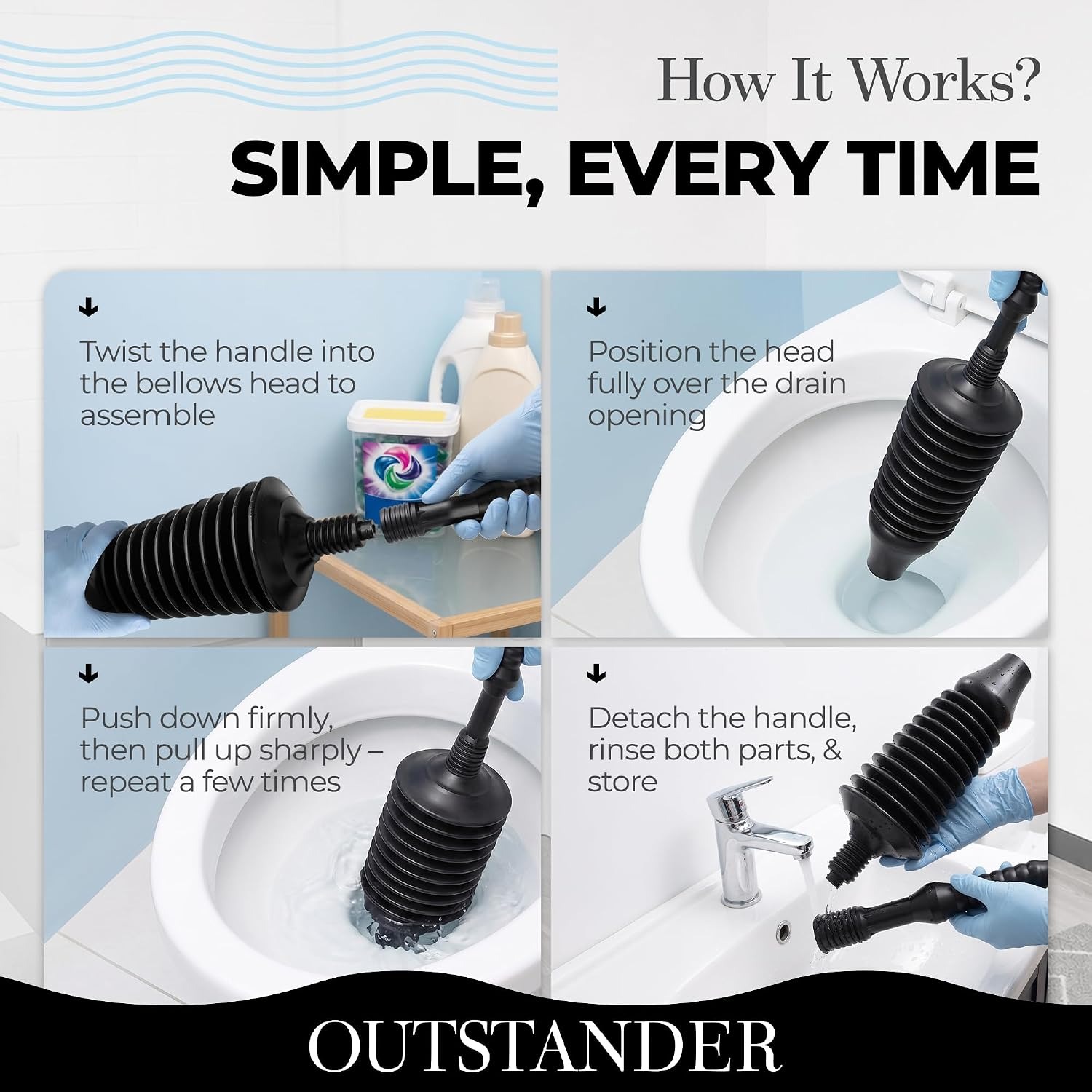
Lower the plunger into the bowl at an angle so air escapes and the bellows fill with water rather than trapping a pocket of air. Sit the opening over the outlet. Then push down firmly and pull straight back up, keeping the opening under the waterline the whole time.
Work in sets of five or six pushes, then pause. Watch the water. If the level drops even slightly, the clog is loosening and you should carry on. If nothing changes after two or three sets, something more solid may be stuck, and a toilet auger or a call to a plumber is the sensible next step.
Flush once when it clears. If it drains normally, you are done. If it struggles, plunge again before the bowl fills.
Cleaning and storing it
This part is easy and people often skip it. Right after the pan clears, flush and work the bellows a few times in the clean water. That rinses the inside properly, which a cup plunger never really does.
Then rinse under a tap, wipe the outside with warm soapy water or an ordinary bathroom cleaner, and stand it upright so the last of the water drains out. Let it dry before putting it away.
Keep it somewhere ventilated and out of direct sunlight. PVC stays flexible when it is kept at normal room temperatures and away from radiators. Avoid solvents and avoid pouring boiling water through it. None of that is complicated, it just needs doing.
At 13 cm across, it stands in a corner behind the cistern or sits upright in a cupboard without taking over the space.
What to look at before you buy
Check your pan shape first. Round, elongated and square-bottom all behave differently with a plunger, and knowing which you have tells you a lot. This one covers all three plus low-flow designs.
Think about who will use it. If several people in the house might need it at 11pm, simple beats clever. There is nothing to assemble and an instruction manual comes in the box.
Consider where it will live. A plunger that lives under the stairs will not get used in a hurry. One that stands in the bathroom corner will.
And think about what you want to stop buying. Plenty of people pick up a tool like this because they are tired of keeping chemical drain products in the house, especially with children or pets around.
The short version
A blocked toilet is a water problem, so the tool that fixes it should move water. A bellows toilet plunger fills with the water in the bowl and drives it at the clog, which gives you far more useful pressure than squashing air in a rubber cup.
It handles low-flow, square-bottom and elongated pans, and it is built to work even when the fit around the bowl is not perfect. It measures 60 x 13 x 13 cm with a 5 cm suction hole, it rinses clean, and it stands in a corner until the next time.
Buy it before you need it. That is the whole point of a plunger.