
The complete guide
Choosing a Pop Up Basin Plug - A Practical Buyer's Guide
The small part that causes the biggest annoyance
A basin plug fails quietly. The rubber flattens, the chain rusts through, or the old pop-up sticks half open and you notice the water level sliding down while you are still shaving. Nothing dramatic happens. You just end up topping the basin up again, or giving up and running the tap.
Most people put up with it for months. The reason is that replacing a plug sounds like a plumbing job, and plumbing jobs mean cupboards emptied, a torch held in your teeth and a wet patch on the floor. That assumption is what this kind of plug is designed to get around. The pop up core drops into the drain hole you already have. The waste pipe, the trap and the fittings underneath stay exactly where they are.
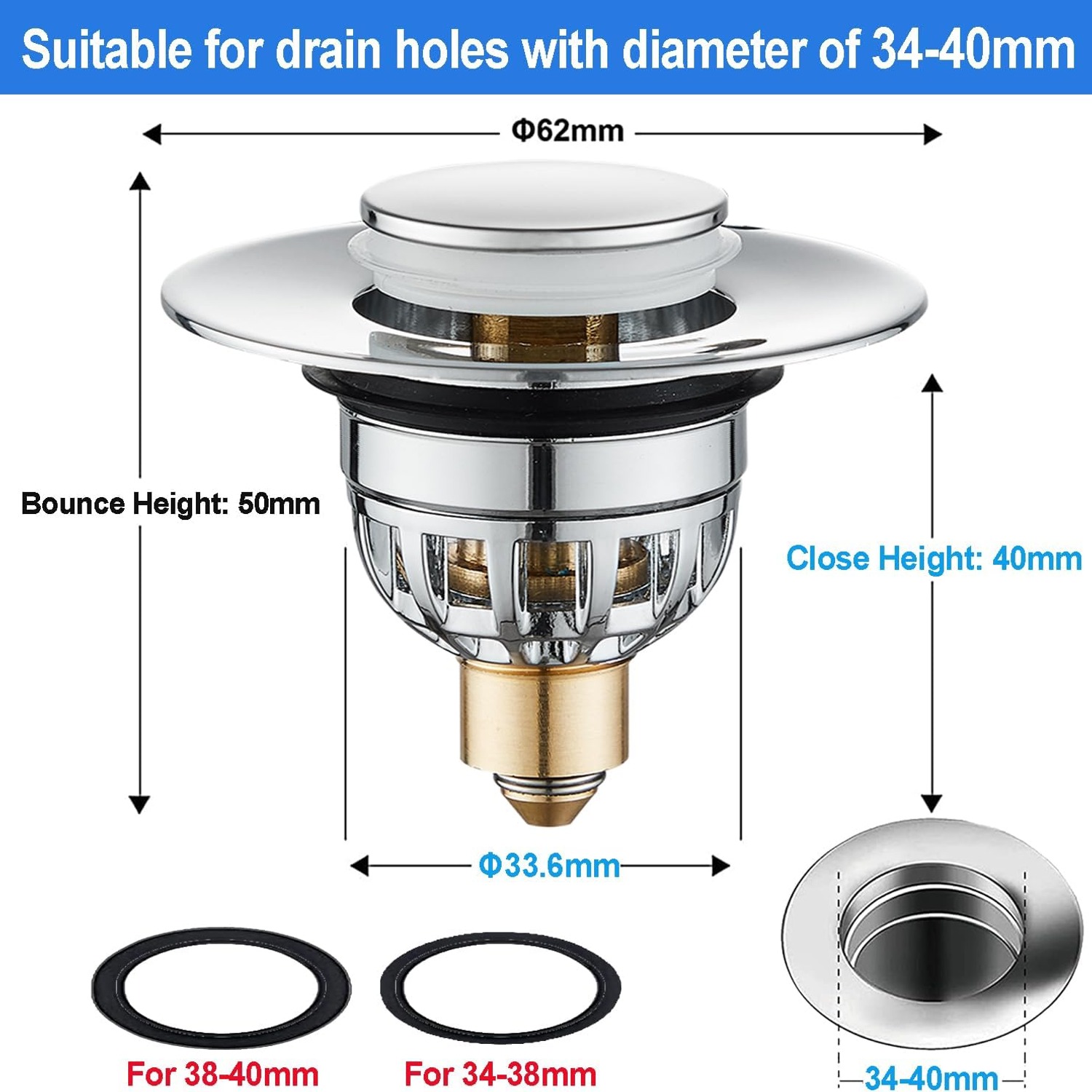
How a push type sink plug actually works
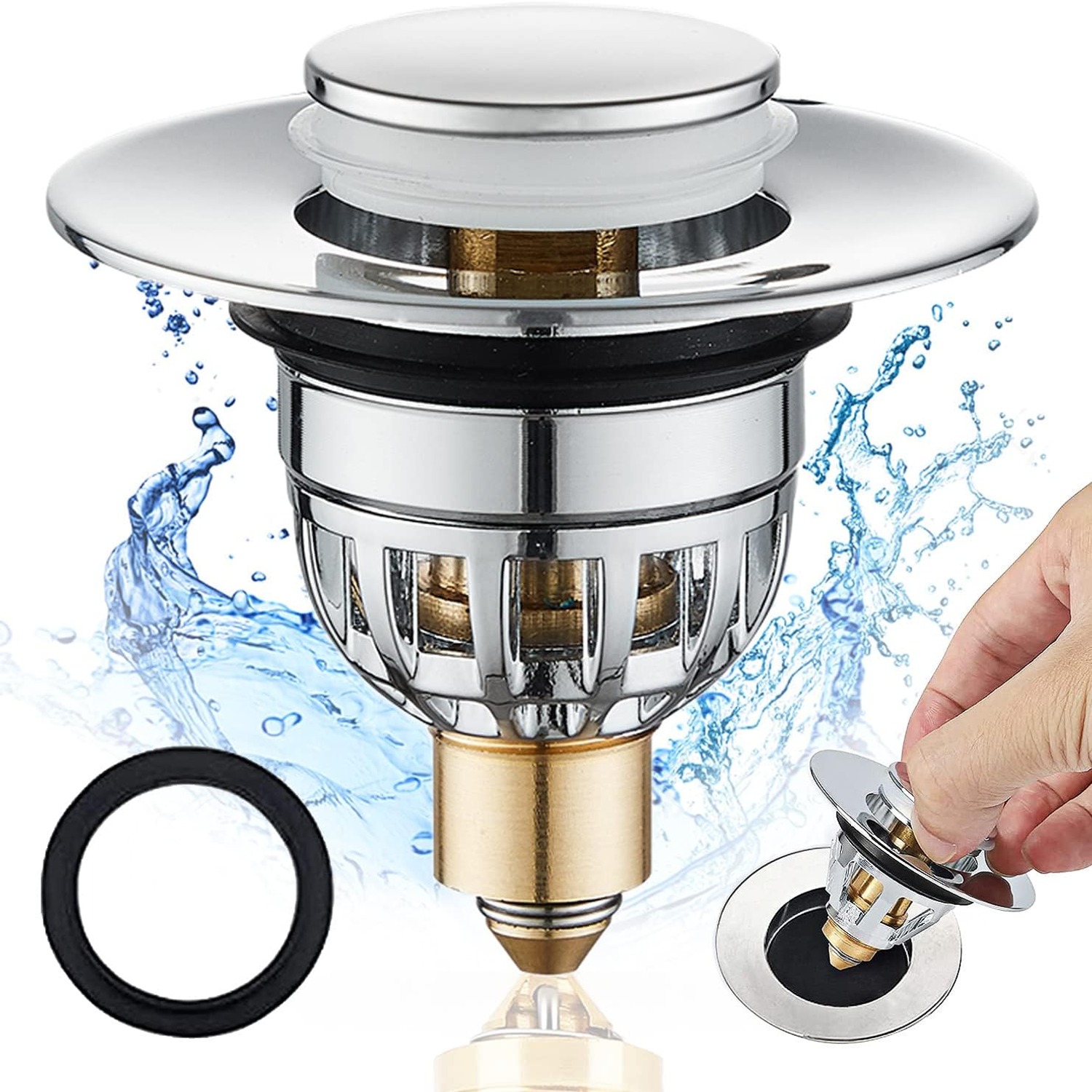
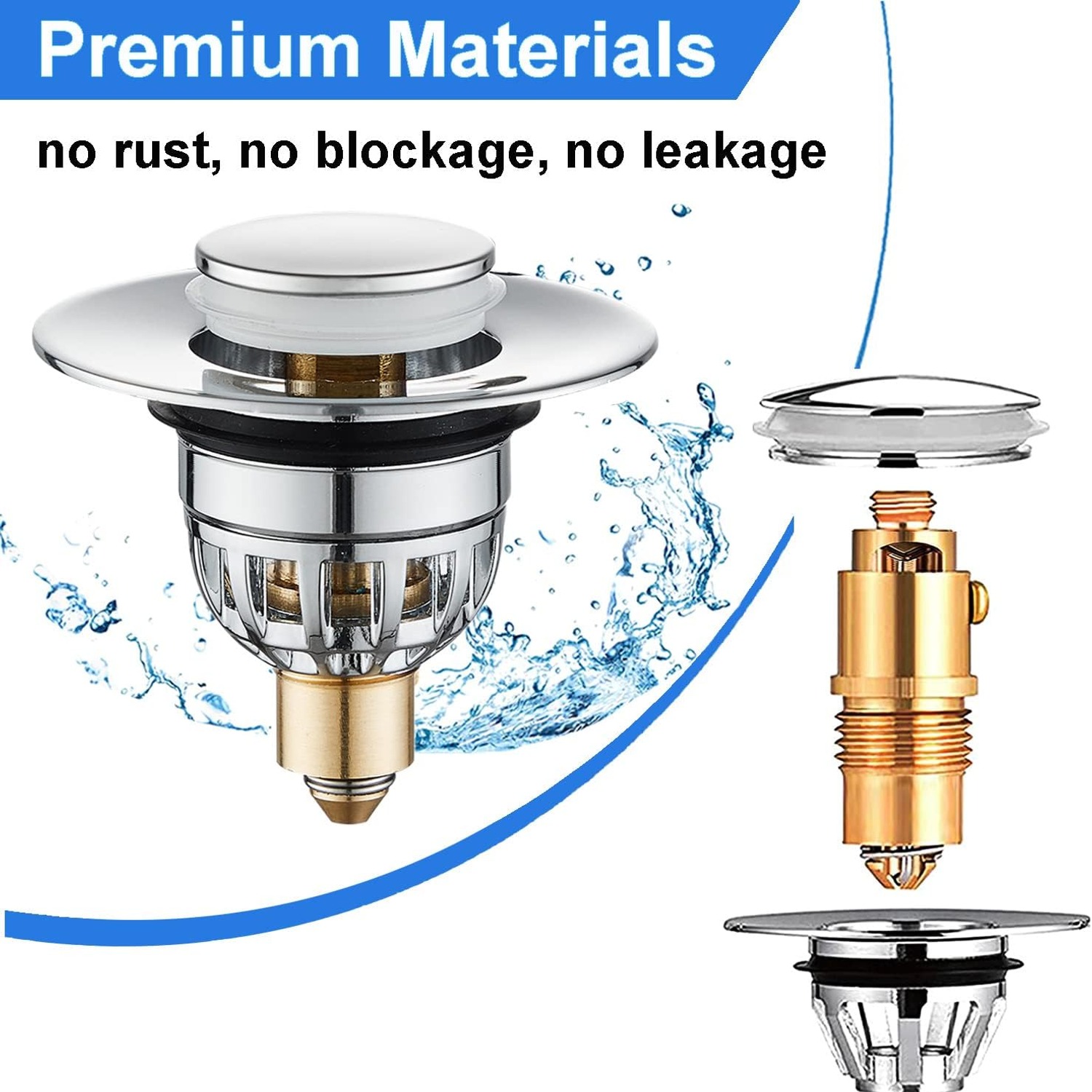
Inside the body there is a sprung catch. Press the top cover and it drops down and latches, sealing against the drain. Press it a second time and the catch releases, the spring lifts the cover, and the water runs away around it.
You may have seen the same mechanism called a click-clack waste. The difference is that a full click-clack replaces the whole waste assembly and usually needs to be screwed in from below. This version is a drop-in core, so you get the same press action without touching anything under the basin.
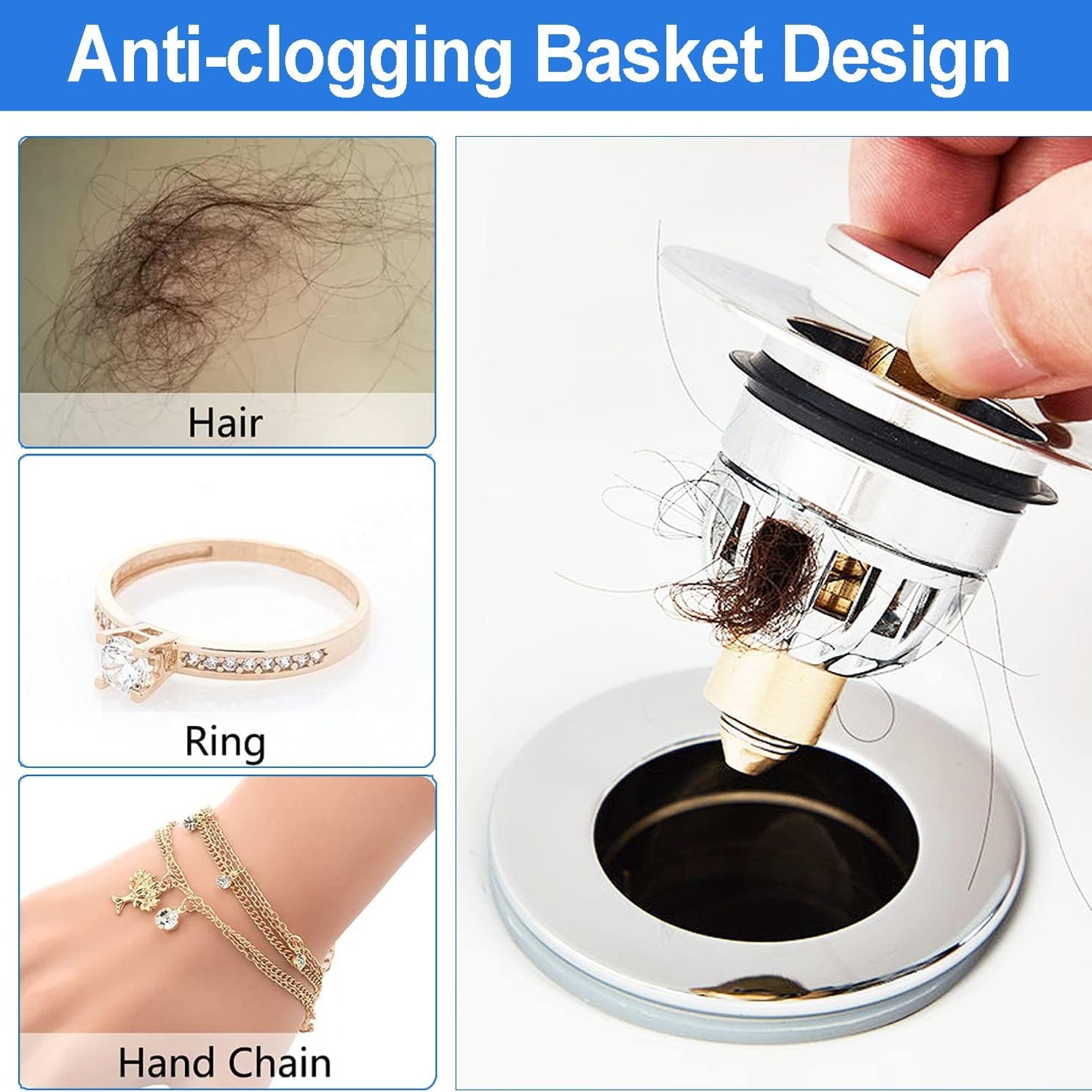
The second half of the design is the strainer basket. It sits below the cover in the flow path, where it catches hair, grit, toothpaste caps and the small lumps of soap that float off a bar. Those are the things that build up in a trap and slowly choke a drain. Catching them where you can see them, and tipping them in the bin, means the pipe stays clear.
Who it suits
This plug makes the most sense for a few different people.
Anyone with a basin that drains slowly will feel the difference first. If you have been pouring chemical unblocker down the sink every few months, the strainer is the fix for the cause rather than the symptom.
Tenants and anyone in a rented flat benefit because nothing is permanent. The old core lifts out, this one goes in, and when you move you reverse it. No landlord conversation required.
Households with long hair get the clearest return. Hair is the single biggest contributor to bathroom blockages, and it binds with soap residue into something that is genuinely unpleasant to deal with later. A basket you empty weekly removes almost all of that.
People who simply want the basin to look tidier also do well out of it. A chain hanging over the edge of a basin is a dated look, and a flat metal cover sitting flush is calmer to the eye.
Getting the size right
This is the part worth slowing down for. The plug suits drain holes measuring between 34mm and 40mm across. That covers a very large share of standard bathroom basins and en-suite sinks, but it does not cover everything.
Take a ruler or a tape and measure across the inside of the drain opening, not the outer rim of the metal flange. If the hole is slightly oval or has a lip, measure at the narrowest point. A number inside that 34mm to 40mm window means the plug will seat properly and the seal will do its job.
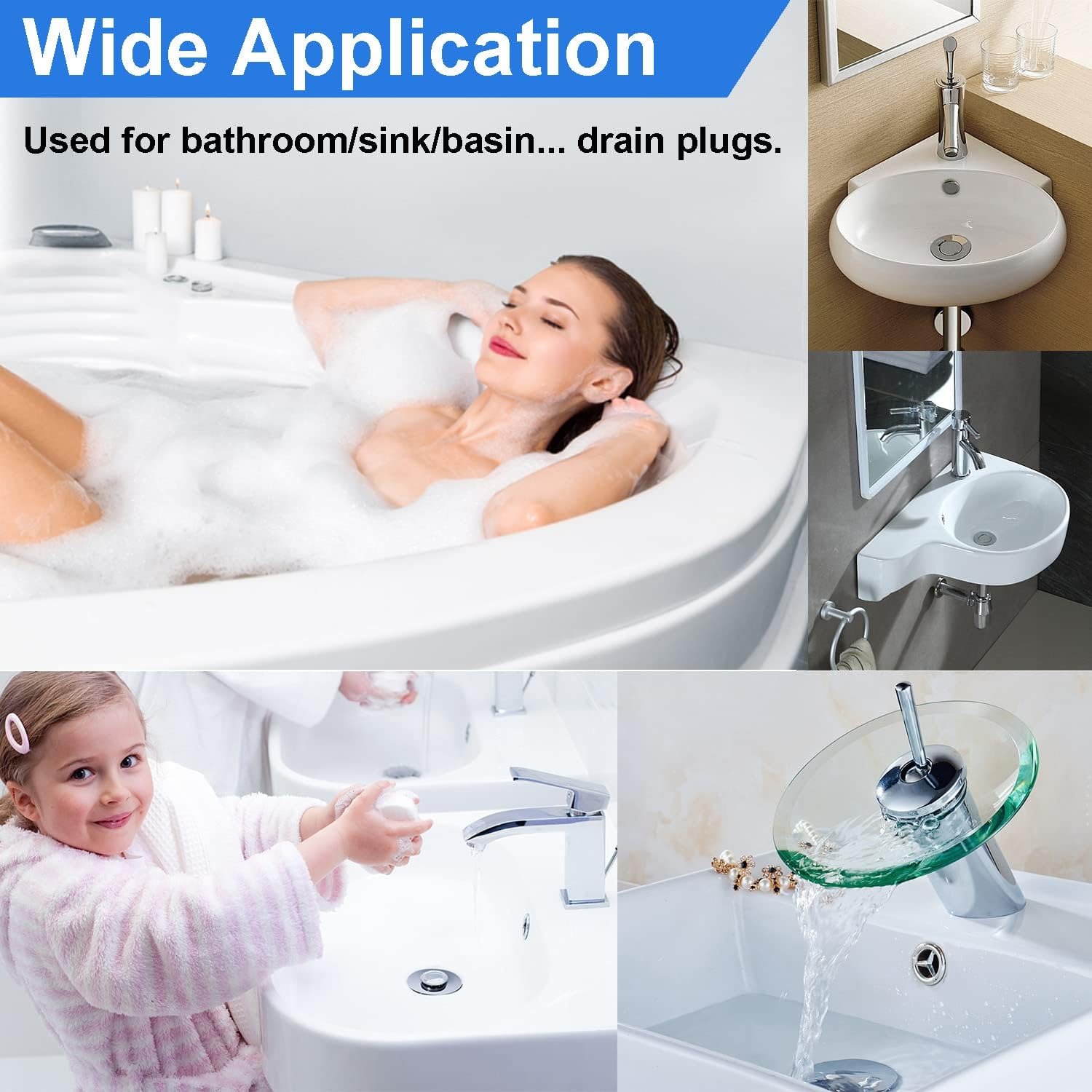
Kitchen sinks are the usual exception. Many use a wider waste, often considerably wider, so measure before you assume. Bath wastes are wider again, which is why a full-size bath generally needs a different product. Some compact baths and smaller shower trays do fall in range, so it is worth checking rather than ruling it out.
If the number comes back under 34mm or over 40mm, this is not the plug for your basin. Buying a near-miss and hoping it seals is how people end up with a slow leak and a damp cupboard.
Fitting it
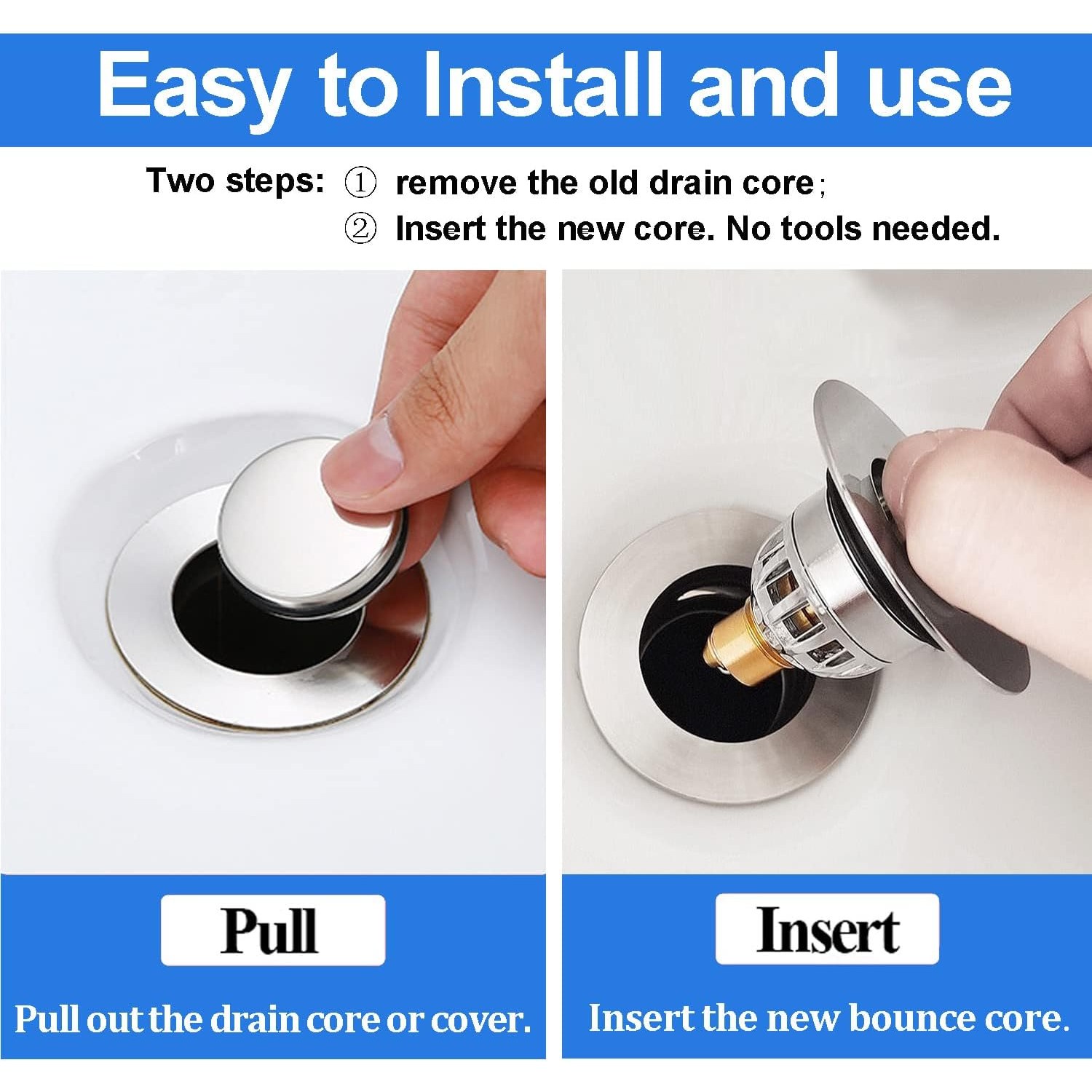
The job is short. Clear anything off the basin, then lift out the existing plug or drainer core. Older plugs may need a gentle twist or a wiggle if limescale has built up around the edge. Wipe the inside of the drain opening clean so the seal has a flat surface to press against. Then push the new plug in until it sits level with the drain.
Run some water and test it. Press the cover down, let the basin fill a little, and watch the water line for a minute. If it holds, you are done. If you see a slow drop, lift the plug back out, check that nothing is caught under the rubber pad, and refit it. A fragment of old sealant or a hair across the seat is the usual culprit.
The spare O-rings in the pack are for later, not for fitting day. Rubber softens over several years of hot water and soap. When the seal eventually starts to weep, swapping the ring is far cheaper than buying a new plug.
Material and finish
The product details list stainless steel in a silver finish. Stainless is the sensible choice for a fitting that lives in standing water, because it resists the rust that eats plated mild steel from the inside once the plating chips.
Silver is also the easiest finish to live with. It sits comfortably beside chrome and brushed taps, which still make up most bathroom fittings. Against matte black or brass it will read as a contrast. Some people deliberately mix metals and like the effect. Others would rather everything matched. Only you can judge that, but it is worth picturing before the box arrives.
Keeping it working
Care is light. Lift the basket out once a week in a busy bathroom, tip it into the bin and rinse it under the tap. Wipe the cover and the drain rim with warm soapy water and a soft cloth, then dry it so water spots do not form.
What to avoid matters more than what to use. Bleach, scouring powder, wire wool and oven cleaner can all mark metal and perish rubber. Strong drain unblockers are the other thing to be careful with, since they sit in direct contact with the seal. If you do need to treat a blocked pipe, take the plug out first, deal with the pipe, flush it through, then refit.
In a hard water area, limescale may eventually make the press action feel stiff. A mild descaler on a cloth, rinsed off straight away, will usually free it. Do not leave descaler sitting on the finish.
What you actually get
The pack holds one plug, one set of replacement O-rings and one protective cover. That is a single plug, so if you want matching fittings in two basins you need two packs. The cover is there to protect the finish during handling and storage, and it is handy to pop back on during decorating work.
Country of origin is listed as China. Packaged weight and overall box dimensions are not specified by the maker, and no warranty period is stated.
The short version
Measure your drain hole first. If it lands between 34mm and 40mm, this plug will drop into your existing waste without tools and without touching the pipework. You press once to hold water and once to drain, and the strainer basket catches the hair and grit that would otherwise end up as a blockage.
It is a small, cheap fix for something that quietly irritates you every single day. Spare seals are in the box, cleaning takes seconds, and if you move house it lifts straight back out.