
The complete guide
Gutter Brush Buying Guide, How To Choose And Fit A Leaf Guard
The problem nobody notices until it rains
Gutters fail quietly. A few leaves land in spring, more arrive in autumn, and somewhere in between the grit that washes off the roof settles into the bottom of the channel. None of it looks like a problem from the ground. Then a heavy night of rain arrives, the water has nowhere to go, and it spills over the front edge in a sheet.
That overflow is the expensive part. Water running down a wall soaks render, finds its way behind fascia boards, and pools at the base of the house where you least want it. The gutter itself is cheap. The damage it causes when it stops working is not.
The traditional answer is to clean the gutters twice a year. That works, as long as you actually do it, and as long as you are happy on a ladder with a scoop and a bucket. For a lot of people, neither of those is true for long.
How a gutter brush works
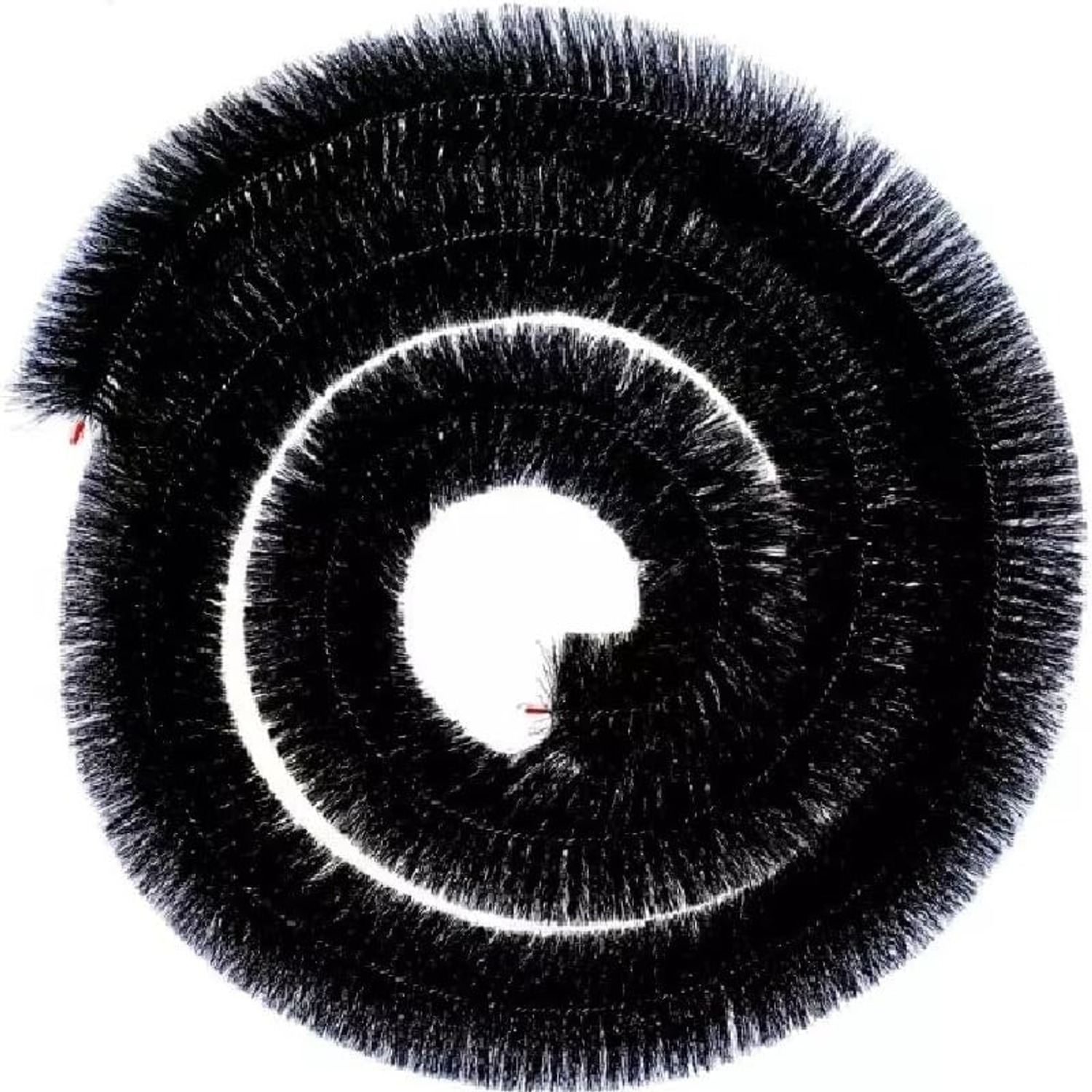
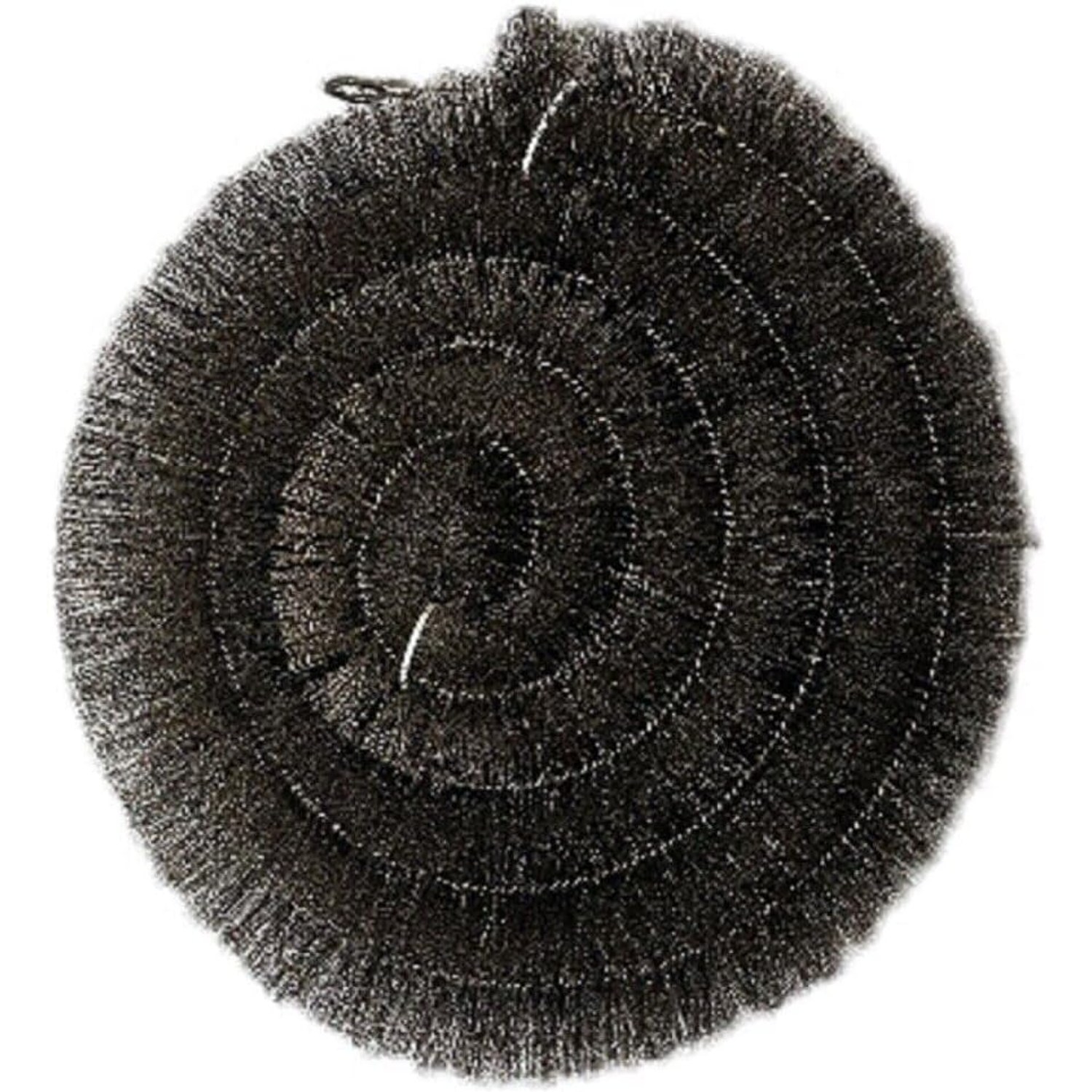
A gutter brush leaf guard is about as simple as home maintenance products get. Take a long strand of stiff nylon bristle, clamp it between two stainless steel wires, then twist the wires so the bristles spiral outward. You end up with a round brush, roughly 100mm across and in this case 4 metres long, that fills the inside of the gutter channel.
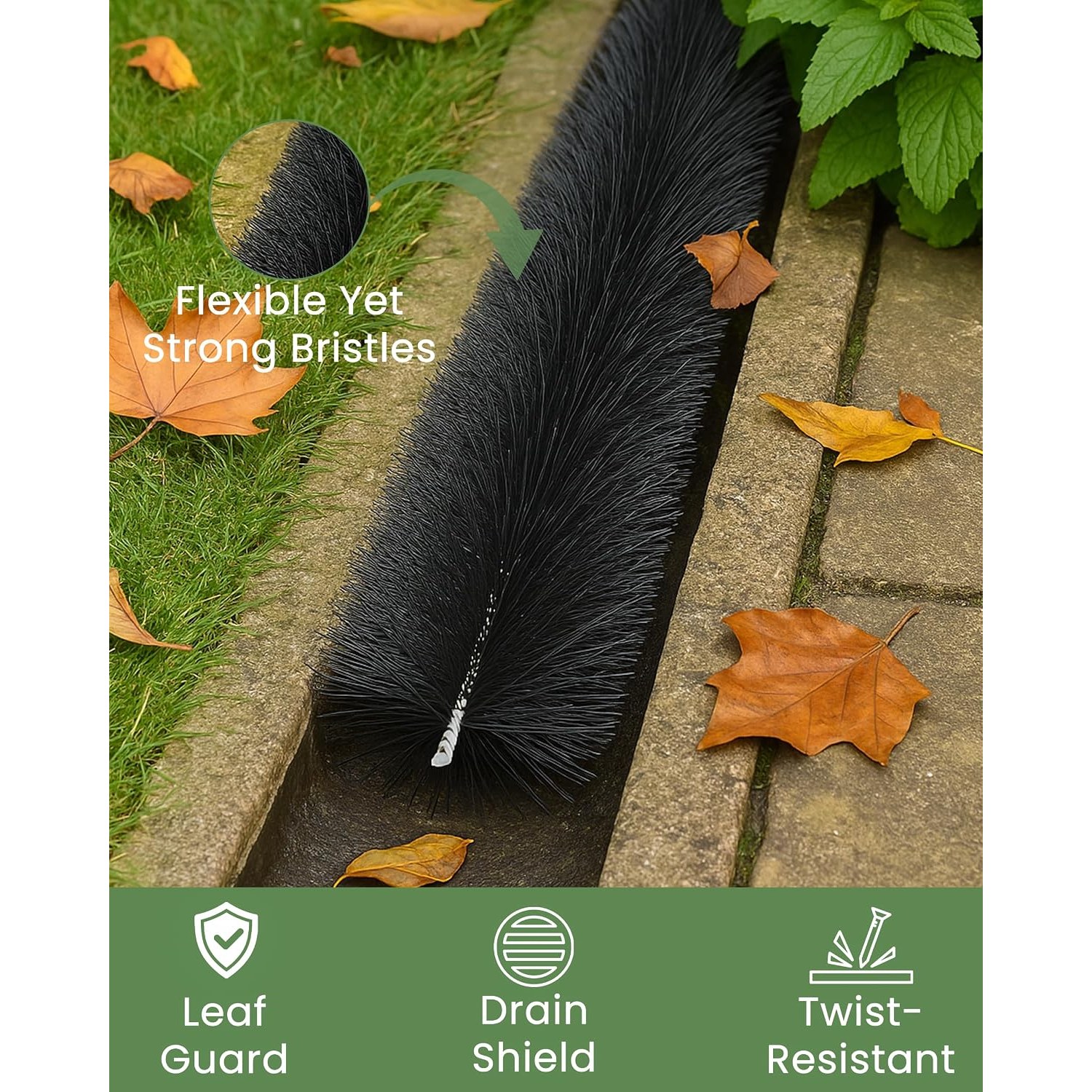
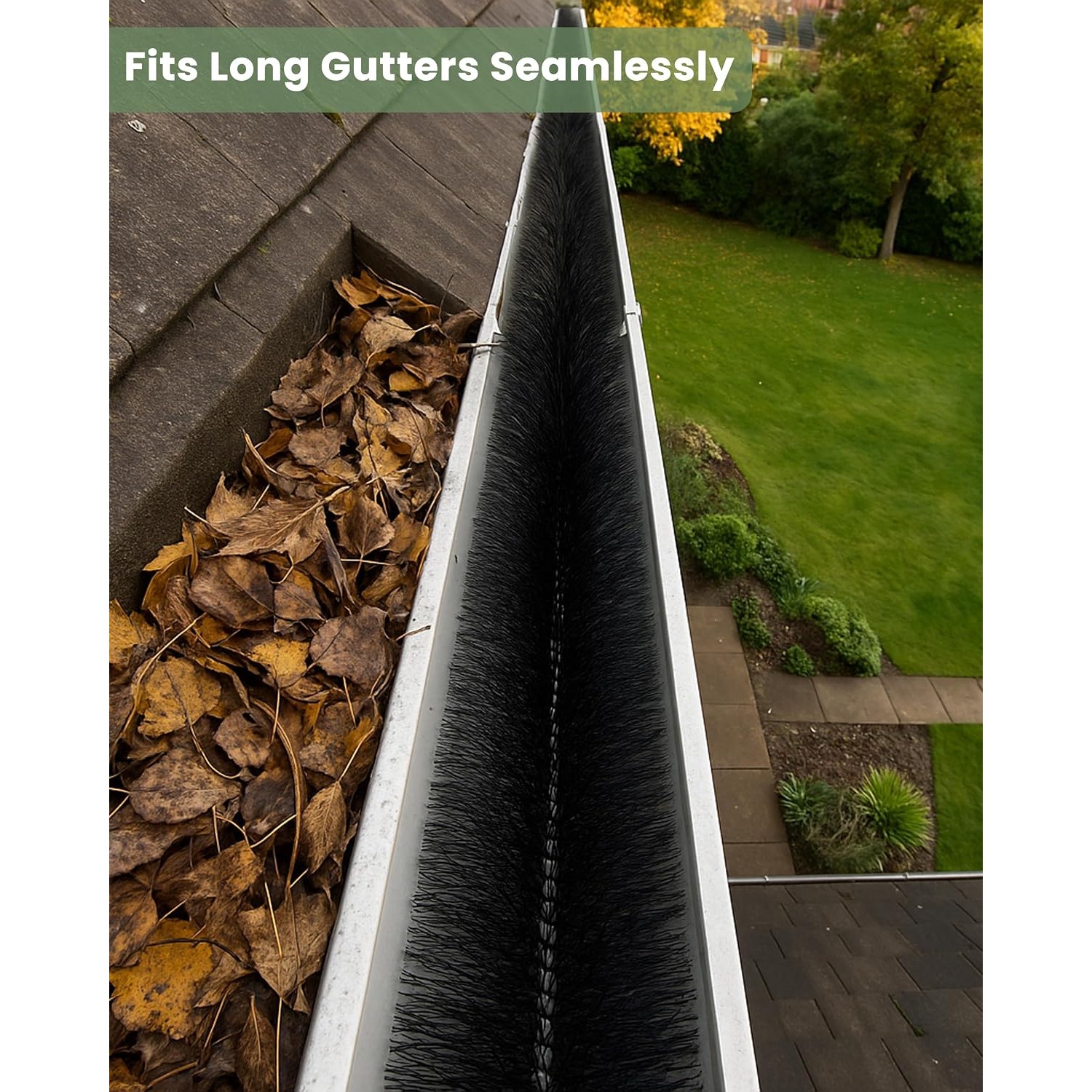
The physics are easy to picture. A leaf is wide and flat. When it lands on the brush it rests on the bristle tips, held clear of the water flowing below. Rain is the opposite: it is fluid and it finds the gaps, so it drains straight down between the bristles and runs along the bottom of the gutter to the outlet.
What happens next is the part people underestimate. The leaves sitting on top of the brush are held in open air, not in standing water. They dry out, go brittle, and a decent gust of wind takes most of them off the roof entirely. Compare that to a leaf that sinks into a wet gutter, rots into sludge and sets like clay around the downpipe outlet.
Who it suits
This kind of gutter protection brush makes most sense if any of the following describe your house.
You have mature trees within reach of the roof, especially deciduous ones that drop in a short, heavy window each autumn. You have a two storey property, or a roofline that needs an awkward ladder position, so each clean is a production rather than a quick job. You are not keen on heights, or you are at a stage of life where ladders are better avoided. Or you rent the place out and want to cut down on the number of small maintenance call-outs.
It is less essential on a single storey bungalow with nothing overhanging the roof, where a ten minute clean once a year is all the gutter has ever asked for. Even then, plenty of people fit it just to stop thinking about the job.
Getting the size right
The number that matters is the internal width of your gutter, measured across the top opening. This brush is 100mm, which is the standard domestic size across most of the common profiles.
Half round gutters, the semicircular ones found on a great many older homes, take this size comfortably. Square and rectangular profiles do too. So do ogee style gutters, which have the decorative front face and a deeper back, and the deeper flow profiles used where a roof sheds a lot of water quickly.
Where the 100mm brush is not the answer is at the two extremes. Small gutters on sheds, greenhouses and carports are often half this width, and the brush simply will not seat. Commercial box gutters and industrial channels are far wider, and a 100mm brush would leave open gaps either side. If your gutter sits in the middle of the normal domestic range, you are fine.
Measure before you order. It takes two minutes on a ladder with a tape and removes all the guesswork.
Working out quantity
Each roll is 4 metres. Walk the perimeter of the house and note the length of each gutter run you want covered. The front elevation might be 8 metres, which is two rolls. A side return of 5 metres takes two rolls with a metre spare, which you can either cut off or tuck into the corner.
Most people cover the runs that sit under trees first and leave the exposed sides for later. There is no rule that says you have to do every gutter on the house at once.
Fitting it
Clean the gutter properly first. This part is not optional. If you drop a brush on top of a layer of old sludge, you have simply hidden the blockage rather than removed it. Scoop out the debris, flush the channel with a hose, and check that water runs away freely down the pipe.
Once it is clear, the brush goes in by hand. Lift one end into the gutter, press it down so the bristles compress against both walls, and work along the run pushing the brush into the channel as you go. The flexible stainless core follows the line of the gutter, including a slight sag or a shallow curve, without needing to be forced.
At internal corners, let the ends of two rolls meet and overlap the bristles slightly rather than leaving a gap. At the downpipe outlet, keep the brush running right over the hole. That is where you want the most filtering, not the least.
Ladder safety is worth a paragraph of its own. Set the ladder on firm, level ground at the correct angle. Have someone hold the base if you can. Move the ladder rather than leaning sideways, because reaching out past your shoulder line is how people come off ladders. If the roofline is high or the ground is uneven, hiring someone for an hour is money well spent.
Keeping it working
No gutter leaf filter is permanent and fit-and-forget. What a brush does is change the maintenance from a dirty job to an easy one.
Twice a year, after autumn leaf fall and again in spring, run a quick check. Lift a section of brush out, give it a shake over a bag or a border, and look at the gutter underneath. If the channel is clear and the bristles are mostly open, drop it back and move on. If grit or moss has worked into the bristles, a rinse with the hose clears it in seconds.
Houses under pine trees need a closer eye. Needles are narrow enough to work between bristles over time, and they are the one type of debris that will test any brush. An extra check each season handles it.
The brush itself asks for nothing. The nylon holds its shape through heat and cold, and the stainless core is there precisely because a gutter is a wet place. Over several years the black will fade a little in strong sun, which affects nothing but the colour.
A few honest limitations
It is worth being straight about what this product does not do. It will not stop ice forming in a gutter during a hard freeze, because nothing in the channel can. It will not keep fine roof grit out entirely, and some will always settle beneath the bristles. It is not a bird deterrent for the roof, although birds do lose interest in a gutter they cannot nest in.
And it does not remove the need to look at your gutters occasionally. It just means that when you do look, there is usually nothing much to do.
The short version
A 4 metre roll of 100mm nylon brush on a stainless core, pressed into the gutter channel with no tools and no fixings. Leaves sit on top and blow away. Rain goes through and down the pipe. Measure your gutter width, count your runs in metres, divide by four, and order that many rolls. Clean the gutters once before fitting, then check them twice a year instead of clearing them twice a year. For most houses with trees nearby, that trade is an easy one to make.