
The complete guide
The Practical Guide To Clearing A Slow Drain With A Hand Snake
The problem nobody deals with until it is too late
A drain rarely blocks overnight. It warns you first. The water in the basin takes a second longer to go down, then a few seconds, then you find yourself brushing your teeth over a shallow puddle. Most of us ignore that stage completely, because nothing is actually broken yet.
By the time the water stops moving, the clog has been building for weeks. In a bathroom it is almost always hair bound together with soap residue, shampoo and skin oils, sitting in or just past the trap. In a kitchen it is grease that cooled, stuck to the pipe wall and started catching everything that came after it. Either way, what you have is a soft, fibrous plug in a specific spot, usually within the first metre of pipe.
That matters, because it tells you what tool to use. You do not need to flood the pipe or dissolve anything. You need to physically reach the plug and bring it back out.
Why a hand snake beats the usual fixes
A plunger works by pressure. It pushes water back and forth against the blockage, hoping to break it apart and flush it onward. For a loose clog in a kitchen sink that sometimes works. For a dense hair mat it mostly just moves the mat around, and occasionally pushes it deeper into the pipe where it is harder to reach.
Chemical cleaners work differently, breaking down organic material over time. They can help, but they have two problems. The first is that they often soften the outer surface of a clog and leave the core intact, so the drain speeds up for a week and then slows again. The second is that you are pouring something caustic into a pipe and then into the water system, which nobody enjoys, and it sits in your cupboard where it should not be near children or pets.
A hand snake just grabs the thing and pulls it out. It is blunt, slightly unpleasant to look at, and extremely effective. When people search for the best sink unblocker tool, this is usually what they land on, because the result is immediate and you can see exactly what came out.
How this one is built
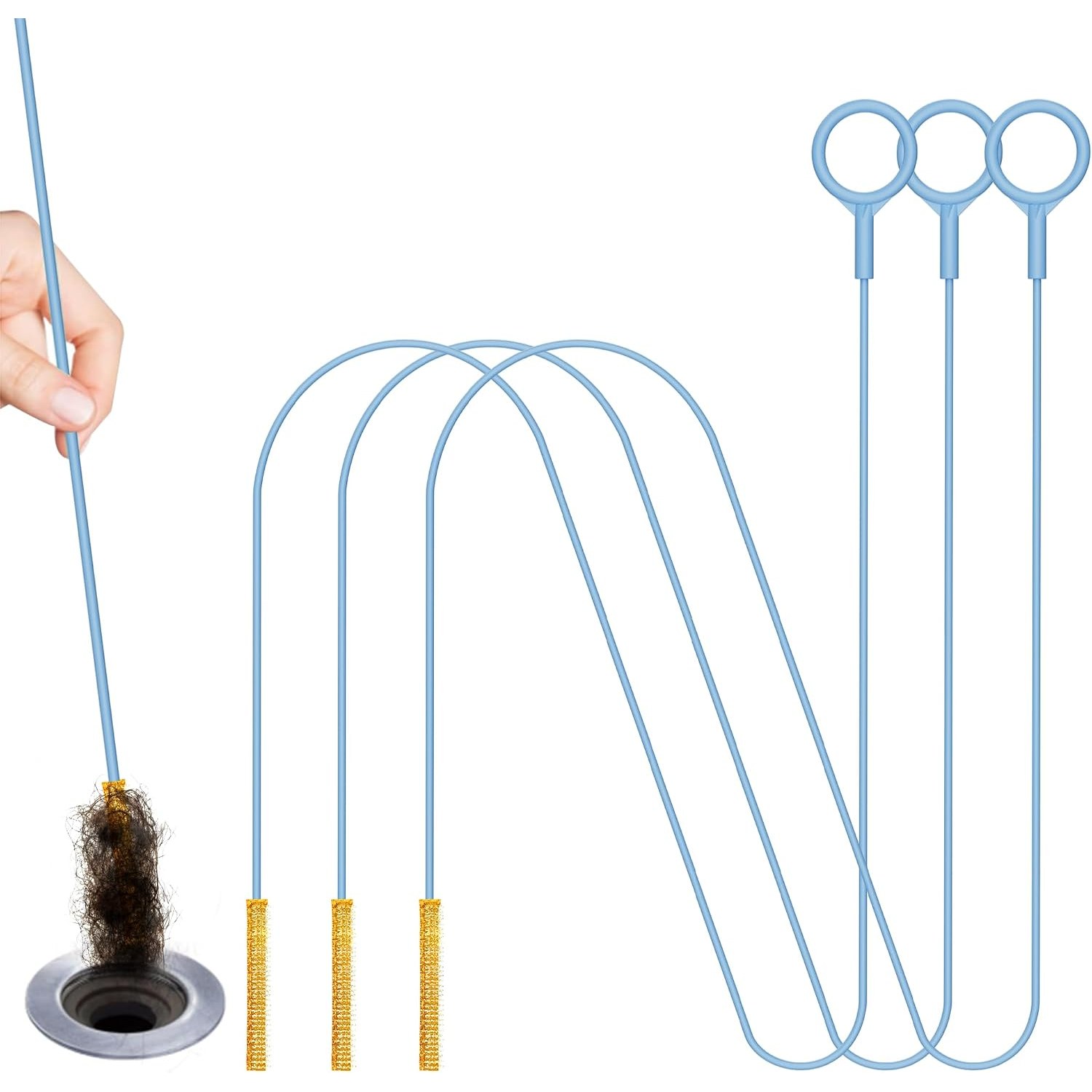
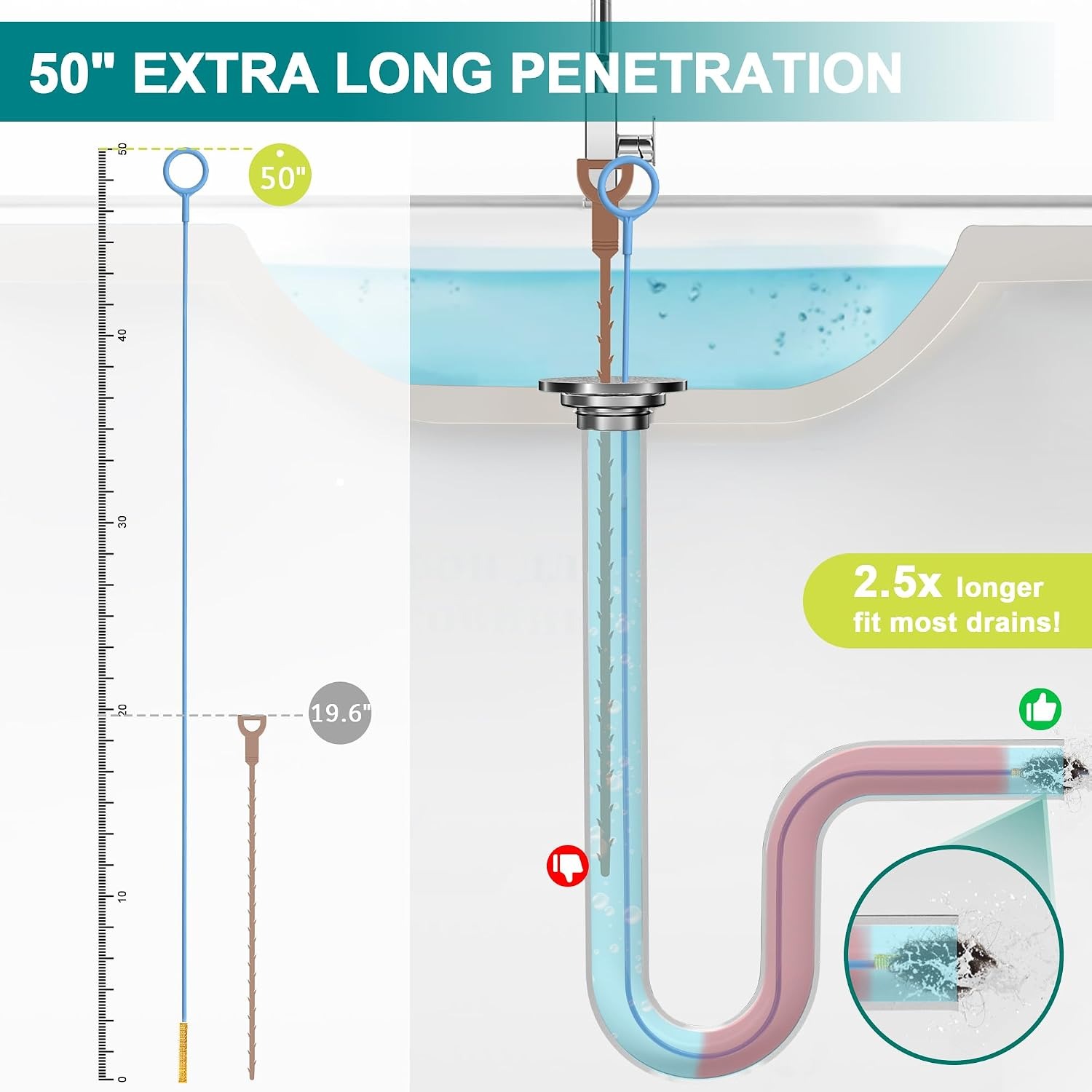
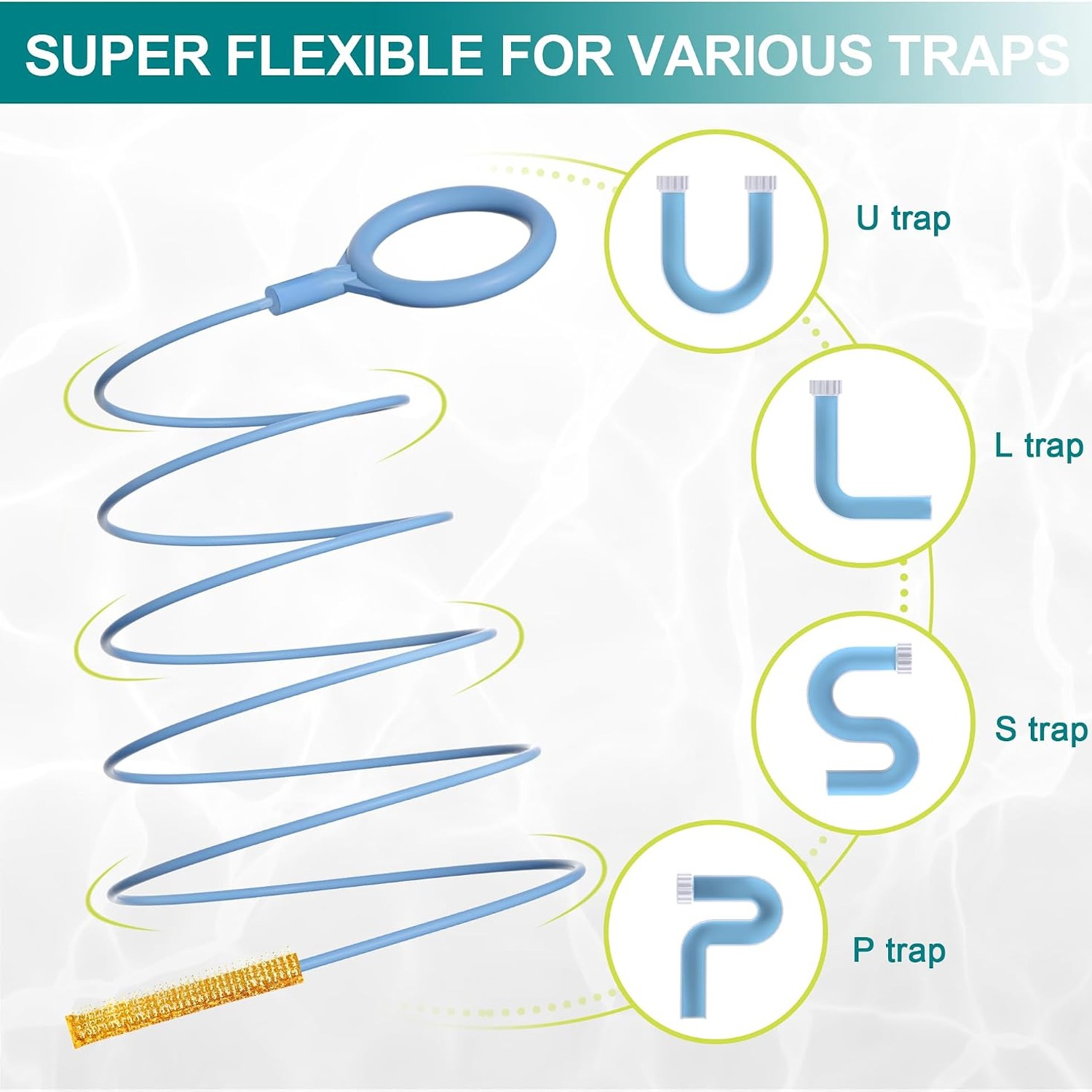
The wand is 127cm long and 0.56cm across. Those two numbers do most of the work. The length gets you past the trap, which is where the vast majority of household clogs live, and a decent way into the pipe beyond it. The thinness means it actually fits into the opening you are trying to use.
That second point is underrated. A lot of drain tools are too fat for a modern shower grating or a basin with a pop-up waste. You end up dismantling the plughole just to get started, which is exactly the kind of job that makes people give up and leave it. A slim wand usually slides through the existing slots.
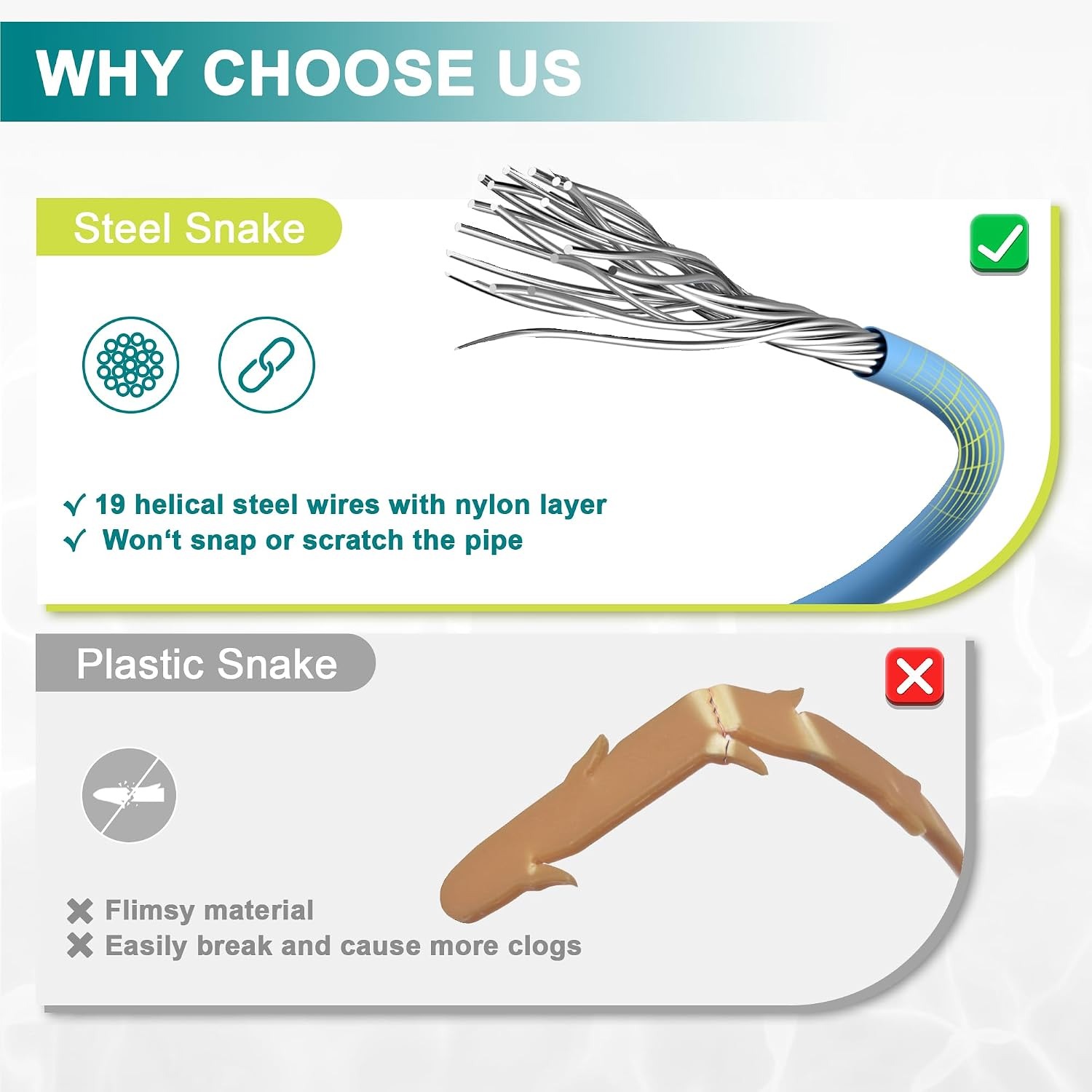
Inside, there is a steel core. That gives the tool enough stiffness to push, so the wand does not just concertina when the tip meets resistance. Around it is a flexible layer that lets the whole thing bend around the U-bend rather than wedging at the first curve. Stiff enough to drive forward, soft enough to turn a corner. That combination is the whole trick with a flexible drain cleaner.
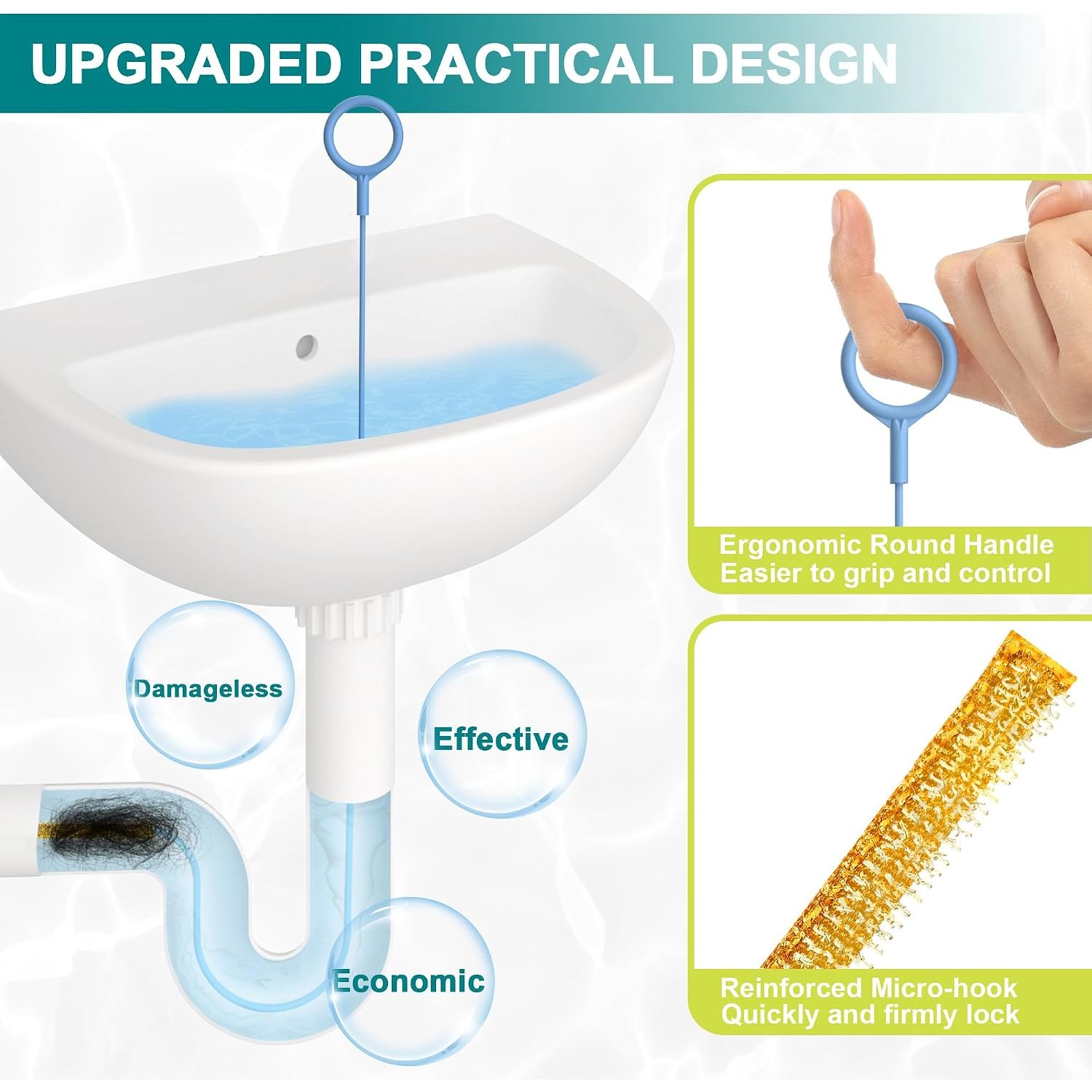
The hooks along the length are stitched and glued rather than moulded. If you have ever used a cheap plastic snake with barbs, you will know the failure mode: you get a good grip on a clog, pull hard, and the barbed tip shears off and stays in the pipe. Reinforced hooks are the fix for that, and the slim head profile helps the tool slide back out instead of catching on every joint.
Who it suits
Anyone with hair in the house, honestly. Long hair makes it worse but short hair clogs drains just as reliably, it just takes longer. Households with two or three people sharing a shower will get the most use out of it.
It also suits renters. You cannot exactly call out a plumber over a slow basin in a flat you have had for two months, and you probably do not want to be dismantling the landlord's pipework. A hand tool that goes in and comes out again is the low-risk option.
Pet owners find it useful too, since a dog wash in the bath sheds a remarkable amount of fur into one drain in one session. And if you look after more than one property, a holiday let, a caravan, a boat, the three-pack means you are not carrying one tool between them.
How to actually do it
Clear the area and put a bin bag or old towel next to the drain, because what comes out is going somewhere and you want that decided in advance.
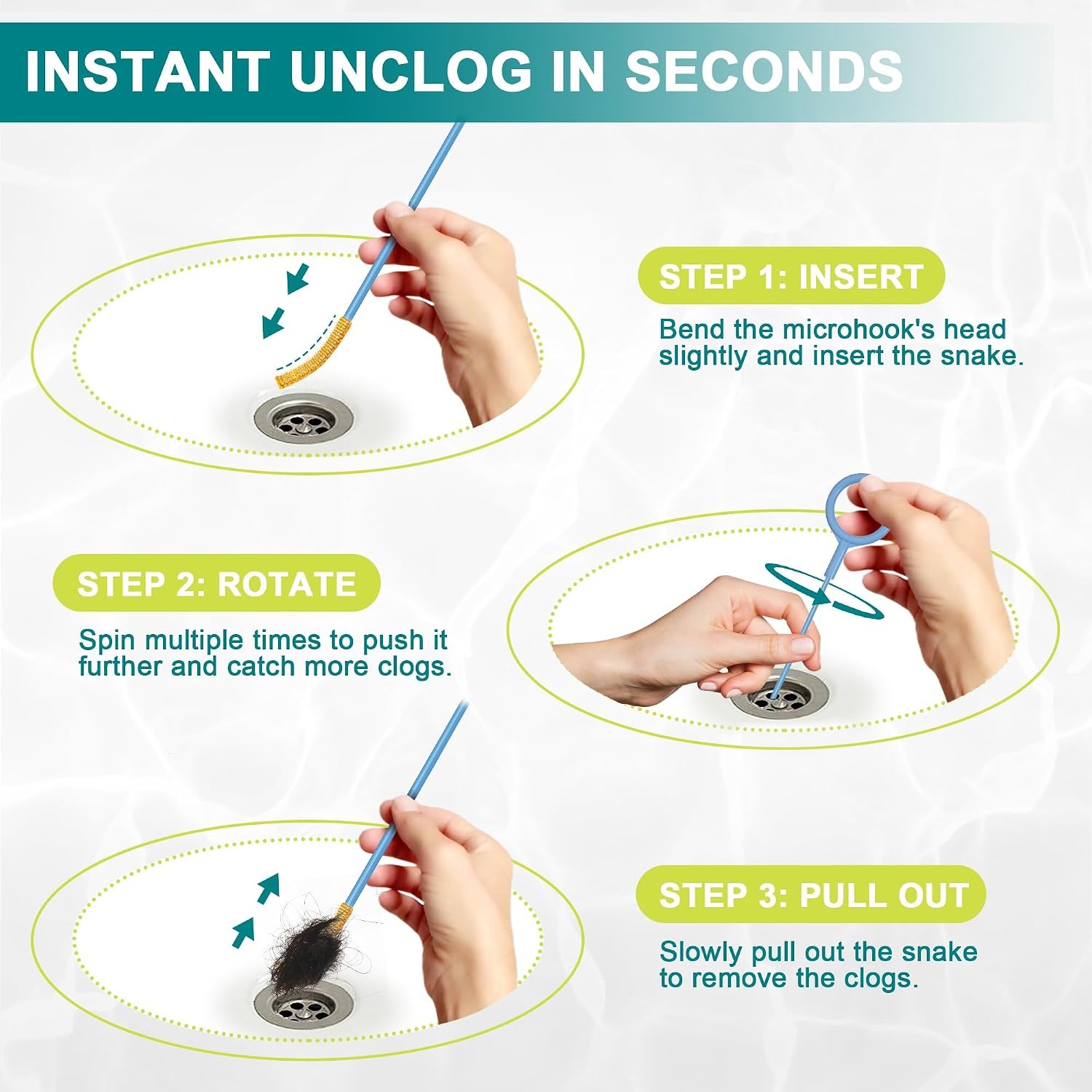
If the tip is dead straight, put a small bend in it first. A cloth or a pair of pliers is the right way to do this. The edges can be sharp and bending it with bare hands is a good way to nick a finger. That little bend helps the tip follow the curve of the trap instead of pressing into the back of it.
Feed the wand in slowly. When you hit resistance, stop pushing and start turning. A few full rotations lets the hooks dig into the mass and get hold of it. Then draw the wand back out slowly and steadily. Slow is the important word, because a fast pull shakes debris off the hooks before it reaches the opening.
Dispose of whatever came out, rinse the wand, and go again. Two or three passes is normal. When the wand comes back clean, run hot water for a minute to flush out the loose remainder. If you want a belt-and-braces finish, plunge afterwards, not before.
If after several passes the water is still barely moving, stop. You have either got a blockage deeper than the wand reaches or something structural, like a collapsed section or a badly sloped pipe. That is a plumber's job and no amount of forcing a hand tool will change it.
Keeping it in good shape
Care is simple. Rinse under hot running water, wipe it down, let it dry fully before it goes back in the drawer. Damp storage is the main thing to avoid.
Store it coiled loosely or hanging from a hook. The one habit to break is folding it hard in the same place every time, because a repeated sharp crease is where a flexible wand eventually weakens. Keep it somewhere children cannot reach, since the hooks are not sharp like a blade but they will catch skin.
A quick note on timing. The tool works best as maintenance rather than rescue. Running it through the shower drain once a month, before anything feels slow, takes about three minutes and means you never meet the fully blocked version. People who treat it as a routine best drain maintenance tool rather than an emergency purchase get far more out of it.
The short version
Slow drains are almost always soft debris sitting just past the trap. The quickest fix is to reach it and pull it out, and that needs something long, thin, stiff enough to push and flexible enough to bend.
This pack gives you three 127cm wands at 0.56cm across, with a steel core and reinforced micro-hooks. No batteries, no chemicals, nothing to assemble. Insert, turn, pull out slowly, rinse.
Keep one in the bathroom and one under the kitchen sink. Use them before the water stops rather than after, and the blocked-drain panic mostly disappears from your life.