
The complete guide
How to Choose a Kitchen Sink Strainer and Plug That Actually Seals
The small part that ruins a sink
Nobody buys a house and thinks about the plug. Then one day you fill the bowl to soak a casserole dish, come back twenty minutes later, and the water has gone. The rubber has hardened, the plug no longer grips, and you spend the next month balancing a mismatched stopper over the hole and holding it down with a mug.
It is a tiny part, but it decides whether your sink works. A plug that does not seal means no soaking, no hand washing glasses in a bowl of warm water, no rinsing vegetables without the water draining away as fast as you pour it. And a sink with no strainer means every scrap of rice, every bit of peel and every stray tea leaf goes straight into the trap, where it sits and starts to smell.
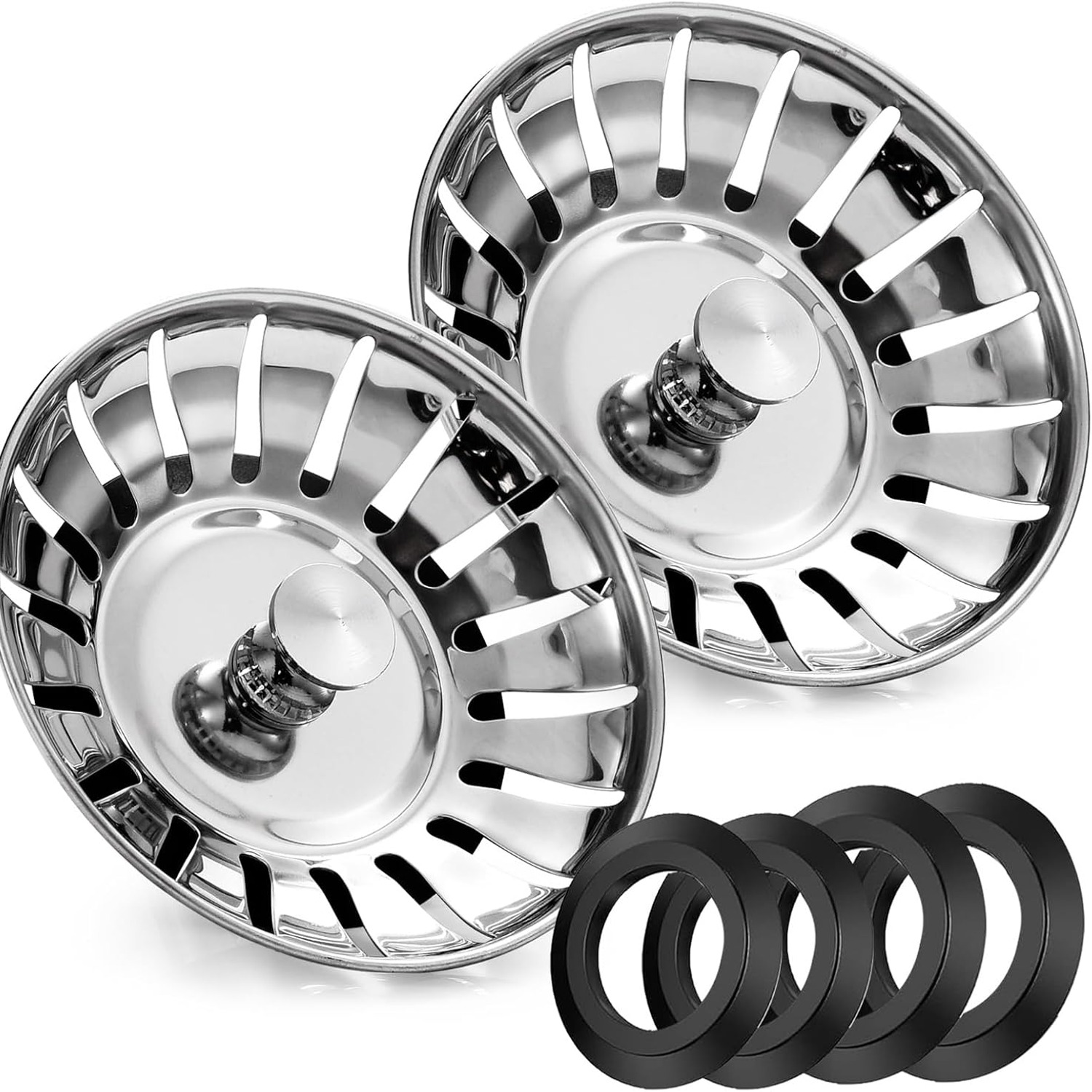
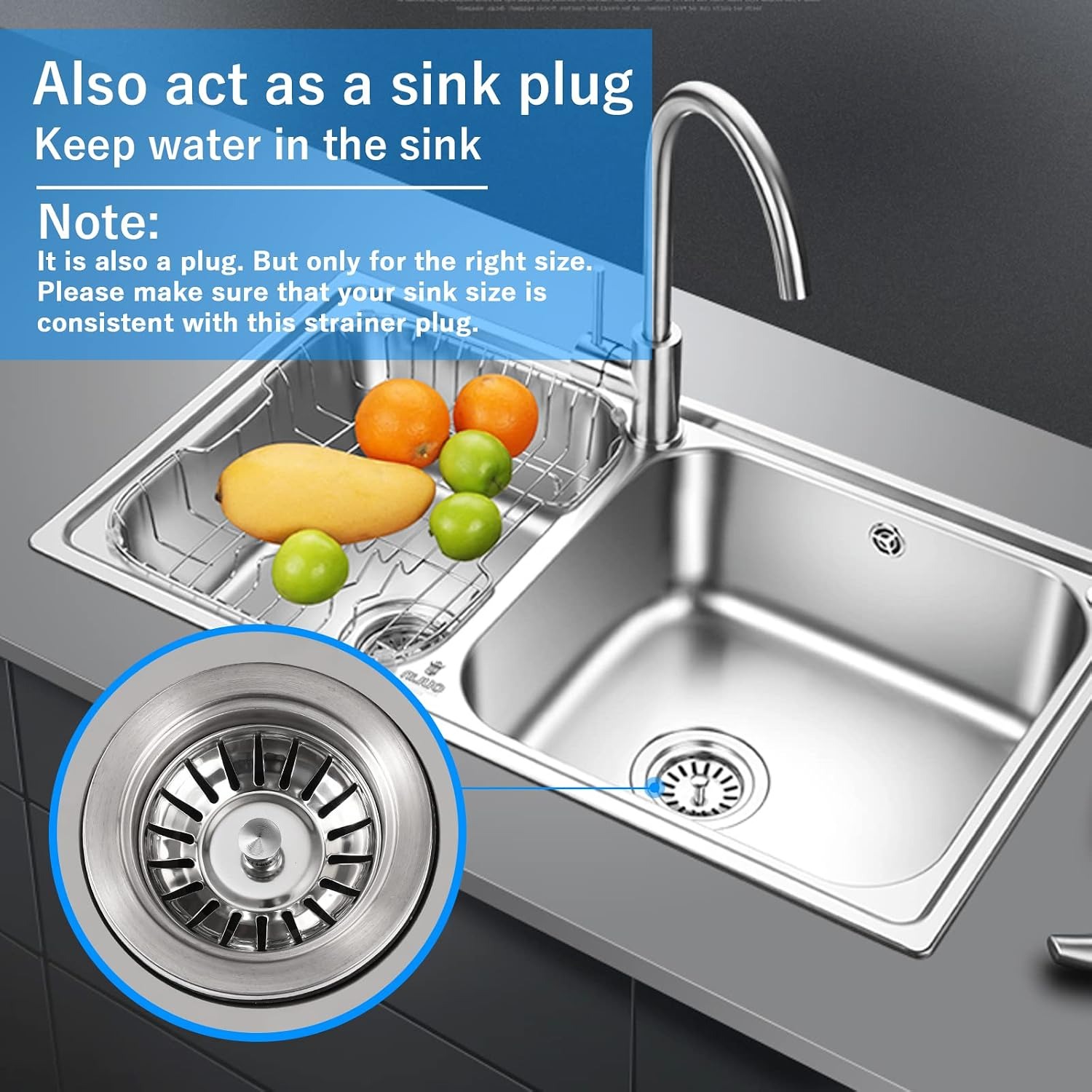
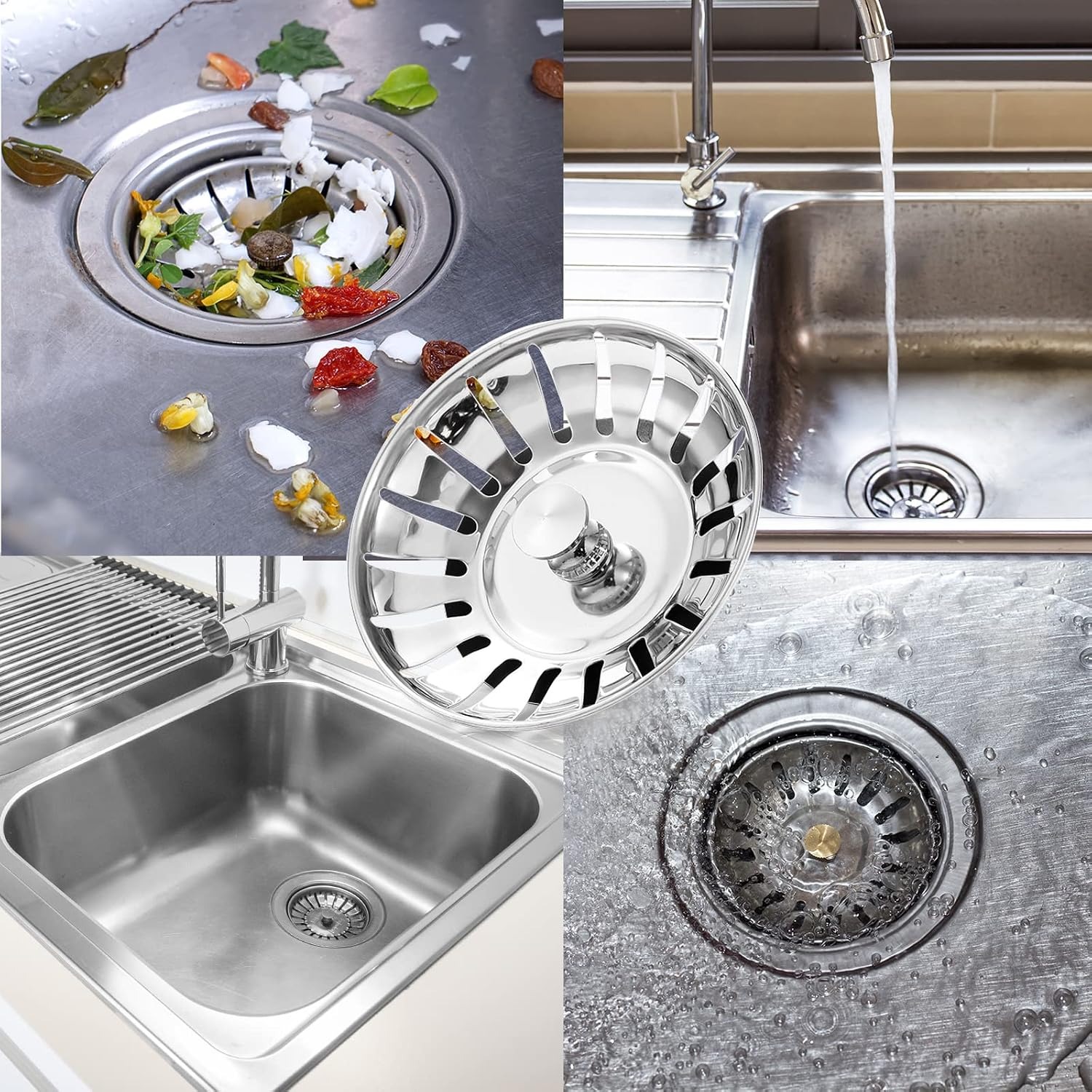
This fitting handles both jobs. It is a 78mm stainless steel unit that works as a plug when you press it down and as a strainer when you lift it slightly, and it comes two to a pack.
How the press down action works
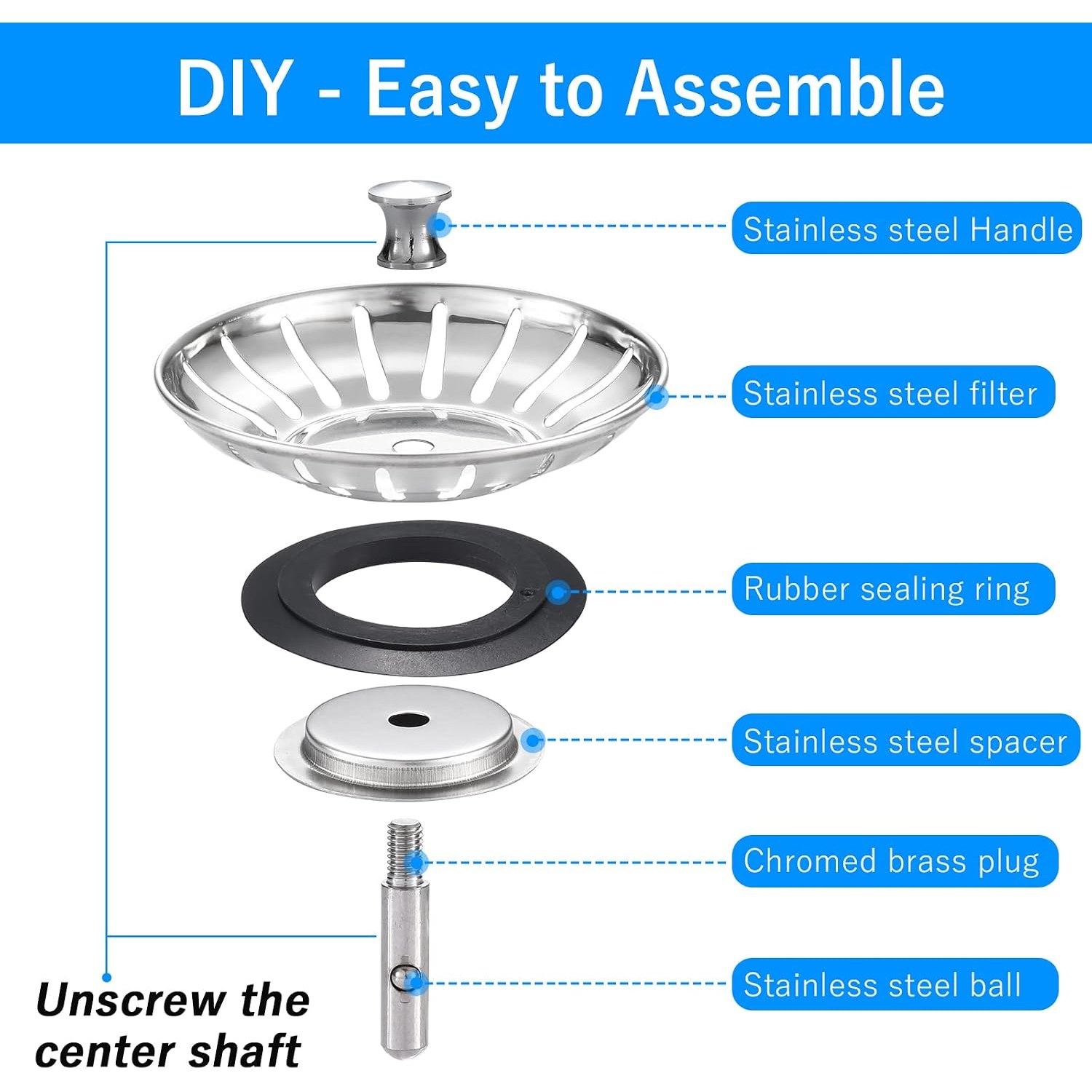
The mechanics are simple, which is why they tend to last. A rubber seal sits underneath the stainless steel body. The central knob moves up and down on a short travel. Press it, and the seal is forced against the inside of the waste outlet, closing it off. The weight of the water in the bowl then helps hold the seal in place rather than pushing it out, which is the opposite of what happens with a loose old stopper.
Lift the knob a small amount and the seal pulls away from the waste. Water starts running out through the 20 holes drilled around the basket. Solids cannot follow, so by the time the bowl is empty you have a neat collection of scraps sitting in the strainer, ready to tip into the bin.
That is the practical difference between this and a flat plastic stopper plus a separate mesh cover. You are not swapping parts halfway through the washing-up. One fitting stays in the hole and you just change its position.
Why stainless steel is worth it here
A sink waste lives in the worst conditions in the kitchen. It is wet almost permanently. It gets detergent, lemon juice, tomato sauce, coffee and hot fat. Plastic fittings go cloudy, then brittle, then crack around the knob. Chrome-plated parts can blister where the plating lifts.
Stainless steel handles that environment better. The polished finish on this strainer wipes clean with a cloth and detergent, and it keeps looking like part of the sink rather than a cheap afterthought sitting in it. If your sink is stainless steel, a matching rustproof sink strainer blends in completely. If your sink is a composite or enamel, the bright silver reads as a deliberate finish rather than a repair.
There is a cosmetic argument too. Sinks age. The bowl gets scratched, the tap gets limescale, and the plug gets grubby. Replacing the plug is the cheapest of those three fixes by a long way, and it is the one that catches your eye every time you walk past.
Getting the size right
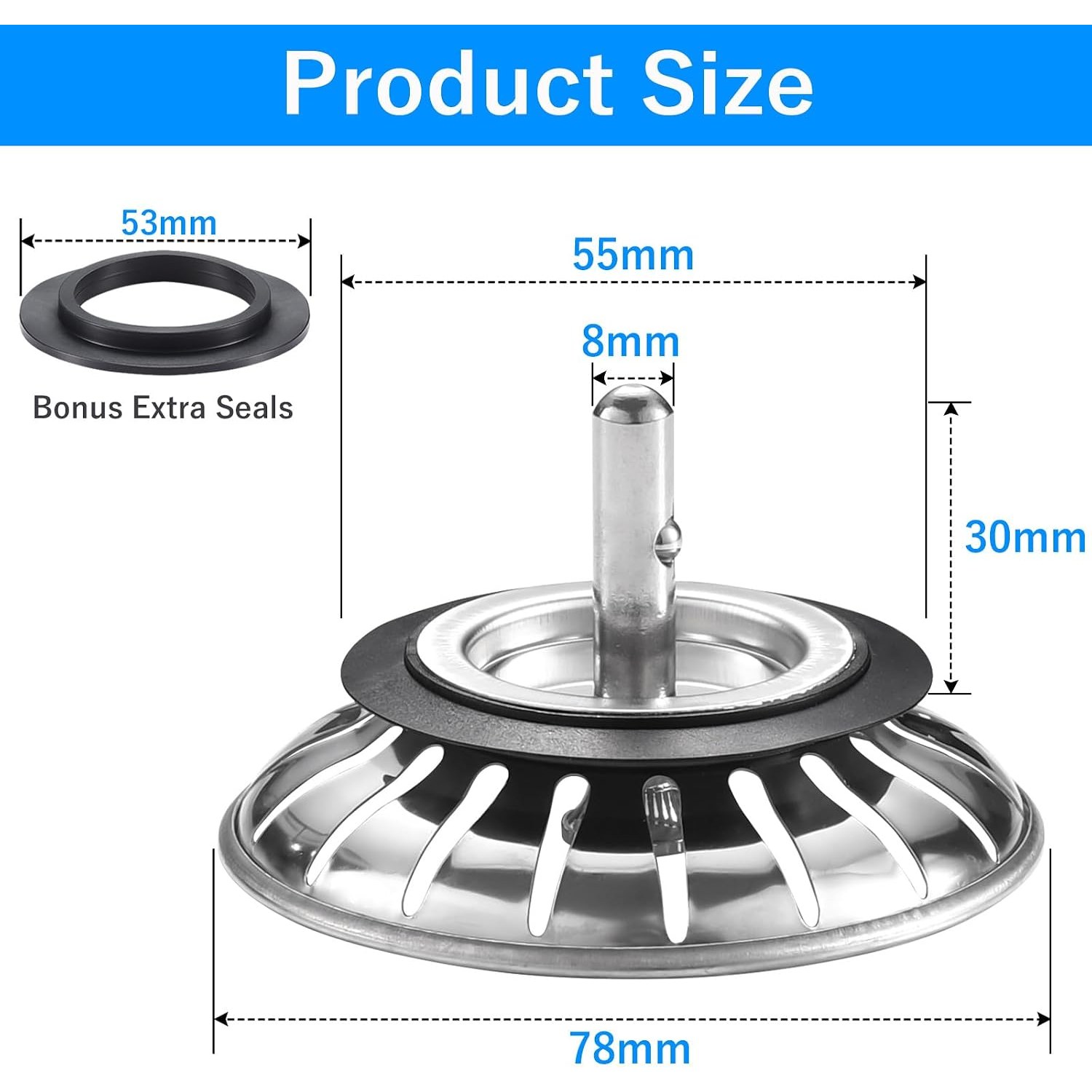
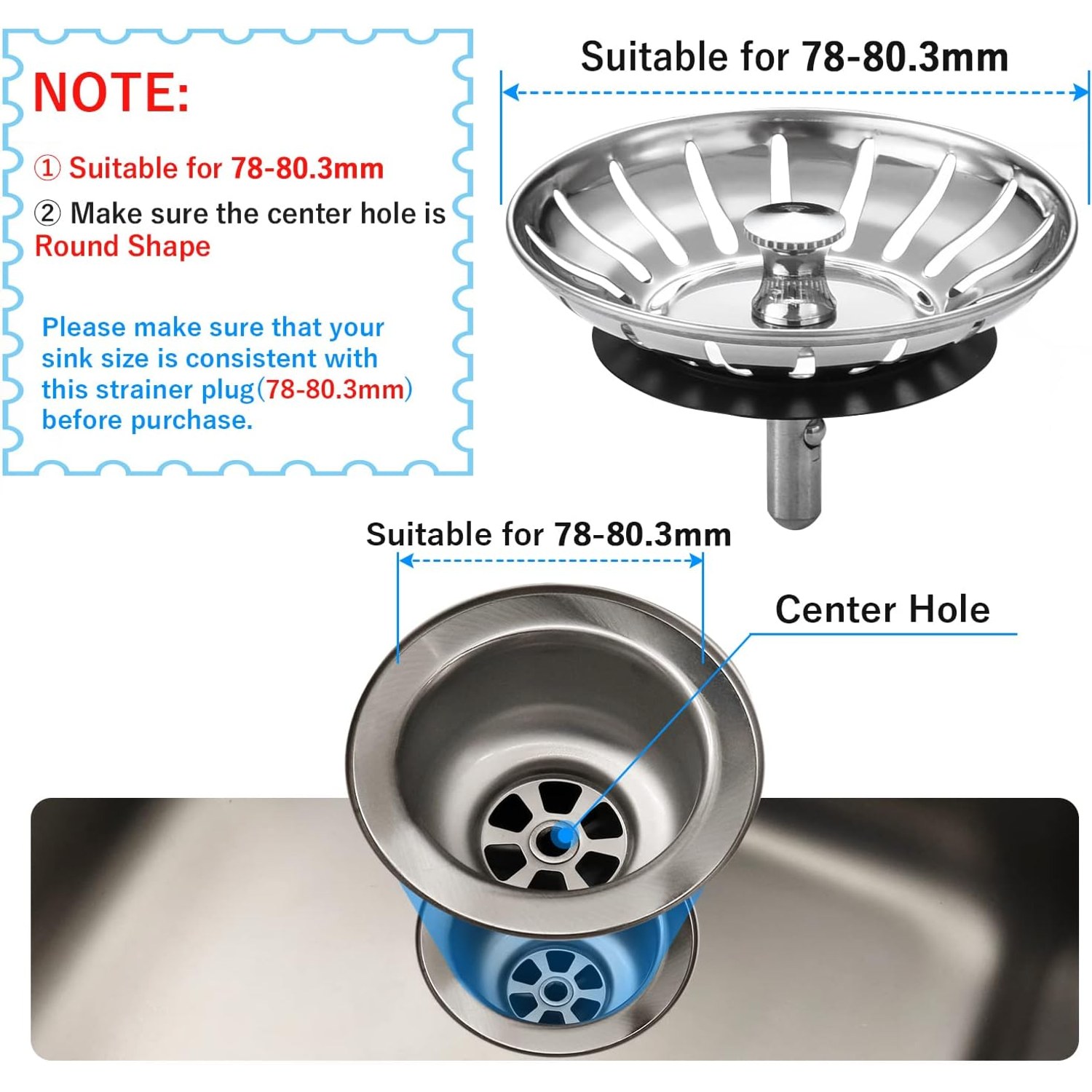
This is the part people get wrong, so it is worth slowing down. The strainer is 78mm and it is made for sink openings measuring 78.3mm to 80mm. That is a narrow window, and sink wastes are not standardised across every brand and every decade.
Take the old plug out and measure the hole in the sink itself, not the plug. Put a steel rule or a tape across the widest point of the opening, inside edge to inside edge. Write the number down. If it reads somewhere between 78.3 and 80, this is your size.
Two other numbers help. The main rubber seal is 55mm, with an extra 53mm seal in the box. And the measurement from the bearing to the rim is 30mm, which tells you how far the basket drops below the sink surface. If your waste is an unusual shape, compare that depth against what you already have.
If the numbers do not match, the right answer is a different size, not force. A sink plug that is slightly too small will never seal properly, and one that is slightly too large will not sit flush.
Who this suits
Anyone with a double bowl sink gets the most obvious benefit, since the pack covers both bowls with a matching finish. Having one bowl with a proper seal and the other with a chipped old stopper is a small irritation that never goes away.
Single bowl households still do well out of two. The rubber seal is the component that wears, usually after a few years of daily use. Having a second complete fitting and spare seals in the drawer means the fix takes seconds whenever that day comes.
Landlords and anyone doing up a tired kitchen should look at it too. Swapping the plug is a no-tools, no-plumber job that visibly improves a sink without touching any pipework. It is one of the better value small upgrades in a kitchen.
Fitting and daily use
Assembly takes under a minute. Put the seal on the body in the order shown in the instructions, drop the unit into the sink opening, and press the knob to check it holds water. Fill the bowl a little and watch for drips around the edge. If the seal is seated correctly it will hold.
Day to day, keep one habit. Scrape plates into the bin before they reach the sink. The strainer is there to catch what gets past you, not to do the scraping for you. With that habit, the basket collects a small amount of debris per wash-up and emptying it is a two second job.
Keeping it clean
Lift it out at the end of the washing-up, tip the scraps into the bin and rinse under warm water. Once a week, give it a proper wash with detergent on a sponge, paying attention to the underside of the basket and the groove where the seal sits. Dry it with a tea towel and the polished surface stays bright instead of spotting.
Two things to avoid. Steel wool and wire brushes will put fine scratches across the polish. And strong drain unblockers should not sit on the fitting, so take it out before you pour anything like that down the waste, then rinse the strainer before it goes back.
The short version
A 78mm stainless steel kitchen sink strainer and plug does two jobs with one part. Press it down to hold water for soaking and hand washing. Lift it slightly to drain while the 20 holes keep food scraps out of your pipes. The polished stainless steel copes with a wet, soapy, acidic environment better than plastic, and spare rubber seals come in the box so the first sign of wear is a quick swap rather than a new purchase.
Measure your sink opening first. If it falls between 78.3mm and 80mm, this is a straightforward fix that takes a minute and makes the sink feel properly sorted again.