
The complete guide
How to Clear a Blocked Drain Yourself, Without Chemicals
The problem nobody notices until it is bad
A drain does not fail suddenly. It gets lazy first. The water in the shower tray lingers for a few seconds after you turn the tap off, and you think nothing of it. A few weeks later it is a puddle around your ankles. By the time you notice properly, the pipe has been narrowing for months.
The cause is almost always the same in bathrooms. Hair goes down the plughole, soap and conditioner coat it, and the mix sticks to the pipe wall just below the surface. In kitchens it is grease and food scraps doing the same thing. Neither one is a plumbing fault. It is just build-up, and build-up can be pulled out if you have something that reaches it.
That is what this kit is for. It does not dissolve anything, it does not need power, and it does not push the problem further down the line. It grabs the clog and brings it back up where you can see it and bin it.
How the tools in the set differ
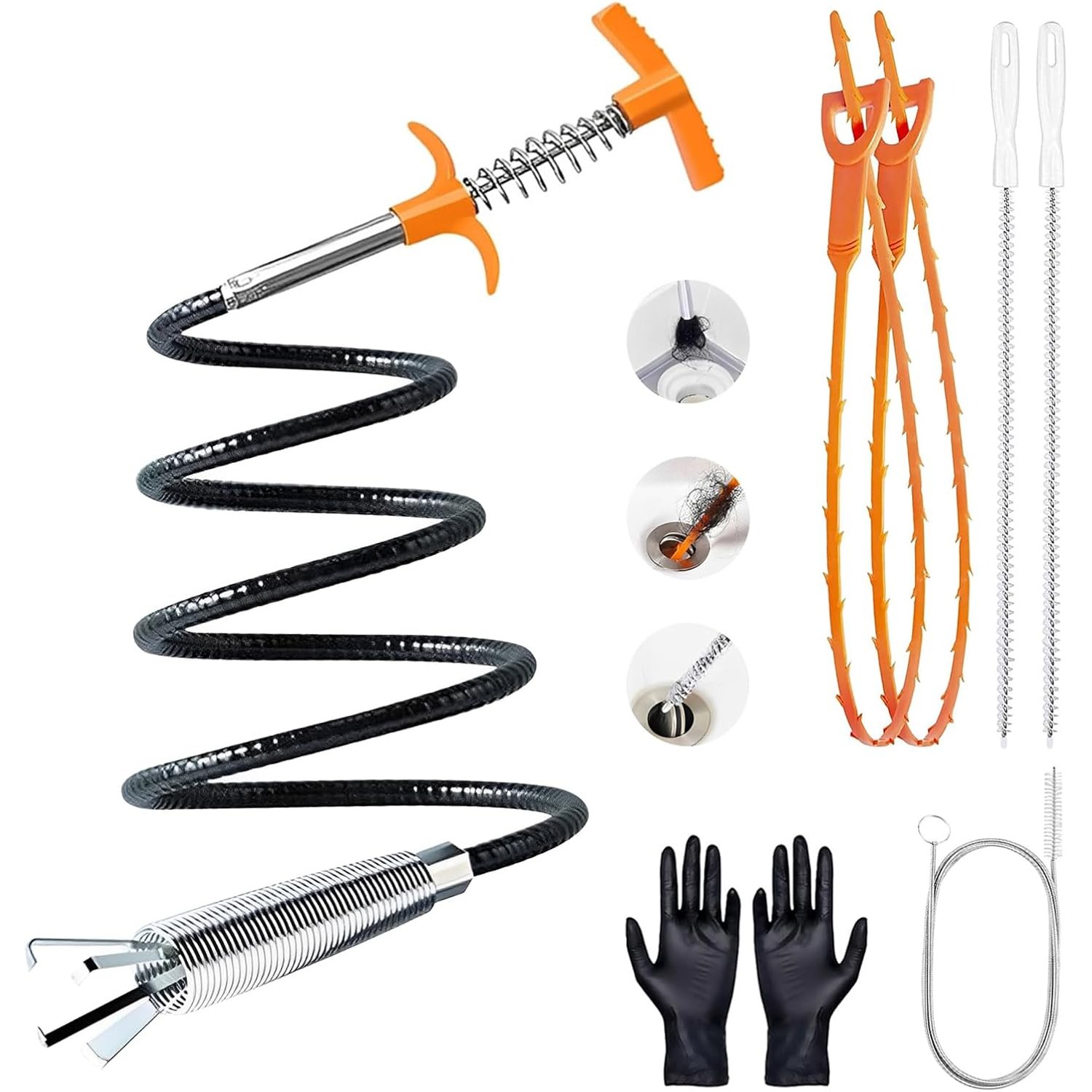
There are several pieces here, and they are not interchangeable. Knowing which does what saves a lot of fiddling.
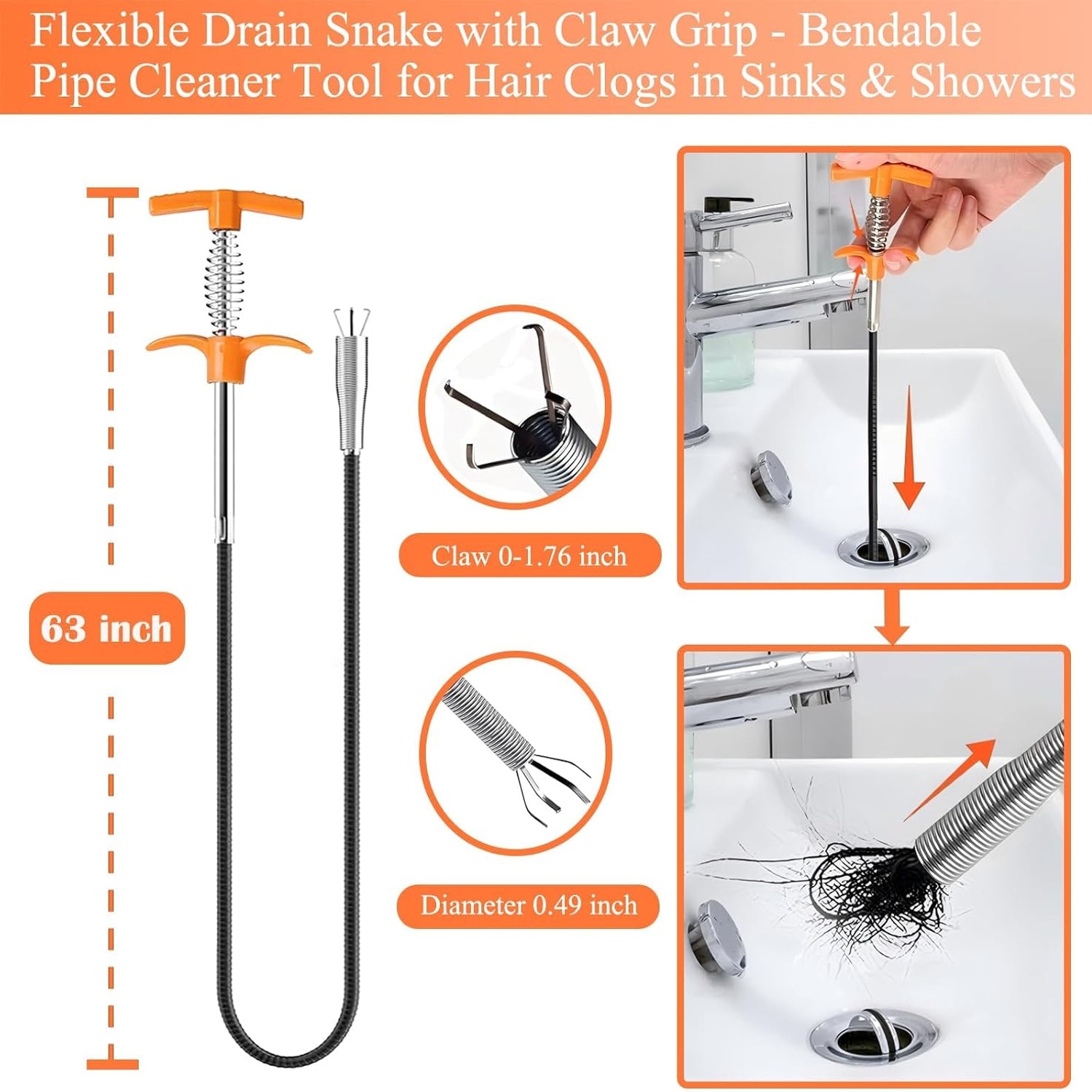
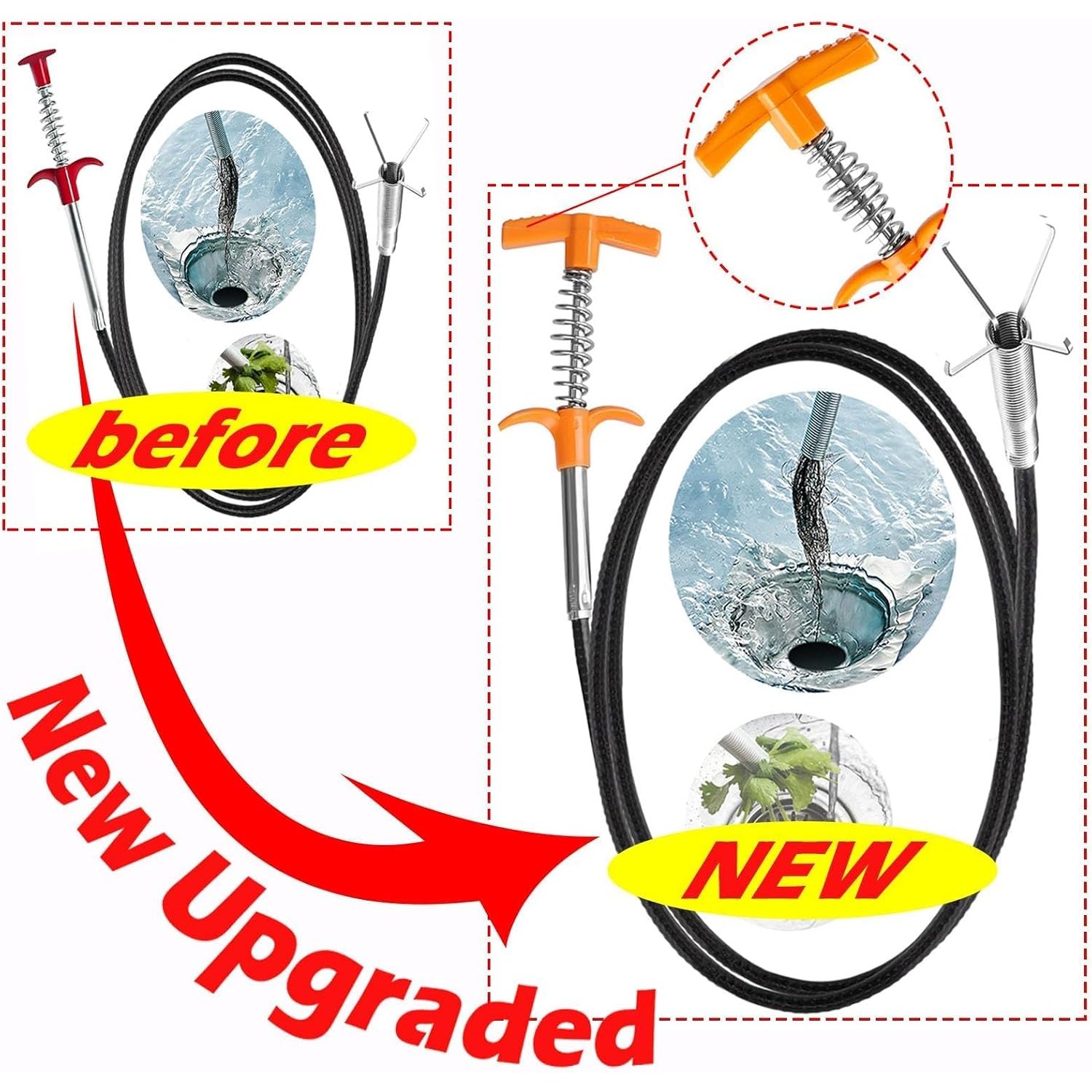
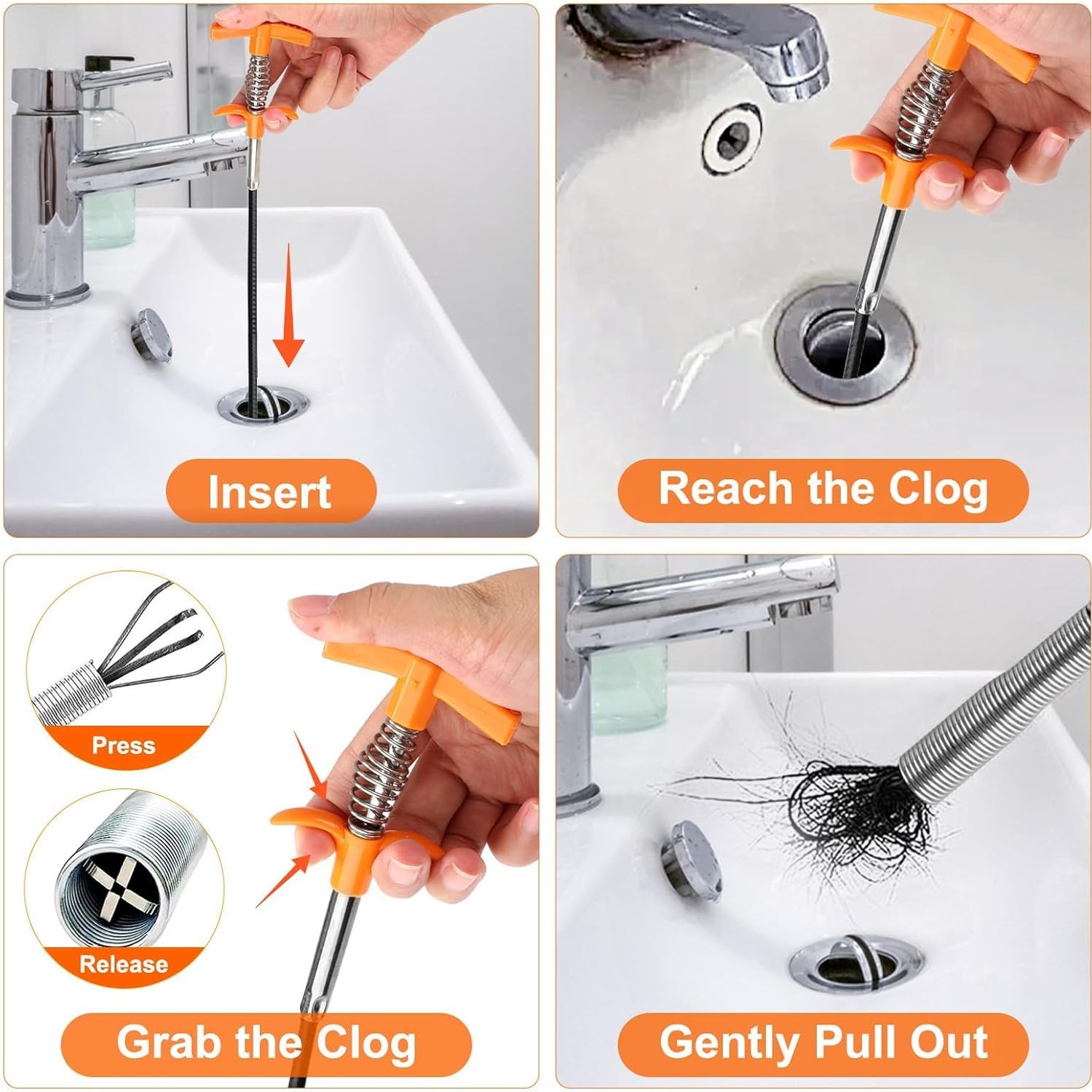
The metal grabber is the long one with a claw at the tip. A handle at the top controls the jaws. Press it, the claws open, release it, they close. You feed the tube down the drain, position the open claws over the blockage, let go of the handle, and pull. This is the piece for anything with bulk to it, a wad of hair, a bottle cap, a ring that went down the sink.
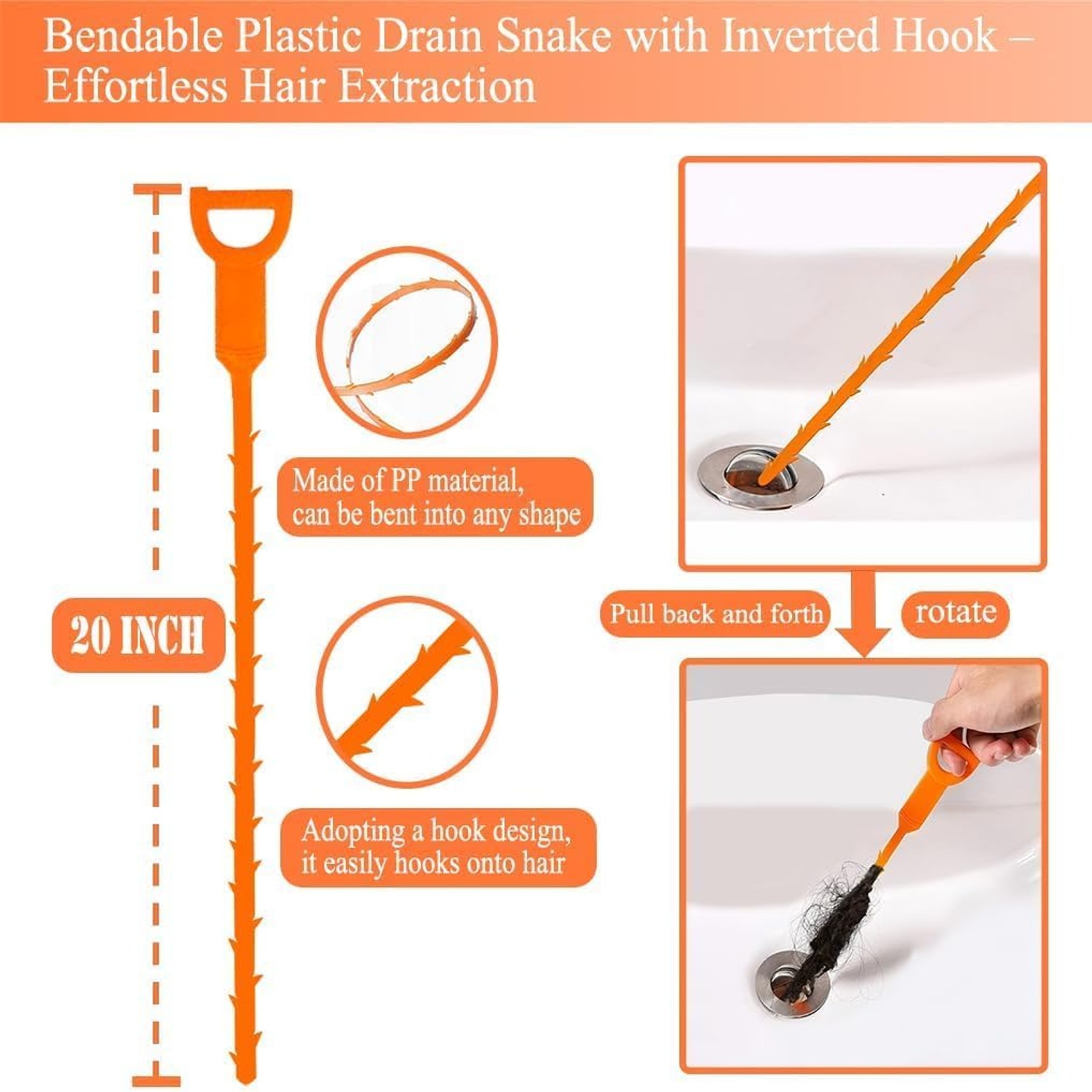
The hooked hair snakes are thin and flexible with small teeth running along the shaft. They are the quickest option for a plughole clog. You push one in, twist, and draw it back out. The teeth catch the hair. It is a crude mechanism and it works extremely well. For most slow showers this is the best hair clog remover tool in the box.
The spring unclogger is flexible and bends through curves, so it reaches past the trap where a rigid tool would stop. It suits pipes that turn sharply under a basin.
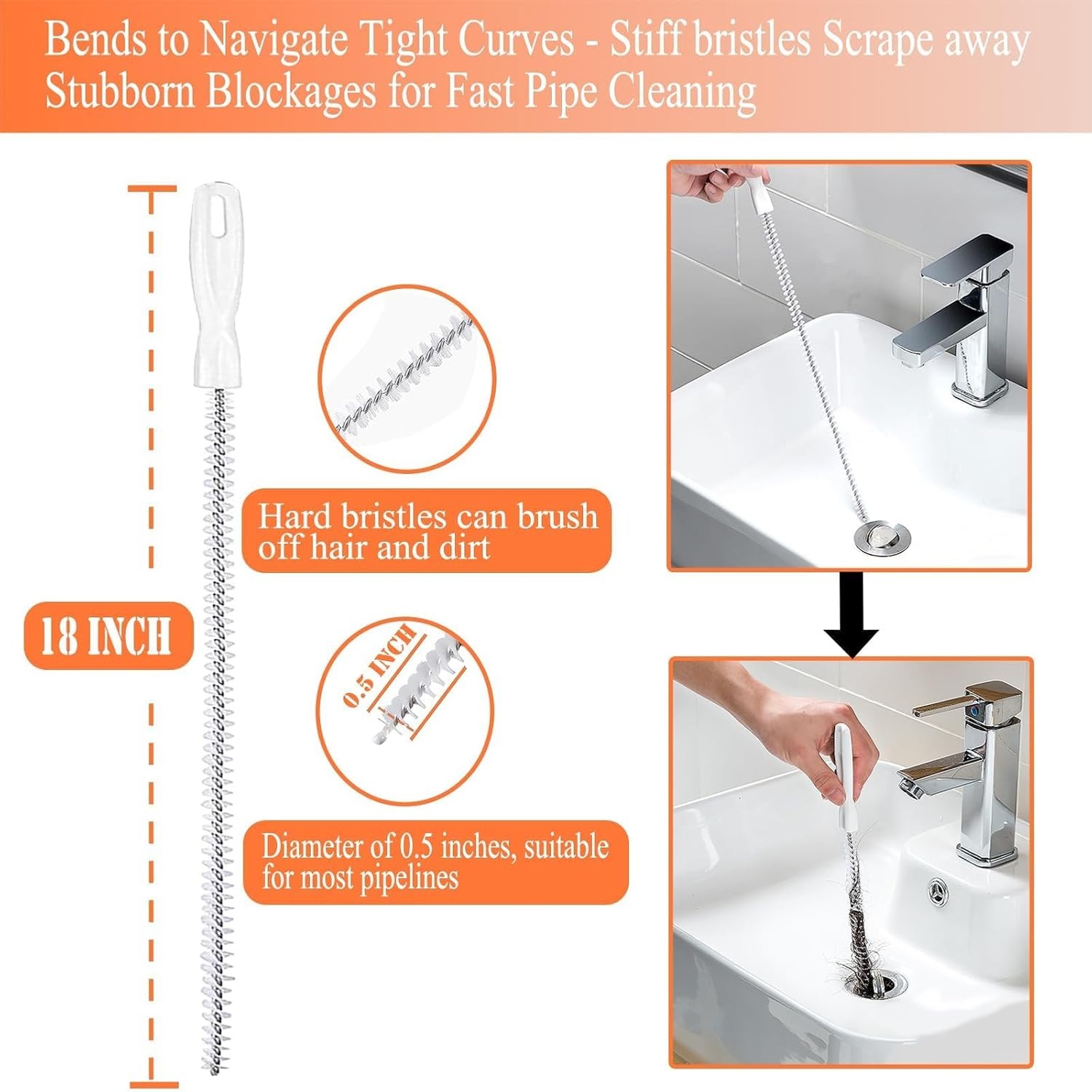
The two slim brushes are the maintenance tools. They clean the inside wall of the pipe, and they reach into the overflow opening near the rim of a basin or bath. That little hole collects a surprising amount of slime, and it is often the real source of a drain smell when the drain itself is running fine.
Gloves are included. Use them. The material you pull out of a drain is unpleasant in a way that is hard to describe politely.
Who this suits
Households with long hair in them get the most out of it. If there are two or three people in the house with hair past their shoulders, the bathroom drains will clog on a predictable cycle, and a monthly pass with a hair snake stops it ever becoming a problem.
Renters find it useful because nothing is permanent and nothing is modified. Landlords and property managers like having one in the cupboard for the same reason.
It also suits anyone who has had a bad experience with chemical drain cleaner. Those products are harsh, the fumes are genuinely unpleasant in a small bathroom, and if they do not clear the clog you now have a pipe full of caustic liquid sitting on top of the blockage. A mechanical tool has none of those complications.
It is less suited to deep main-line blockages. If water backs up in more than one fixture, or if flushing the toilet makes the shower gurgle, the problem is further down the system than any hand tool reaches. That is a job for a professional with a powered auger.
Checking it will fit your drain
One practical point before you buy. The grabber tube is slim, around half an inch across, and the drain opening needs to be wider than that. Most standard sink, bath and shower drains are, but it is worth a quick look.
You also need to be able to remove the plug or strainer. Pop-up basin plugs usually unscrew or lift out with a twist. Shower grates often lift straight off, sometimes with a small screw at the centre. If your grate is fixed and the gaps in it are narrow, the thin hair snakes are the only pieces that will get through, and they will still do useful work.
Using it without making a mess
Put an old towel down first. Whatever comes out of the drain will land somewhere, and you want it to land on something you can throw in the wash.
Have a bin bag open and within reach. The temptation is to rinse the hair clump down the drain you just cleared, which is obviously self-defeating.
Work slowly. Pushing hard is the main way people get a tool stuck or lose the clog further down. Feed the tool in until you feel resistance, then work it gently. If it will not go, pull back a little and try a slightly different angle.
Once the blockage is out, run hot water for a minute. That flushes the loose residue the tool has disturbed but not removed. In kitchens, add a squirt of washing-up liquid to the hot water to shift the grease film.
Keeping the tools in good shape
Rinse everything under hot running water straight after use. Hair and residue dry hard, and cleaning the tools later is far more tedious than cleaning them now.
Dry the pieces properly before they go back in the cupboard. Damp tools in a closed space is how things start to smell and corrode.
Store the long flexible pieces either straight or loosely coiled. Sharp permanent kinks in a flexible tool make it harder to feed into a pipe next time.
Keep the whole set somewhere adults can reach and children cannot.
Making it last longer between uses
The fastest way to stop needing the kit is to catch hair before it goes down. A cheap mesh catcher over the shower plughole intercepts most of it, and you empty it into the bin every few days.
In the kitchen, keep fat and oil out of the sink entirely. Let it cool in the pan, wipe it with kitchen paper, bin the paper. Grease poured down a drain while hot sets solid when it hits the cold pipe.
Run hot water through both drains for thirty seconds once a week. It is not a cure, but it keeps the film from thickening.
Do a preventive pass with a hair snake once a month. It takes about ninety seconds and it means you never meet a full blockage at seven in the morning.
The short version
This is a manual kit for pulling hair and debris out of household drains. The grabber claw grips and lifts larger blockages, the hooked snakes catch hair near the plughole, the spring unclogger bends around pipe curves, and the brushes handle routine cleaning including the overflow hole. Gloves are included.
It weighs 270 g, needs no batteries, and everything is reusable. Material, colour and country of origin are not specified in the supplier record, so we have not stated them.
Check that your drain opening is wider than half an inch and that the plug comes out. If it is, this handles the ordinary clogs that make a shower slow. If several drains back up at once, that is a different problem and worth a call to a plumber.