
The complete guide
Choosing a Kitchen Sink Strainer and Stopper: A Practical Buyer's Guide
The small annoyance that adds up
Every kitchen has one. The sink fills while you are rinsing plates, water pools around your wrists, and you end up lifting out a slimy strainer to pick bits off it with your fingers. Or worse, the drain has no strainer at all and the food goes straight down, which you only notice weeks later when the water starts draining slowly and the smell arrives.
A sink strainer is one of the cheapest bits of kitchen hardware you can buy, and one of the most used. It works every single day. That is why the design details matter more than you might expect for something so small.
What a strainer and stopper set actually does
There are two jobs happening at a kitchen drain, and most people need both.
The first is straining. You want water to run away freely while the solid stuff stays behind. Rice, tea leaves, bits of onion skin, coffee grounds, the ends of carrots. All of it should be caught in something you can lift out and tip into the bin or the food waste caddy.
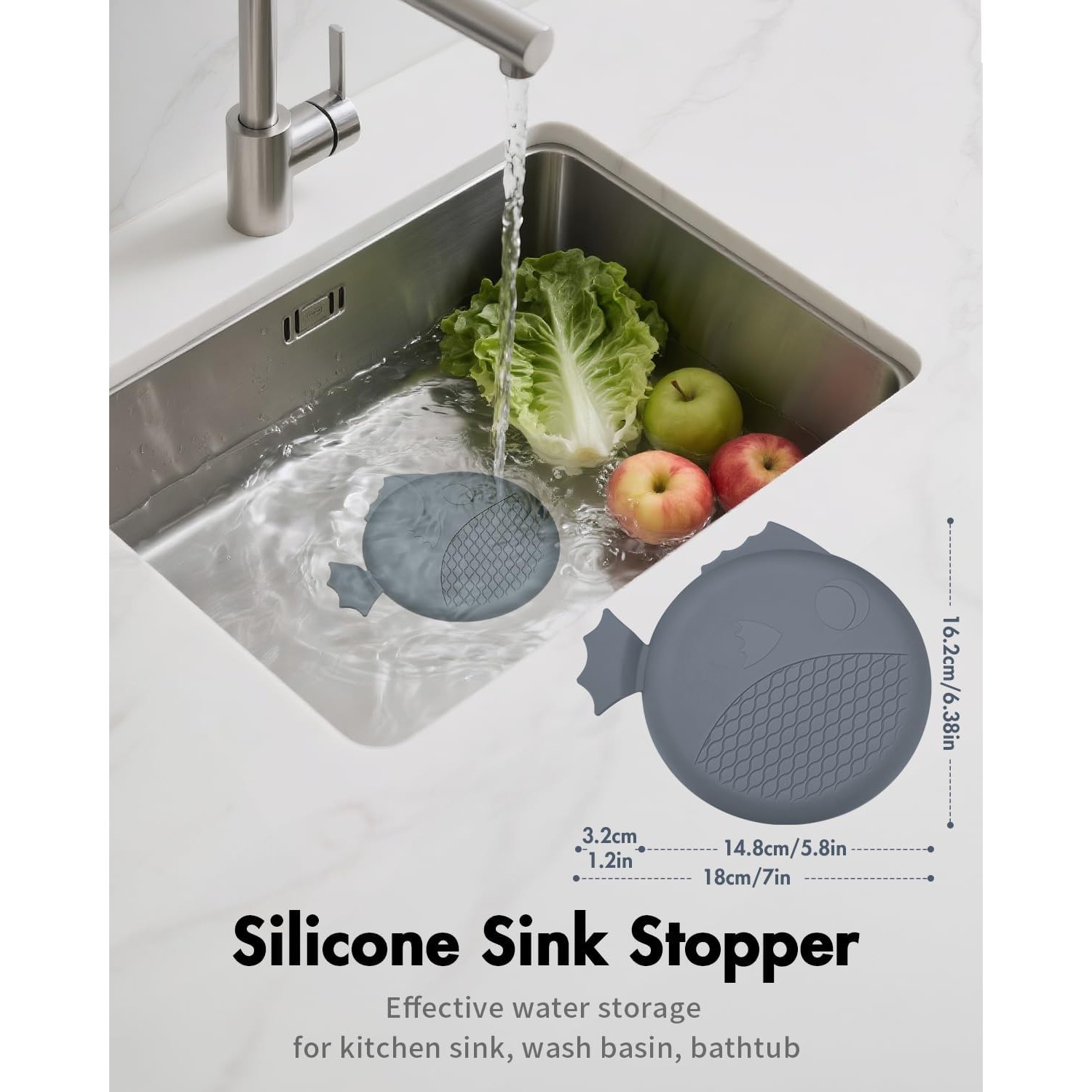
The second is stopping. Sometimes you want a bowl of water. Soaking a baked-on casserole dish, washing salad leaves, rinsing a handful of potatoes. For that you need a plug that seals properly, holds the water, and comes out when you are done.
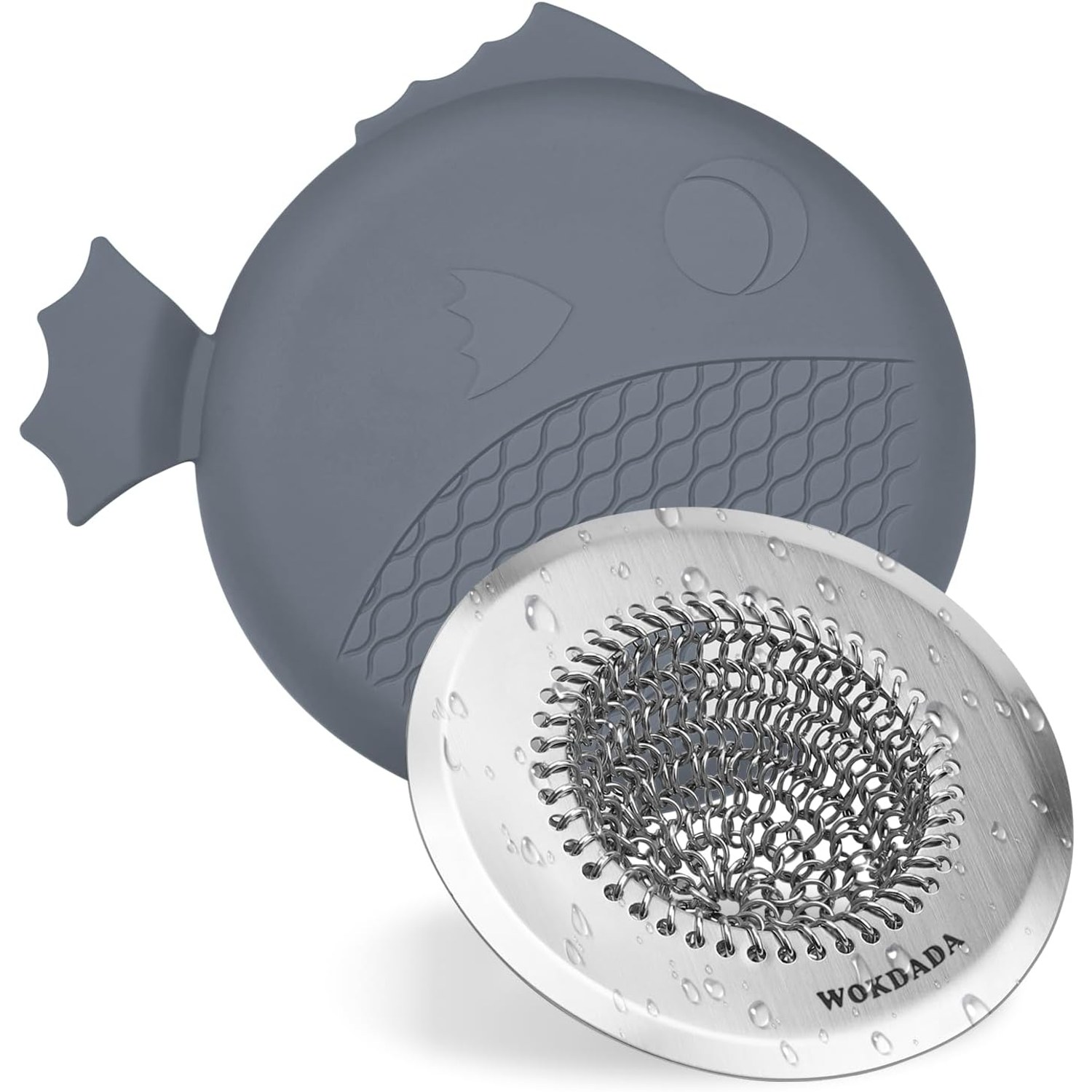
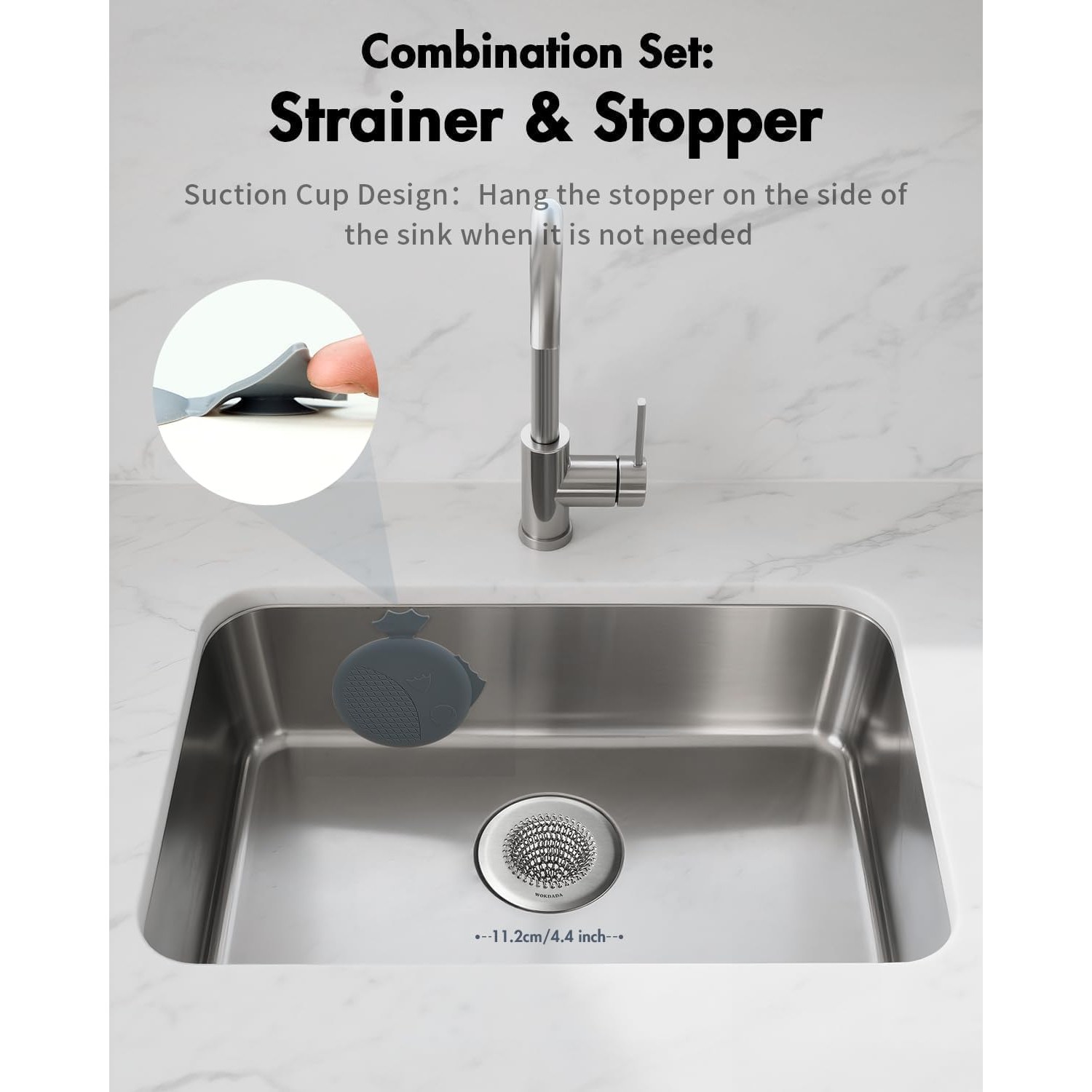
This set covers both. The mesh basket handles the straining, and the silicone stopper presses in when you want to fill. Swapping between them is a matter of lifting one out and dropping the other in.
Why the mesh design matters
Here is where strainers differ, and it is worth understanding before you buy.
The cheapest type is a flat stainless steel disc with holes punched through it. It sits over the drain and catches large debris. The problem is the holes. Once a few tea leaves or grains of rice settle across them, water flow drops sharply. You end up with a full sink and a slow drain, which is exactly what you were trying to avoid.
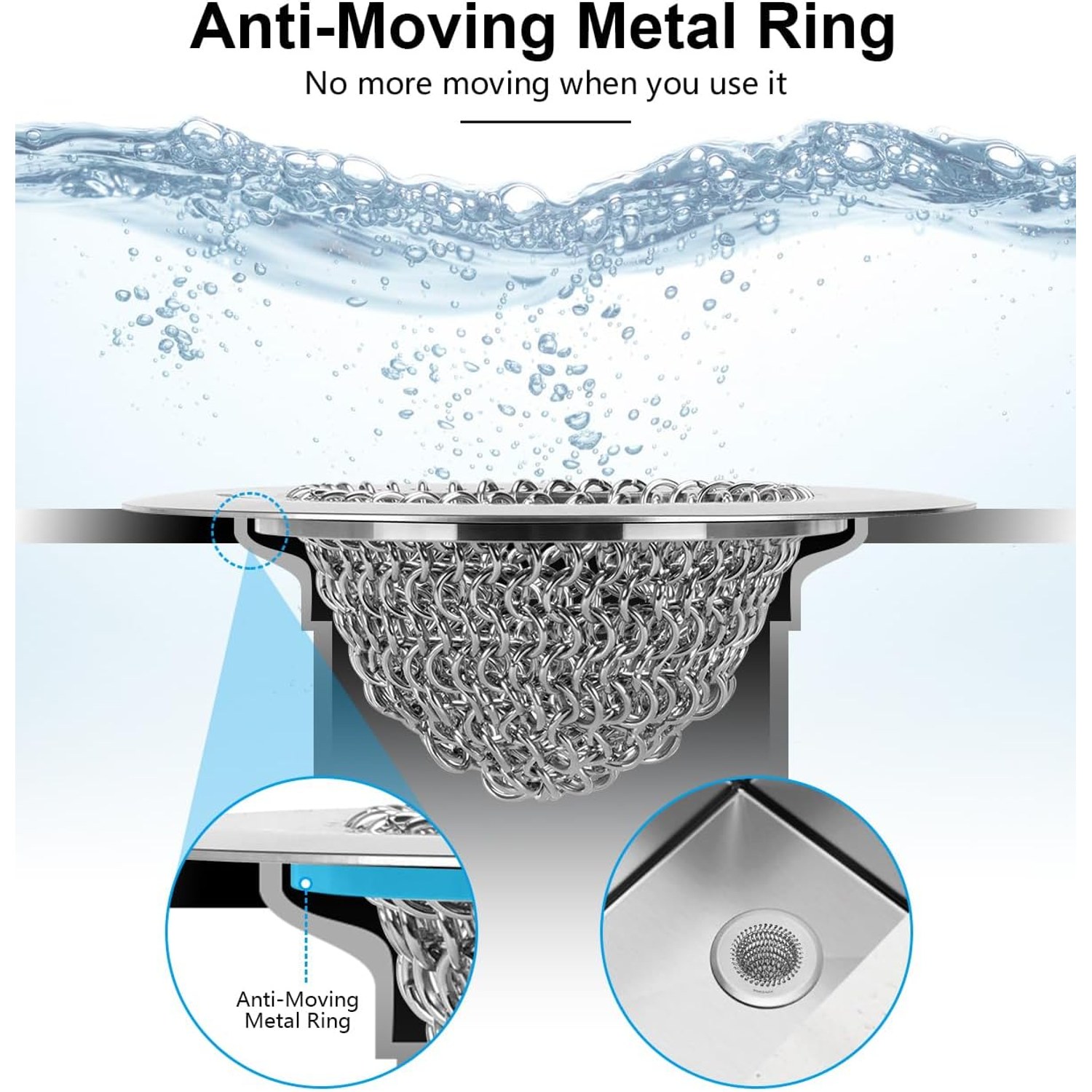
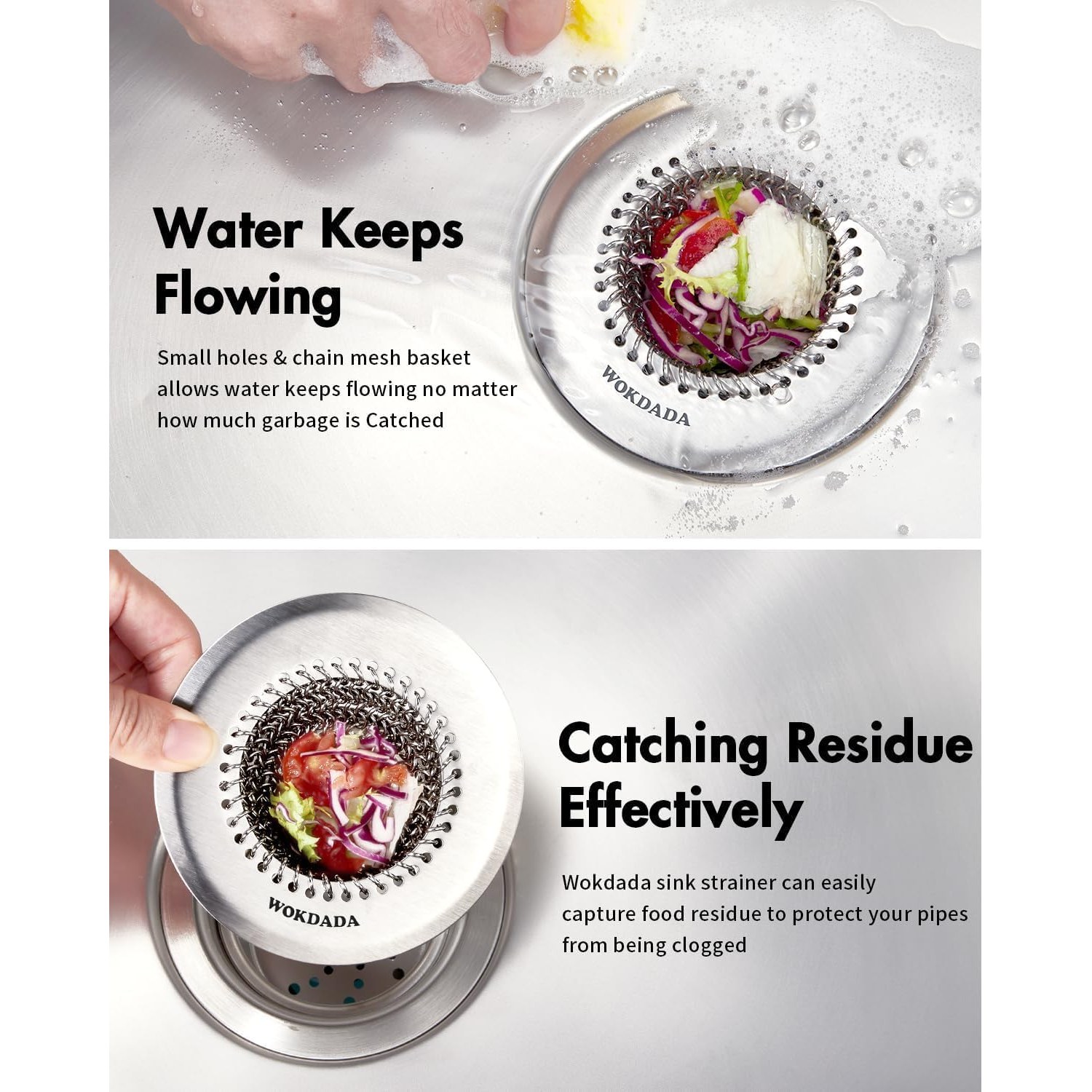
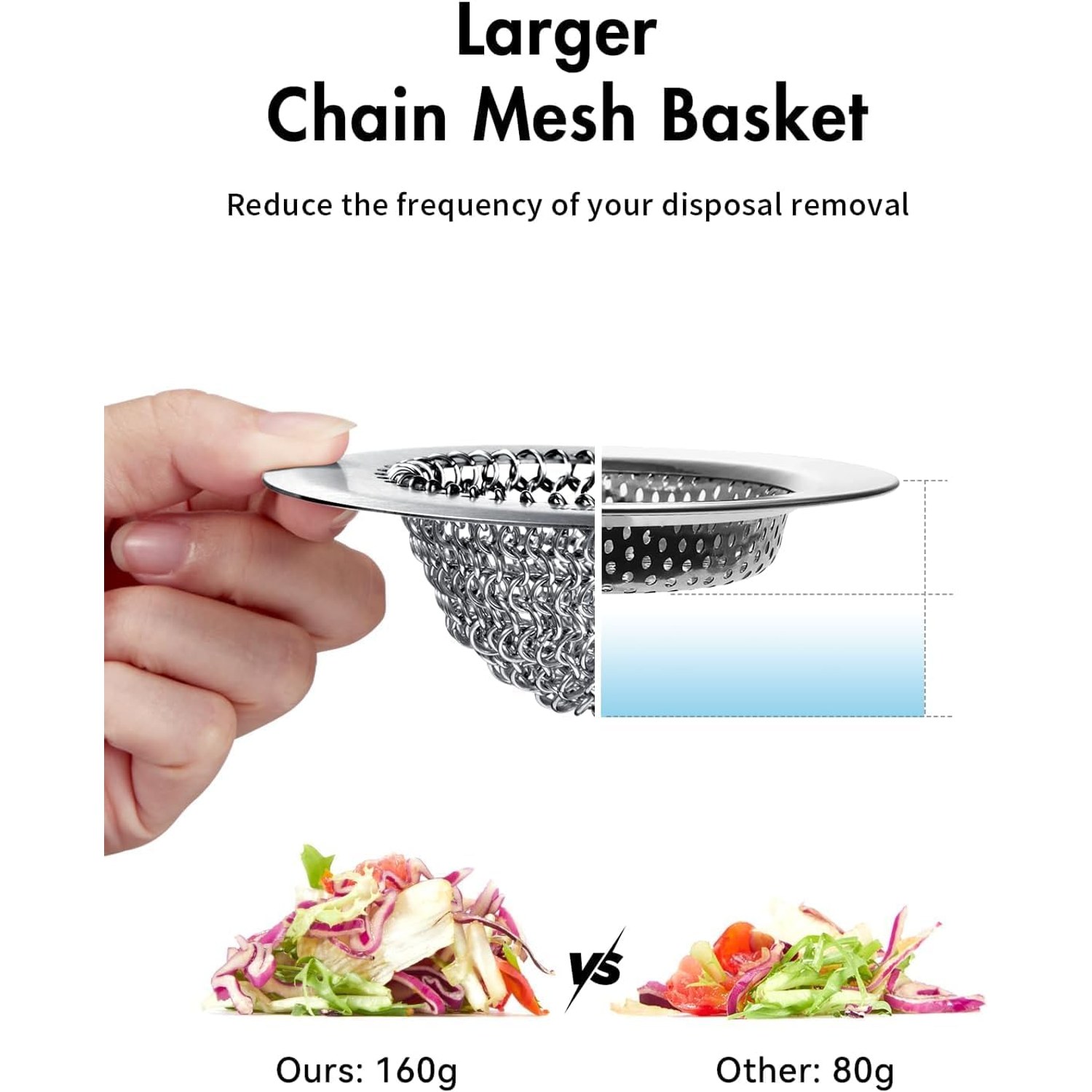
A basket strainer is better. It sits down into the drain opening and has a much larger surface area, so debris spreads out rather than forming a single blocking layer. Water keeps flowing around the sides even when the bottom is covered. The basket in this set is designed this way, with a mesh pattern that keeps drainage going while the basket is holding food waste.
The reversible part is the piece that makes daily use easier. Standard mesh baskets are awkward to clean because the debris sits on the inside, tangled in the weave. You poke at it, run water through, and still find bits clinging on. This one flips inside out. The scraps that were trapped inside are now on the outside, where they rinse straight off. It is genuinely the difference between a thirty-second job and a thirty-second job you actually do.
Material and build
The strainer is made from 304 stainless steel. If you have shopped for kitchen or bathroom fittings you will have seen that grade mentioned a lot. It is used around water because it resists rust and copes with detergents and daily wetting. There is no coating to flake off and no plated layer to wear through.
The finish is brushed rather than mirror-polished. Brushed steel hides water spots and fingerprints better, which matters for something sitting in a sink all day. It also matches most contemporary taps, sink bowls and kitchen hardware, so it does not stand out awkwardly.
The stopper is silicone. Silicone is flexible enough to compress slightly into the drain opening and create a seal, and it does not harden and crack the way old rubber plugs did. It is easy to clean with warm soapy water and does not absorb odours the way porous materials can.
Getting the size right
This is the one thing that will make or break your purchase, so take two minutes with a tape measure before ordering.
The strainer measures 112mm across, which is about 4.4 inches. That is a common size for standard kitchen drain openings, and it covers the majority of sinks. The overall item dimensions are listed as 16.4cm wide by 4.5cm high.
To check yours, measure the diameter of the drain hole in your sink bowl, across the widest point of the opening. If you get something close to 112mm, you are fine. If your opening is clearly smaller, say around 90mm, this will sit on top rather than seating in properly. If it is considerably larger, the fit will be loose and the stopper will not seal.
Two situations deserve extra care. The first is a sink with a food waste disposer fitted, because those have a different drain collar and usually come with their own splash guard. The second is a bathroom basin, which is almost always smaller than a kitchen drain. This set is intended for kitchen sinks.
Who this suits
Busy kitchens get the most out of it. If you cook from scratch, prep a lot of vegetables, or wash up for a household rather than one person, the larger basket capacity means fewer trips to the bin mid-wash. The open mesh keeps draining while you work.
It also suits anyone who has given up on their current strainer because cleaning it was a pain. The flip-clean action removes most of that friction. A strainer you clean is a strainer that works, and a strainer that works keeps your pipes clearer.
Renters and people in older properties often find their sink came with a mismatched or missing plug. A set like this gives you both pieces in a finish that looks deliberate rather than makeshift.
If you have a very small sink and only ever rinse a mug or two, a basic flat strainer would probably do the job. There is no shame in that. This is for people doing real volume at the sink.
Living with it
Care is straightforward. Rinse the basket after each washing-up session. Flip it inside out and let the water carry the scraps away. Once a week or so, give both pieces a proper wash with warm water and dish soap, using a soft brush on the mesh if anything greasy has built up.
Dry the steel afterwards if you want to keep the brushed finish looking its best. Water left to evaporate on steel leaves mineral spots, which are harmless but visible.
What to avoid: bleach, oven cleaner, descaler left sitting on the metal, and abrasive scouring pads. Harsh chemicals can mark the surface, and scouring pads leave fine scratches that then hold grime. Plain dish soap handles everything a sink strainer encounters.
The silicone stopper benefits from being stored dry rather than left wet in the sink. Give it a shake and set it on the draining board.
One habit worth building
Catching food before it enters your pipes is the single most useful thing you can do for your drains. Most slow kitchen drains are caused by fat and food waste building up together in the trap. A good strainer stops the food half of that problem at source.
Scrape plates into the bin before washing, keep the strainer in place, and empty it as you go. That combination prevents far more blockages than any amount of drain cleaner poured down after the fact.
The short version
A kitchen sink strainer is a tiny purchase that you interact with every day, so the details are worth caring about. This set gives you a 304 stainless steel mesh basket that drains well even when loaded, a reversible design that turns inside out for rinsing, and a silicone stopper that presses in for a leak-resistant seal.
Measure your drain opening first and check it lands near 112mm. If it does, you get two pieces of kitchen hardware that quietly do their job and make the worst part of washing-up slightly less annoying.