
The complete guide
How To Choose A Kitchen Sink Strainer Plug That Actually Fits
The problem with the plug you already have
Most kitchen sinks come with a plug that was never really designed. It holds water, more or less, and when you pull it out everything in the bowl goes down the pipe. Coffee grounds. Rice. Bits of onion skin. Tea leaves. Over months, that material settles in the trap, mixes with grease, and turns into the kind of slow drain that has you buying caustic gel at the supermarket.
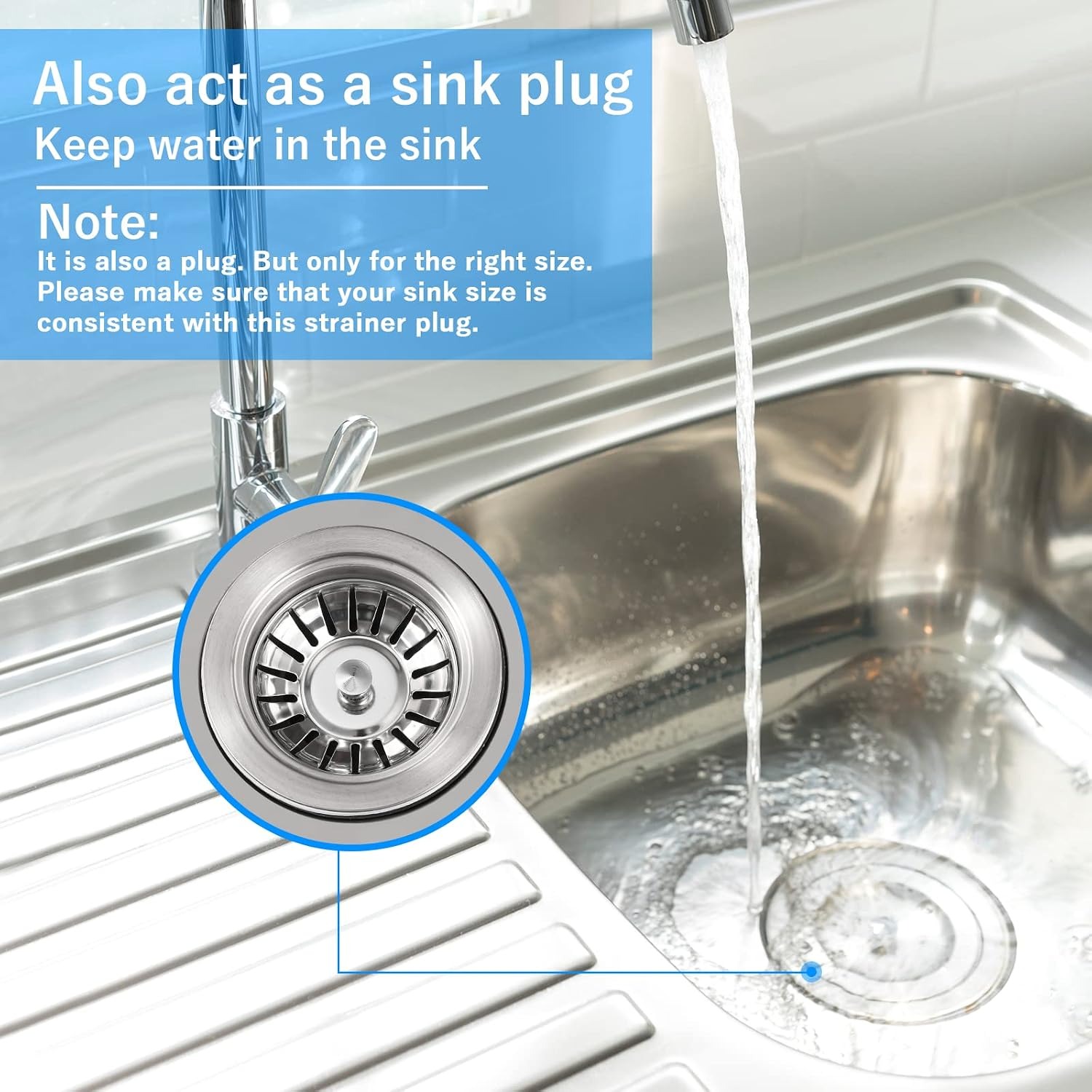
The second problem is the opposite one. Some sinks have an open basket sitting in the waste that strains well but will not hold water, so filling the bowl means jamming a rubber disc on top of it and hoping.
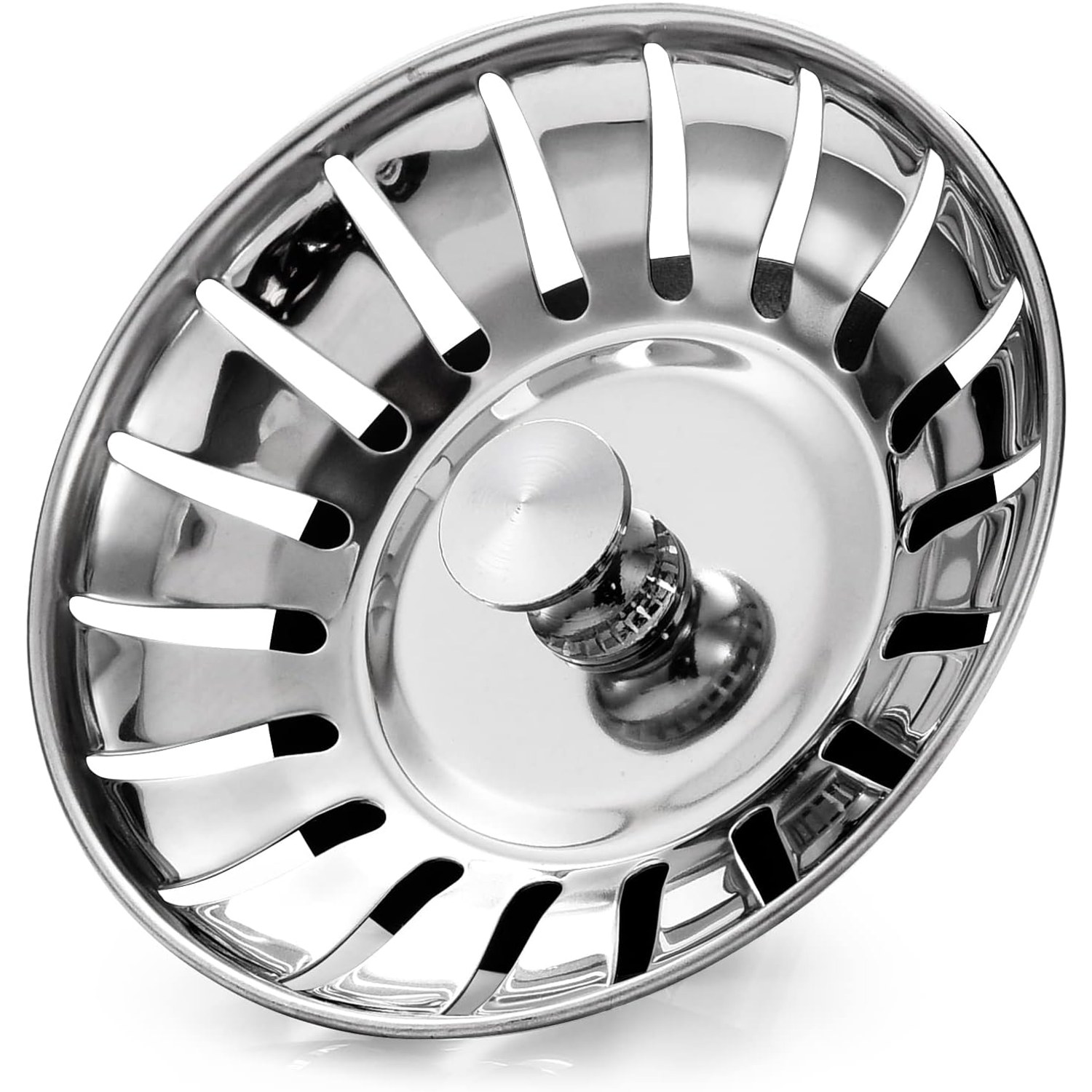
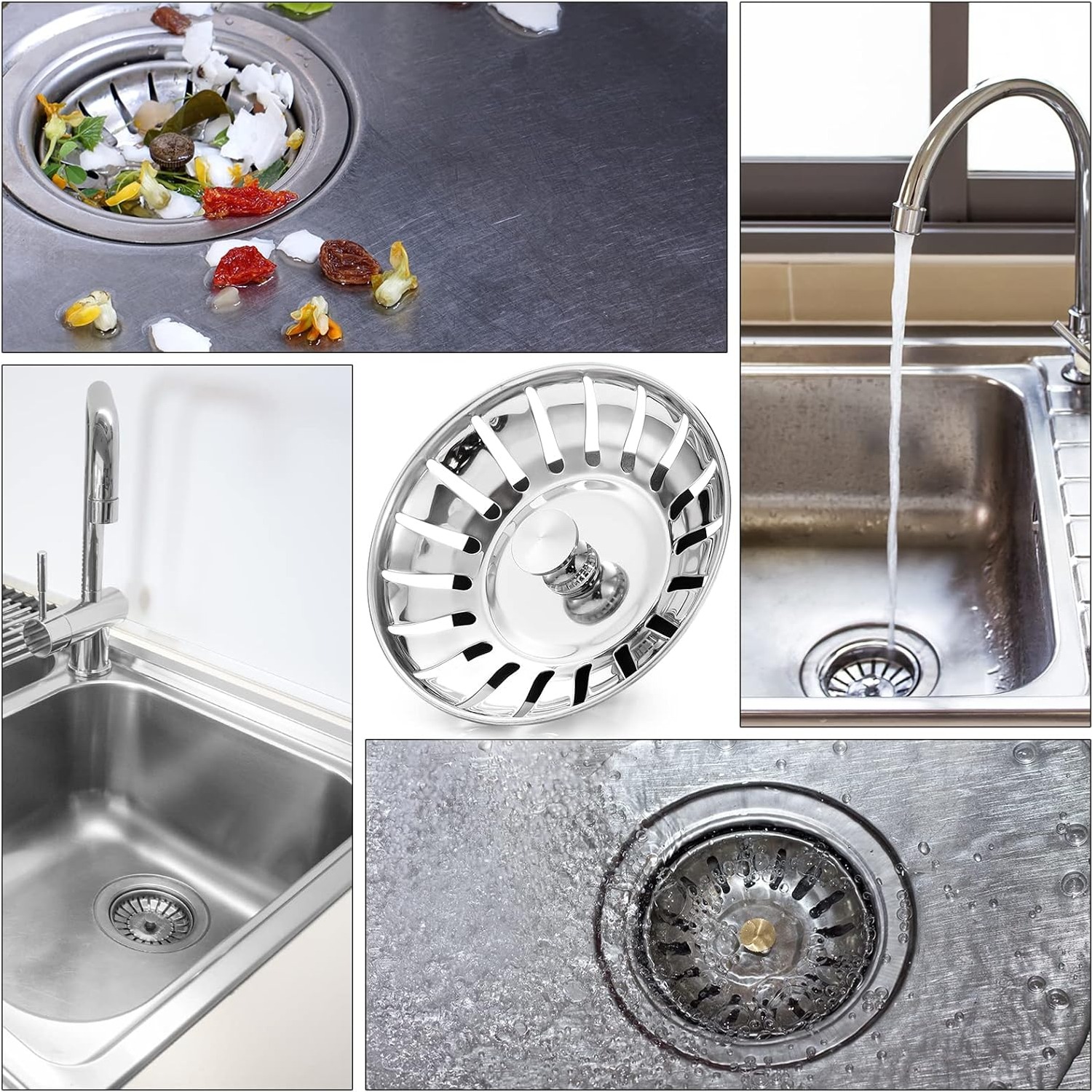
A kitchen sink strainer plug solves both at once. One fitting in the waste opening that seals when you want a full sink and filters when you want it empty. The version covered here is the Tomario SS102, a 78mm stainless steel sink plug with a press down knob in the centre.
How the two in one design works
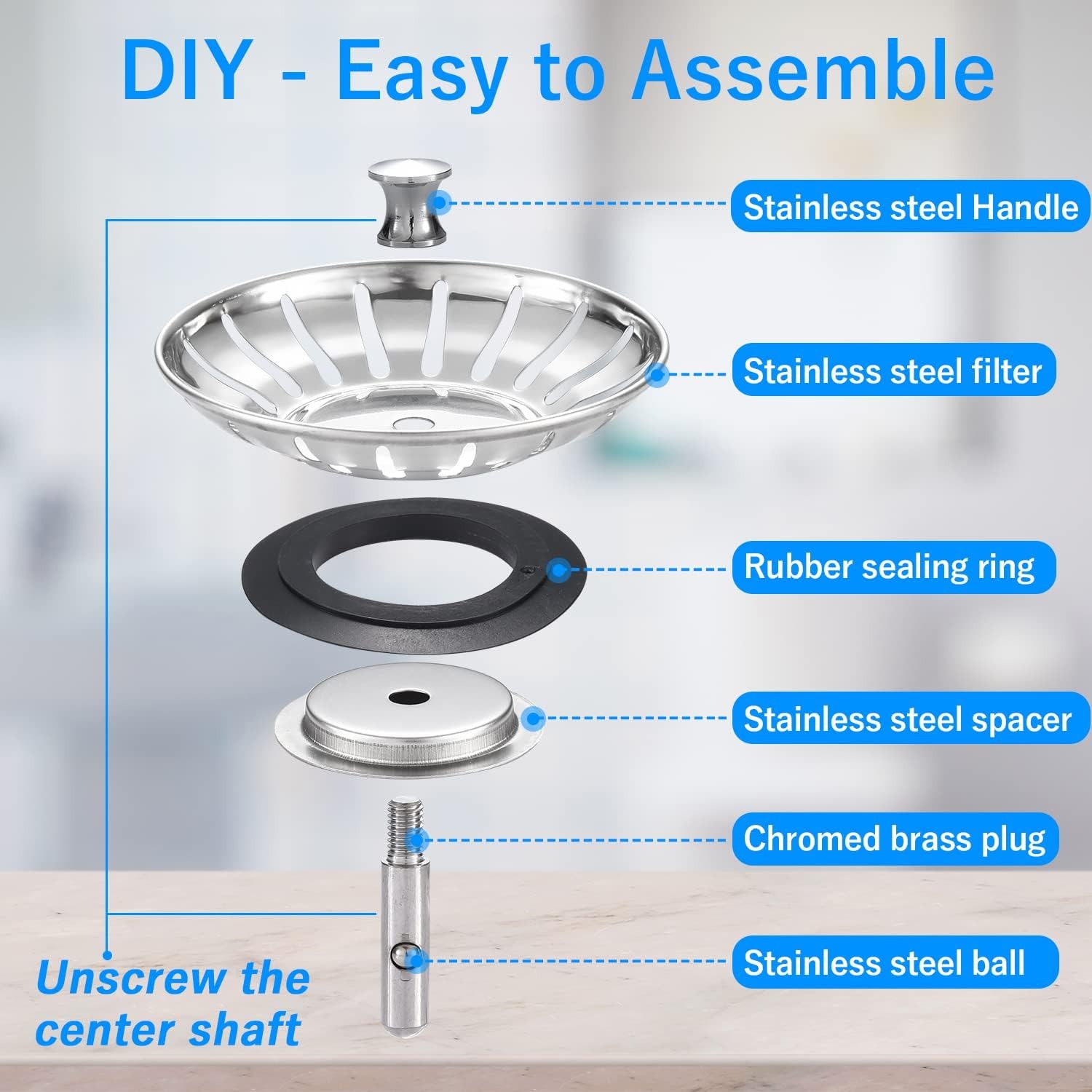
The mechanism is simple, which is why it tends to last. A central knob sits on a shaft running through the middle of the basket. Press it down and a rubber seal underneath closes tight against the waste opening, so the bowl fills and stays filled while you wash up.
Lift the knob a fraction and that seal opens. Water flows out through the gap and down the drain, but the stainless steel basket stays where it is. Anything solid in the water gets stopped at the basket while the liquid carries on.
When the washing up is done, you lift the whole unit out, knock the scraps into the bin, rinse it and drop it back in. That is the entire routine. No separate strainer to store next to the tap, no rubber plug on a chain to go missing behind the kettle.
Getting the size right, because this is where people go wrong
More returns on this kind of product come down to measuring than anything else. Kitchen sink waste openings are not all the same. They cluster around a few common sizes, but the differences of a few millimetres decide whether a seal works or leaks.
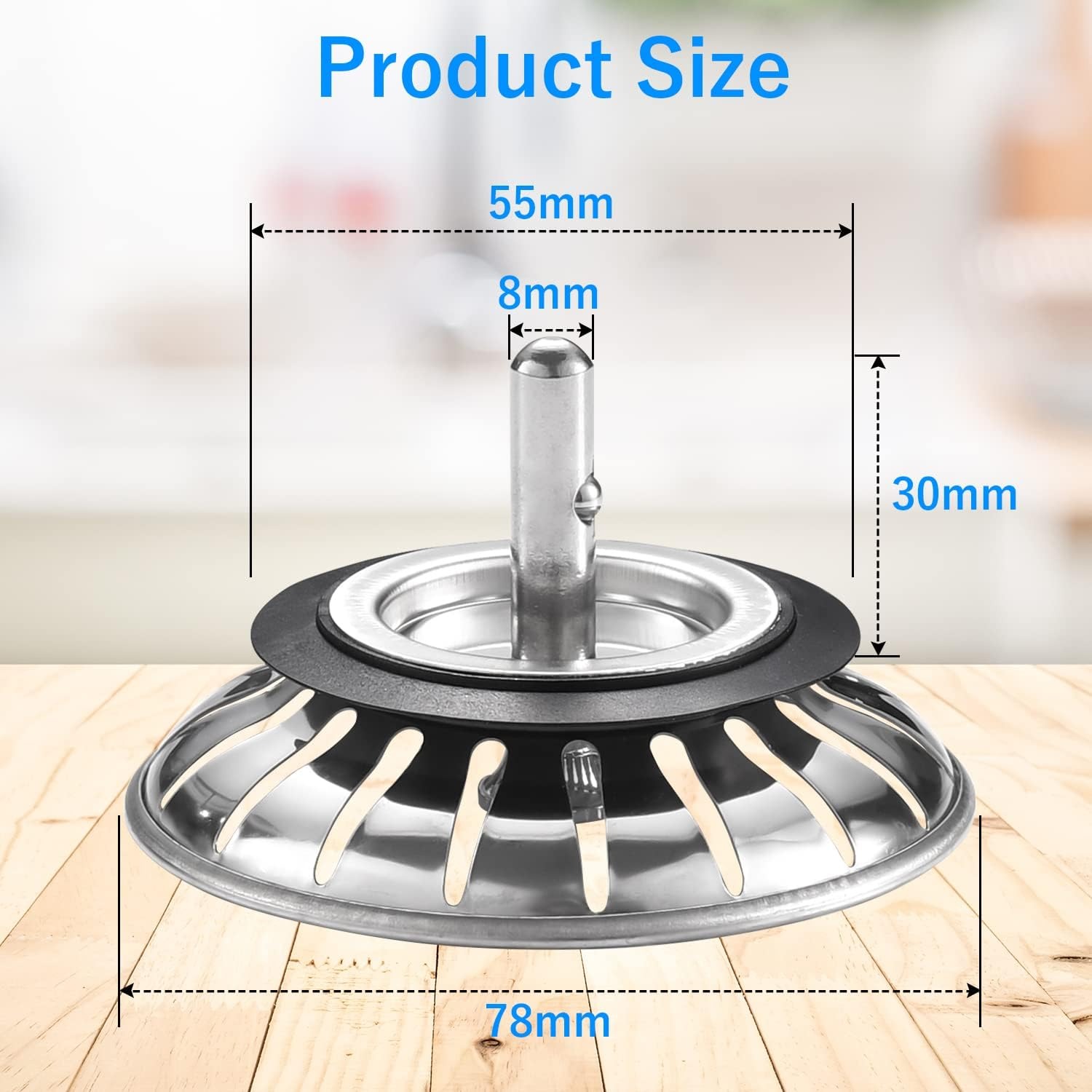
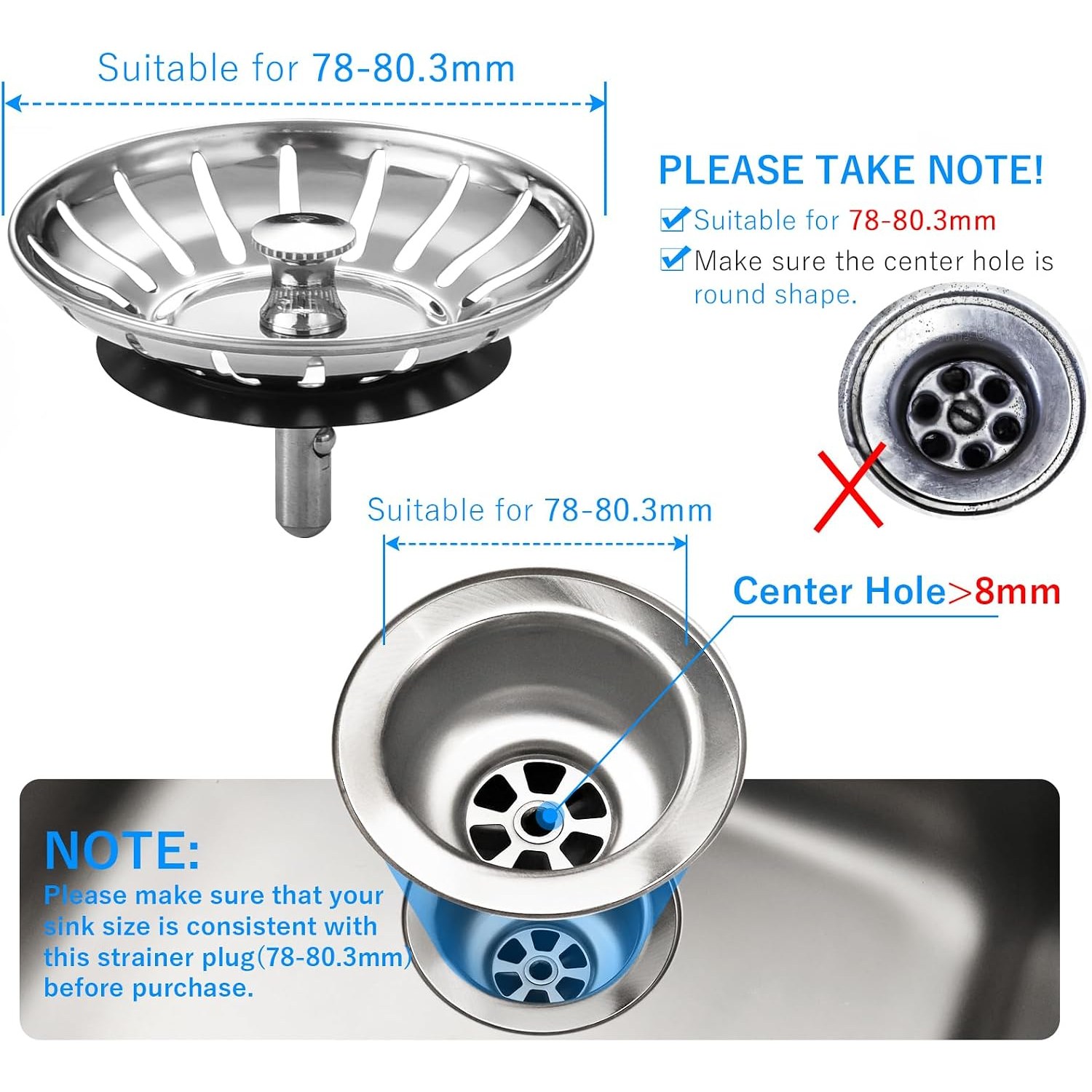
This particular strainer has an outside diameter of 78mm and is intended for sink holes measuring about 78.3mm to 80mm. Overall the item is 7.8 cm wide and 3 cm high.
To measure yours, take the current plug out, then lay a steel tape or ruler straight across the circular opening at the widest point. Measure from the inside edge of the rim to the inside edge opposite. Do it twice at different angles, because sinks are not always perfectly round after years of use.
If your number falls in that range, you are fine. If it comes out at 82mm or 90mm, you need a different size of basket strainer waste plug, and no amount of force will make this one seal. There is no shame in checking twice. It takes thirty seconds and saves a return.
Why stainless steel is the right material here
Think about what a sink plug goes through. Boiling water from a pasta pan. Cold water from the tap. Dish soap. Vinegar. Tomato. Oil. Repeat two or three times a day, every day, for years.
Plastic goes cloudy and brittle. Chrome plated zinc eventually bubbles and flakes at the edges. Stainless steel handles the constant wetting and the temperature swings without changing much. It wipes clean, it does not absorb smells, and it looks the same after a year as it did on day one, assuming you give it a rinse now and then.
The rubber seal is the part that wears, because rubber always is. Heat and detergent slowly harden it. You can slow that down a lot by rinsing the seal after use rather than leaving food residue baked onto it.
Fitting it in under a minute
Assembly is deliberately basic. The centre shaft unscrews, the parts slot together in order around it, and the shaft screws back in to hold everything. No tools, no plumbing, nothing to disconnect under the sink.
Once assembled, it drops into the existing waste opening and stays there. You do not replace the sink flange, you do not touch the trap, and you do not need to turn the water off.
The same process in reverse takes it apart if you want to deep clean it or clear anything that has worked its way into the mechanism. Most people will not need to do this often, but it is good that you can.
Who this suits
If you wash up by hand, this is an easy upgrade. The ability to fill the bowl and then drain it without losing scraps down the pipe is the main daily benefit.
It also suits anyone who has had a blocked kitchen drain and does not want another one. A good kitchen sink waste filter is the cheapest preventative measure available. Food that never enters the pipework cannot block it.
Renters like it because nothing is permanent. It goes in, it does its job, and it comes out again when you move, assuming the next sink is the same size.
People replacing a lost or perished plug get the straining function thrown in for the same effort as a plain replacement.
The one group it does not suit is anyone with a waste disposal unit. Those use their own flange and fitting, and you should keep the strainer that came with the unit.
Living with it day to day
The routine that works best is emptying the basket as part of clearing up, not as a separate job you remember later. Lift, tip into the bin, rinse, drop back in. Ten seconds.
If the water starts draining slowly, the basket is full. That is the system telling you it is working. A rinse sorts it.
If the plug starts to weep when it should be sealed, the usual cause is a crumb or a smear of grease on the rubber. Lift it, wipe the seal and the waste rim with a cloth, and refit.
For cleaning, warm soapy water and a sponge covers almost everything. Limescale in hard water areas responds to a soak. Stay away from wire wool, scouring powder and bleach. Wire wool scratches the steel, and bleach is hard on rubber seals over time.
The short version
A kitchen sink strainer plug is one of those small purchases that quietly improves a daily task. This one is stainless steel, 78mm across, and fits sink waste openings of roughly 78.3mm to 80mm. Press the knob to fill the sink, lift it to drain, and the basket keeps food out of your pipes.
Measure your waste opening first. If the number matches, the rest is easy. If it does not, look for the size that does, because fit is the only thing that really decides whether a sink plug works.