
The complete guide
How to Choose a Three in One Kitchen Sink Plug
The small part that causes the most annoyance
Think about how many times a day you touch your kitchen drain. You fill the bowl, you drain it, you scrape a plate, you fish something out of the plughole. That one small fitting gets more use than almost anything else in the room, and most of them are an afterthought.
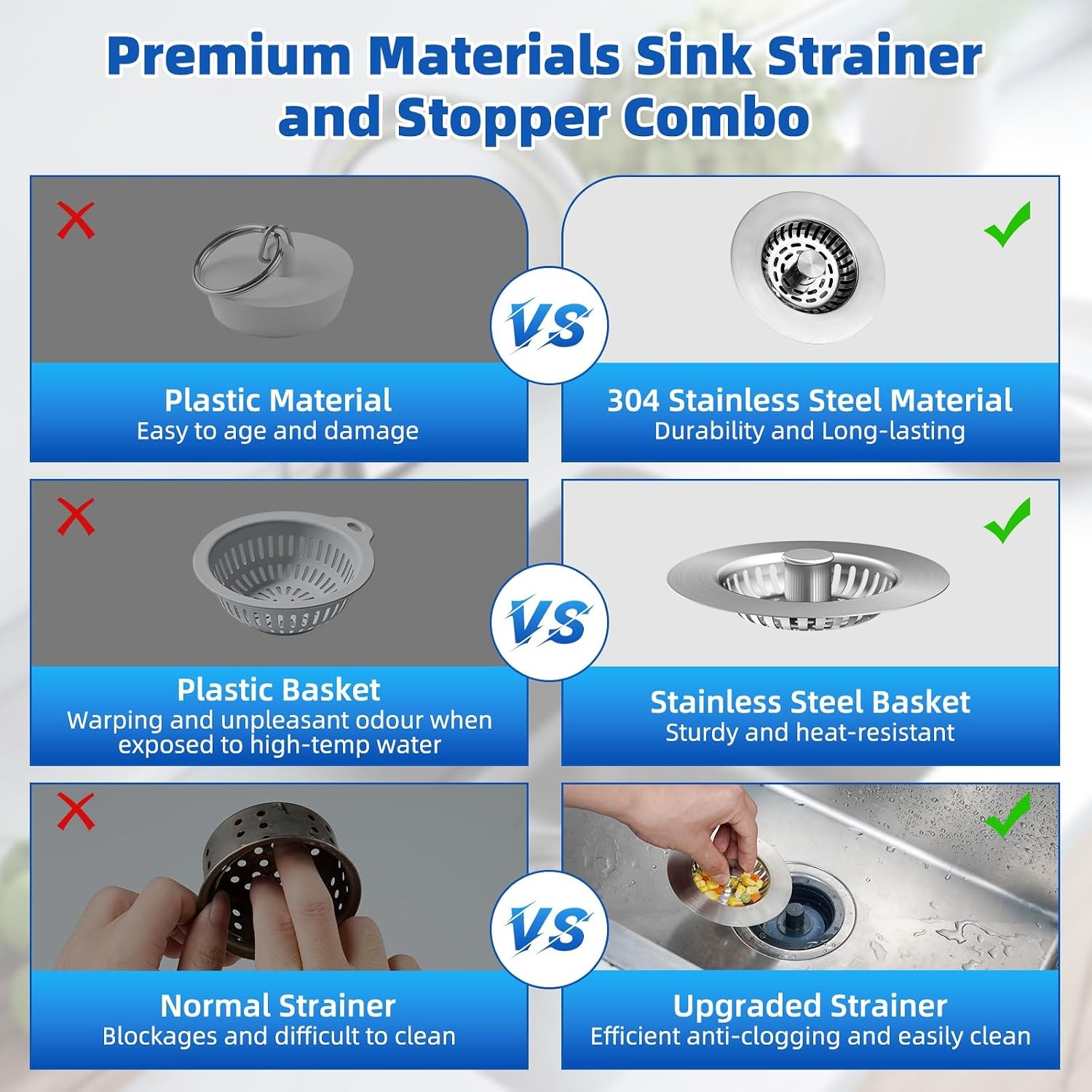
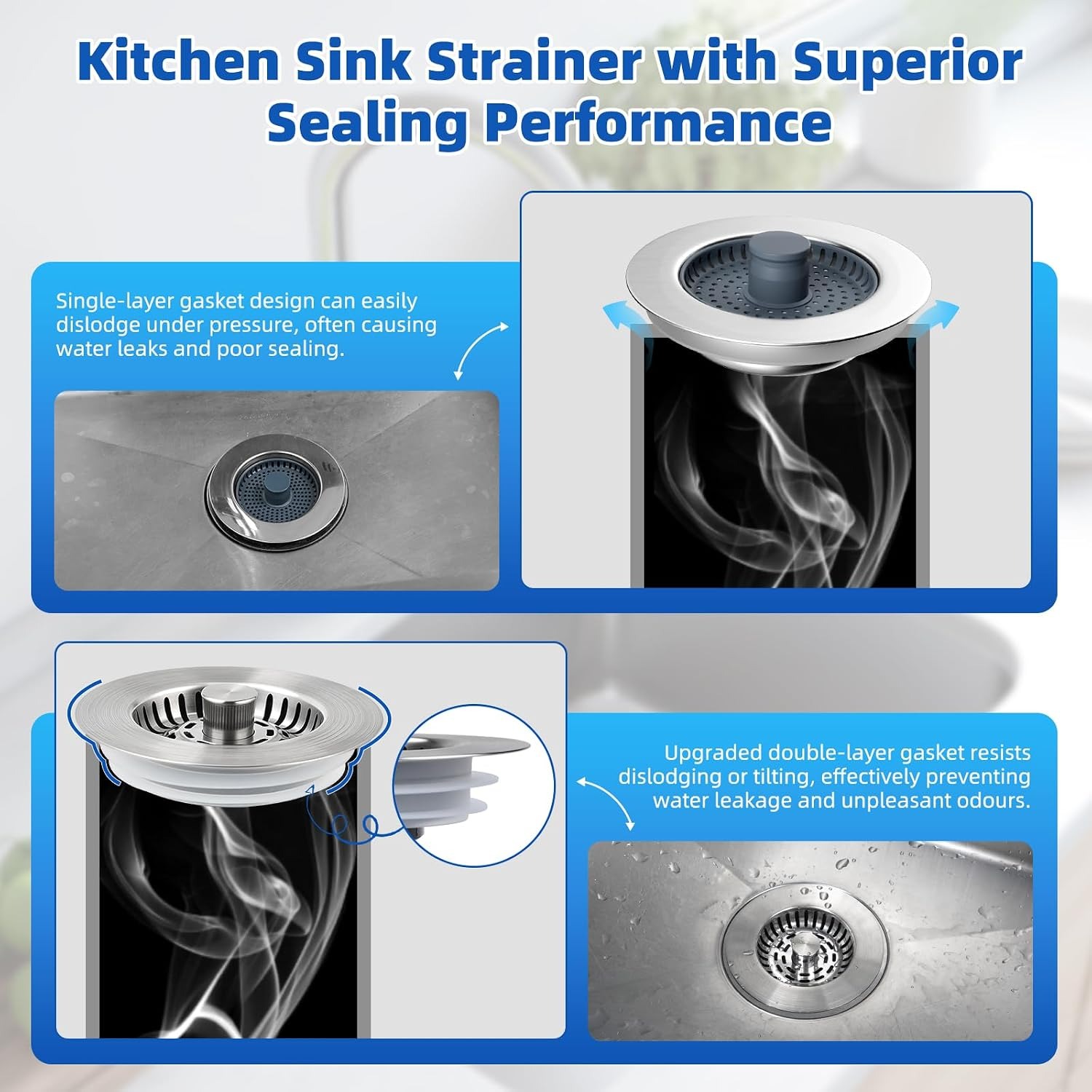
The standard setup is a rubber bung on a chain and a loose metal strainer that sits on top. The bung perishes and stops sealing. The strainer slides sideways and tips its contents straight into the water. And because nothing seals properly, the drain begins to breathe. You notice it on a warm evening or when you come home after a few days away, a faint sour smell hanging around the sink.
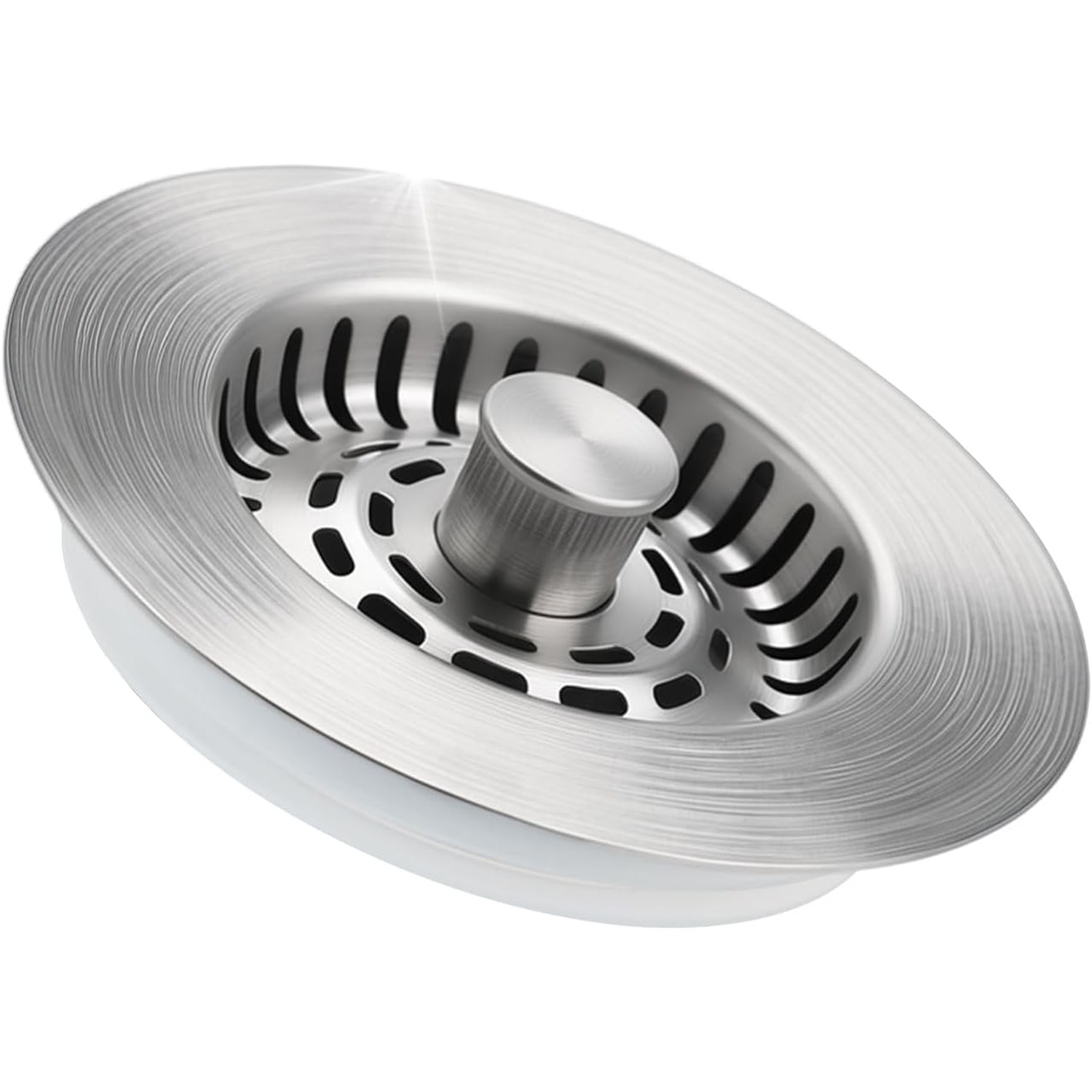
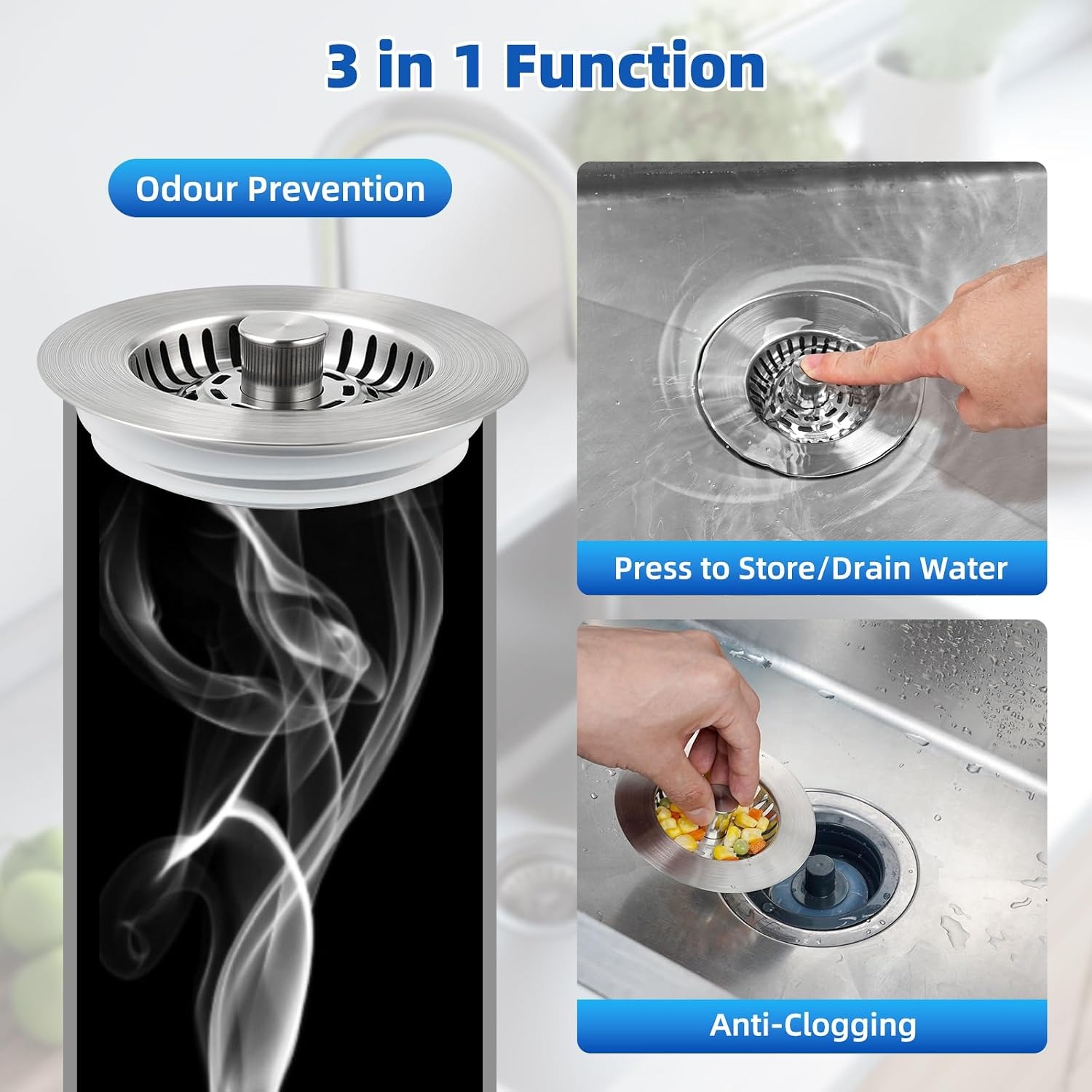
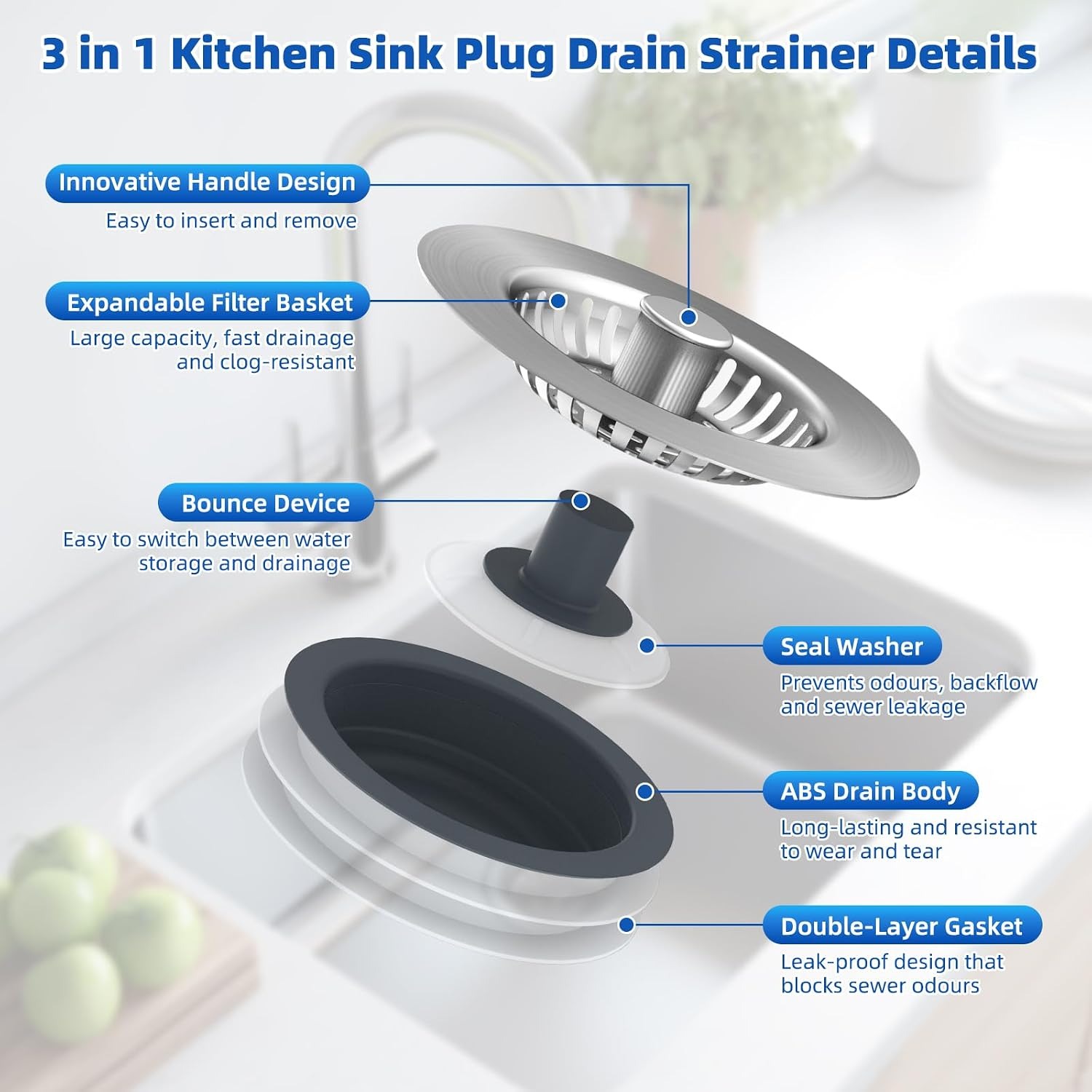
A three in one kitchen sink plug tackles all three of those problems with one part. It holds water when you want it, it catches food waste when you do not, and the seal around it keeps the pipe smell down where it belongs.
How the three jobs fit together
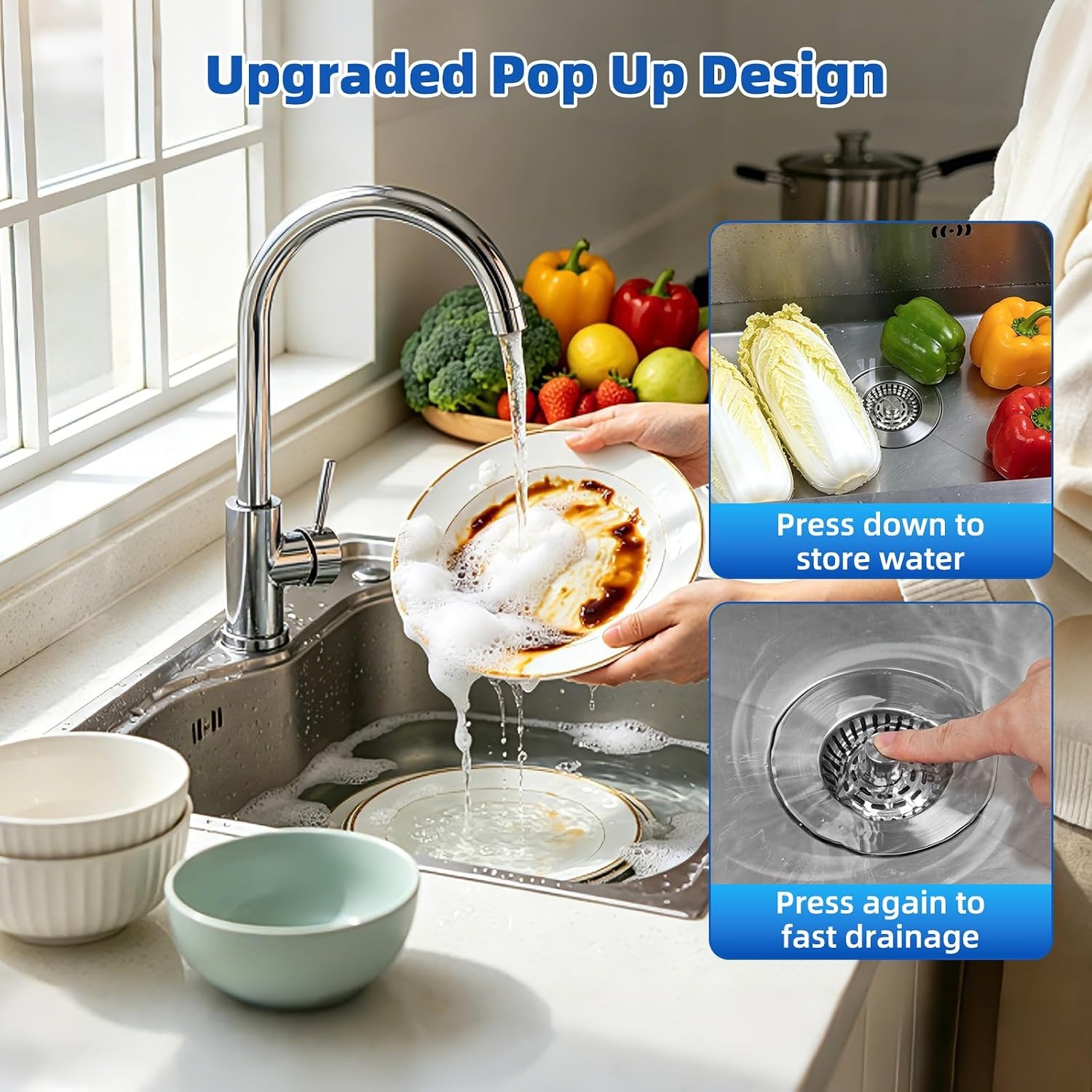
Start with the water. The pop-up core sits in the middle of the fitting. Press it and it drops into the closed position, pressing the rubber gasket against the seating. The sink fills. Press it again and it rises, letting the water out. That is the whole operation, done with one finger, usually dry.
Compare that with the old way. You lower a bung into cold water that already has fat floating on top, or you grope for a chain that has sunk under the suds. The pop-up design is not clever for the sake of it. It removes a small daily unpleasantness.
Next, the straining. A removable basket sits above the core, inside the drain opening. Peelings, rice, pasta, tea leaves and coffee grounds land in it instead of washing into the pipe. When you have finished washing up, you lift the basket, tip it into the bin and rinse it. Ten seconds, maybe less.
That is the part people skip, and it is the part that matters. Blockages do not happen overnight. They build up as layers of starch, fat and small solids cling to the inside of the pipe over months. Catching the solids at the source is the cheapest drain maintenance there is.
Last, the odour. The double-layer rubber seal does double duty. It holds water when the stopper is down, and it also closes the gap that would otherwise let air travel up from the waste pipe. A tight seal is why a good stopper keeps a kitchen smelling neutral.
Who this suits
Renters get a lot out of it. You are not altering plumbing, you are swapping a drop-in fitting, and you can take it with you when you leave if you put the original back.
Anyone who cooks from scratch benefits more than they expect. Peeling carrots, rinsing rice, draining pasta and scraping plates all send solids toward the drain. A good kitchen drain strainer absorbs that load.
Households with older pipework are another strong case. If your drain already runs a little slow, adding a food waste catcher at the top is a sensible way to stop it getting worse.
Small kitchens benefit too. If you only have one bowl, being able to seal it quickly for a soak and then drain it just as quickly makes the space work harder.
Getting the size right
This is the only part that trips people up, so do it before you order.
Take out whatever is currently in your drain. Measure straight across the circular opening at its widest point. You are looking for roughly 75 mm. Then measure the depth of the groove, meaning how far down the recess goes before it narrows into the pipe. You want more than 28 mm.
If both numbers line up, fitting is a drop-in job. If the groove is shallower than 28 mm, the stopper will not seat properly and you will get seepage. If the opening is noticeably smaller, you are probably looking at a basin waste rather than a kitchen one.
One more check: if you have a waste disposal unit, the drain collar is a different arrangement entirely and this stopper is not designed to replace it.
Finish and how it looks
The brushed nickel finish is a middle-of-the-road choice in the best sense. It is soft and slightly warm, close to brushed steel, and it sits quietly against stainless bowls and modern mixer taps. It does not fight with the tap for attention.
It also hides water spots better than bright chrome. Hard water areas are unkind to polished metal, and a brushed surface forgives the odd mineral mark. Keep a dry cloth near the sink and give it a wipe now and then.
Living with it day to day
The routine is simple. Empty the basket every time you finish washing up. Do not let it sit full overnight, because wet food in a warm kitchen is what actually causes the smell people blame on the drain.
Once a week, lift the whole stopper out, wipe the rubber gasket and run a cloth around the seating groove. A single strand of spinach or a coffee ground stuck under the seal is the most common reason a sink starts losing water slowly. Thirty seconds of cleaning fixes it.
Keep harsh products away from it. Bleach left sitting, strong caustic drain openers and gritty scouring powder will all shorten the life of the rubber and dull the finish. Warm soapy water and a soft cloth do the job.
Grease is still your enemy. A strainer catches solids, not liquid fat. Wipe oily pans with kitchen paper before they reach the sink, and the drain will stay clear far longer.
Comparing your options
A plain rubber bung is cheap and that is its only advantage. It does not strain anything and it perishes.
A basket strainer that sits loose in the drain catches food but does not hold water reliably and usually does nothing for odour.
A proper pop-up unit with an integrated basket and a sealing gasket does all three. It costs more at the start and saves you the cost of a drain callout later. For most kitchens, that is a straightforward trade.
The short version
Measure your drain opening and groove depth first. If you have 75 mm across and more than 28 mm of depth, this fitting drops straight in.
You get a sink that seals on one press, a basket that stops food waste reaching the pipe, and a rubber seal that keeps drain smells out of the room. The finish is brushed nickel, which suits modern taps and stainless sinks and hides water spots well.
Empty the basket after every wash-up, wipe the seal once a week, and keep the harsh chemicals away from it. Do that and a small part you touch twenty times a day stops being an annoyance and starts being invisible, which is exactly what you want from a drain.