

The complete guide
The Practical Guide To Choosing And Using A Drain Brush Set
The problem nobody deals with until it floods
A drain does not block overnight. It narrows, slowly, over months. Every shower sends a few hairs down with a film of conditioner and soap. Every washing-up session sends fat, coffee grounds and bits of rice. None of it leaves the house in one go. It sticks to the inside of the pipe just past the plughole, where the water slows down and the trap curves, and it builds into a greasy sleeve that gets a little thicker every week.
You notice it as inconvenience first. The basin takes a few seconds longer to empty. The shower holds water around your feet by the end of a wash. Then there is a smell when the heating comes on. Then one morning the sink simply does not drain and you are standing there with a kettle, a plunger and a growing sense that this is going to cost money.
The irritating part is that almost all of it is preventable with a tool that costs less than a takeaway and a few minutes every month.
Why a brush beats a bottle
The usual first move is chemical drain cleaner. It works sometimes. But think about what it actually does. It sits in the trap and tries to dissolve a plug of hair and grease with a strong alkali or acid. The hair at the edges breaks down, water starts trickling through, and the core of the blockage stays where it is. You have not removed anything. You have just made a channel through it, and the channel closes up again in a few weeks.
A brush does the opposite. It goes in, grabs the mass and brings it out of the pipe entirely. What comes out goes in the bin. Nothing has been added to your plumbing, your septic tank or the water system, and you can see with your own eyes exactly what was causing the problem. For anyone looking for the best chemical free drain cleaner, that is the whole argument in one sentence.
There is a safety angle too. Caustic drain cleaner that fails to clear a blockage leaves a pipe full of strong chemical sitting under your sink. If you then try to plunge it, you can splash it. A nylon brush has no such failure mode.
What is in this set and why three pieces
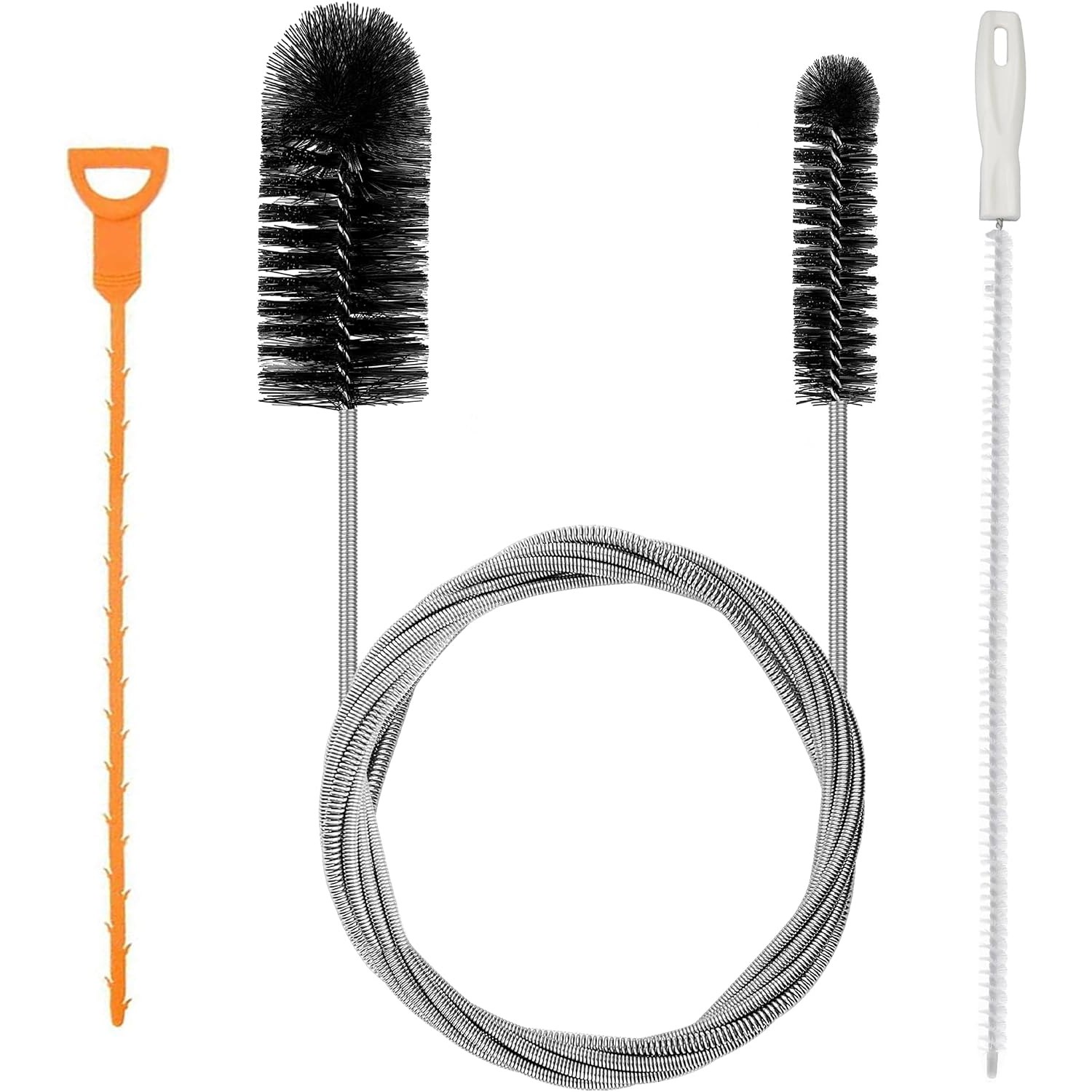
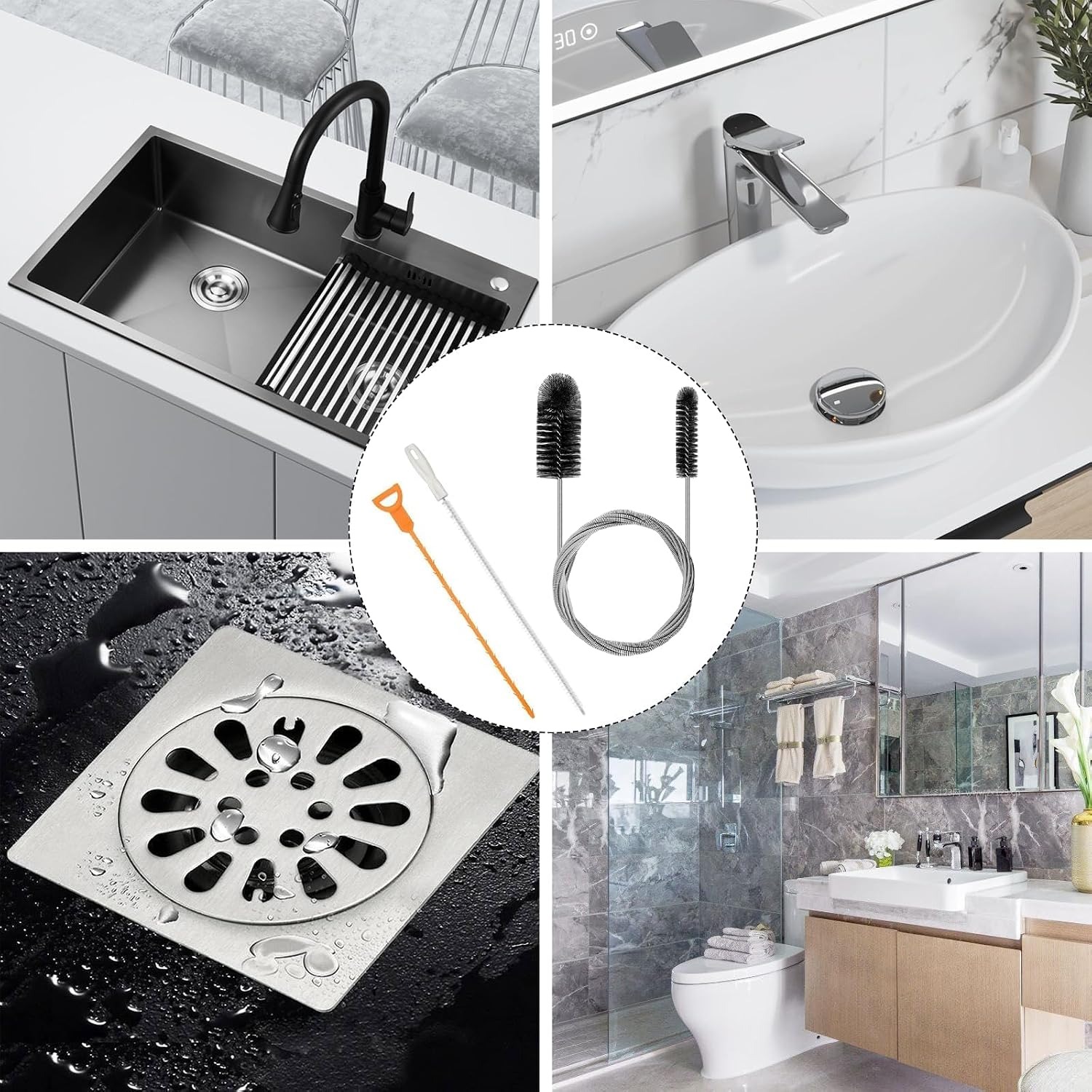
This pack gives you three tools because household drains are not one size.
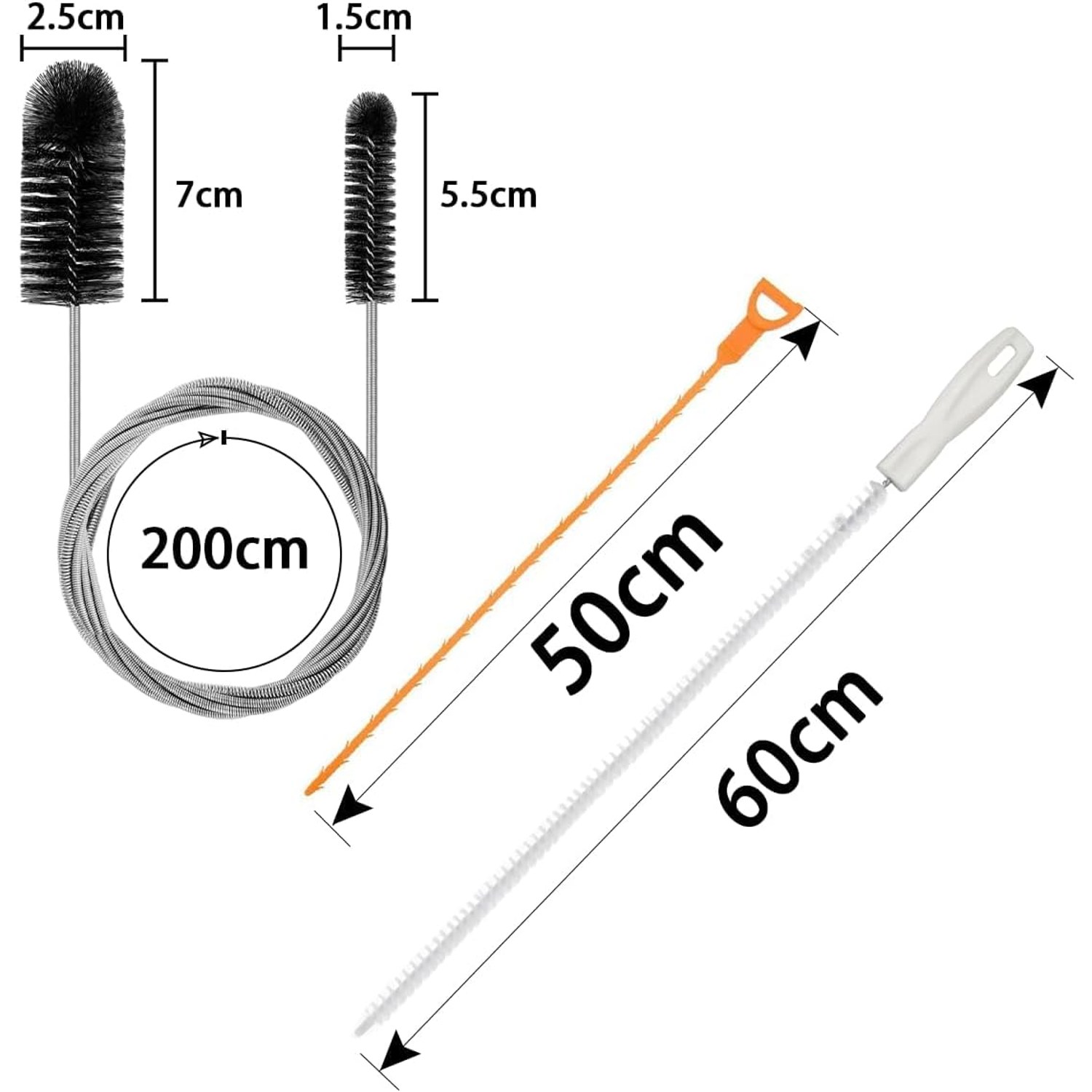
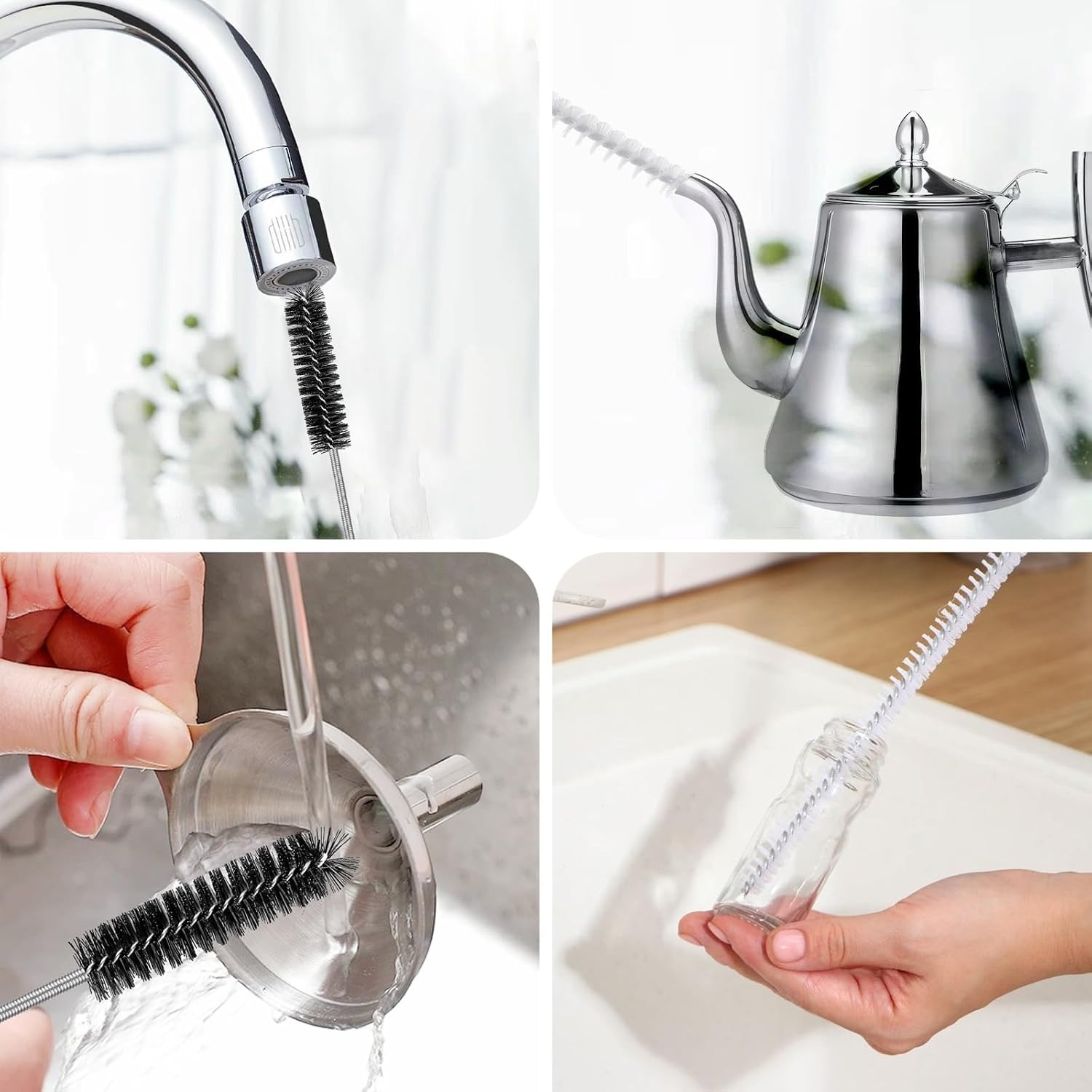
The 200cm flexible brush is the specialist. It has bristle heads at both ends and a stainless steel wire core, and its job is long narrow tubing rather than plugholes. Fridge defrost drain lines, aquarium filter hoses, washing machine outlet hoses, coffee machine internals and car sunroof drain channels all share the same awkward geometry, long, thin and bending. Rigid tools cannot get in. A short brush does not reach. This is the piece that solves the best flexible pipe brush problem.
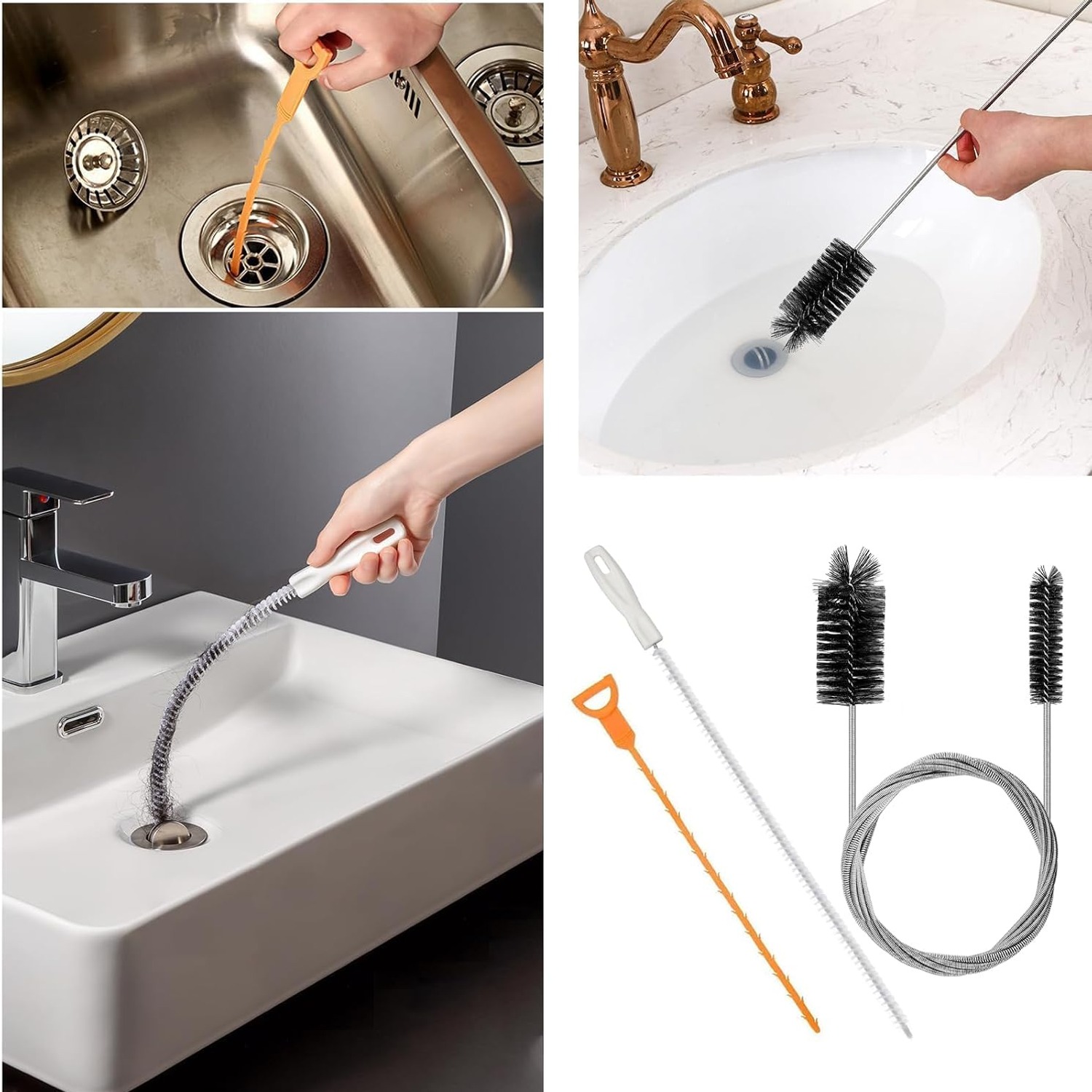
The two shorter tools are the everyday workers. One is sized for sinks, kitchen or bathroom, where the build-up is a mix of grease and food film. The other is a thinner stick style tool for showers and bath wastes, where the enemy is almost always matted hair. If you only ever use the set for these two jobs it will still have paid for itself the first time it saves a call-out.
The reason this matters when you compare against the best drain brush set options is that single-tool products force compromises. A tool thick enough to scrub a kitchen waste is often too fat to slip past a shower grate. Having both means you stop improvising with a coat hanger.
Materials, and why they are not just marketing
Two things determine how long a drain brush survives. The bristles and the shaft.
The bristles here are high-density nylon filament. Nylon does not soften when wet, does not rust, and has enough stiffness to keep its shape while scrubbing. Cheap brushes use low-density fibres that lie flat the first time they meet resistance, and then you are pushing a limp stick through a pipe hoping for the best. Density is also what keeps bristles anchored rather than shedding into the drain you are trying to clear.
The shaft is 304 stainless steel wire. Stainless matters in a tool that lives in water, obviously. But the more useful property is spring. A good wire core bends around a trap and then straightens again. A poor one takes a permanent crease at the first hard turn, and after that it will not feed cleanly into anything. If you have ever fought with a bent drain snake you know the difference immediately.
The maker describes the tools as flexible with long handles and designed to be reused. That is the right framing. This is a tool you keep, not a consumable.
How to use it properly
Technique takes about thirty seconds to learn.
Lift the grate or remove the plug if you can. Feed the tool in slowly until you feel it meet something. Do not force it, because forcing just compacts the blockage further down the pipe. Instead, twist the handle a quarter to a half turn. That wraps the bristles around the hair the way a fork wraps spaghetti. Then withdraw steadily. Most of the time the whole plug comes out as one grey rope, which is disgusting and extremely satisfying.
Clean the head, go back in, repeat. When the brush comes out clean, you are done. For kitchen drains, follow with a kettle of very hot water to flush any softened grease on its way. For showers, a rinse of the tray is enough.
For tubing work with the long brush, straighten the hose as much as possible first and feed from the easier end. Short back-and-forth strokes move more debris than one long push. If you are cleaning an appliance line, disconnect and cool the appliance before you start.
Who this set suits
Households with long hair are the obvious case. So are homes where dogs get bathed indoors, which puts a surprising amount of coat down the bath waste. Renters benefit because a slow drain is something you can fix yourself in five minutes rather than logging a maintenance request and waiting a fortnight.
Beyond the bathroom, the long brush pulls in a different crowd. Aquarium keepers use flexible tube brushes constantly, since filter hose biofilm quietly strangles flow rate. Caravan and motorhome owners deal with narrow waste runs. Anyone whose car sunroof has started dripping into the headlining has a blocked drain channel, and that is a 200cm-flexible-brush job rather than a garage job.
If you are shopping for the best hair removal drain tool or the best sink unblocker brush, you are probably in one of these groups already.
Looking after it
Care is simple and it decides how long the set lasts. Strip the hair off by hand, ideally with a glove, straight after use. Rinse under hot water with a squirt of washing-up liquid. If bristles stay clogged, an old toothbrush clears them in seconds.
Then dry it. This is the step people skip. A wet brush shoved in a cupboard develops an odour and the wire sits damp. Hang it or lay it somewhere airy until it is properly dry, then store the long brush loosely coiled. Never fold it sharply, and never use it as a lever to prise anything.
When to call someone instead
Be honest about the limits. This set handles hair, soap, food particles and slime in the first stretch of pipe, which covers the overwhelming majority of domestic slow drains. It will not clear a collapsed pipe, a root-invaded sewer lateral, or a blockage sitting ten metres out under the garden. If every drain in the house is backing up at once, that is a main line problem and no hand tool will fix it. Call a plumber and save yourself the frustration.
The short version
Slow drains are caused by build-up you can physically remove. This three-piece set gives you a 200cm flexible double-headed brush for tubing and appliance lines, plus two shorter tools for sinks, showers, baths and floor drains. Nylon bristles on a stainless steel wire core, reusable, no chemicals involved.
Use it once a month on the drains you already know are sluggish and you will mostly stop having blocked drains at all. That is a better outcome than any bottle under the sink.