EzyDrains Company
Company
Shop By Category
T&Cs
Shop Online
  • Size, material and fit listed
  • Free tracked delivery across the UK over £100
  • 14-day returns

Double Ended Drain Brush 170cm | Flexible pipe cleaning brush | hose and drain cleaner

Double Ended Drain Brush 170cm Flexible Pipe Cleaner

£13.99 £16.99 Save £3
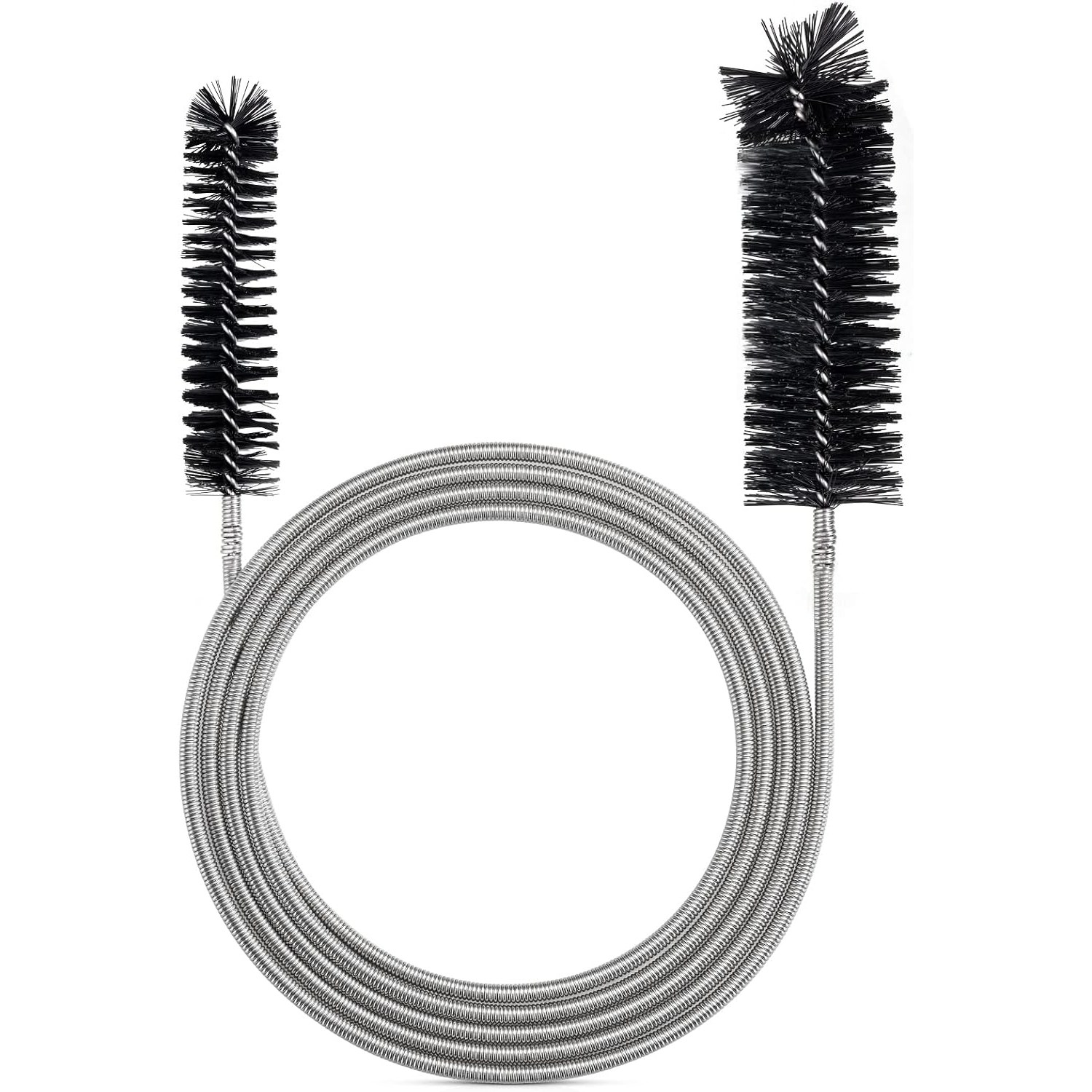
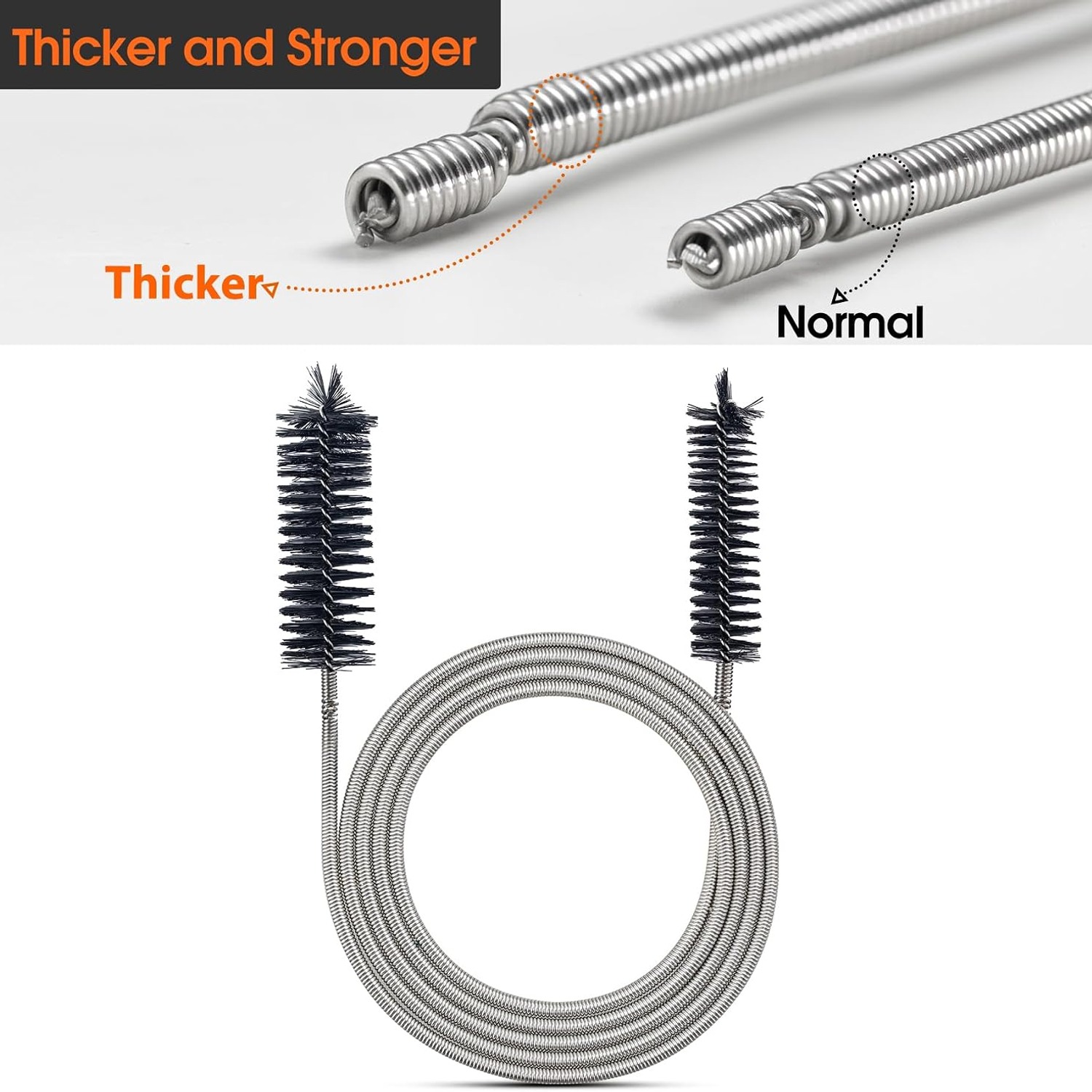
  • 170cm Of Reach
  • Bends Round Curves
  • Two Bristle Heads
  • Nylon Bristles

Price: £13.99 £16.99

  • Free tracked delivery across the UK on orders £100+, otherwise a flat £12
  • Pay by card or PayPal, handled by the payment provider
  • 14 days to change your mind, plus your statutory rights
Product specifications
BrandLiteTour
Model NumberSXS170-BT
Manufacturer Part NumberSXS170-BT
ManufacturerLejie
ColourBlack
Handle MaterialMetal
Bristle MaterialNylon
Item TypeBrush
Item ShapeRectangular
FlexibilityVery flexible
Recommended SurfacesPipes and piping
Specific UsesHose and drain cleaning
Packaged Dimensions18 x 8 x 1 cm
Item Weight0.09 kg
Number Of Items1
Number Of Packs1
Unit Count1
Country Of OriginChina
Weight0.09 kg
Shipping & returns

Tracked delivery anywhere in the UK, sent from UK stock. It is free on orders of £100 or more, and a flat £12 below that. Most orders arrive within 3 to 6 working days.

Under the Consumer Contracts Regulations 2013 you have 14 days from delivery to cancel for any reason, and a further 14 days to send it back. You may handle the item as you would in a shop. We refund the price you paid, including standard delivery, though we may reduce the refund if it has been used beyond that. You cover the cost of returning it unless the item is faulty.

If it arrives faulty, damaged or not as described, we put it right at no cost to you under the Consumer Rights Act 2015, return postage included.

Shipping details · Refunds and returns

170cm Of ReachGets deep into long hoses and pipe runs that short brushes cannot touch.
Bends Round CurvesThe flexible spring shaft follows bends instead of jamming at the first turn.
Two Bristle HeadsA head at each end means you can work from either side of a pipe.
Nylon BristlesSoft enough on most surfaces, firm enough to lift slime and build-up.

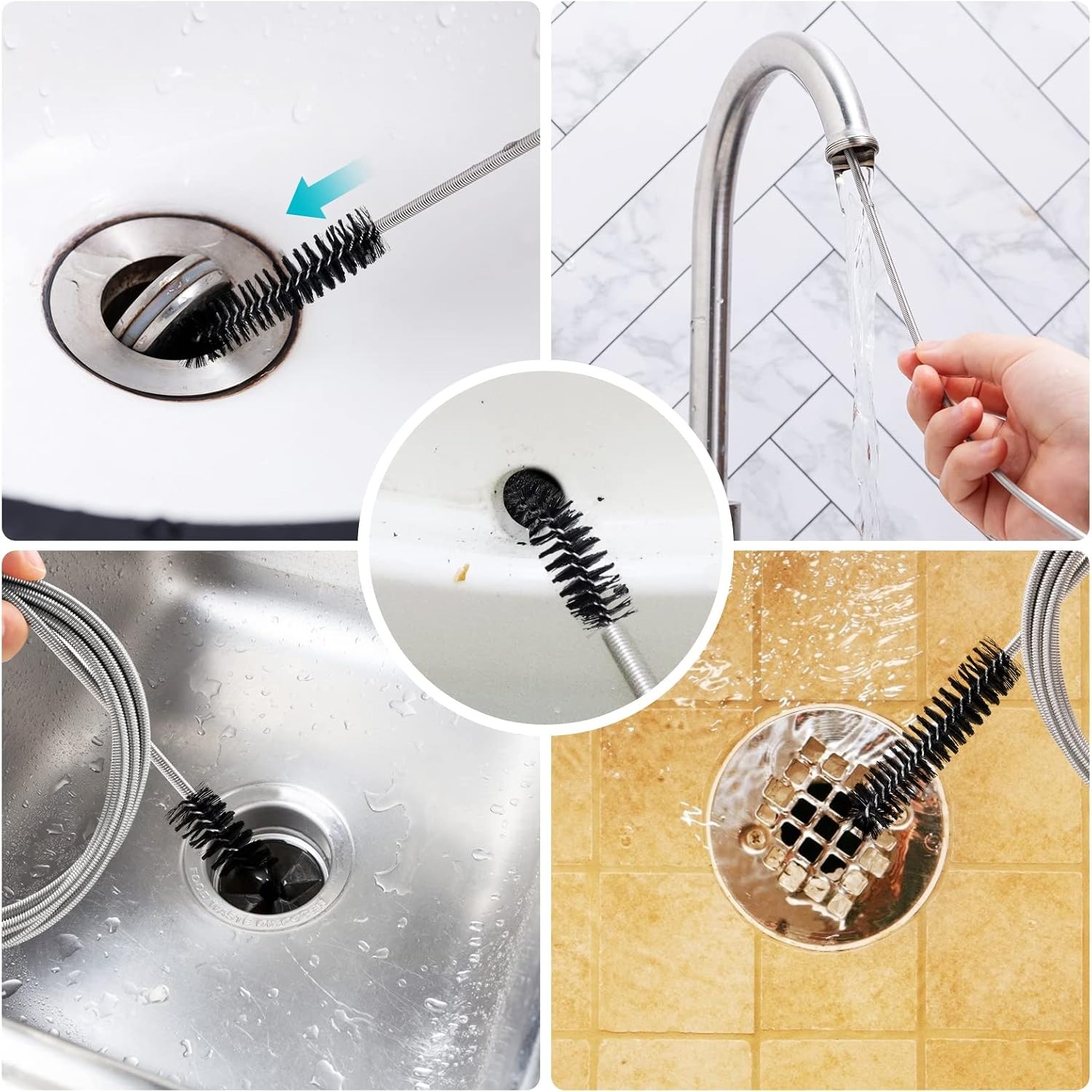
Reach the gunk you cannot see with a double ended drain brush 170cm long that bends around corners instead of stopping at them.

A flexible metal-handled spring shaft with nylon bristle heads at both ends sweeps sludge, hair and slime out of sinks, hoses and narrow pipework in one pass.

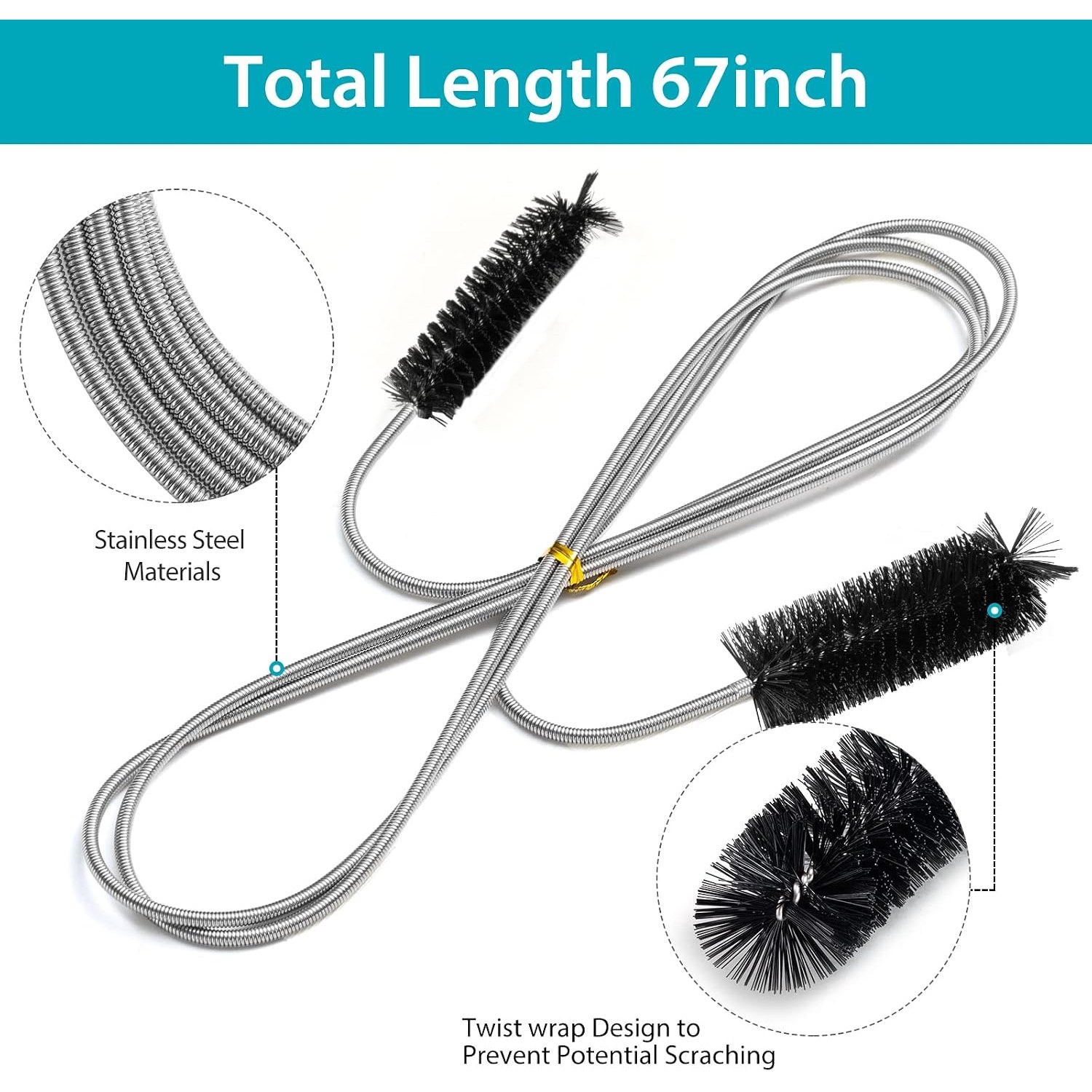
This double ended drain brush measures 170cm in total, so it reaches right through long hoses and awkward pipe runs in a single pass.

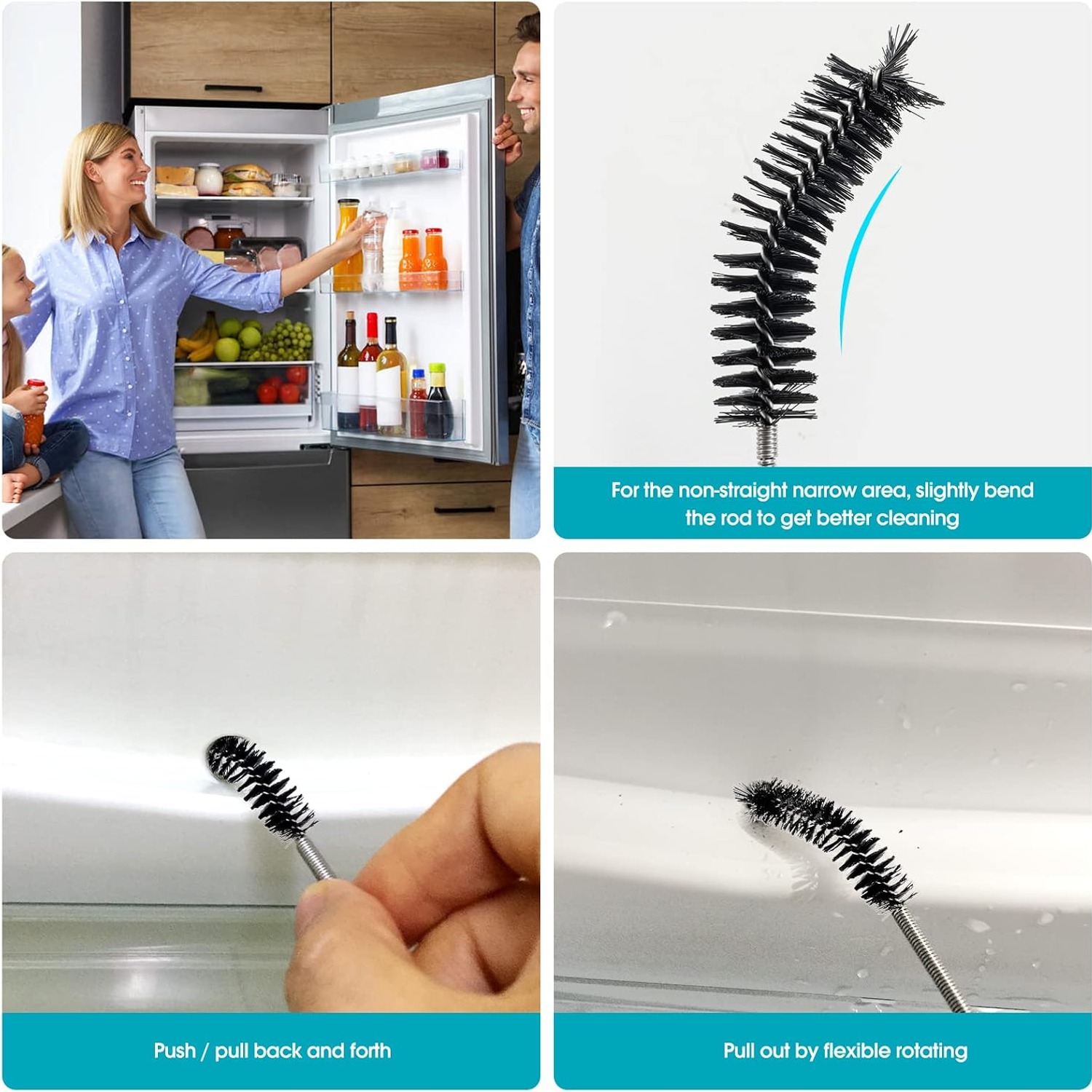
The flexible shaft bends through curves and elbows, which is where most sludge quietly collects.

Nylon bristle heads at both ends let you scrub from either opening without turning the whole brush around.

The metal handle gives you something firm to grip and twist while the bristles do the work.

At just 0.09 kg it coils up small and lives happily in a cupboard, a toolbox or a caravan locker.

Double Ended Drain Brush 170cm Flexible Pipe Cleaner

Most blockages do not start as blockages. They start as a thin film of grease, soap and hair clinging to the inside of a pipe, and every wash adds another layer. A bottle brush cannot reach it, a plunger pushes it further along, and chemical cleaners only soften what they can touch. A long flexible pipe brush gets physically into the pipe and pulls the build-up out, which is why plumbers reach for a brush before they reach for anything else.

Double Ended Drain Brush 170cm Flexible Pipe Cleaner

This double ended drain brush 170cm in length is built around a flexible metal spring shaft with a nylon bristle head at each end. The flexibility is the point. Straight rods stop dead at the first elbow, while a spring shaft follows the curve and keeps going, so you can clean the bends where sludge actually settles rather than just the easy first few centimetres.

Double Ended Drain Brush 170cm Flexible Pipe Cleaner

Having bristles on both ends gives you options. You can feed one end into a sink waste and keep the clean end in your hand, or work a washing machine hose from each opening in turn so you are never trying to force debris the wrong way through a kink. When one head gets clogged, swap to the other and keep working while the first rinses out.

Double Ended Drain Brush 170cm Flexible Pipe Cleaner

The nylon bristles are the right compromise for mixed jobs. They are stiff enough to scrape slime off the inside wall of a hose but not so aggressive that they chew up softer tubing. The metal handle at the end of the shaft gives you a solid grip so you can push and rotate at the same time, which is how the bristles scrub rather than just slide past the dirt.

Double Ended Drain Brush 170cm Flexible Pipe Cleaner

It is a small, light tool. At 0.09 kg and packed flat in an 18 x 8 x 1 cm format, it coils into a drawer, a cleaning caddy or a caravan locker without taking up real estate. For a job people usually put off until water is standing in the sink, having the brush already in the cupboard changes the habit from emergency to routine.

Not sure yet? That is fine.

A drain part has to fit the drain you have, and you cannot always judge that from a photograph. Under the Consumer Contracts Regulations 2013 you have 14 days from delivery to cancel for any reason, and a further 14 days to send it back. You can handle it as you would in a shop to check the fit. We refund the price you paid, including standard delivery, though we may reduce the refund if the item has been used beyond that.

If it turns up faulty, damaged or not as described, that is on us. The Consumer Rights Act 2015 covers you, and we pay the return postage. Read the full detail on our refunds and returns page, or ask us anything before you order.

Frequently Asked Questions

What exactly is a double ended drain brush?

It is a long, flexible brush with bristle heads on both ends joined by a springy shaft. You feed one end into a drain, hose or pipe and push it through while twisting, so the bristles scrub the inside wall. This one has a total length of 170cm.

How long is the brush?

The total length is 170cm, which is about 67 inches. That is long enough to pass right through most domestic waste pipes, washing machine hoses and garden hose runs. Packed for shipping it folds into an 18 x 8 x 1 cm format.

Will it go around bends?

Yes. The shaft is described as very flexible, so it follows curves rather than stopping at them. It handles gentle elbows and S-bends far better than a rigid rod, though extremely tight right-angle turns in rigid pipe can still be a struggle for any brush.

What is the handle made of?

The handle material is listed as metal. That gives you a firm grip for pushing and twisting, which is how the bristles actually scrub instead of sliding over the dirt.

What are the bristles made of?

The bristles are nylon. Nylon is firm enough to lift slime, grease film and hair off a pipe wall, but softer than wire, so it is a sensible choice for mixed household surfaces.

Why does it have two bristle heads?

A head at each end means you can clean a pipe from either opening without reversing the whole tool. It also gives you a fresh head to switch to when the first one gets loaded with gunk.

Is this the best drain cleaning brush for kitchen sinks?

It is a strong option for kitchen waste pipes because grease builds up in the bend right under the sink and this brush reaches it. For the trap itself, you may still want to unscrew and empty it. Use the brush for the run of pipe beyond the trap.

Can I use it on a washing machine hose?

Yes, that is one of the common uses. A washing machine hose brush needs to be long and flexible, and 170cm covers most standard drain hoses. Disconnect the hose first and work it through over a bucket or outside.

Does it work on a dishwasher drain hose?

It does. A dishwasher drain hose cleaner job is much the same as a washing machine one, mostly grease and detergent residue. Detach the hose, flush it with warm water first, then run the brush through from both ends.

Will it clean a garden hose?

Yes. As a hose cleaning brush it will pull out the green algae film and grit that collects inside a hose that has been left lying in the sun. Flush the hose with water afterwards so loosened debris does not sit inside.

Is it suitable for a caravan or motorhome water hose?

It is a practical caravan water hose brush because it is light and coils up small for storage. Clean the hose with the brush, then rinse thoroughly and sanitise the hose according to the hose maker's advice before using it for drinking water.

Can I use it on aquarium tubing?

Many people use a long flexible brush as an aquarium tube brush for airline and filter hoses. Only use it with water, never soaps or chemicals, and rinse it very thoroughly before and after so nothing transfers to the tank.

Is it safe for CPAP tubing?

Some owners use a soft long brush as a CPAP hose cleaning brush, but you should follow your device manufacturer's cleaning instructions first. If they approve brushing, use warm water only and let the tube dry completely before reuse.

Will it scratch my pipes?

Nylon bristles are far gentler than metal ones and are generally fine on plastic and metal pipework. On very soft or polished surfaces, test on a hidden section first and avoid forcing it. Let the bristles do the work rather than pushing hard.

Can it clear a full blockage?

It is designed to scrub and remove build-up rather than ram through a solid clog. It will often break up and drag out hair and sludge that is starting to restrict flow. For a hard, complete blockage you may need a drain snake or a plumber.

Does it remove hair from shower drains?

It helps a lot. As a shower drain hair remover it hooks hair strands in the bristles so you can pull them back out rather than pushing them deeper. Work slowly and withdraw often to clear the head.

Do I need chemicals as well?

Usually not. Mechanical cleaning removes the material instead of just dissolving part of it. If you do use a cleaner, flush the pipe with plenty of water before you put the brush in so the bristles are not sitting in anything harsh.

How do I use it without making a mess?

Put a bowl or towel under the pipe opening, feed the brush in slowly, and twist as you push. Pull back every 20 to 30cm to clear debris off the head, then continue. Working outside or over a bucket for detached hoses saves cleanup.

Which direction should I push it?

Where possible, push from the direction water normally flows, so debris keeps moving the way it would drain. With a detached hose you can work from both ends, which is where the double ended design pays off.

How do I clean the brush afterwards?

Rinse it under running water and shake it out. If it has been through greasy pipework, wash it in warm soapy water and rinse again. Let it dry fully before storing so the shaft and bristles are not left damp.

How should I store it?

Coil it loosely and hang it up or lay it in a drawer. Avoid sharp kinks in the spring shaft, because repeated hard bends in one spot shorten the life of any flexible brush.

How heavy is it?

The item weight is 0.09 kg, so it is very light. That makes it easy to control one handed and easy to take with you in a caravan, a boat or a toolbox.

What colour is it?

It is black. The colour is listed on the product details, though a dark finish also hides staining from greasy pipe work better than a light one would.

What is the model number?

The model number and manufacturer part number are both SXS170-BT. The brand is LiteTour and the manufacturer is listed as Lejie.

Where is it made?

The country of origin is China.

What diameter pipes does it fit?

The exact bristle head diameter is not specified by the maker. As a general guide, choose a brush head slightly wider than the pipe so the bristles press on the wall. If your pipe is unusually narrow or wide, measure first.

How many brushes come in a pack?

One brush per pack. The unit count is listed as one and the number of packs is one.

Does it come with a warranty?

No warranty terms are stated for this item. If anything arrives faulty or damaged, contact us and we will sort it out under our normal returns process.

How quickly will it arrive?

Delivery times depend on your country and address. You will see the available options and estimated timeframes at checkout before you pay.

What if it is not right for me?

If it arrives and it is not what you expected, get in touch within the returns window stated at checkout and we will arrange a return or exchange. Keep the packaging if you can, since that makes sending it back simpler. We would rather help you find the right tool than have you keep one that does not fit your pipes.

The Practical Guide to Cleaning Drains, Hoses and Pipes With a Flexible Brush

6 min read EzyDrains Company

The smell that comes back

You pour something down the sink, the water runs away faster for a day or two, and then the smell returns. That cycle is familiar to almost everyone, and it tells you something useful. The problem was never really the water sitting in the basin. The problem is the coating on the inside of the pipe.

Grease, soap scum, toothpaste, food particles and hair all stick to pipe walls. Every time water passes over them, a little more sticks. Over months that coating gets thick enough to slow the flow and to feed the bacteria that cause the smell. Chemical cleaners can soften part of it. They cannot scrub.

A flexible pipe cleaning brush is the simple answer that people forget about. It goes into the pipe, presses bristles against the wall, and drags the build-up back out where you can throw it away. Nothing clever about it. It just works, and it keeps working without you buying another bottle of anything.

How a long flexible brush actually works

The design is straightforward. A springy shaft carries a bristle head, and you feed the head into the pipe while twisting the handle. The twist is important. Pushing alone just slides the bristles along the sludge. Rotating as you push makes the bristles sweep the circumference of the pipe, which is what lifts the film off.

This particular brush is 170cm long with a head at each end, a metal handle, and nylon bristles. The shaft is described as very flexible, and that flexibility is the whole reason a tool like this beats a rigid rod. Pipes are not straight. There is a trap under every sink, a loop behind every washing machine, and a bend wherever the pipe meets the wall. A rigid rod meets the first bend and stops. A spring shaft bends with it.

Two heads instead of one gives you a bit more freedom. If you are cleaning a detached hose, you can start from one end, get partway, then work from the other end and meet in the middle. If one head loads up with hair, you switch to the clean one rather than stopping to rinse. It is a small design decision that saves real time on a messy job.

Nylon sits in a sensible middle ground for bristle material. Brass and steel bristles bite harder but can mark plastic waste pipe and soft tubing. Very soft bristles will not shift a hardened grease film. Nylon lifts slime and scum without being aggressive, which is what you want when the same brush is expected to handle a kitchen waste pipe one week and a garden hose the next.

Who gets the most out of one

Anyone with a kitchen sink, honestly. Kitchens are the worst offenders because of fat and oil. Even if you never pour grease down the plug, it comes off plates and pans in small amounts and it all ends up in the same place.

Beyond the kitchen, there is a long list of people who find a tool like this more useful than they expected. Caravan and motorhome owners deal with water hoses that sit coiled in a locker and grow something unpleasant inside. Boat owners have the same issue. Anyone with a washing machine or dishwasher has a drain hose that nobody has ever cleaned, and those hoses are a classic source of a musty smell in a laundry.

Aquarium keepers use a long flexible brush on filter tubing, where algae and biofilm reduce flow long before you notice. Home brewers and people with coffee machines use one on transfer lines. Parents end up using them on reusable drinks bottles with long straws. The common thread is simple. Something is tube-shaped, you cannot see inside it, and nothing else reaches.

Choosing the right brush for the job

Length matters more than people think. A short bottle brush is fine for a water bottle and useless for a two metre hose. At 170cm this one covers most domestic runs, including washing machine drain hoses, sink waste pipes and standard garden hose lengths. If your hose is 20 metres long, no handheld brush is going to pass all the way through. In that case clean from both ends and flush the middle with water pressure.

Diameter is the second factor. You want a head that is a little wider than the inside of the pipe so the bristles press outward against the wall. Too small and it just rattles through without touching anything. Too large and you will fight it the whole way and risk bending the shaft. The bristle head diameter for this brush is not listed by the maker, so if you are working on unusually narrow or wide pipework, measure your pipe before you order.

Then think about flexibility. If every pipe you clean is dead straight, a stiff rod is fine. The moment there is a bend, you need a shaft that will follow it. This one is rated very flexible, which is the right choice for household drains and coiled hoses.

Finally, consider the handle. A metal handle gives you something solid to twist against. Thin plastic handles tend to flex or snap when you put torque through them, and torque is exactly what the job needs.

Getting good results without a mess

Prepare before you start. Put a bucket, bowl or old towel under the opening. If you are cleaning a detached hose, take it outside or into a laundry tub. Loosened gunk has to go somewhere and you do not want it on a clean floor.

Flush with warm water first if you can. Warm water softens grease and makes the brushing easier. Then feed the brush in slowly, twisting as you go. Do not try to run the whole 170cm through in one push. Go in 20 or 30cm, pull back, clear the head, and go again a bit further. It feels slower but it is faster overall, because a loaded head stops scrubbing.

When you get resistance, stop pushing hard. Back off, twist, and try again with a lighter touch. Forcing a flexible shaft against a solid blockage just kinks the shaft. If something genuinely will not move, you are dealing with a clog rather than a coating, and that is a job for a drain snake or a plumber.

Finish by flushing the pipe with plenty of water to carry away anything you loosened but did not pull out. On a drinking water hose, flush for longer and follow the hose maker's advice on sanitising before you use it again.

Looking after the brush

Rinse it straight after use, before anything has a chance to dry on the bristles. For greasy jobs, a wash in warm soapy water and a second rinse will sort it out. Shake the water off and let it dry fully, ideally hanging up, because a damp coiled brush in a dark cupboard develops exactly the problem you bought it to solve.

Store it coiled loosely. Spring shafts last a long time if you treat them gently, but repeated sharp kinks in the same spot will eventually weaken the metal. Keep it away from strong solvents, and keep a separate brush for anything food or drink related if you also use one on household drains.

How often to use it

For a kitchen sink, every month or two is plenty for most households. If you cook a lot or have a large family, monthly is sensible. Bathroom and shower drains depend mostly on how much hair goes down them, so once a month is a fair starting point if you have long hair in the house.

Appliance hoses need far less attention, perhaps once or twice a year, and are often best cleaned when you are already pulling the machine out for another reason. Garden and caravan hoses are worth doing at the start and end of the season. Aquarium tubing follows your normal maintenance cycle.

The habit is the real benefit. A quick pass with a brush takes five minutes. A proper blockage takes an afternoon or a call-out fee.

The short version

Build-up inside pipes causes slow drains and bad smells, and only something physical removes it. A 170cm double ended drain brush with a flexible metal shaft and nylon bristles reaches into hoses, waste pipes and tubing, bends around the corners where sludge collects, and pulls the mess back out.

It weighs almost nothing, stores in a drawer, and handles kitchen sinks, shower drains, washing machine hoses, garden hoses and aquarium tubing with the same tool. Rinse it, dry it, coil it loosely, and it will keep earning its place in the cupboard for years.

Browse the shop

Ready to clear that pipe?

Grab the 170cm double ended drain brush and keep it in the cupboard so the next slow drain is a five minute job instead of a weekend one.

Ask us a question

Page summary

The LiteTour double ended drain brush is a flexible pipe cleaning brush with a total length of 170cm and a nylon bristle head at each end. The handle material is listed as metal and the bristles as nylon, with the item described as very flexible so it can follow curved pipework. It is intended for hoses, pipes and household drains. The brush is black, weighs 0.09 kg, and ships in a package measuring 18 x 8 x 1 cm. The model and manufacturer part number is SXS170-BT, manufactured by Lejie, country of origin China. One brush is supplied per pack. Exact bristle head diameter, shaft gauge and GTIN are not specified by the maker.