
The complete guide
How to Choose a Shower Hair Catcher That Actually Works
The problem with shower drains
Nobody thinks about their shower drain until the water stops going down. Then suddenly it is a daily annoyance. You step in, the water pools around your ankles, and by the end of the shower you are standing in something lukewarm and grey.
Almost every time, hair is the cause. A single shower sheds more hair than you would guess, and it does not behave like other debris. It does not break down and it does not flush through. It drifts down the pipe, catches on a joint or a rough edge, and then starts collecting everything else that comes past, mostly soap residue, conditioner, skin, and sand or grit from shoes and feet. Within a few months that forms a soft plug that water has to squeeze through.
The frustrating part is how easy the whole thing is to prevent. Hair only becomes a problem once it is out of sight. Catch it at the surface and it is just something you pick up and bin.
How a drain catcher works
A shower drain catcher is a filter placed between your feet and the pipe. Simple idea, but the execution decides whether it helps or just annoys you.
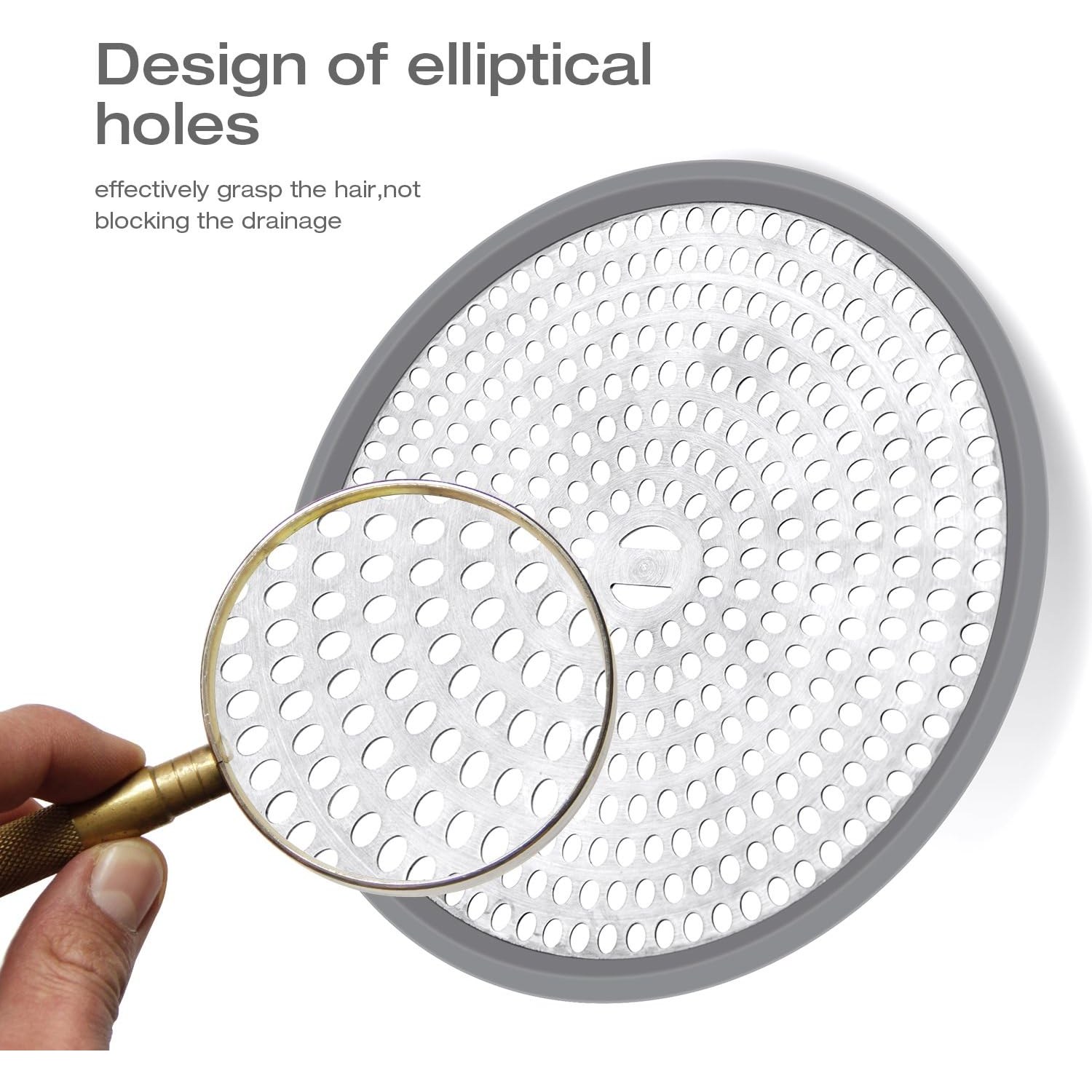
The balance is between flow and capture. Make the holes too small and water backs up, so people take the cover off and never put it back. Make them too big and hair slides straight through, so you have a metal disc that does nothing. The useful middle is a slot shape that is long in one direction and narrow in the other. Water has plenty of length to pass through, while hair, which arrives as long strands rather than droplets, lies across the slot instead of threading down it.
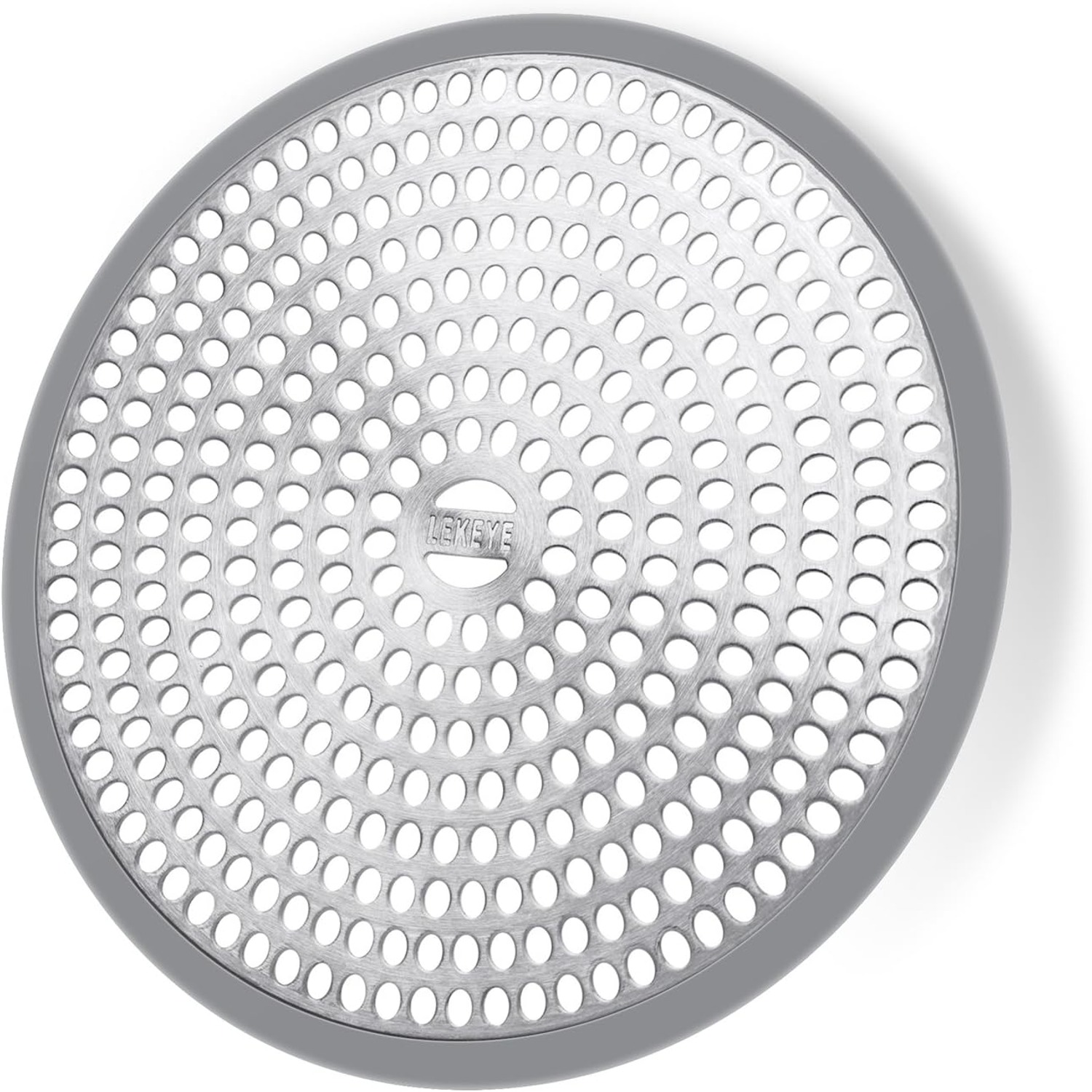
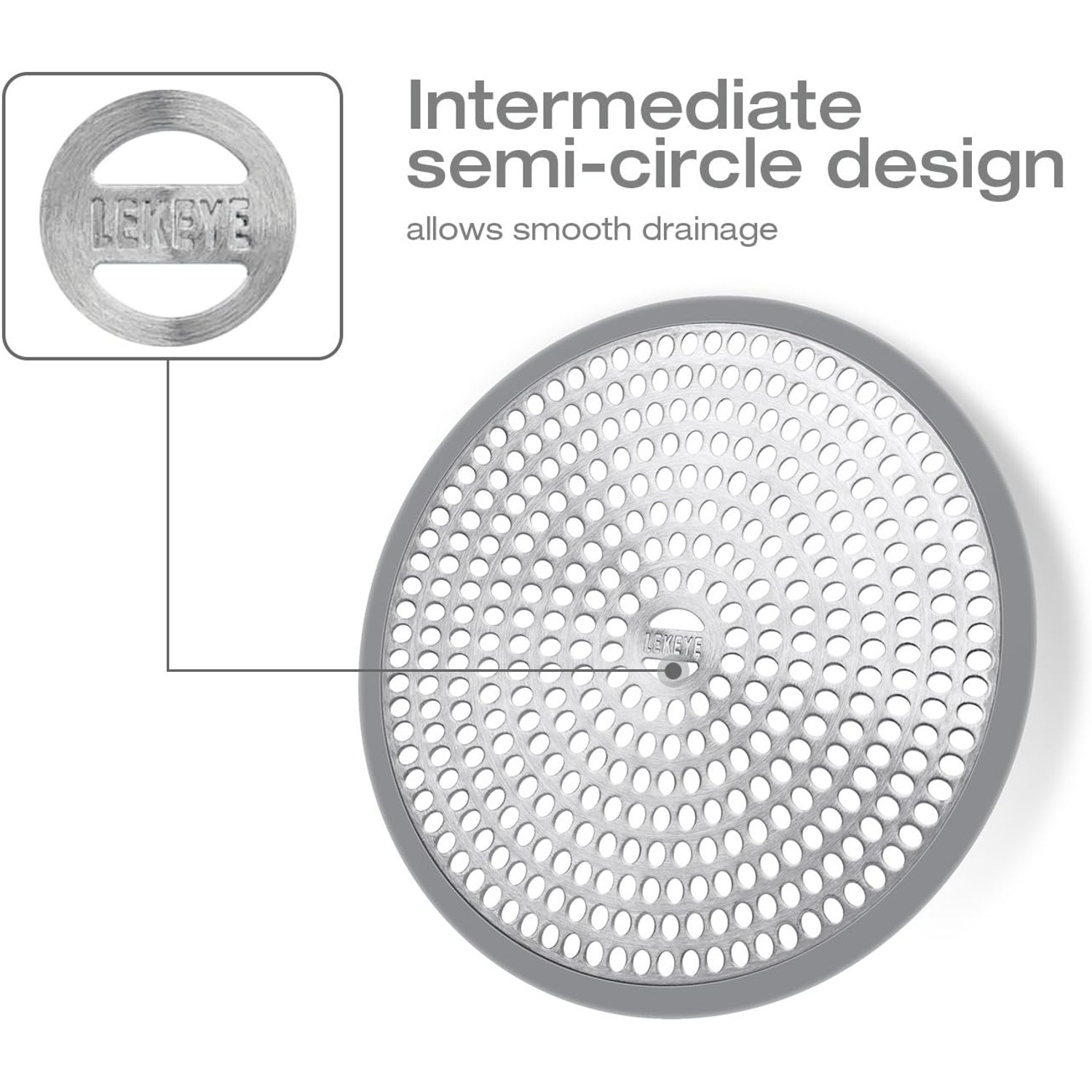
This catcher uses elliptical slots in a stainless steel face, with an open semi-circle section through the middle. That centre opening is a deliberate relief valve. When a surge of water hits, it has somewhere to go even if some slots are partly covered in hair.
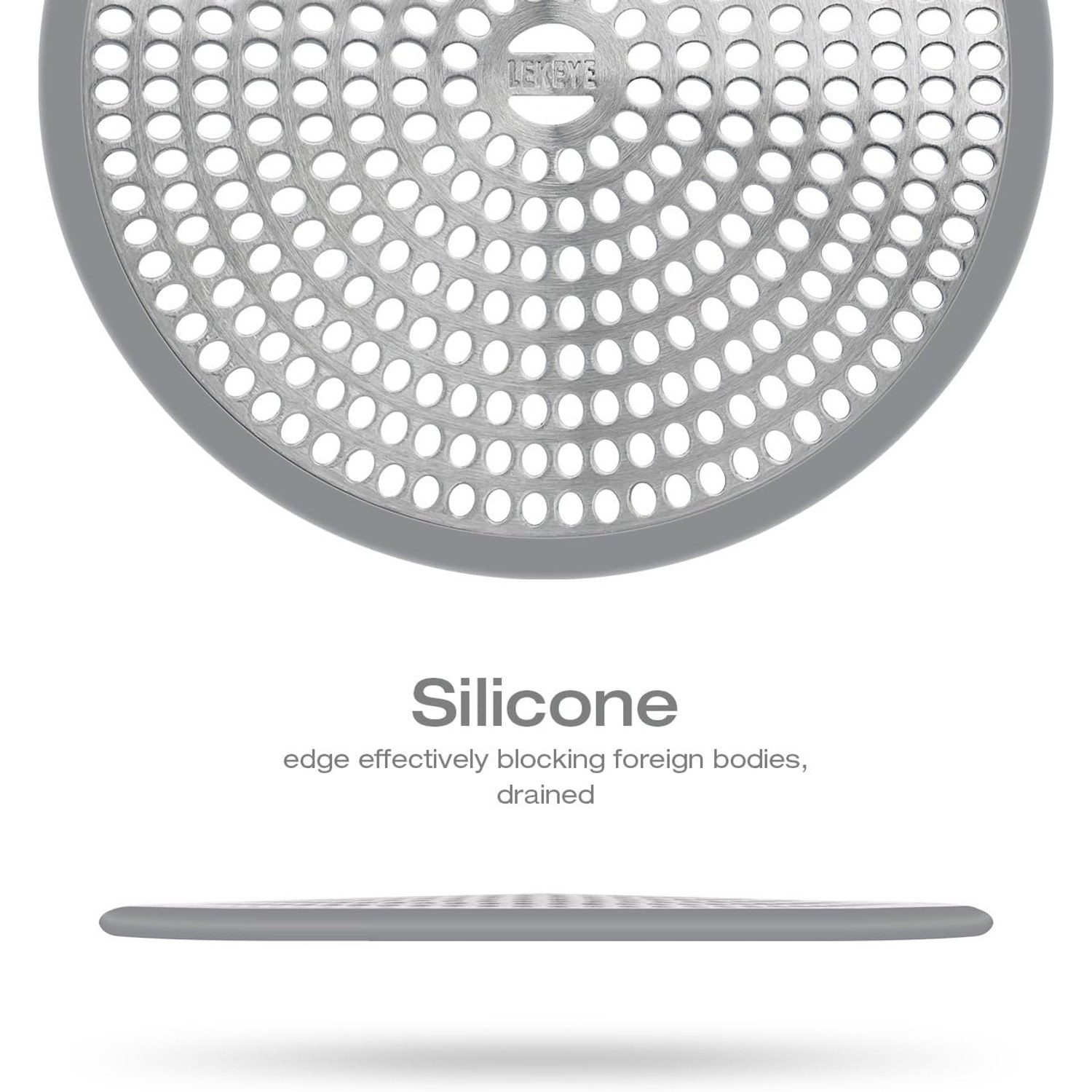
Then there is the edge, which is where cheap drain covers fail. A flat metal disc sitting on a floor that is not perfectly level leaves tiny gaps at the rim, and hair is very good at finding them. The silicone rim here flexes against the floor and closes those gaps, so what you catch stays caught.
Materials matter more than you think
Bathrooms are hard on things. Constant moisture, hot water, soap, shampoo, and whatever cleaning products you use all take a toll.
Plastic drain screens are everywhere because they cost almost nothing. They also discolour within months, go brittle after repeated hot water, and warp just enough that they stop sitting flat. Once a plastic cover warps, it rocks when you step on it and the gap at the edge widens.
Stainless steel does not have those problems. It keeps its shape, resists rust, and cleans up with a rinse. It also just looks better, which matters more than people admit when the thing is sitting in plain view on your shower floor every day.
Silicone is the other half of the design. It stays soft and flexible in wet conditions, grips a little against tile or acrylic, and does not scratch the floor. Putting a rigid material where you need strength and a soft material where you need a seal is a sensible way to build something this small.
Getting the size right
This is the step people skip, and it is the one that causes returns.
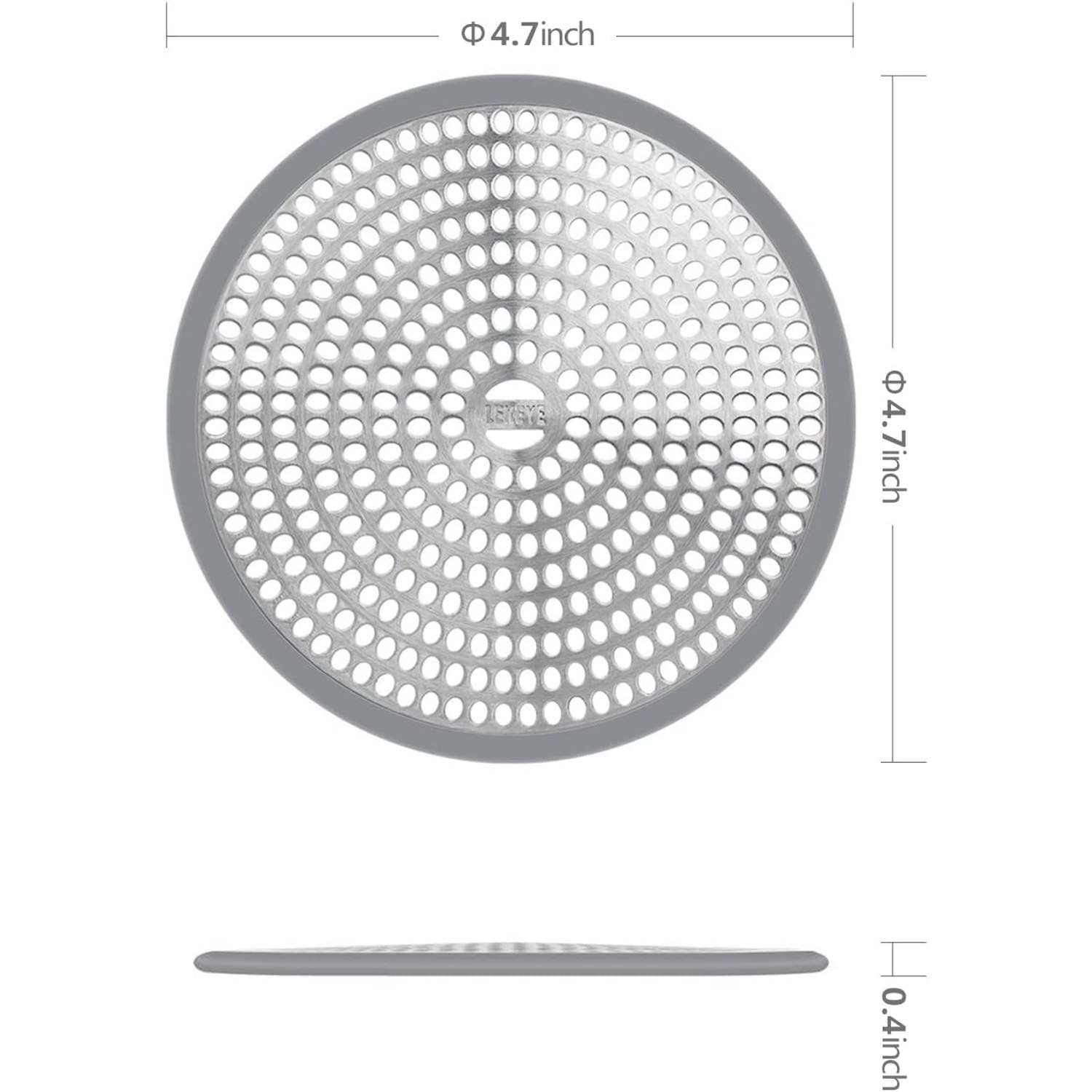
This catcher is about 12.1 cm across and around 1 cm tall. It is meant to rest on top of the drain, overlapping the opening on all sides. That overlap is what lets it work. A cover that drops into the hole or balances on the rim will shift the moment you nudge it.
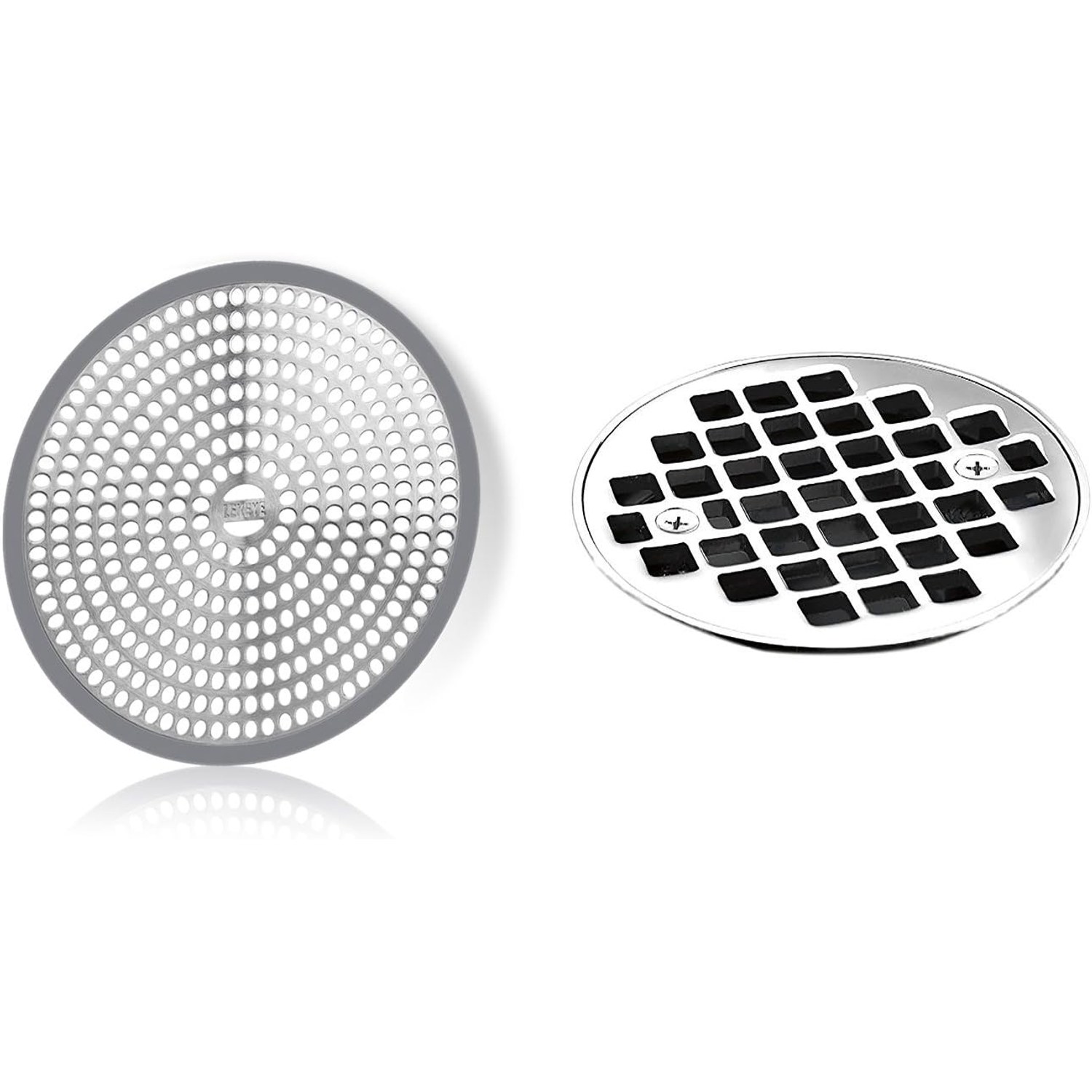
So before ordering, take a tape measure to your own drain. Measure the widest point of the opening, not the outer trim ring. If that number is comfortably under 12.1 cm, you are fine. If it is close to or larger than 12.1 cm, look for something wider instead.
Shape matters too. This is a round cover, so it suits round drains. Square or rectangular drains, and the long linear channel drains you find in some newer wet rooms, need a different product entirely.
Height is the last check. At roughly 1 cm, this is a low profile drain cover and it clears most shower doors and screen tracks without catching. Worth a glance if your drain sits unusually close to the frame.
Who this suits
Households with long hair get the most out of it. If someone in the house has hair past the shoulders, the pipes are collecting it every single day, and a good hair trap for your shower drain changes that routine completely.
Renters are the other obvious group. Nothing is fixed, glued, or screwed. It sits on the floor, and when you move out it comes with you. Anyone who has had a deposit questioned over a slow drain will see the appeal.
It also suits anyone who has already paid for a plumber once. The call-out fee for a blocked shower waste is usually many times the cost of preventing it, and the prevention takes under a minute a week.
Where it is less suitable is a bath with a recessed plughole, a kitchen sink, or any drain that is not roughly round and under 12.1 cm wide.
Keeping it clean
The routine is short, which is the point. Lift the catcher out, tip the hair into the bin, rinse it under the tap, put it back. Done.
Do it before the hair mat gets thick. A small amount lifts off cleanly in one piece. Leave it for three weeks and it turns into a damp clump that you have to pick at, which is exactly the chore people avoid.
Once a month, give it a proper wash. Warm water, a drop of dish soap, and a soft brush will shift the soap scum film that builds on the steel. Drying it afterwards stops water spots, though that is cosmetic rather than necessary.
Skip steel wool, abrasive scouring pastes, and bleach-based cleaners. The steel does not need them and the silicone will not thank you for them. If you use a chemical drain cleaner in the pipe, take the catcher out first and rinse it before replacing it.
A note on expectations
A drain catcher is preventive, not corrective. If your shower is already draining slowly, there is a build-up in the pipe and the catcher will not reach it. Clear that first, whether with a drain snake, a plunger, or a plumber. Then put the catcher in place and the problem should not come back.
Think of it the way you think of a doormat. It is not glamorous and nobody compliments you on it, but it stops a steady stream of mess reaching somewhere harder to clean.
The short version
Hair blocks shower drains. Catching it at the surface is far easier than clearing it from a pipe.
This one uses a stainless steel face with elliptical slots and an open centre so water keeps moving, plus a silicone rim that closes the gap around the edge where hair usually escapes. It is around 12.1 cm wide and 1 cm tall, it needs no installation, and it cleans with a lift and a rinse.
Measure your drain first. If it is comfortably under 12.1 cm and round, this will do the job quietly for a long time.