
The complete guide
Accordion Sink Plunger Buyer's Guide, Clearing Blocked Drains At Home
The problem nobody plans for
A blocked drain is the household fault that always arrives at the wrong time. The kitchen sink fills during washing up and will not empty. The shower tray starts pooling around your feet. The bathroom basin takes three minutes to clear after you brush your teeth, which is somehow more annoying than a full blockage.
Most people's first instinct is to pour something down it. A bottle of caustic cleaner, maybe a kettle of boiling water, then waiting and hoping. Sometimes it works. Often it half works, the drain runs for a week, and then the same problem comes back because the actual plug of gunk is still sitting in the pipe.
The second instinct is to call a plumber, and that costs real money for what is usually a five minute job. A manual plunger sits in between those two options. It is cheap, it costs nothing to use, and it shifts a surprising share of everyday blockages on the first try.
How a bellows plunger actually works
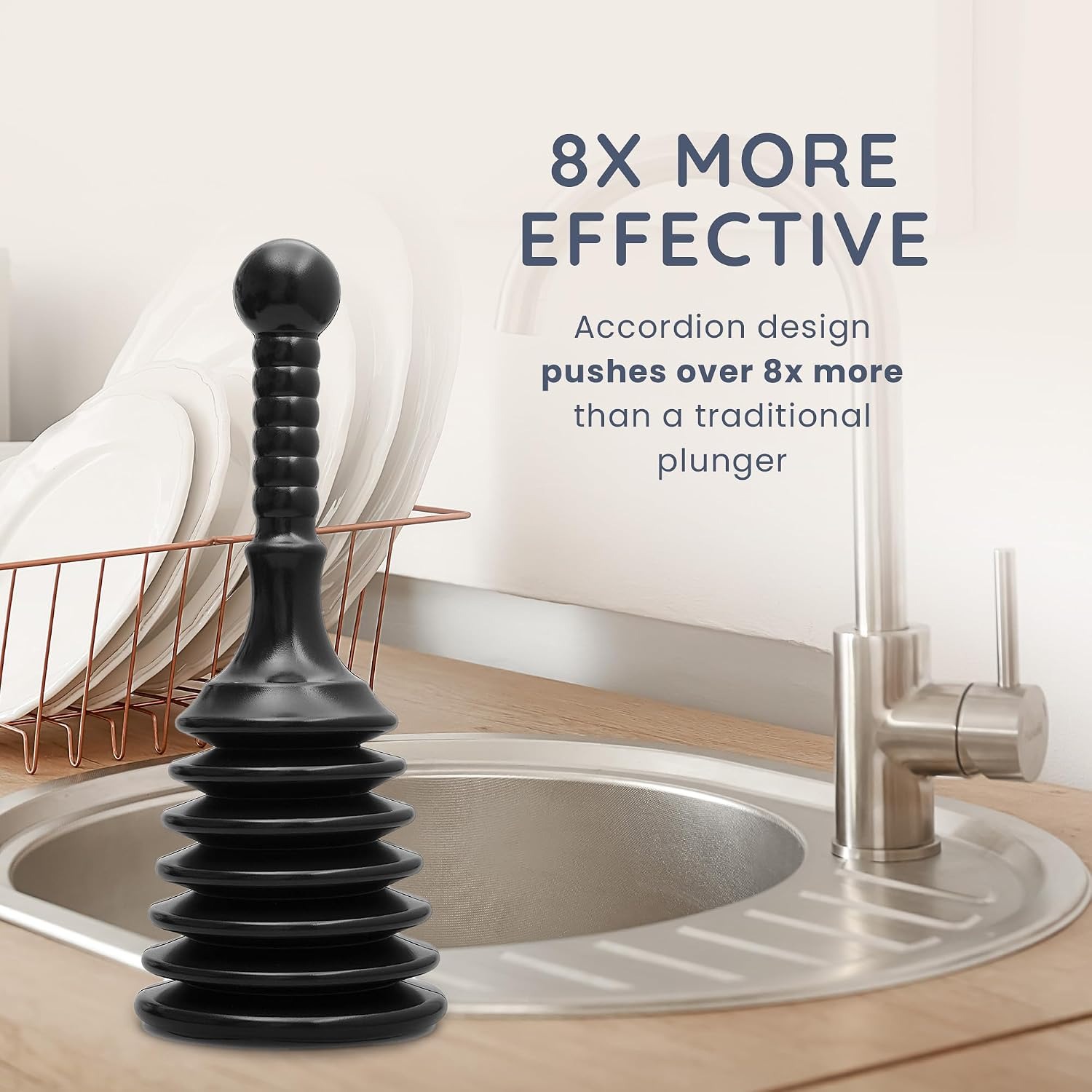
A traditional plunger is a rubber dome on a wooden handle. You push it down, the dome squashes, and some of that squash turns into pressure down the pipe. The problem is that a dome mostly traps air, and air compresses. A lot of your push disappears into squeezing the air inside the cup rather than hitting the clog.
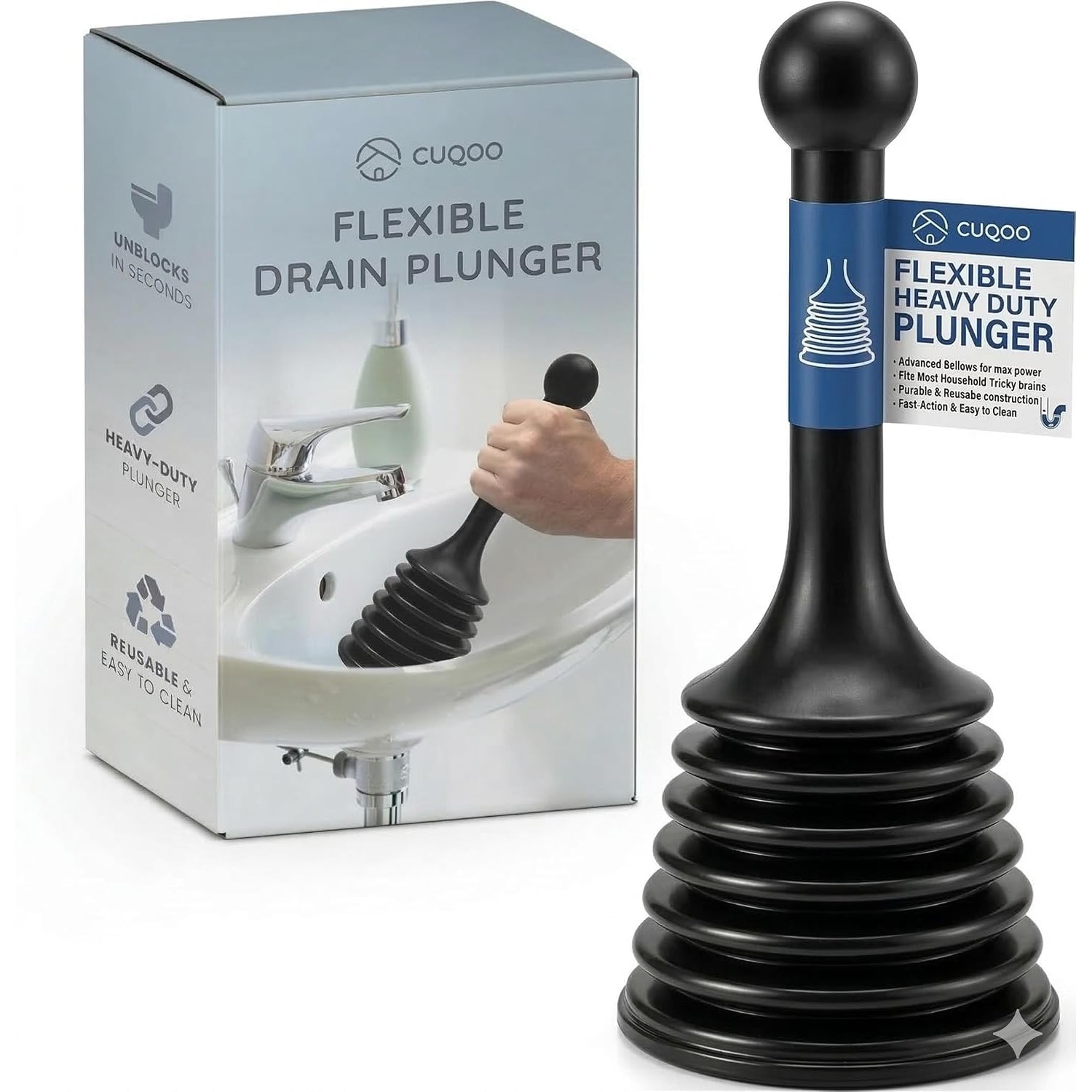
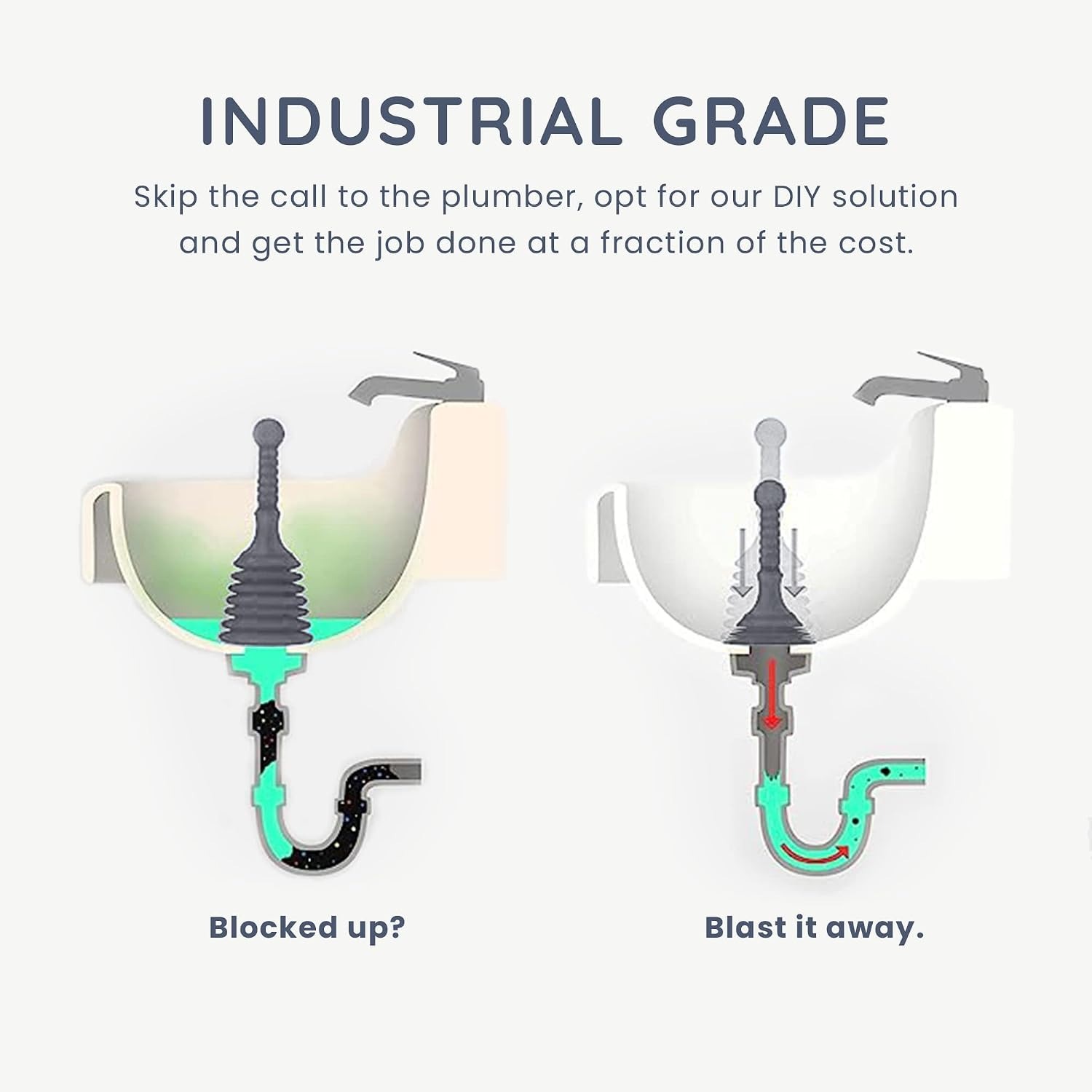
An accordion sink plunger is built differently. The body is a concertina, a series of folds that collapse along a line when you press. Because the folds give way all at once, the stroke is fast and the volume inside the cup drops sharply. If there is water sitting over the drain, that water gets pushed forward in a single concentrated pulse.
Water does not compress. That is the whole point. Instead of cushioning your effort, it carries it straight down the pipe and slams it into whatever is stuck. You can feel the difference in use, there is a distinct thud rather than a soft wheeze.
The other half of the job happens on the way back up. When you release, the bellows pulls back and creates suction, which tugs the blockage towards you. A good plunging rhythm uses both directions, push and pull, push and pull, until something gives.
Who this suits
Anyone who owns or rents a home with plumbing in it, honestly. But there are a few situations where a bellows plunger earns its place faster than most.
Households with long hair have bathroom drains that clog on a schedule. Hair, conditioner and soap scum build into a mat that narrows the pipe, and it needs breaking up with pressure rather than dissolving.
Kitchens where cooking happens daily are the other classic case. Fat goes down the drain as a liquid and cools into a solid further along the pipe, and every coffee ground and rice grain that follows sticks to it. The best kitchen sink plunger is one that seals over your waste properly and can be pumped fast, and a lightweight bellows design does both.
Landlords and holiday-let owners should keep one in every property. Guests will not and should not be calling out tradespeople, and a plunger in the cupboard quietly solves most of what would otherwise become a complaint.
It also suits people who would rather not keep caustic chemicals in the house. A mechanical tool does not burn skin, does not need child-safe storage, and does not go into the water system.
Choosing the right plunger for your drains
The single most important factor is the seal. A plunger only works if the opening sits flat against the surface around the drain and nothing leaks out. That is why the shape of the cup matters more than how hard you can push.
Measure your drains before you buy anything. A kitchen sink waste is typically around 9 cm across, a bath outlet a little less, and a shower tray waste can be wider with a flat surround. A plunger with a wide, flat opening covers all three. A heavily domed toilet-style plunger with a flange underneath is excellent in a pan and poor on a flat shower tray, because it rocks.
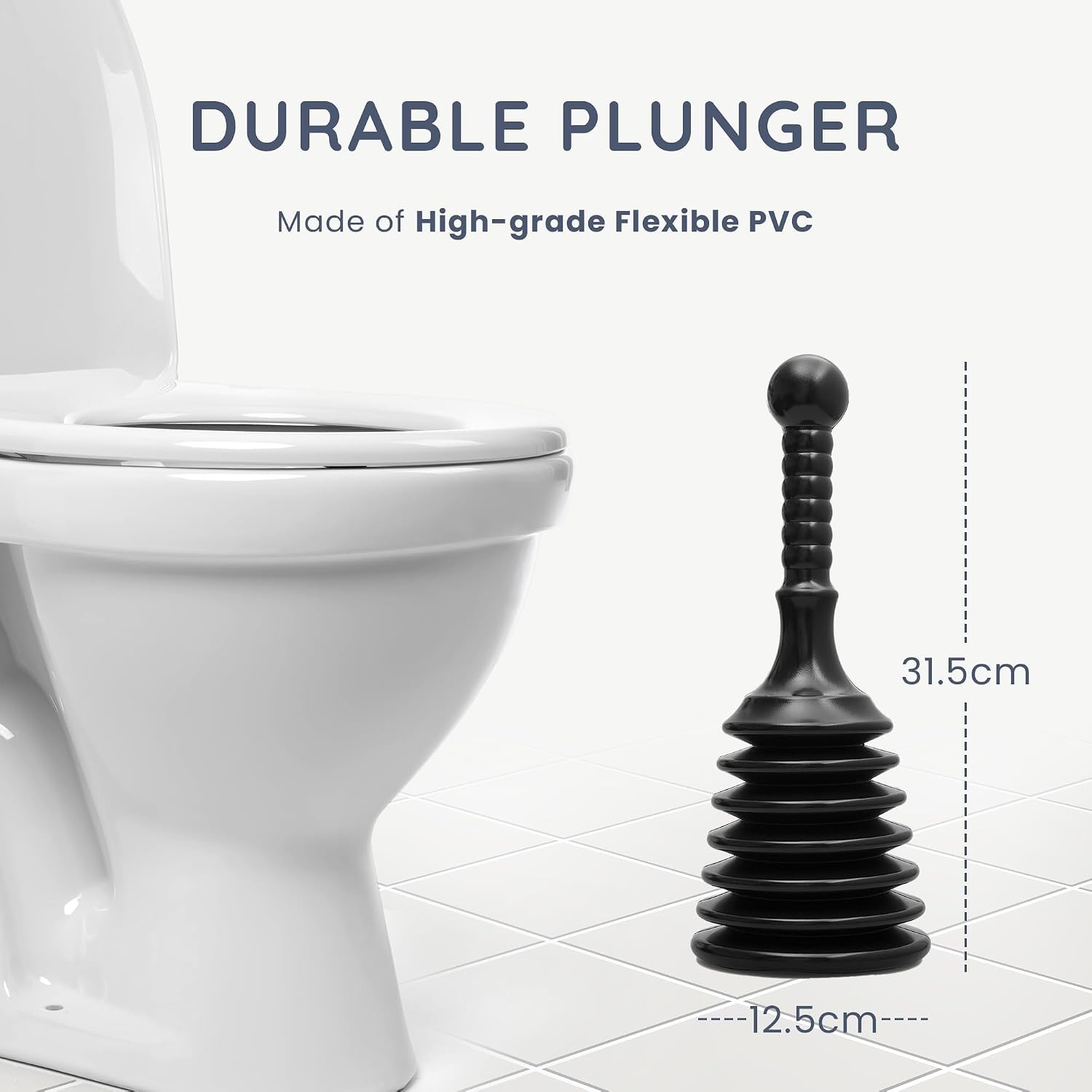
Think about where you will keep it. A plunger on a long wooden handle is awkward to store and tends to get shoved behind the cleaning supplies where it drips on everything. A folded bellows body is slimmer, and at 27 x 4 x 27 cm this one slides into a narrow gap easily.
Weight matters more than people expect. At 120 g you can hold this over a full sink at arm's length and keep pumping without your shoulder complaining. Heavy plungers slow your stroke rate down, and stroke rate is what builds pressure.
Finally, look at how easy it is to clean. The best bathroom drain plunger is useless if it is so unpleasant to store that you throw it away after one job. Being able to spray and rinse it through without touching the business end is a small design detail with a big effect on whether you keep the thing.
Using it properly
There is a technique, and getting it right makes the difference between five strokes and five minutes of frustration.
Start by blocking the overflow. Almost every sink and bath has an overflow hole near the rim, and it is a direct escape route for the pressure you are trying to build. Jam a damp cloth or a wet sponge into it and hold it there, or get someone else to. On a double kitchen sink, plug the second drain the same way.
Leave a few centimetres of water in the basin. Dry plunging just moves air around. If the sink is already full, that is ideal, though go gently on the first stroke so it does not splash over the edge.
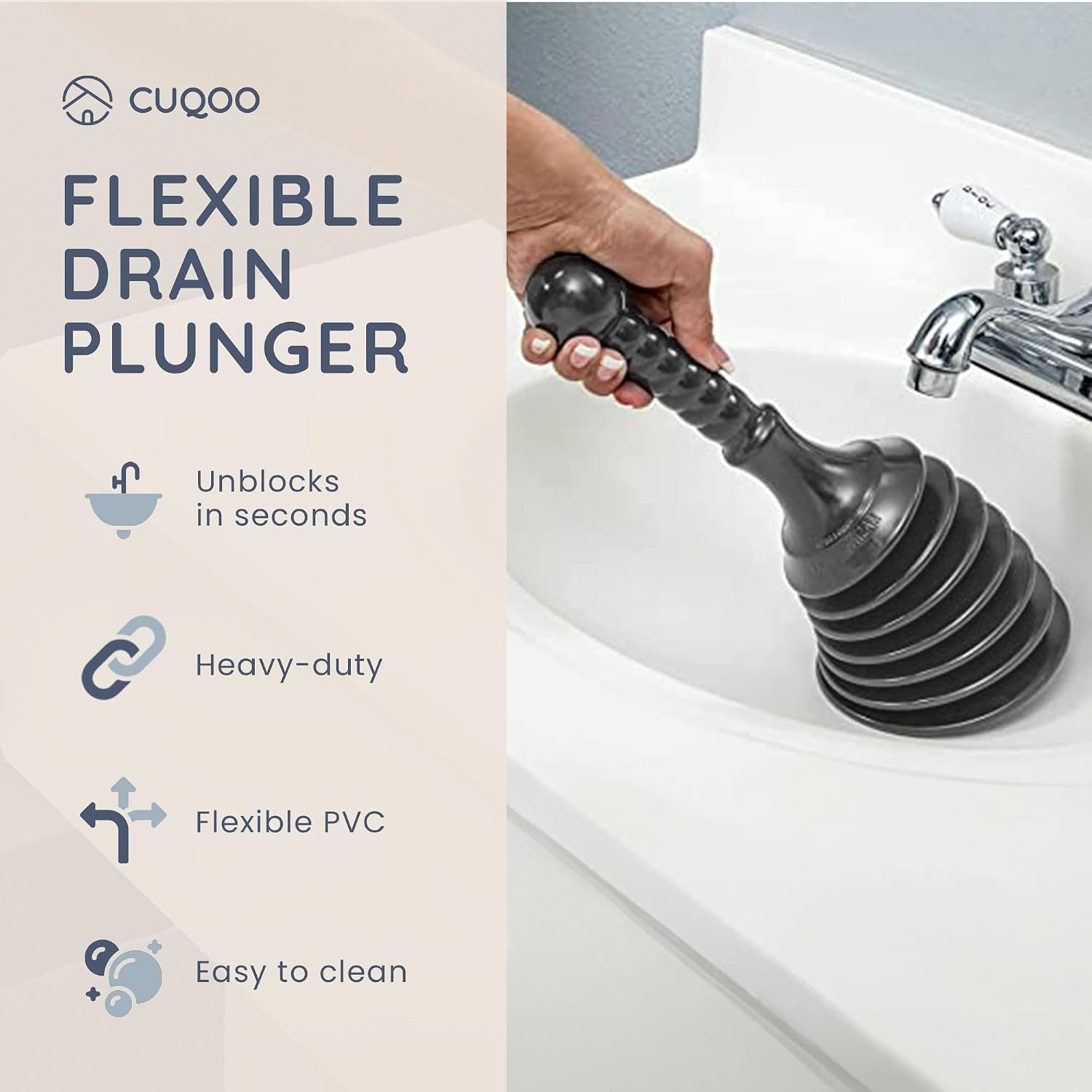
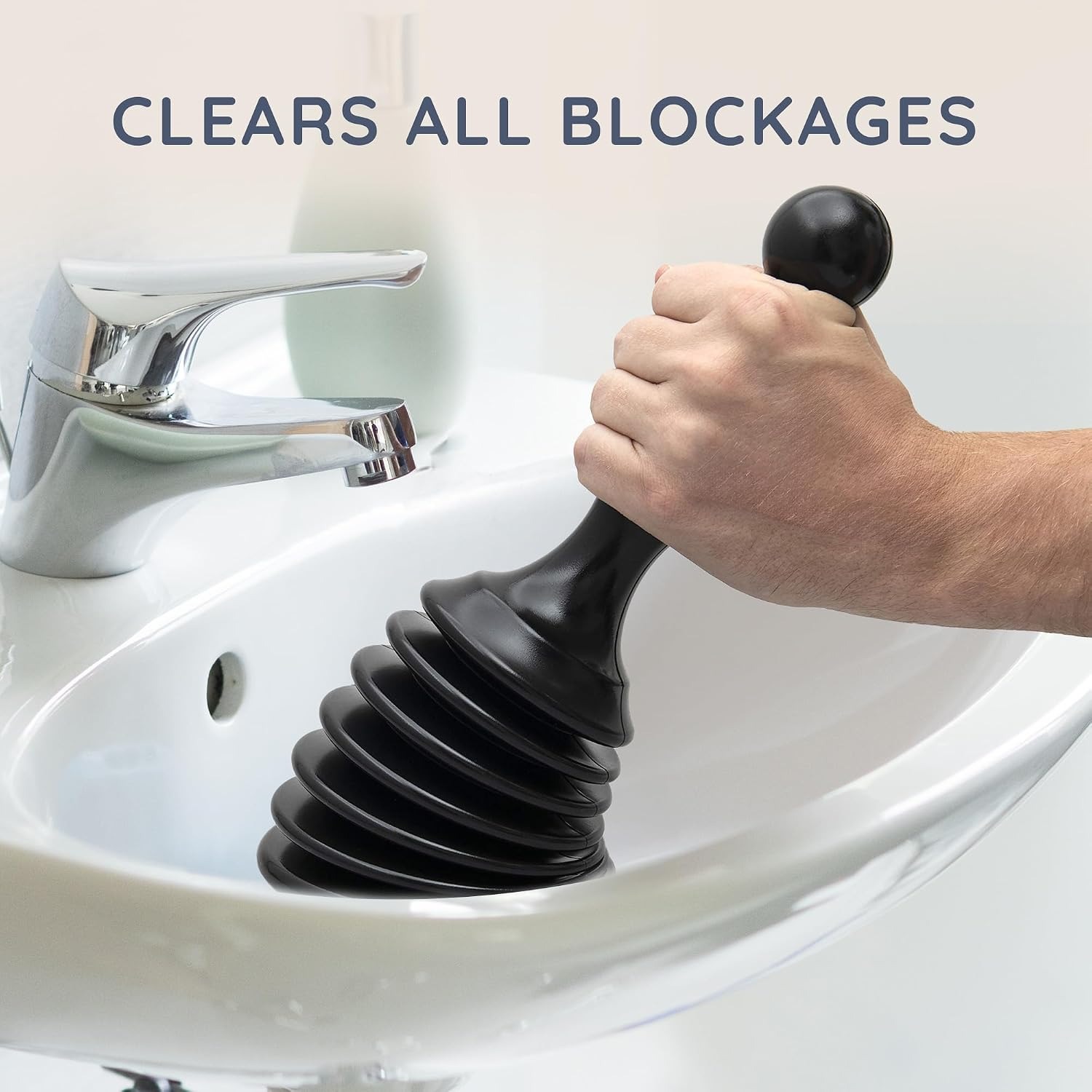
Seat the plunger flat over the drain and press down slowly once to expel the air underneath. Then pump with firm, quick strokes, keeping the seal the whole time. Do not lift it off between strokes, you lose everything you built. After six or so strokes, pull it off sharply and see whether the water drains.
If nothing happens, try again. Two or three rounds is reasonable. If the water still will not move after that, the blockage is probably further along than a plunger can reach, and it is time to look at the trap under the sink or call someone.
Looking after it
This part is easy. Rinse the cup and chamber under the tap, spray a household cleaner into it, rinse again and shake the water out. Stand it cup-down on a tray or hang it so the inside dries rather than sitting damp.
Keep it out of direct sunlight and away from radiators, since heat and UV are what make flexible materials stiffen and crack over time. Do not store it soaking in undiluted drain chemicals, and avoid solvents when cleaning.
Treated that way it will last years and handle dozens of blockages, which is the whole argument for a reusable tool over a bottle you buy again every month.
The short version
An accordion sink plunger pushes water rather than air, which is why it hits harder than the old rubber cup your parents kept behind the bin. The flat, wide opening seals over kitchen sinks, basins, bath outlets and shower trays, so one tool covers the house. It is light at 120 g, folds slim for storage, needs no batteries, and rinses clean in under a minute.
Block the overflow, leave some water in the basin, keep the seal and pump with a rhythm. Do that and most everyday clogs are gone before the kettle boils. Keep it as your first move, and save the plumber for the jobs that genuinely need one.