
The complete guide
Drain Snakes Explained: How To Clear A Slow Sink Without Chemicals
The problem nobody notices until it is bad
A drain rarely stops working overnight. It slows. The water in the basin takes a second longer to go, then five seconds, then you find yourself brushing your teeth over a puddle. By the time it bothers you enough to act, there has usually been a build-up growing quietly for months.
What is in there is predictable. In a bathroom it is hair, mostly, held together by soap scum and skin oils. In a kitchen it is grease and food fragments. Either way, the mass sticks to the pipe wall just past the plughole, where the flow slows down and the trap curves. Water still squeezes through the middle until the gap finally closes.
The reason this matters when choosing a tool is simple. The blockage is almost never deep in the system. It is within arm's reach, maybe 20 to 50cm down. You do not need heavy equipment for that. You need something long enough, thin enough and grabby enough to go get it.
How a drain snake actually works
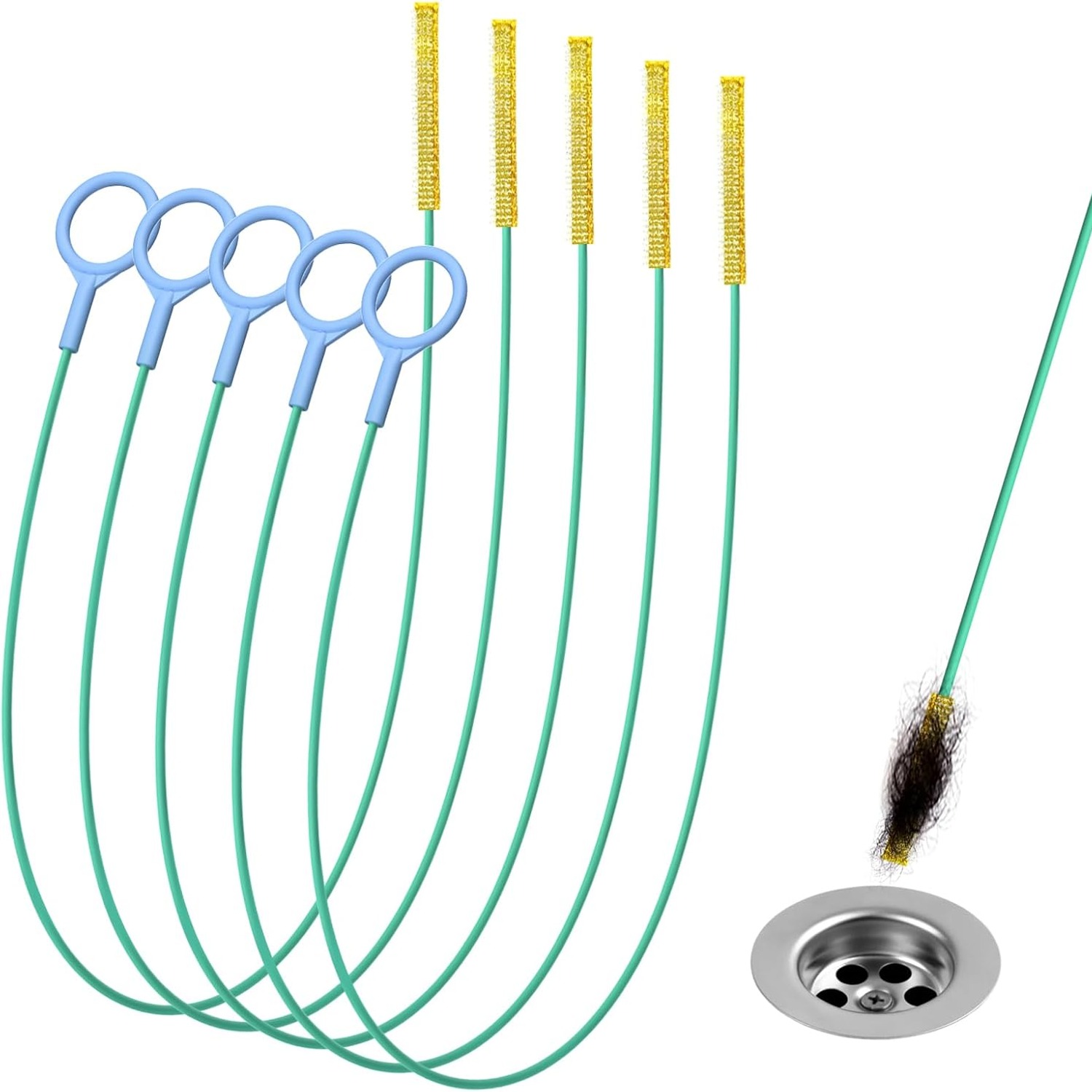
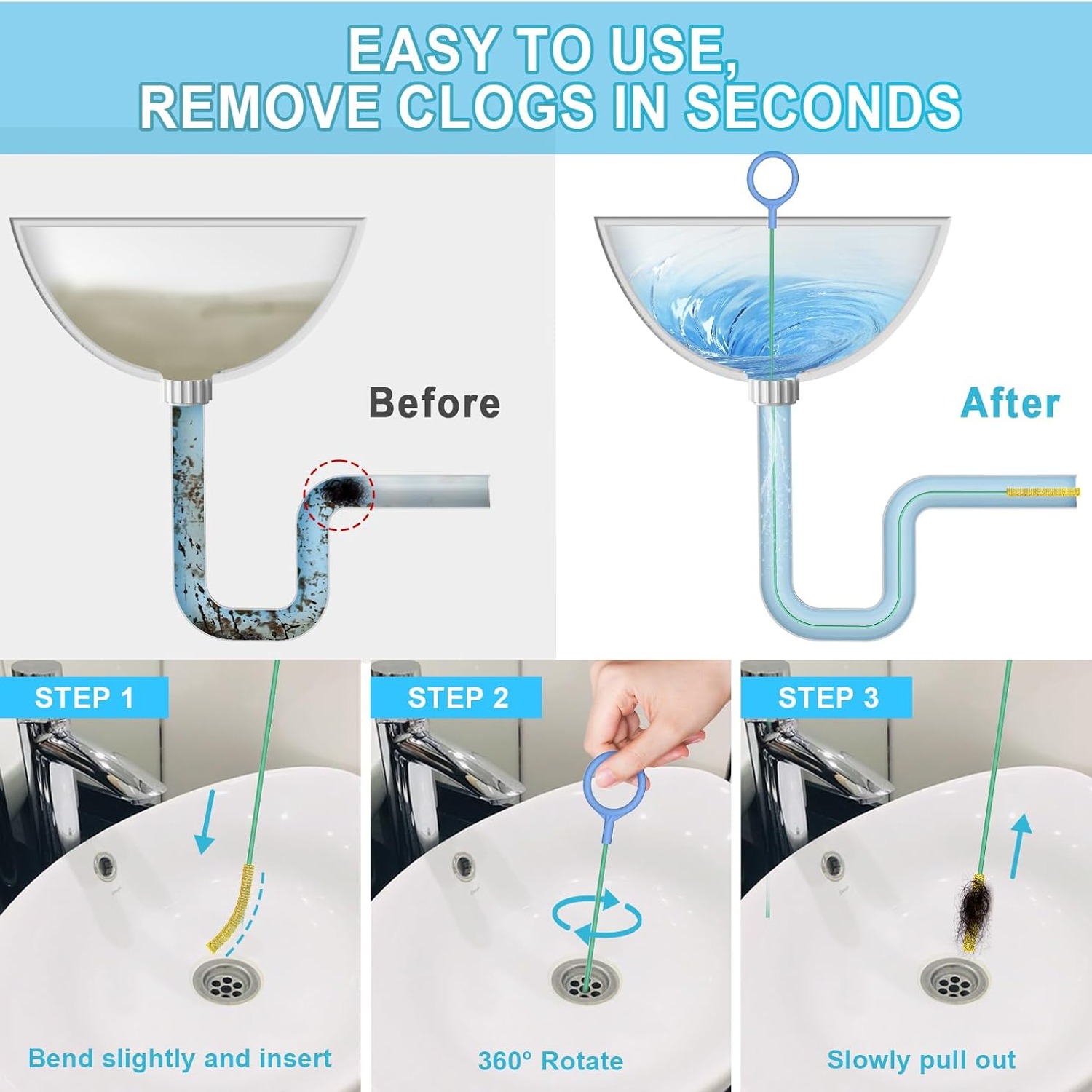
A drain snake is a long flexible wand with a hooked head. You feed the head into the drain, push until it meets the clog, then twist so the barbs wind into the hair. When you pull back, the clog comes with it.
That is the whole mechanism. There is nothing clever happening, which is exactly why it works so reliably on hair. Chemicals try to dissolve the mass in place, and they often only open a narrow channel through it, so the problem returns within weeks. A hair clog remover tool takes the mass out of the pipe completely.
Three things decide whether a snake is any good. Reach, thickness and tip quality.
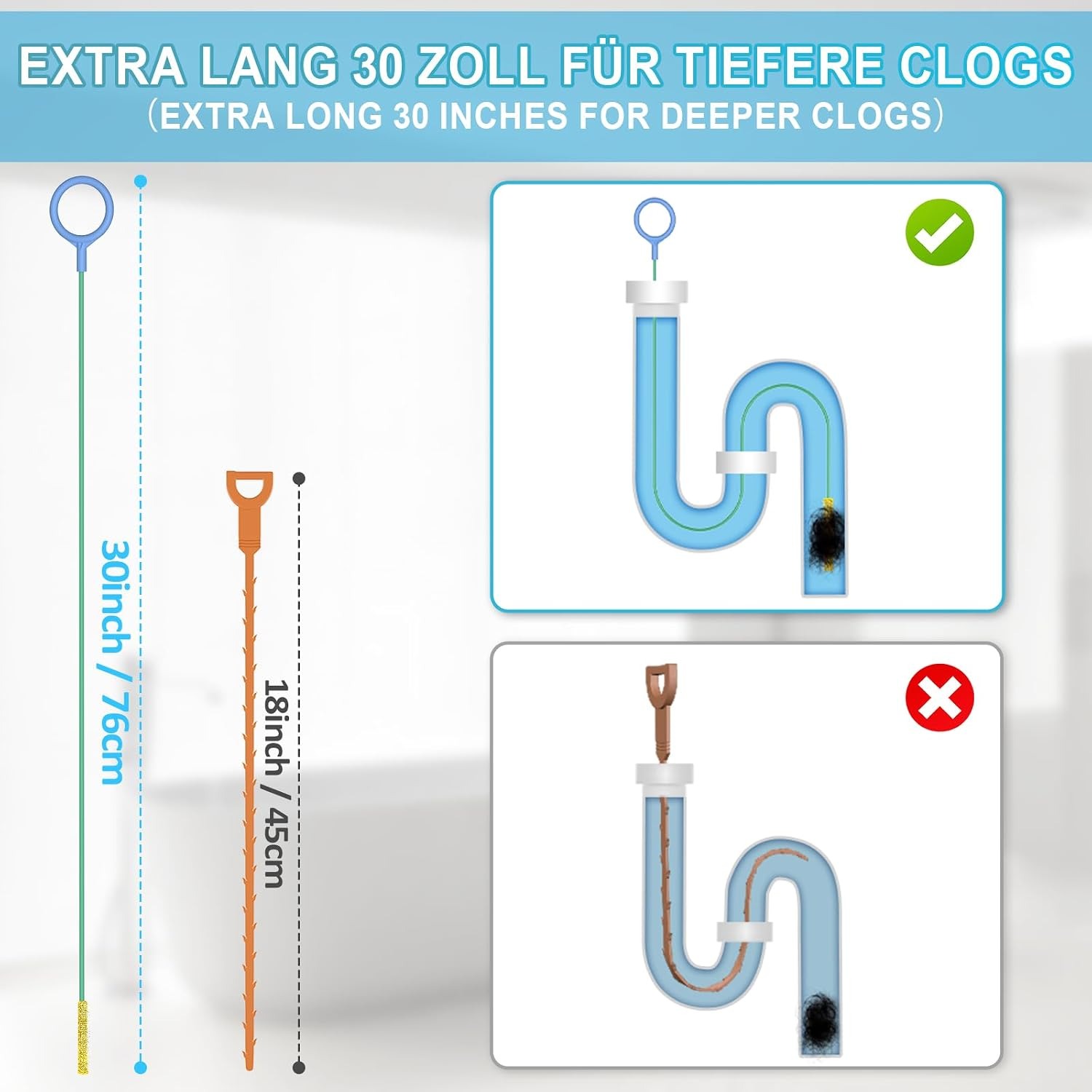
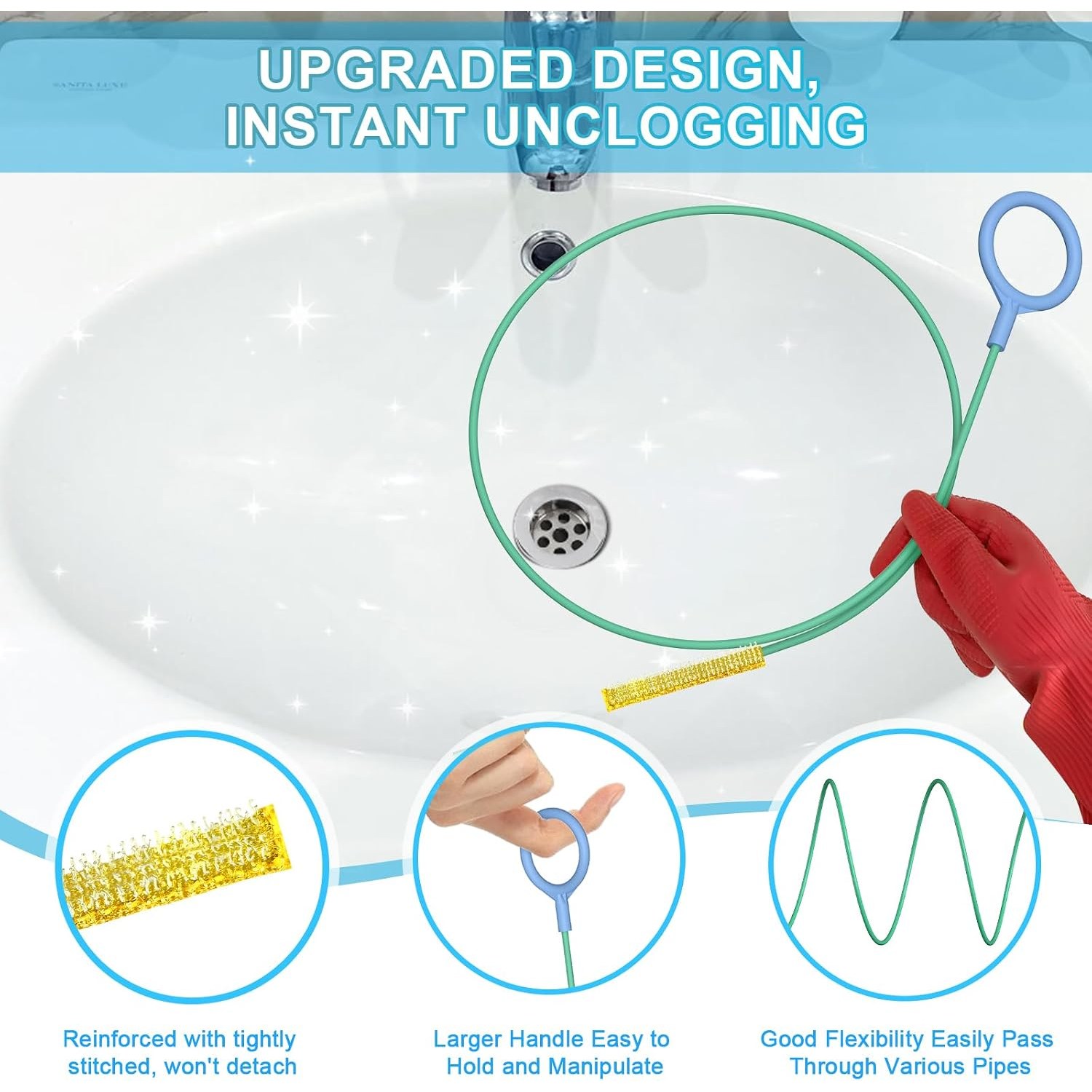
Reach needs to be enough to clear the trap. These wands are 76.2cm, which handles most domestic basins, baths and showers comfortably. Thickness decides whether you can even get in. At 0.58cm across, this one slides through shower grates and down the side of a pop-up stopper, so you are not unscrewing fittings before you start. Tip quality decides whether the thing grips or just slides past the hair.
That last point deserves attention. A hook that detaches inside a pipe turns a ten minute job into a plumber's visit. These tips are stitched and glued to the wand rather than simply pressed on. It is a small detail that changes the risk profile of the whole job.
The build, plainly
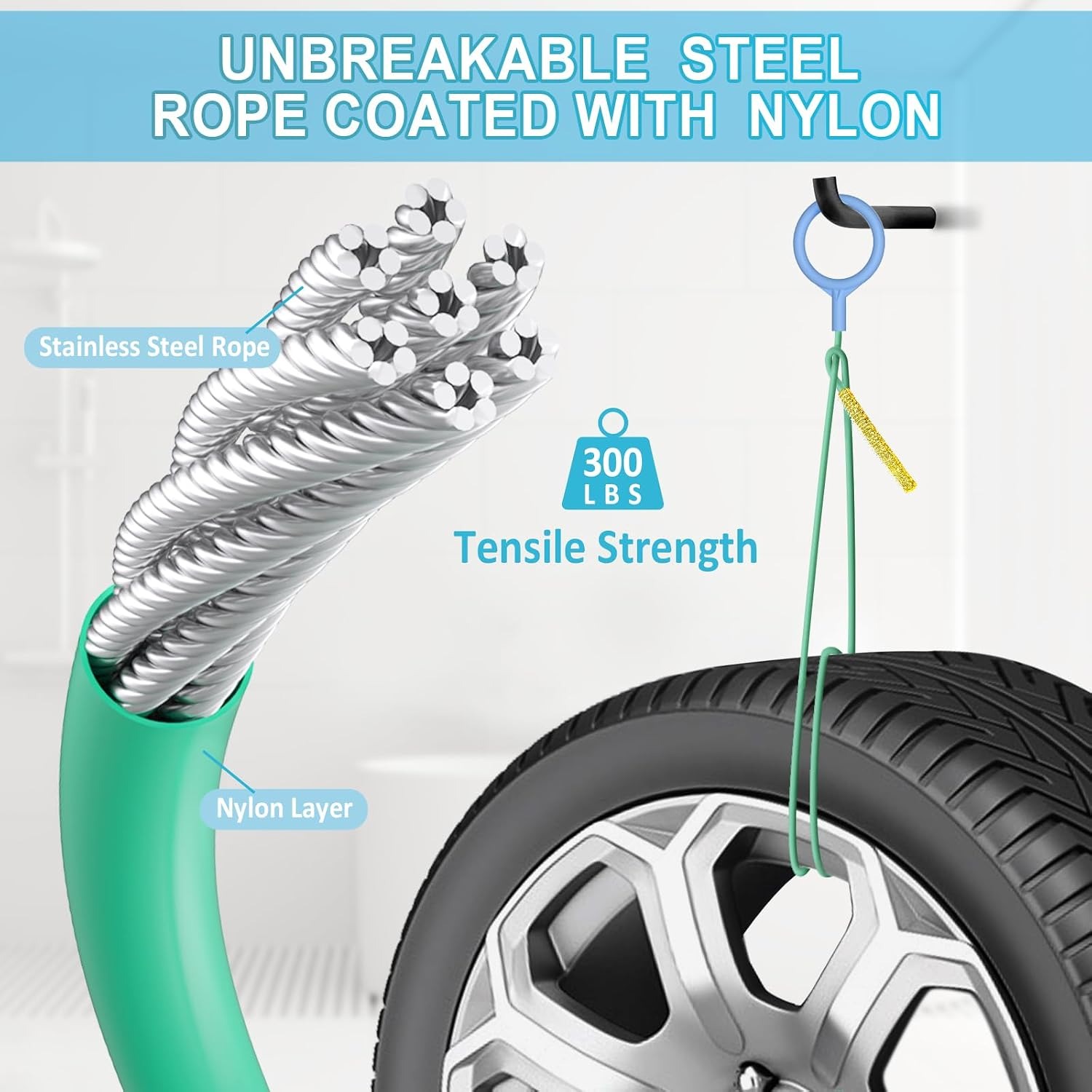
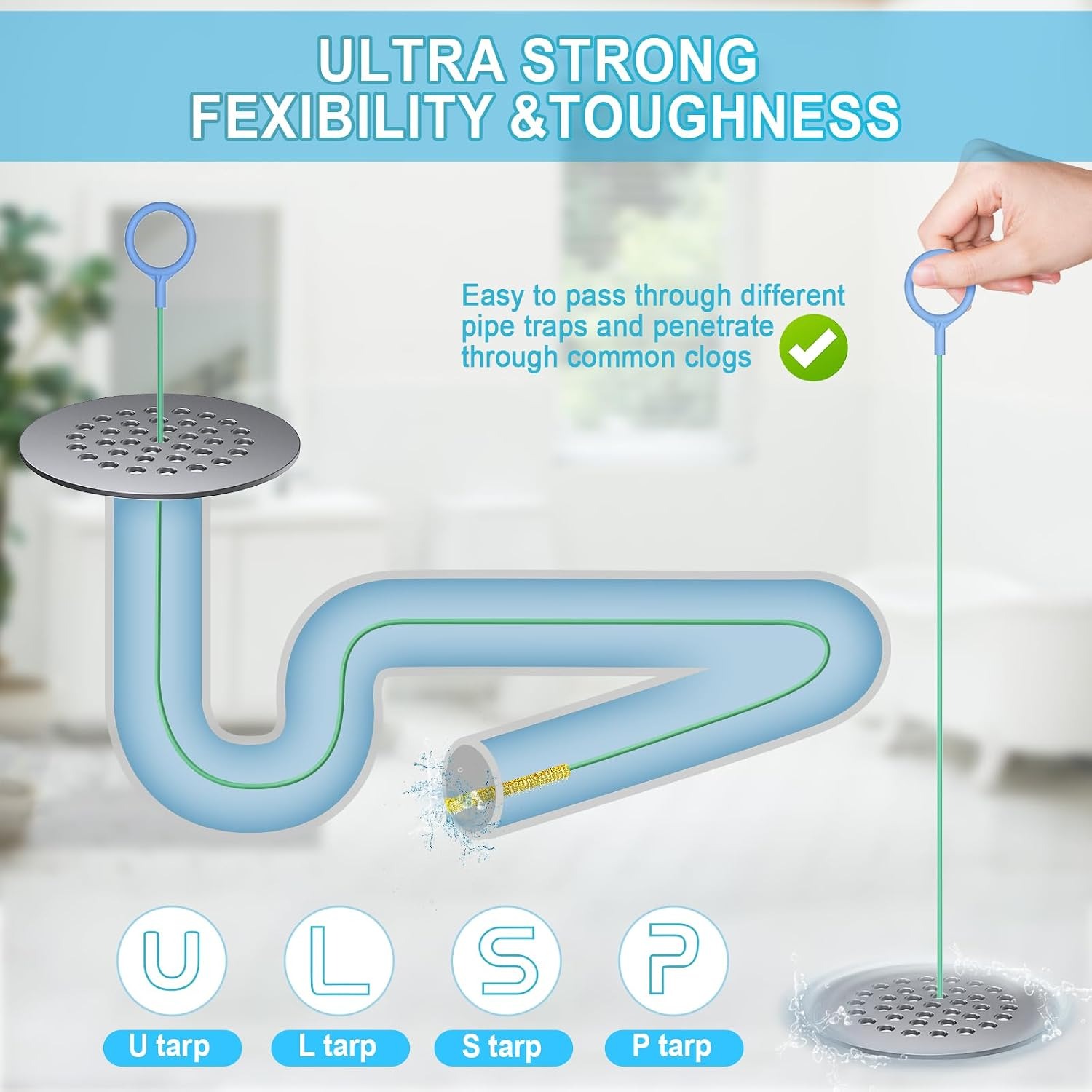
Each wand has a metal core with a nylon layer over it. The metal gives it the backbone to be pushed and pulled without deforming. The nylon gives it flexibility and softens the contact with your pipe, so you are less likely to scratch a chrome waste or stress a plastic trap.
That combination is why a flexible drain cleaning wand behaves differently to a rigid rod. A rod wants to go straight. It stops dead at the first bend and, if you push harder, it pushes into the pipe wall rather than round the corner. A nylon-coated wand bends with the trap and keeps travelling.
The listed finish is stainless steel and the colour is green, with a round head style. Each wand weighs very little, with the whole five pack coming in at 130 g.
Who this suits
Households with long hair are the obvious case. If anyone in the house has hair past the shoulders, the shower drain is collecting it every single day, and no amount of hot water flushing will shift what has already matted onto the pipe wall.
Renters are another good fit. Reporting a slow drain to a landlord is an exercise in waiting, and a small slow-draining sink fix you can do yourself takes two minutes and requires no permission or tools.
It suits anyone trying to avoid caustic products too. If you have a septic system, small children, pets, or you simply do not want to pour something corrosive down your own plumbing, mechanical removal is the better route.
It is less useful for a few situations. If the blockage is a solid object, a snake will push past it or fail to grip. If water will not move at all and the snake finds nothing within reach, the problem is likely further along the waste run and that is a job for someone with proper gear.
Choosing between options
If you are comparing a sink drain cleaning tool like this against the alternatives, here is the honest comparison.
Against a plunger, a snake wins for hair and loses for airlocks and suction-clearable debris. Plungers work by pressure. They can dislodge a soft blockage, but they often just move hair further down to re-form somewhere less accessible.
Against chemicals, a snake wins on thoroughness and on not putting anything nasty into the water. Chemicals win on convenience if the clog is grease rather than hair, since grease responds to heat and detergent in a way that a hook does not.
Against a drum auger or a powered unit, a snake loses on reach and gains massively on price, storage and ease. Most people do not need 15 metres of steel cable to clear a basin.
Against a reusable metal hook tool, the comparison is closer. A good reusable hook lasts longer. A five pack costs less per clog and means you are not scrubbing the same hook over the sink you just cleared.
Getting the most from it
A few things make the job easier.
Bend the tip slightly before you start, maybe fifteen degrees. A small curve helps the hook catch the pipe wall where the hair actually sits, rather than running down the middle of the pipe and finding nothing.
Go in slowly and stop when you feel resistance. That resistance is either the clog or the bend in the trap. If it feels soft and springy, it is the clog. If it feels like a hard stop, back off slightly, rotate the wand and try to feed again.
Twist as you withdraw, not just as you push. The winding action is what wraps hair around the barbs.
Have a bin bag and paper towel ready before you pull. What comes up is unpleasant and you will not want to carry it across the room looking for somewhere to put it.
Do it before you need to. A drain cleaning kit for home sitting in a cupboard is only useful if you actually use it. Running a wand down the shower drain every few weeks takes under a minute and means you never get to the standing water stage.
Care and storage
Rinse each wand under running water after use, then wipe it down. Let it dry fully before storing so moisture does not sit against the metal core. Hang it up or coil it loosely rather than folding it hard in the same place repeatedly.
Wear gloves when handling anything you pull out, and bag the waste rather than pushing it back into the drain or the toilet. It came out of the pipe for a reason.
When a wand has done enough work that cleaning it is more effort than it is worth, bin it and open the next one. That is the practical logic of buying five rather than one.
The short version
A slow bathroom drain is almost always hair, and it is almost always within 50cm of the plughole. A thin flexible drain cleaner reaches it, hooks it and pulls it out, which solves the problem rather than postponing it.
These wands are 76.2cm long and 0.58cm thick, with a reinforced microhook tip and a nylon layer over a metal core. They go through shower grates without dismantling anything, bend around the trap, and come five to a pack so you can keep one wherever you need it.
It is a cheap, simple tool for a common, annoying problem. Keep a pack in the cupboard and you will stop thinking about slow drains altogether.