
The complete guide
How To Choose And Use A Sink Plunger That Actually Works
The problem with a slow drain
A blocked sink rarely announces itself. The water takes a few extra seconds to go, then a minute, and one morning you are brushing your teeth over a basin that is filling up instead of emptying. By then most people reach for a bottle of drain cleaner, pour it in, wait, and hope.
That is usually the wrong first move. Household blockages in sinks, basins, baths and showers are nearly always soft. They are made of grease that cooled and set, soap scum, toothpaste, hair and bits of food. They sit in the U shaped trap just under the plughole, where the pipe deliberately holds a pool of water. A soft plug like that does not need dissolving. It needs shifting.
That is what a plunger does, and it does it in about two minutes.
How a plunger actually works
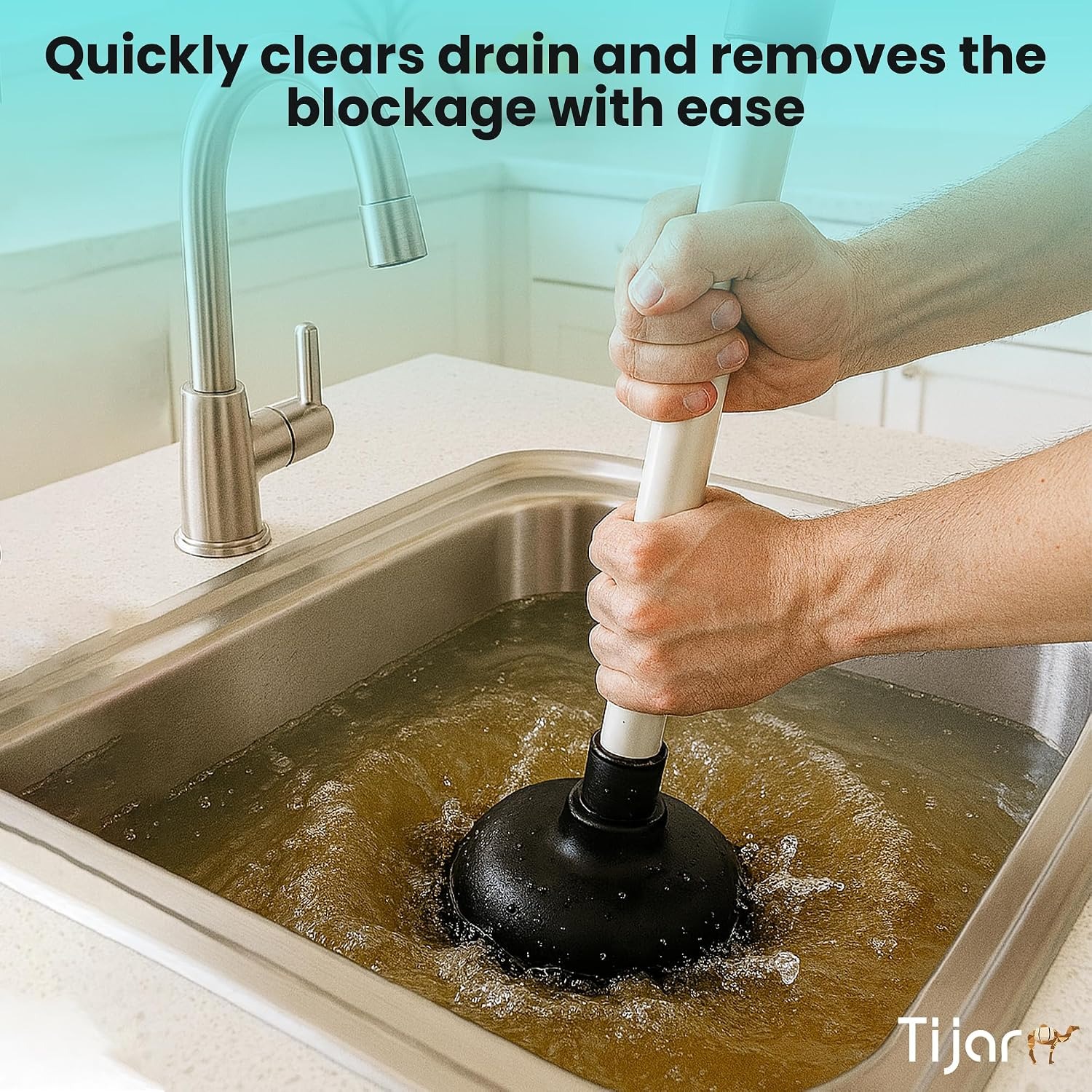
The cup is not a scoop. It is a seal. When you press the rubber cup flat over the plughole and push the handle down, you compress the air and water trapped underneath and send a pressure wave down the pipe. When you pull back up, you create the opposite, a sharp suction that tugs the blockage back towards you.
It is that alternating push and pull that does the work. The clog gets worried loose from both directions until it breaks apart and flushes away with the next rush of water. Nothing corrosive enters your pipes, nothing has to be left to sit, and you can see straight away whether it worked.
Two things decide whether this succeeds. The first is the seal. If the rubber rim does not sit flat, pressure escapes around the edge and all you achieve is splashing. The second is water. Water carries pressure far better than air does, so a basin with a few centimetres in it will clear much faster than a dry one.
Why the cup and handle matter
Cheap plungers often use hard, stiff rubber. It looks sturdy, and it fails on exactly the surfaces most people need it for. Modern kitchen sinks are flat stainless steel. Shower trays are flat acrylic or stone resin. A rigid cup rocks on those surfaces and never grips.
A softer rubber cup squashes down and conforms. That is the whole trick. It is why a 10cm soft cup will outperform a bigger, harder one on a shallow basin.
The long handle solves a different problem. Plunging needs short, firm, repeated strokes, and you need force plus a comfortable stance to produce them. With a short handle you end up hunched over a kitchen sink with your knuckles in grey water. With a longer one you stand upright, use your shoulders, and keep your sleeves clean. It sounds like a small thing. In practice it is the difference between dealing with a slow drain today and leaving it until Saturday.
Who this suits
Renters get the most out of it. Flats and shared houses tend to have older waste runs, more people using the same shower, and landlords who are slow to respond. Having your own plunger means you fix it yourself in minutes.
Families with long hair in the house will know the bathroom basin and shower tray story well. Hair binds with soap into a mat that catches everything else. Plunging regularly, before it becomes a full stop, keeps it manageable.
Cooks and anyone who washes roasting tins will know the kitchen version, where fat goes down warm as a liquid and sets solid a metre along the pipe. Hot water plus plunging is a far better routine than a chemical bottle.
It is also worth keeping in caravans, boats, holiday lets and student rooms. Those systems have narrow pipes and block easily, and at 120 g this takes up almost no space.
How to choose a plunger
Think about where you will use it rather than how big it looks.
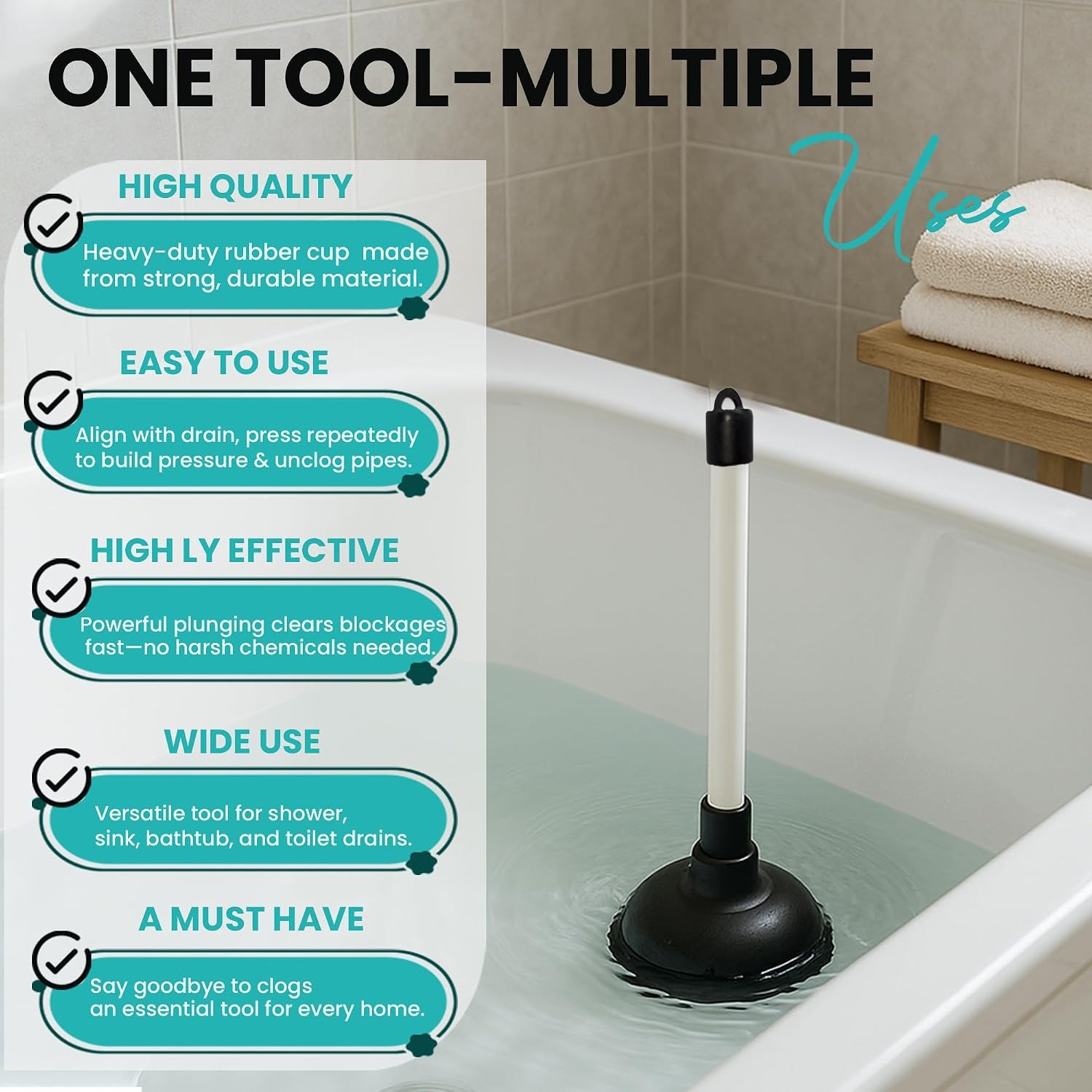
For sinks, basins, baths and showers, you want a flat cup. Around 10cm covers standard waste openings without being so large it cannot sit flat in a small basin.
For toilets, you want a different shape entirely, a flanged cup with a rubber extension that pushes into the curved outlet. A flat cup can be made to work on a pan, but it is not the right tool and you will fight it.
Check the rubber for flexibility. Pinch the rim. It should give easily. Stiff rubber is a bad sign.
Look at the handle length and think about your sink height. If your kitchen sink is deep, a short handle leaves you bent double.
Finally, consider buying two. One for the kitchen, one for the bathroom. Using the same cup on food waste and shower water is not something most people enjoy thinking about.
Using it properly
Start by taking out anything loose. Lift out the basket strainer, the hair catcher or the pop up plug so the cup can sit flat. While you are there, pull out any hair you can see and bin it. Sometimes that alone solves it.
Run in enough water to cover the cup rim, around five centimetres in a basin.
Block the escape routes. In a bath, that means pressing a wet cloth firmly into the overflow. In a double kitchen sink, it means stopping the second plughole. If either is open, your pressure goes there instead of down the pipe.
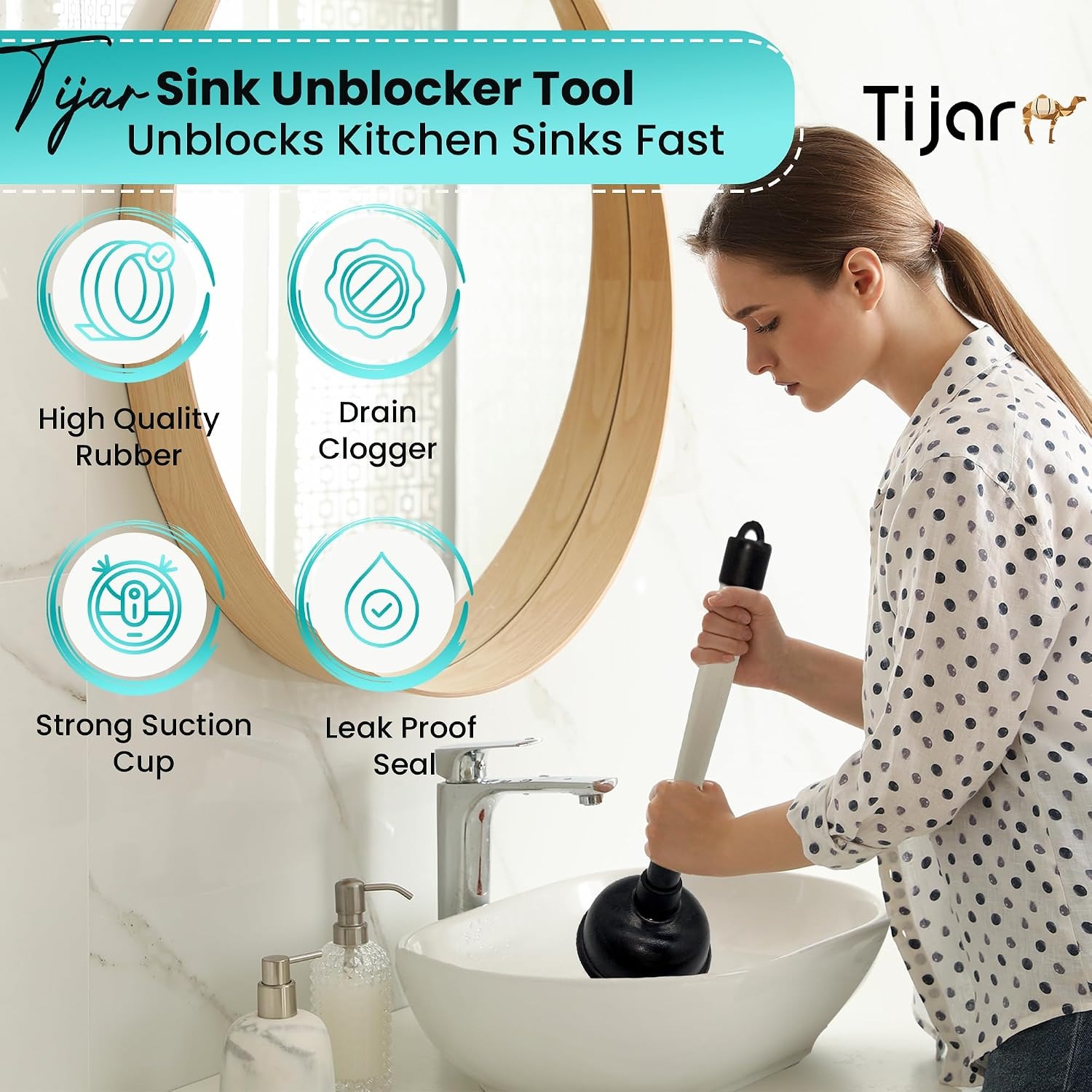
Set the cup over the drain at an angle so it fills with water rather than trapping an air pocket, then press it down flat.
Now plunge. Short, firm strokes, keeping the cup sealed throughout. Ten to twenty is usually enough. Resist the urge to lift it on every stroke, because the seal is what makes it work.
Lift the cup and watch. If the water drains, run the hot tap for thirty seconds to flush the loosened debris right through. If it does not, try again with more water and a better seal.
If two or three honest attempts fail, the blockage is probably further along or more solid than plunging can handle. The next step is unscrewing the trap under the sink with a bucket underneath, which is less intimidating than it sounds and catches most remaining kitchen problems.
Looking after it
Rinse the cup under hot water after every use, with a little washing up liquid if it has been in a greasy sink. Wipe the handle. Then let it dry before storing.
Store it so water can run out of the cup, either hanging or upside down. A cup left sitting full of water will start to smell, and nobody wants to find that out mid emergency.
Keep it out of direct sun and away from radiators, since heat and UV are what age rubber. Every few months, flex the rim and look for splits. A cracked or hardened rim cannot seal, and a plunger that cannot seal is just a stick.
Prevention beats plunging
A couple of habits cut the number of blockages sharply. Pour fat and cooking oil into a container and bin it rather than washing it down. Use a cheap mesh hair catcher in the shower and empty it weekly. Once a week, run the hot tap hard into each drain for a minute to carry away anything starting to build up.
None of this takes effort, and it means the plunger stays a tool you own rather than one you use.
The short version
A slow sink, basin, bath or shower is almost always a soft clog in the trap, and pressure clears it faster and more safely than chemicals do. You need a cup soft enough to seal on a flat surface, enough water in the basin to carry the pressure, and the sense to block any overflow or second drain first.
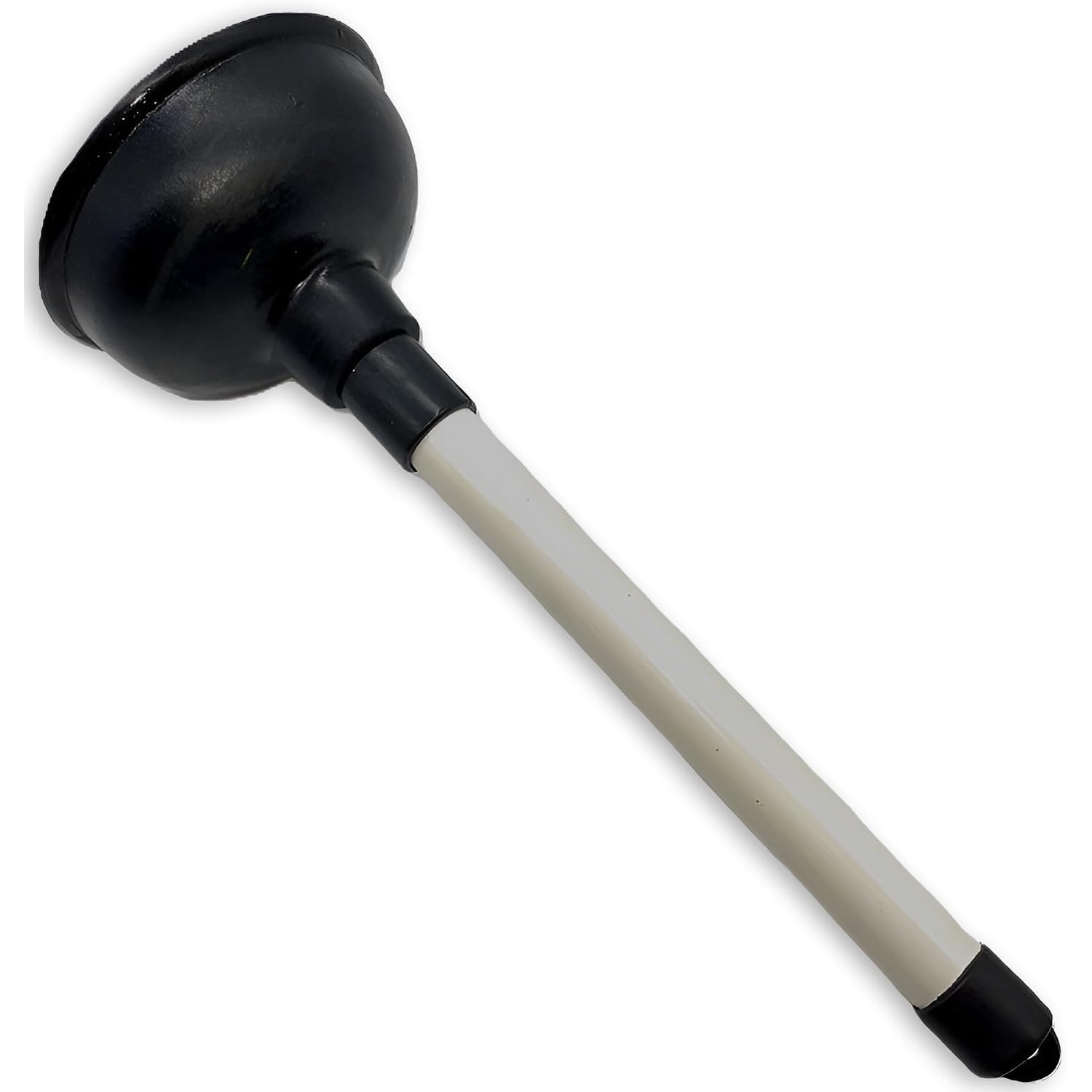
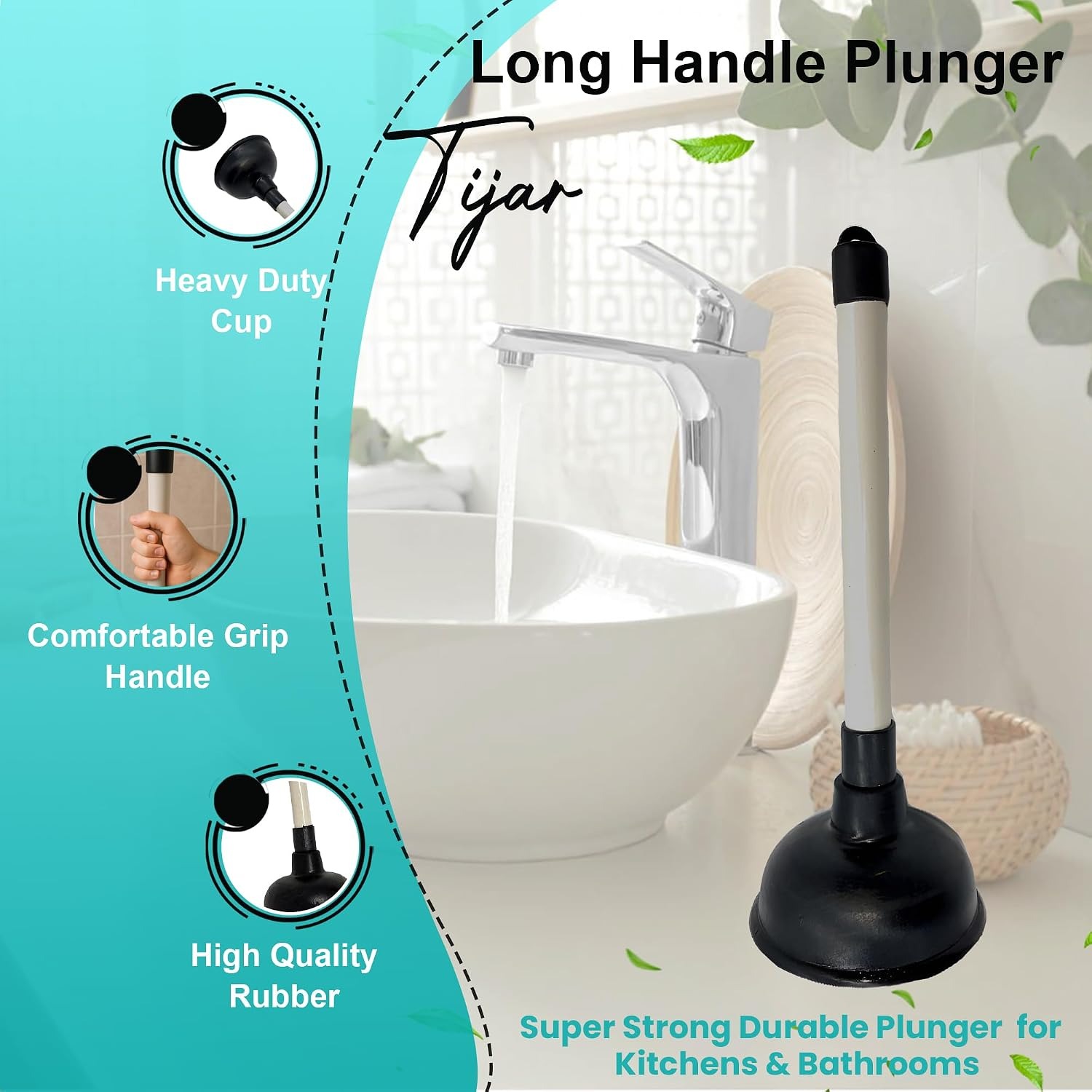
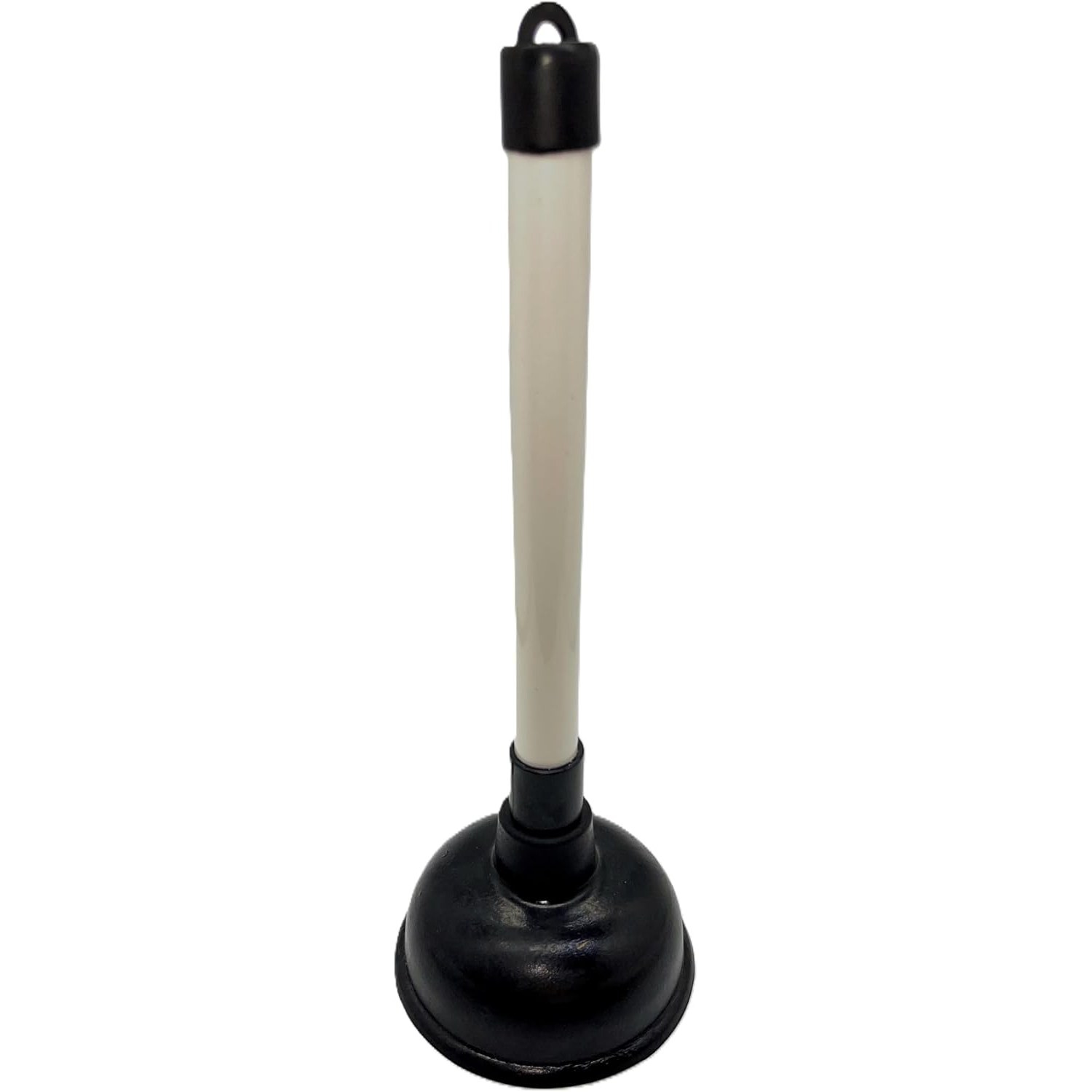
This TIJAR plunger gives you a soft rubber 10cm cup on a long handle, weighs 120 g, and stores anywhere. Keep one in the kitchen, keep one in the bathroom, and the next slow drain becomes a two minute job instead of a phone call.