
The complete guide
How to Choose a Pop Up Basin Plug That Actually Fits
The small thing that ruins a basin
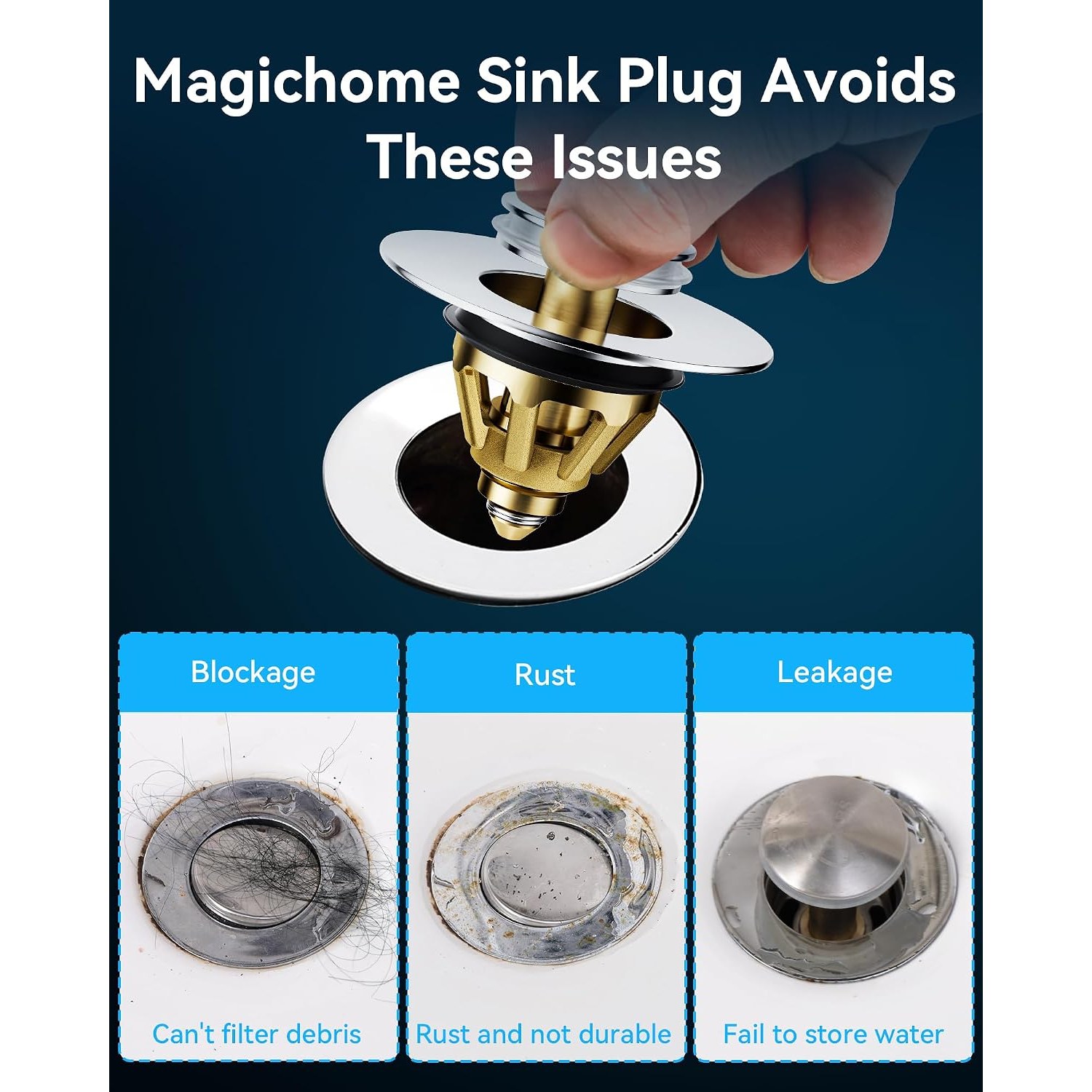
Nobody plans to spend a Saturday thinking about a plug. It becomes a problem slowly. The rubber stopper hardens and stops sealing, so the water you ran for shaving drains away before you finish. The chain snaps and the plug ends up sitting in a soap dish. Or the original pop up waste gets gummed up with years of soap and hair and now jams halfway, leaving a basin that drains like it is thinking about it.
Then there is the blockage. Basin waste pipes are narrow. Hair binds with soap scum into a grey rope that sits in the trap, and one morning the water simply stops going anywhere. Most people reach for a bottle of drain cleaner, which treats the symptom and not the cause.
A good pop up basin plug deals with all of it at once. It seals properly, it drains properly, and it stops the stuff that causes blockages from ever getting into the pipe.
How a pop up plug works
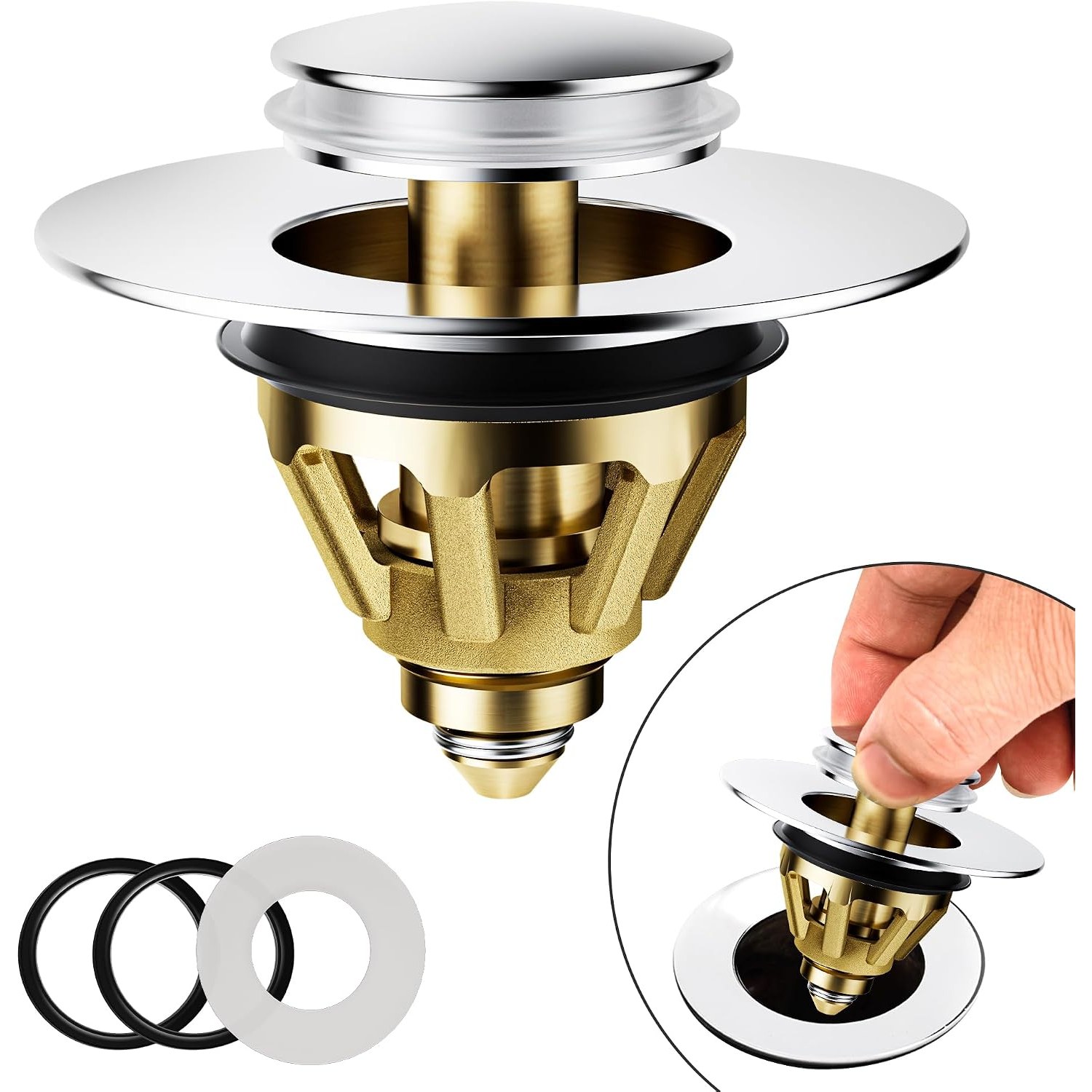
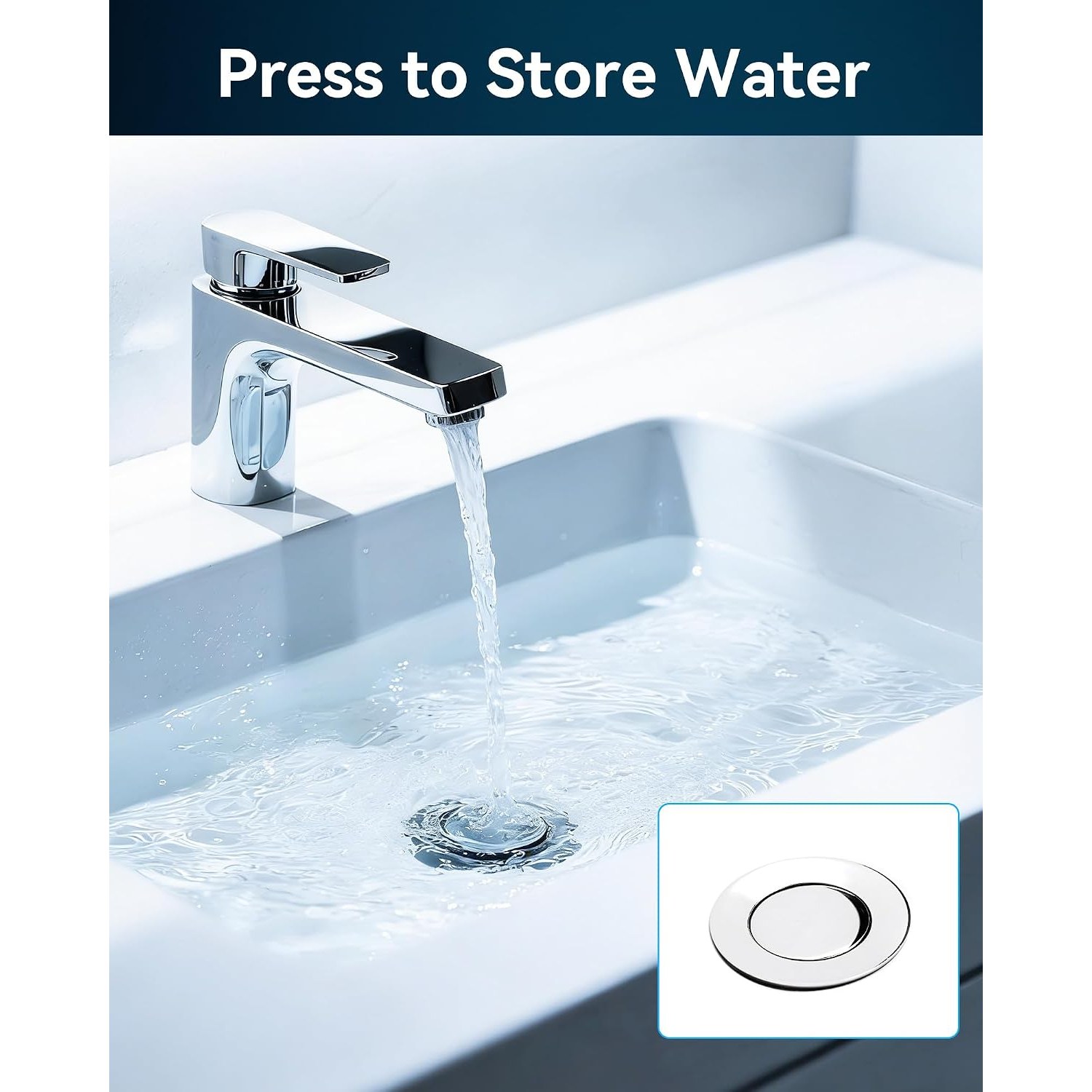
The mechanism is mechanical and simple, which is why it lasts. Inside the body there is a spring and a latch. Press the cap down and it travels into the seat and locks there, pressing a seal against the opening so water stays in the basin. Press it again and the latch releases, the spring pushes the cap back up, and the water runs out around the edge of the cap.
That is the whole thing. No chain, no lever behind the tap, no linkage rod under the basin to go out of adjustment. Because there are no loose parts, nothing goes missing and nothing ends up down the plughole.
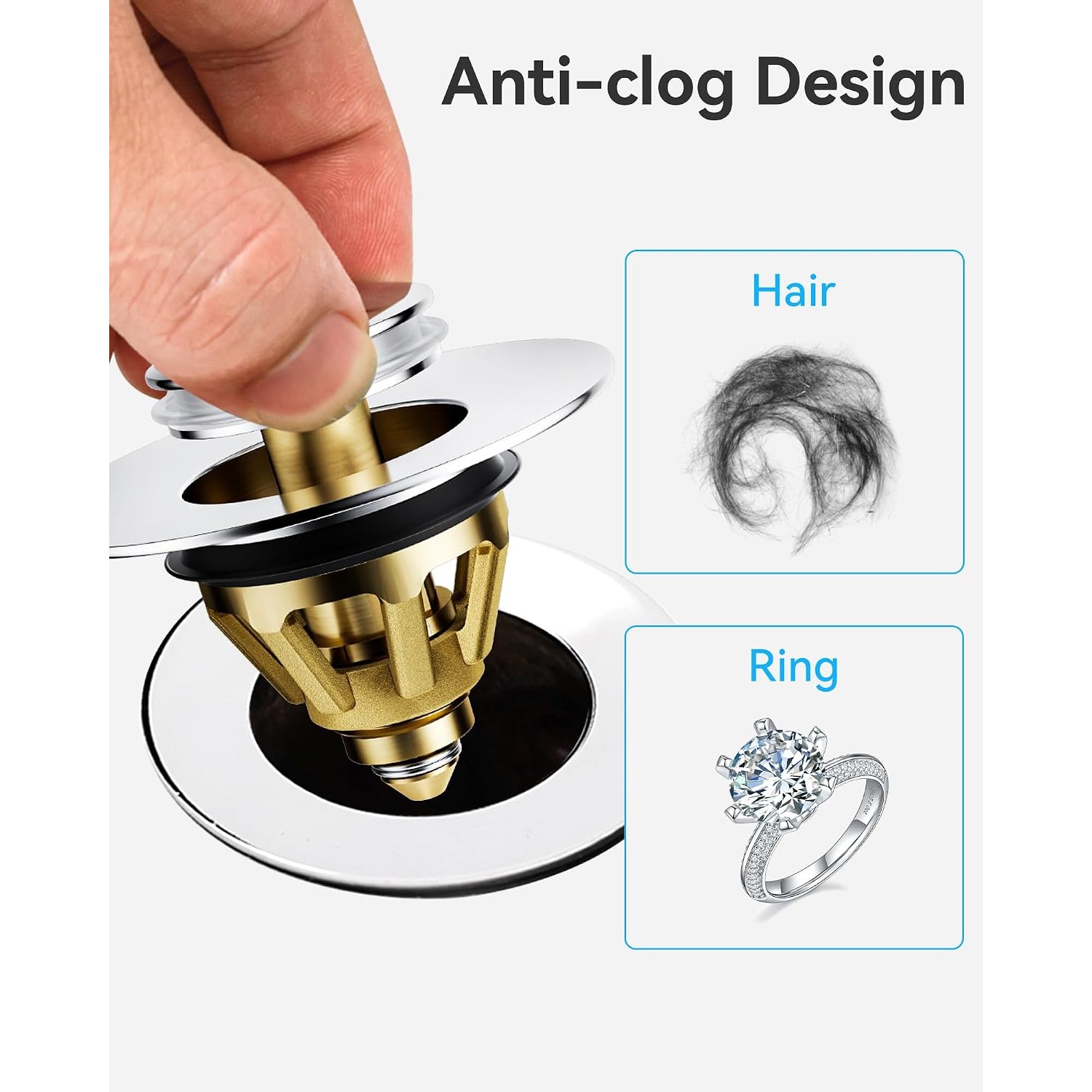
This particular plug adds a second job. A basket strainer sits in the body below the cap. Everything that goes down the basin passes through it. Hair, flakes of soap, toothpaste, a stray contact lens, the back of an earring. All of it lands in the basket instead of the pipe.
Why brass and copper matter
A basin plug lives in water. That is the whole point of it. Any material that struggles with constant wetting is going to disappoint you fairly quickly.
This one is built from brass and copper. Those metals are standard in plumbing for a reason. They do not rust, they hold their shape under repeated pressure, and they tolerate hot water without softening or warping. A plated plastic plug can look identical in a photo, but the coating chips, the spring loses tension, and within a year the press action feels mushy and the seal stops gripping.
You will notice the difference the first time you handle it. At 100 grams it has some heft. It sits in the hole with a bit of weight behind it rather than bobbing like a bottle cap.
The finish is silver, which sits comfortably next to chrome taps and most modern basin hardware. If your bathroom is all matte black or antique brass, it will read as a contrast rather than a match, so bear that in mind.
Getting the size right
This is the part that decides whether you are happy or frustrated, so it is worth two minutes.
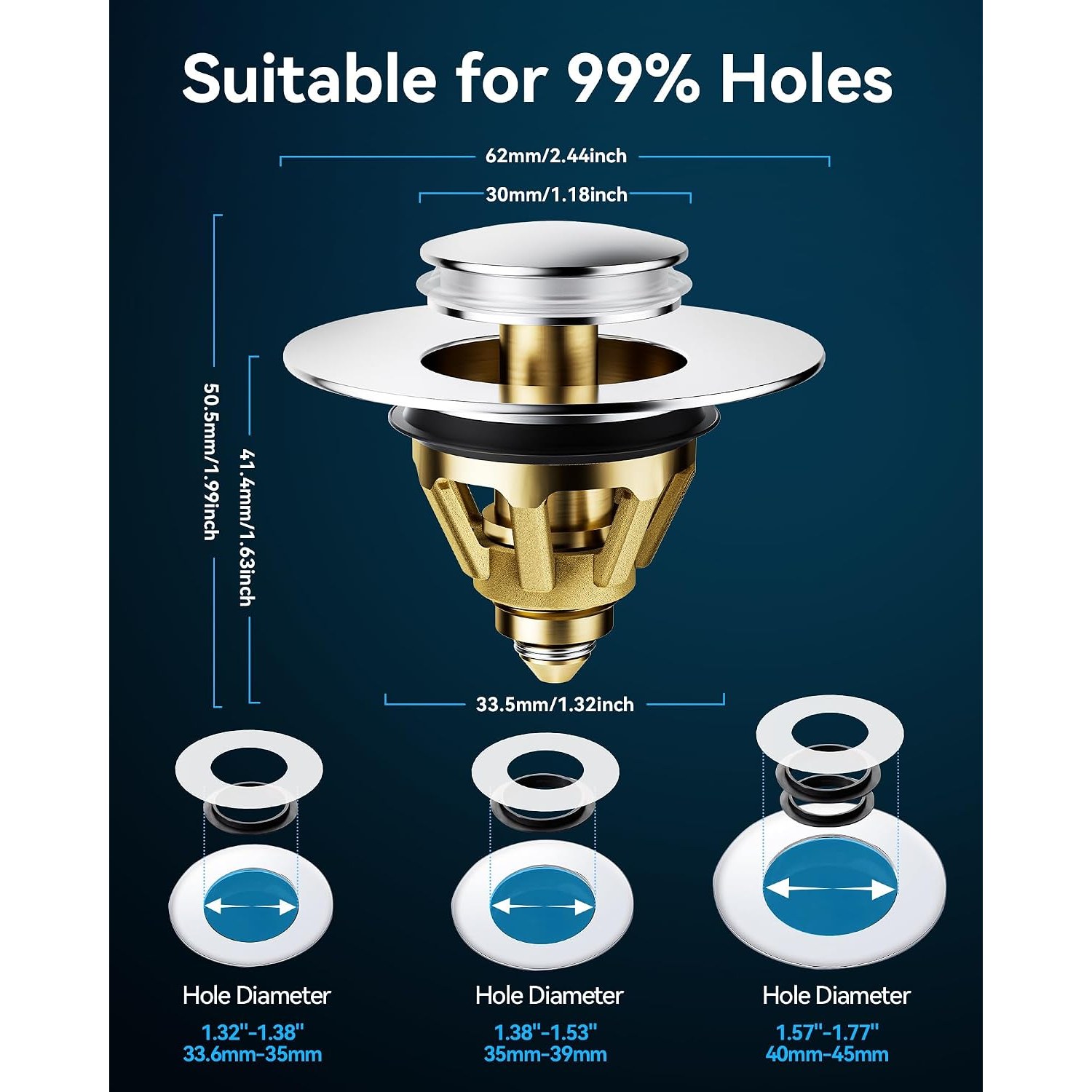
The plug fits drain holes with an inner diameter between 34mm and 45mm. That is a genuinely wide window and covers a large share of standard bathroom basins, but it is not every basin.
To measure, take out whatever is currently in the hole. Then lay a ruler or a tape across the opening itself at its widest point. Measure the hole, not the rim. Many basins have a decorative flange or a chrome ring sitting on top of the ceramic, and measuring that will give you a number several millimetres too big. If your reading falls anywhere from 34mm to 45mm, you are fine.
If you are near the edge of the range, measure twice. A hole at 33mm or 47mm is a different fitting entirely, and no amount of pushing will change that.
Kitchen sinks are usually out. Their waste holes tend to be around 90mm, far beyond this range. Baths are generally larger too. This is a basin and small wash basin product.
Who it suits
Renters get a lot out of it. It is a hand-fit swap with no tools and no plumbing work, so you can improve a tired basin without touching anything you are not allowed to touch, and take it with you when you move.
Households with long hair get the biggest practical win. If you have ever pulled a clump out of a basin trap, you already know why. The basket catches that hair before it goes anywhere, and emptying a basket is a far nicer job than clearing a trap.
Anyone doing a small bathroom refresh will find it one of the cheapest upgrades available. New taps cost real money. A new plug costs very little and changes how the basin feels to use every single day.
Families with young children benefit too, because small items stop disappearing. Beads, hair ties, a tooth from the tooth fairy. The strainer catches them and you can fish them out.
Fitting it
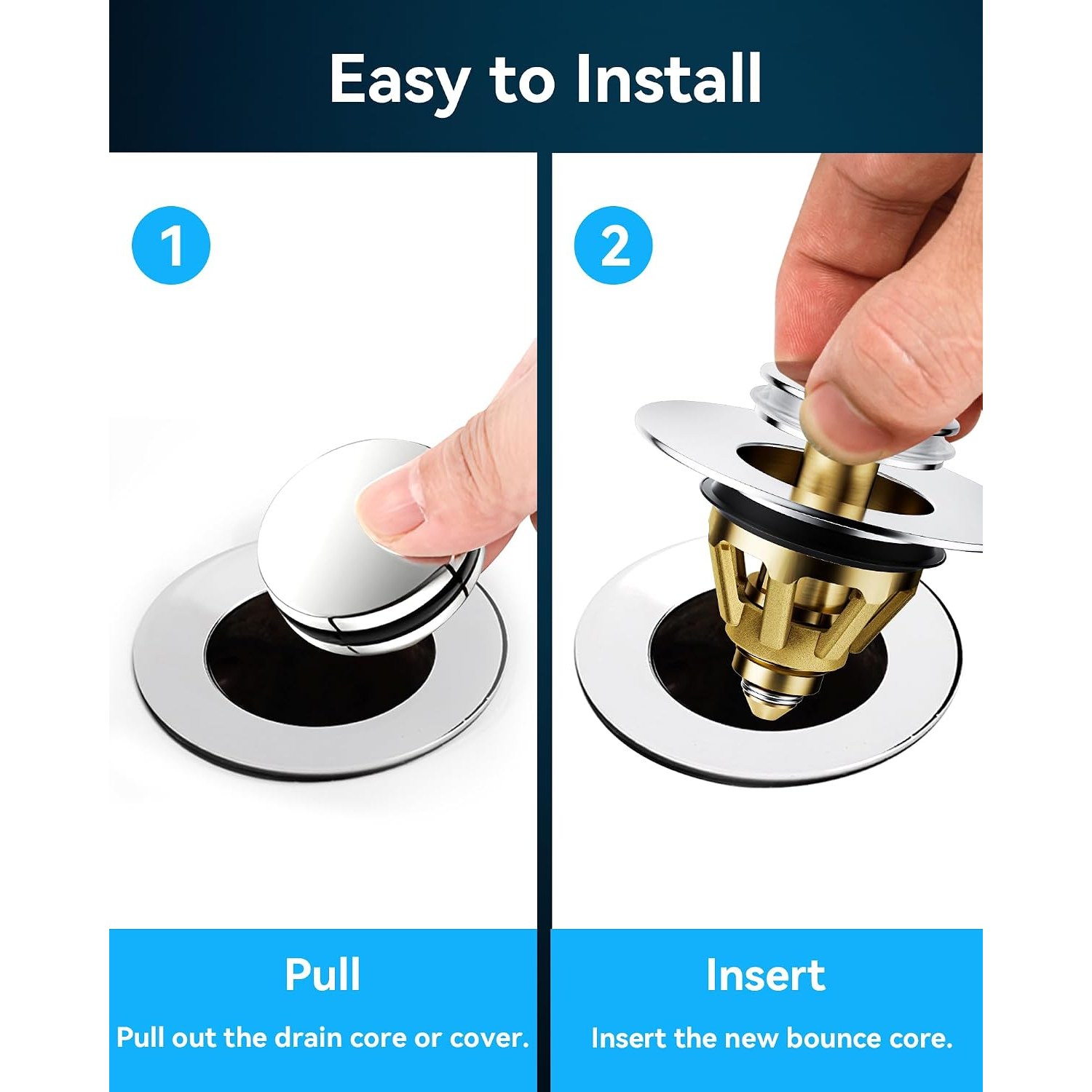
There is no clever technique. Clear the old fitting out of the hole. If there is old sealant, limescale or soap residue around the seat, scrape and wipe it away so you are working with a clean surface. A dirty seat is the single most common reason a plug does not seal well.
Then lower the new plug into place and tighten by hand. That is it. No tools, no tape, no sealant, no waiting for anything to cure. Run some water and press the cap to check it holds, then press again to check it drains.
If it holds water but leaks slowly, lift the cap out and look at the sealing edge. Usually there is a hair or a grain of grit sitting on it. Rinse and refit.
Keeping it working
A plug with a strainer only helps if you empty the strainer. Make it a habit. Every week or two, lift the cap and the basket out, tip the contents in the bin, rinse both parts under the tap and drop them back in. It takes under two minutes.
While you are there, wipe the metal with a soft damp cloth and dry it off. In a hard water area this stops white spotting building into a crust.
What to avoid is more important than what to use. Keep bleach, scouring powder and wire wool away from it. Abrasives scratch the finish and aggressive chemicals can dull the metal over time. Warm soapy water handles everything a basin plug encounters.
If drainage ever slows despite regular emptying, take all the parts out, check the basket is clear and flush the waste with hot water before refitting. That usually sorts it without any chemicals at all.
The short version
If your basin plug has stopped sealing, has lost its chain, or has seized in place, this is a cheap and quick fix. The brass and copper body handles a wet bathroom far better than coated plastic. The press action is simple and there is nothing loose to lose. The built-in basket strainer is the real long-term saving, because it keeps hair and soap scum out of your waste pipe instead of letting it build into a blockage.
Just measure first. Inner diameter of your drain hole, between 34mm and 45mm, and you are good to go.