
The complete guide
How to Choose and Use a Plunger Set for Sinks, Baths and Showers
The slow drain problem
Nearly every blocked drain starts quietly. The bath takes a bit longer to empty than it used to. The kitchen sink holds a puddle after you wash up. There is a faint smell near the plughole that you notice in the evening and forget about by morning.
Then one day the water just sits there.
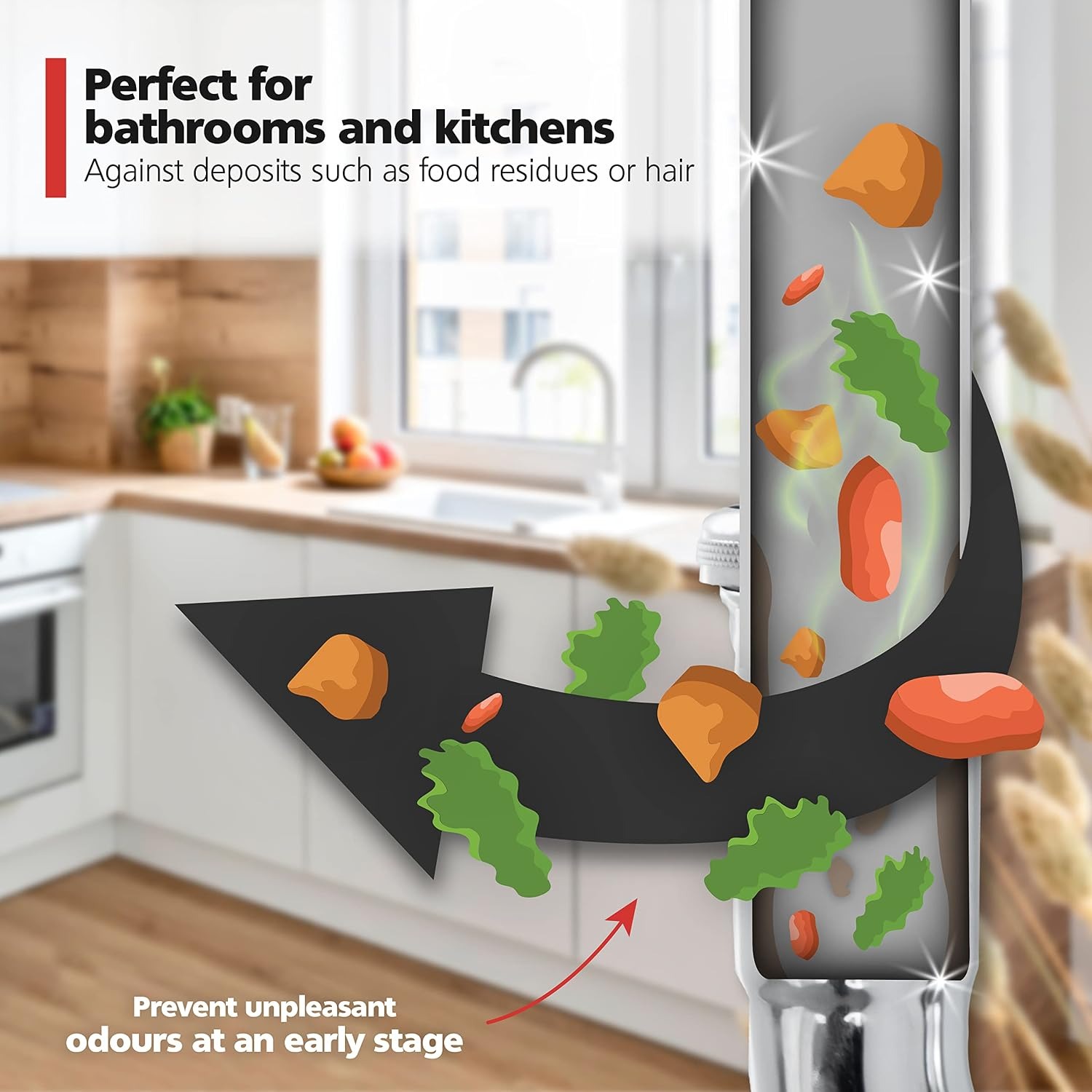
What has happened is simple. Hair, soap, grease and food waste collect at the bends in the pipe, usually within the first thirty centimetres. Each deposit narrows the pipe a little more until water cannot get past. The fix at that stage is still easy, as long as you have the right tool and you do not reach for a bottle of chemical first.
Why suction beats chemicals
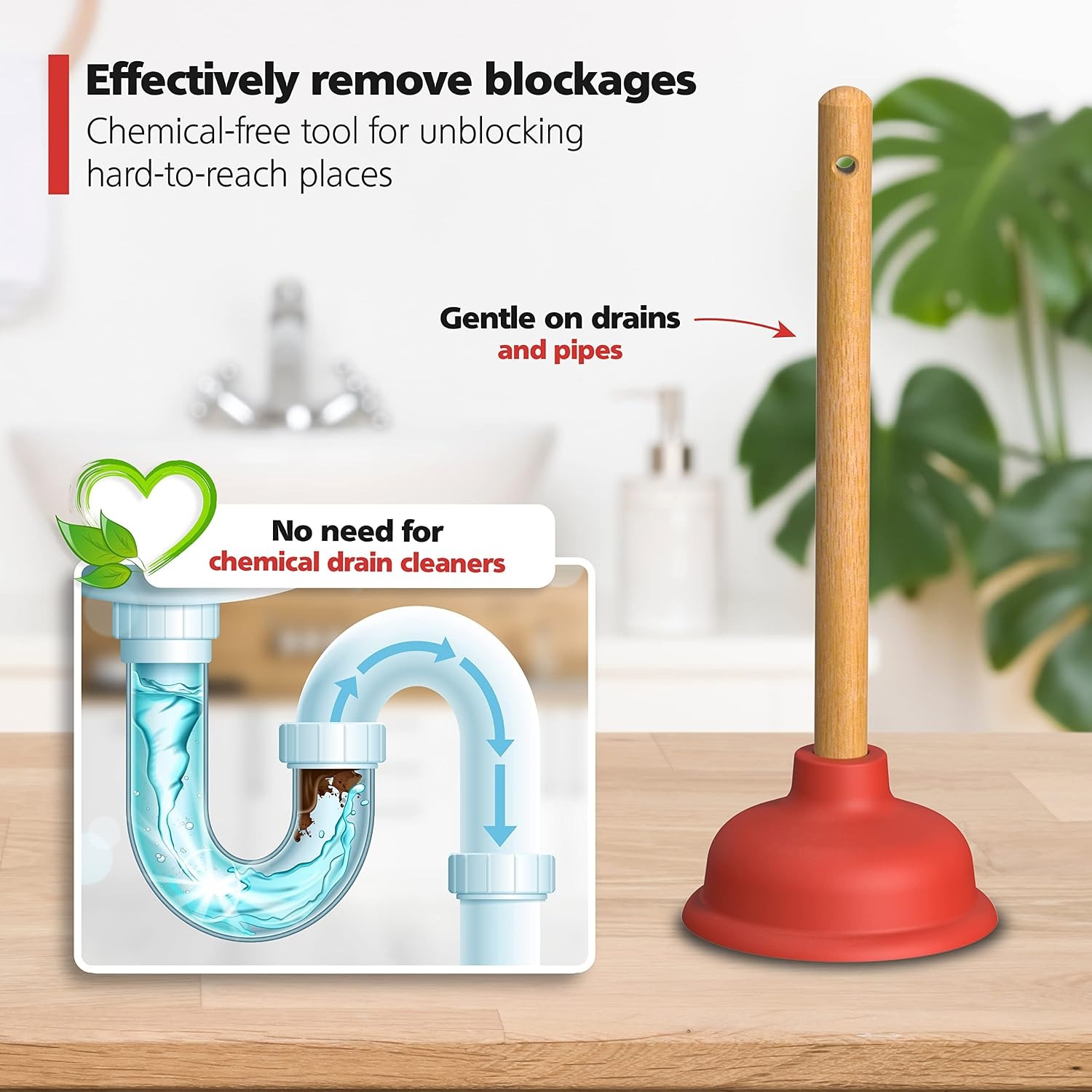
Caustic drain cleaner works by dissolving whatever is in the way. It can do the job, but it comes with trade-offs. The liquid sits in the trap doing its work, which means it is sitting against your pipe joints and seals. It is dangerous to store, dangerous to splash and unpleasant to breathe. If it does not clear the blockage, you now have a pipe full of corrosive liquid and a plumber who has to deal with it.
A plunger does something different. It moves water. You push down and send a pulse of pressure along the pipe, then pull up and drag everything back towards you. That back-and-forth breaks the clog apart mechanically. Nothing is added to the drain, nothing has to be disposed of, and you can repeat it as many times as you like without risk.
This is why a plunger is still the first thing a plumber reaches for. It is also why the best chemical free drain cleaner in most homes is not a bottle at all.
Why two cup sizes matter
Here is the part people get wrong. A plunger only works if the rubber cup makes a complete seal around the drain opening. No seal, no pressure, no result. You can plunge for ten minutes with the wrong cup and achieve nothing except a wet floor.
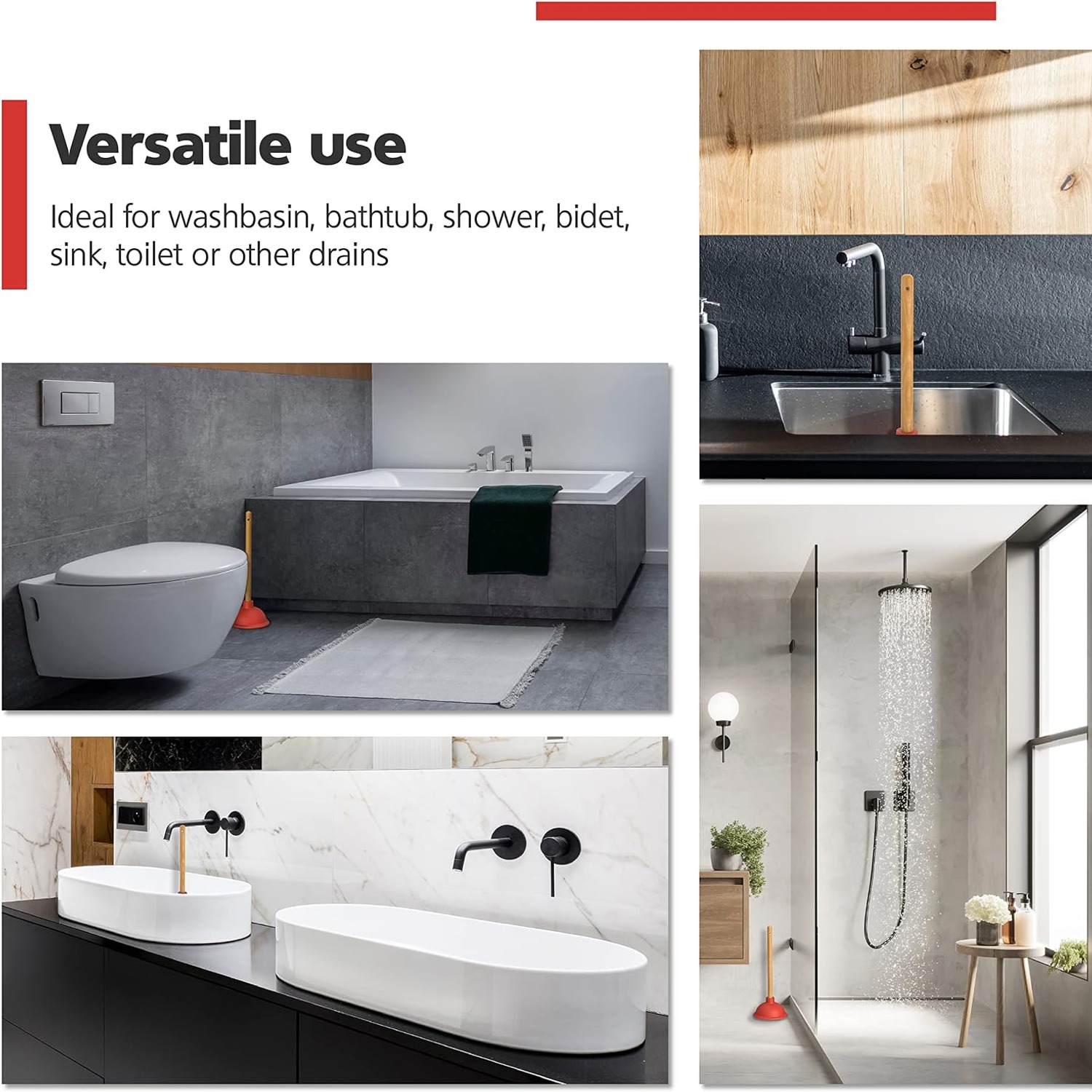
Drains in a single house vary a lot. A cloakroom basin might have a small outlet tucked close to the back wall. A bath has a wide, shallow opening. A kitchen sink sits deep and often has a larger waste fitting. One cup will not seal properly across all of them.
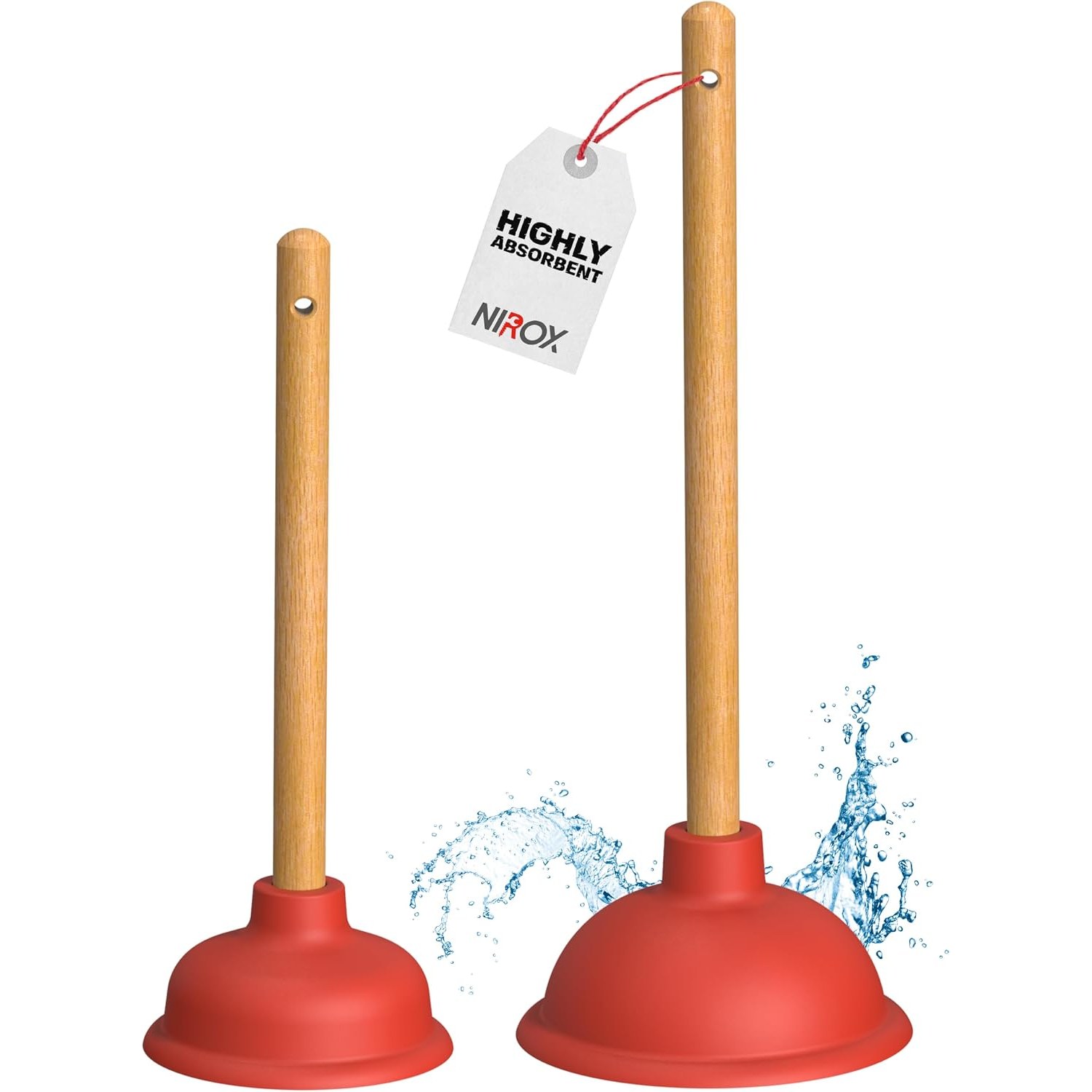
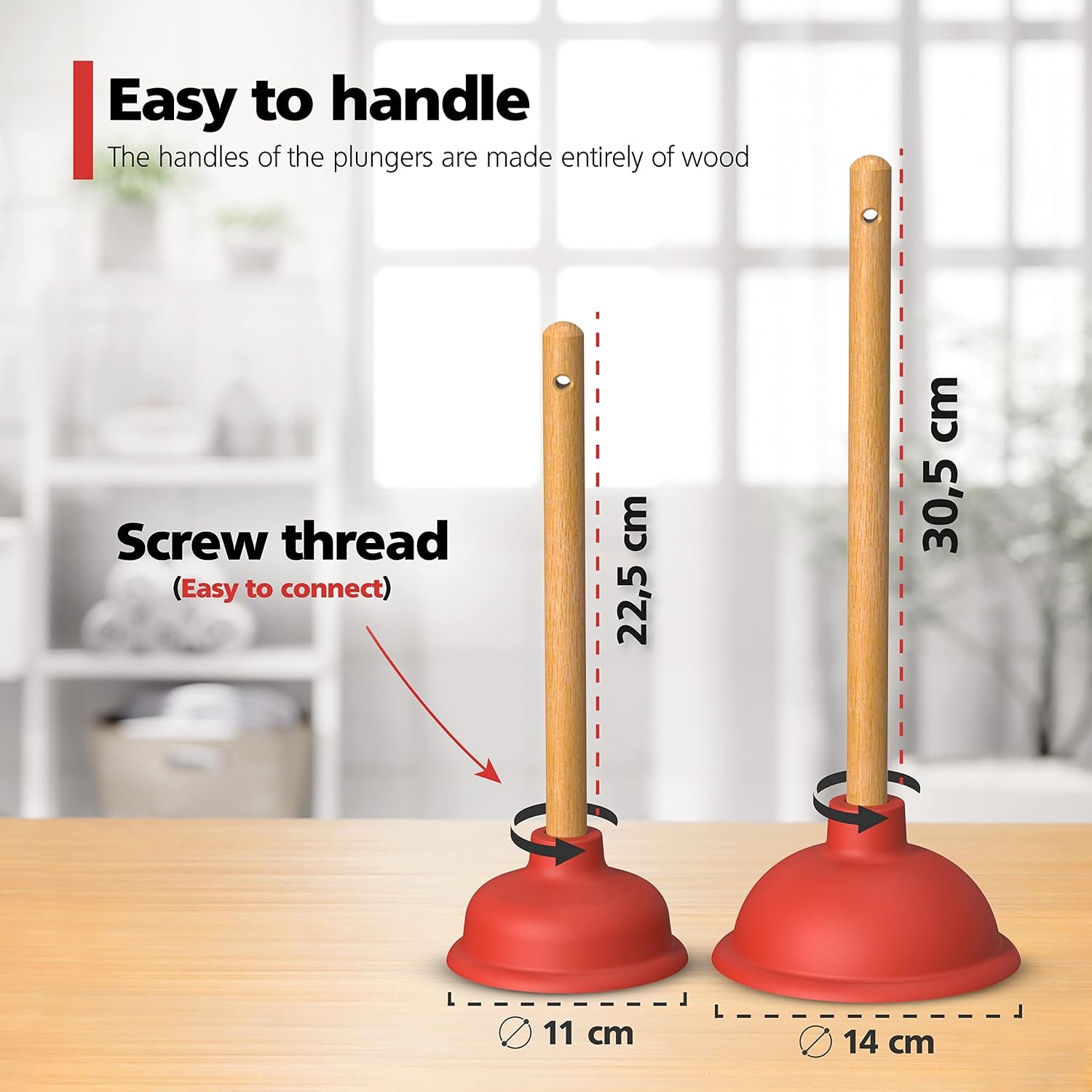
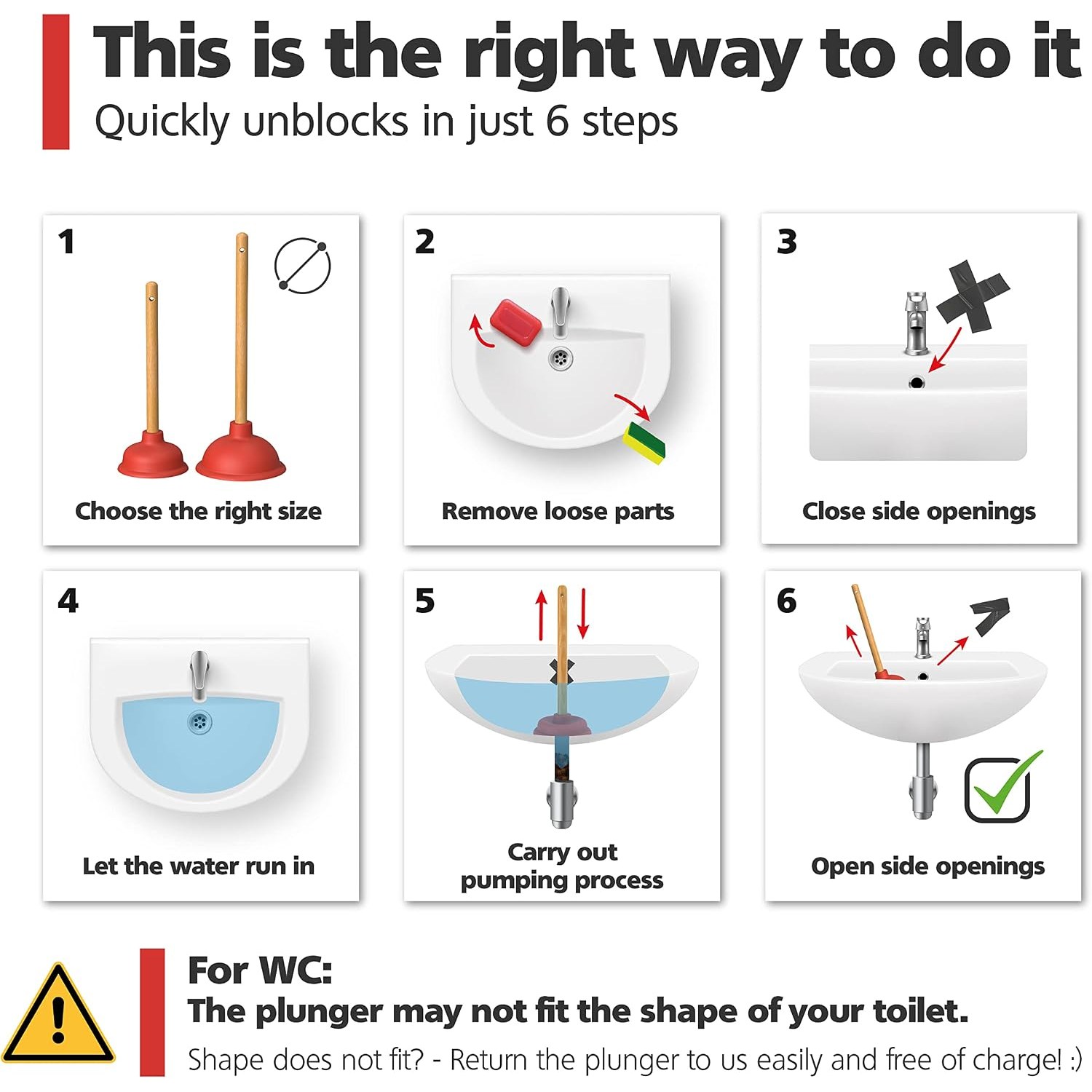
That is the logic behind this set. The 110 mm cup handles basins, bidets and smaller outlets. The 140 mm cup handles baths, shower trays and kitchen sinks. Having both means you stop improvising.
The handles also differ. The smaller plunger is 29 cm in total, which is easy to control in a confined space under a tap. The larger plunger is 37.5 cm, giving you reach across a bath without needing to lean in over the rim.
Getting a proper seal
Technique matters more than strength. A few rules make the difference.
First, water. There needs to be enough standing water to cover the rubber cup completely. Water carries pressure, air does not. If the sink has drained but is still slow, run a few centimetres in before you start.
Second, the overflow. Baths and most basins have an overflow hole near the top. If it is open, your pressure escapes through it instead of going down the pipe. Hold a damp cloth firmly over the overflow, or get someone to do it for you, before you plunge.
Third, the first push. Press the cup down slowly to squeeze the air out and settle the rim flat. Then start working. If you slam it down on the first stroke you just blow air out from under the rim and lose the seal.
Fourth, rhythm. Fifteen to twenty firm strokes, keeping the cup in contact with the surface the whole time, then lift and check. Most blockages give way in the second or third round.
Where each plunger earns its keep
In the bathroom, the smaller cup is the one you will use most. Basin blockages are almost always hair and soap, caught just below the plughole. They clear quickly. For a shower tray, switch to the larger cup, since the opening is wider and there is more water to move.
Baths are where the longer handle pays off. You can stand beside the bath rather than crouch in it, and you get more power through the stroke.
In the kitchen, blockages are usually grease and food. Run the hot tap for a minute before you start, which softens the grease and makes it far easier to shift. Then plunge with the 140 mm cup. If you have a double sink, block the second plughole with a stopper or a cloth, otherwise the pressure simply pushes water up the other side.
For a toilet, a cup plunger is workable but not ideal. A flanged plunger seals better in a curved outlet. If this set is what you have, press the larger cup firmly into the bottom of the bowl and use short, controlled strokes.
Looking after wooden handles
Wood feels better in wet hands than bare plastic. It also needs a small amount of care.
Rinse the cups after use, give the handles a wipe, and let everything dry before you put it away. The problem to avoid is leaving a plunger standing in a puddle in the bottom of a cupboard, where the end of the handle sits in water for days. Do that repeatedly and the wood roughens.
Store them hanging, or cup-down in a bucket. Because the handles unscrew by hand, you can take them apart and store the set flat if cupboard space is tight. That is also handy for a car boot or a toolbox if you are heading to a rental property.
When plunging is not the answer
Be realistic about limits. Plunging clears blockages that sit in the trap or just beyond it. That covers the large majority of household problems.
What it will not fix is a pipe blocked further downstream, a collapsed waste run, or a drain blocked by something solid that has fallen in. If you have plunged properly several times and nothing has moved, the next step is to unscrew the trap under the sink with a bucket underneath. That is where blockages hide, and clearing it by hand is often the real fix.
If the trap is clean and the water still will not go, or if several drains in the house are slow at the same time, the problem is in the main waste pipe and that is a job for a plumber.
The short version
A plunger is cheap, lasts years and solves most slow-drain problems in a couple of minutes. The only real trick is matching the cup to the opening so you get a seal.
This set gives you a 110 mm cup for basins and bidets and a 140 mm cup for baths, showers and kitchen sinks, with wooden handles of 29 cm and 37.5 cm that screw on by hand. Keep water in the basin, cover the overflow, go steady on the first push, then work in bursts.
Dry it after use, hang it up, and you will have it the next time a drain starts to slow down.