
The complete guide
Choosing a Toilet Plunger with Wall Holder That You Will Actually Use
The real problem is not the blockage
Everyone has a story about a blocked toilet. Fewer people talk about the thing that happens afterwards, which is standing there holding a dripping plunger with nowhere to put it. You end up leaning it against the wall behind the cistern, where it sits wet for days, drips onto the tiles and leaves a mark. Within a month you are avoiding that corner when you clean.
That is why a plunger with a proper caddy is worth more than it looks on paper. The plunging part is five minutes of your year. The storage part is every other day. A closed holder with a drip tray turns a tool you are slightly ashamed of into a small white object nobody notices.
How this style of plunger actually works
The rubber cup plunger most of us grew up with works by suction. You press it down over the drain opening, squash the air out, then pull back to create a vacuum that tugs the blockage loose. That is a fine idea when the bowl outlet is a clean circle and the rubber can seal against it. Plenty of modern toilets are not clean circles. Elongated bowls, oval outlets and odd moulded shapes all give a cup plunger something to slip off.
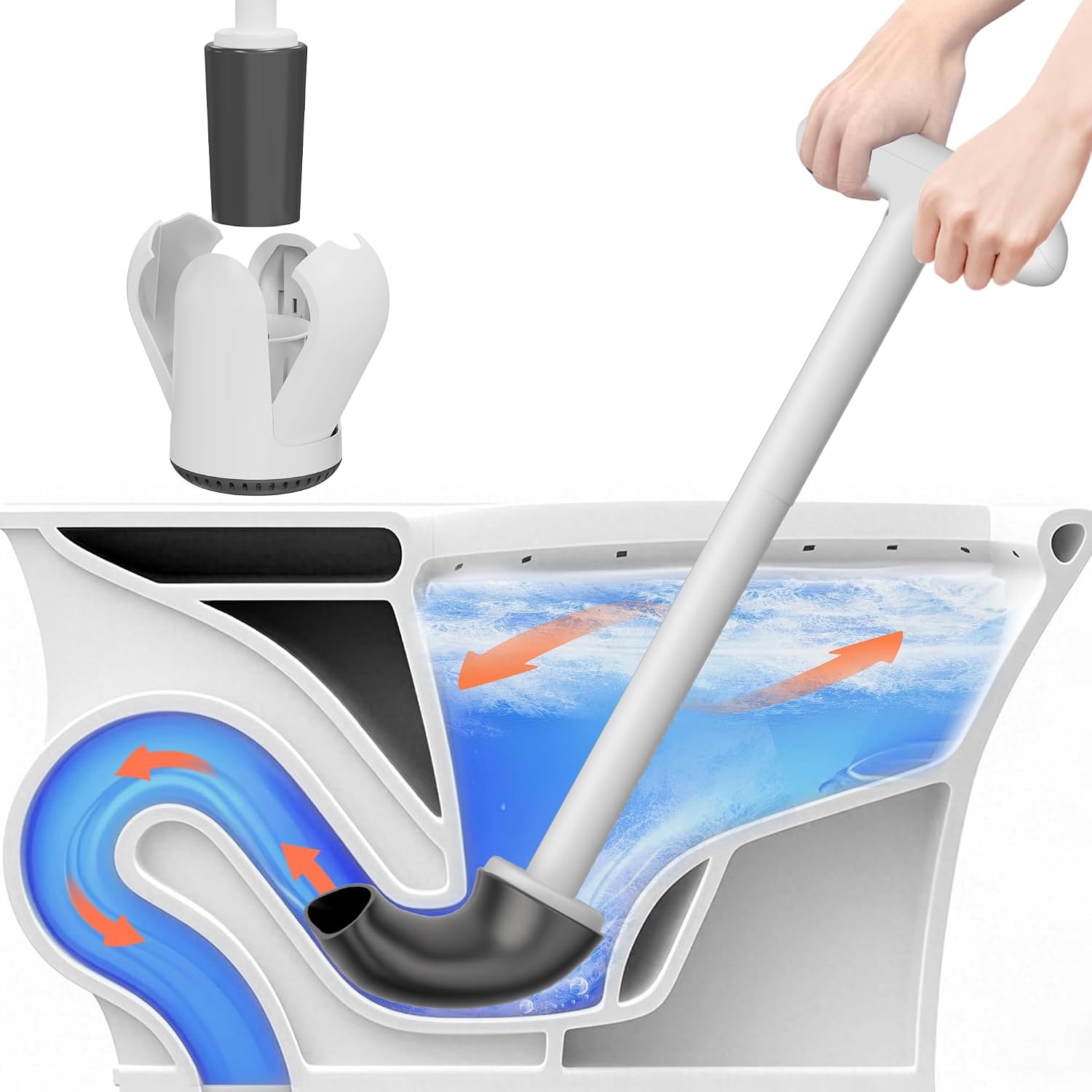
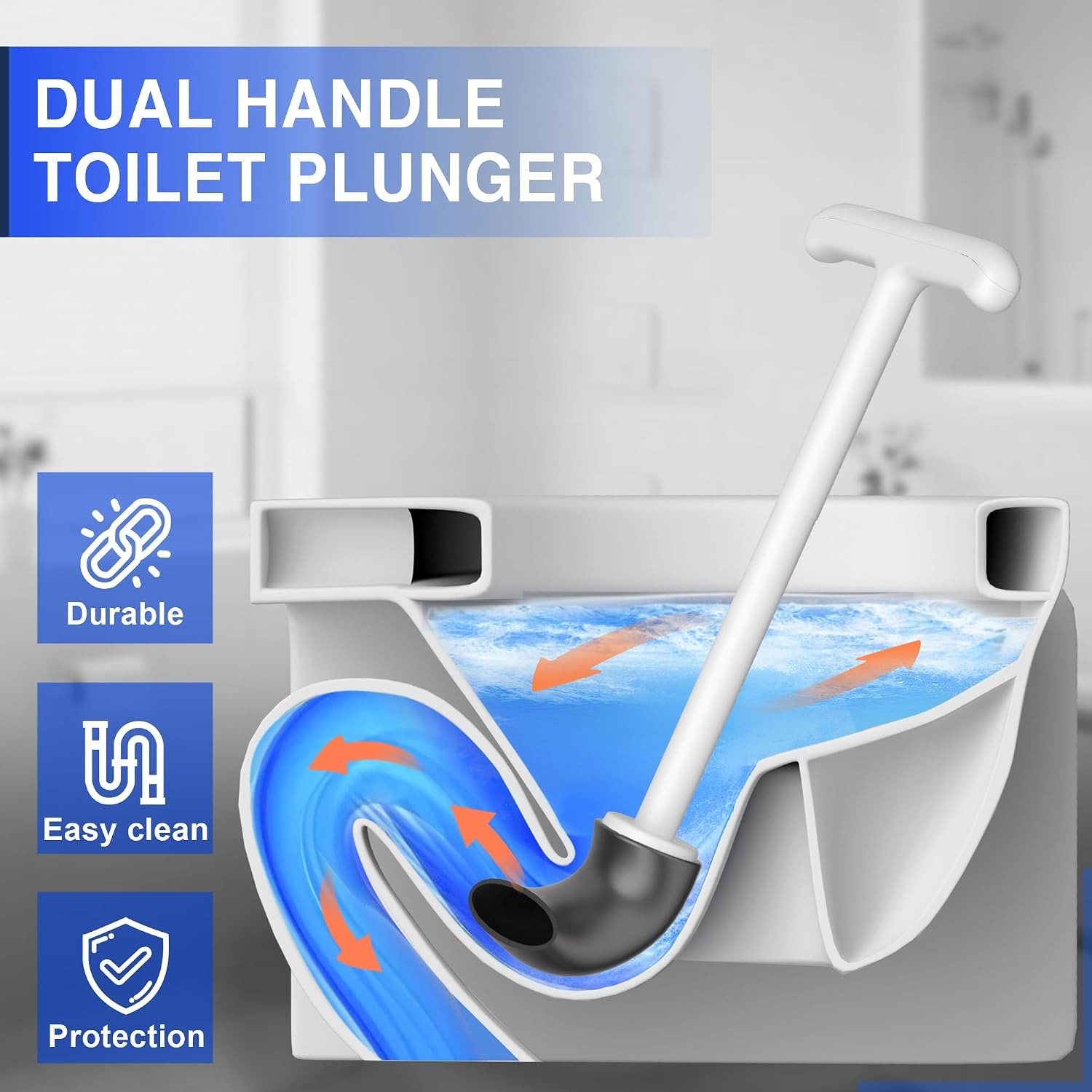
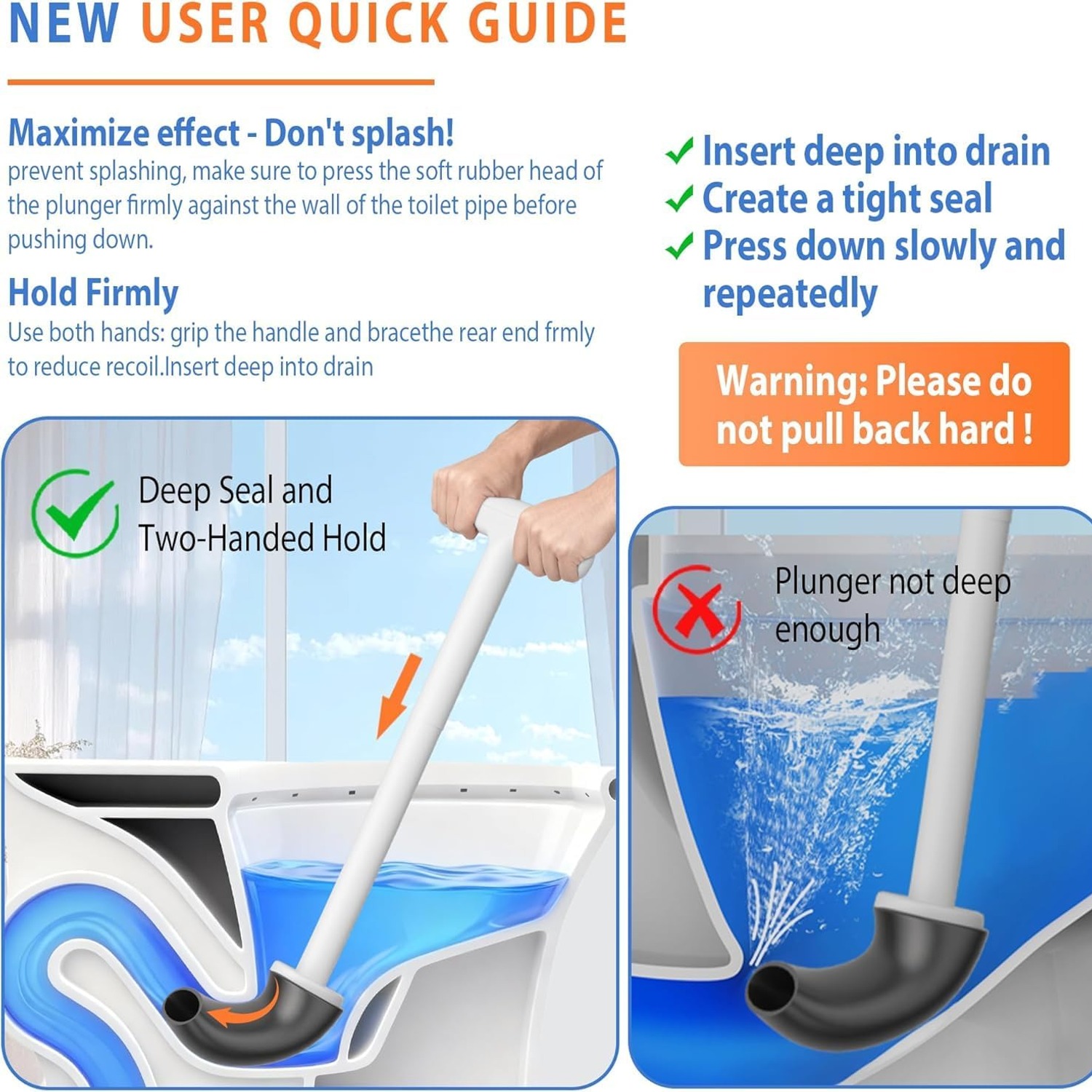
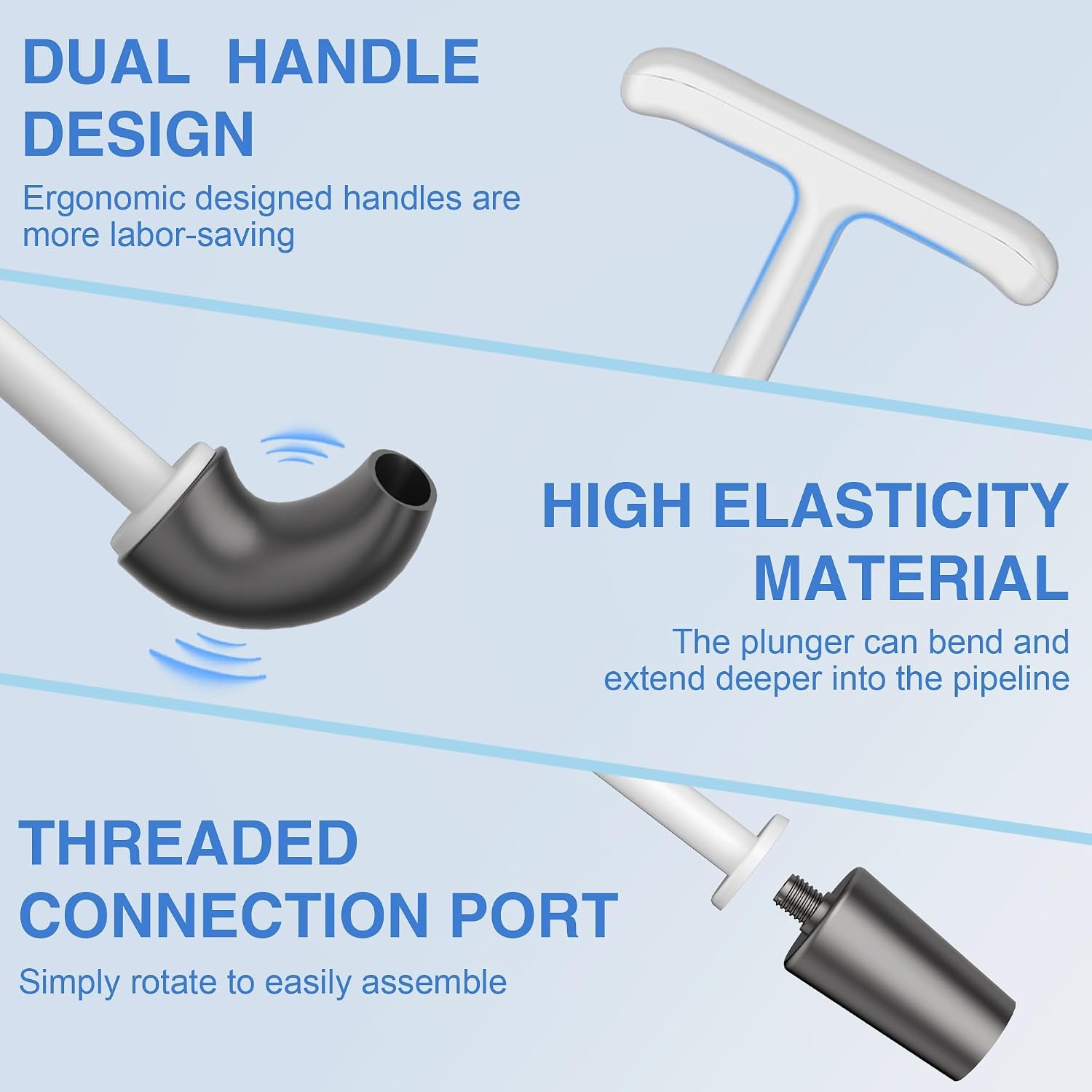
This design flips the approach. The head is narrower and flexible, and it goes down inside the drain rather than sitting on top of it. Once it is in there, it is already below the water line. There is no pocket of trapped air between the tool and the water, which matters because air compresses and water does not. Every push sends a solid column of water around the bend and into whatever is blocking it. You are using pressure rather than suction, and pressure travels.
The practical upshot is that bowl shape stops being the deciding factor. If the head fits in the drain, the tool works. That is what people are usually after when they search for the best plunger for low flow toilets or the best toilet unblocker tool, even if they describe it differently.
The handle matters more than you think
A standard plunger has one wooden or plastic stick. You grip it with one hand, maybe two stacked awkwardly, and you push at whatever angle your body allows while leaning over a toilet. It is tiring and it is hard to control the speed.
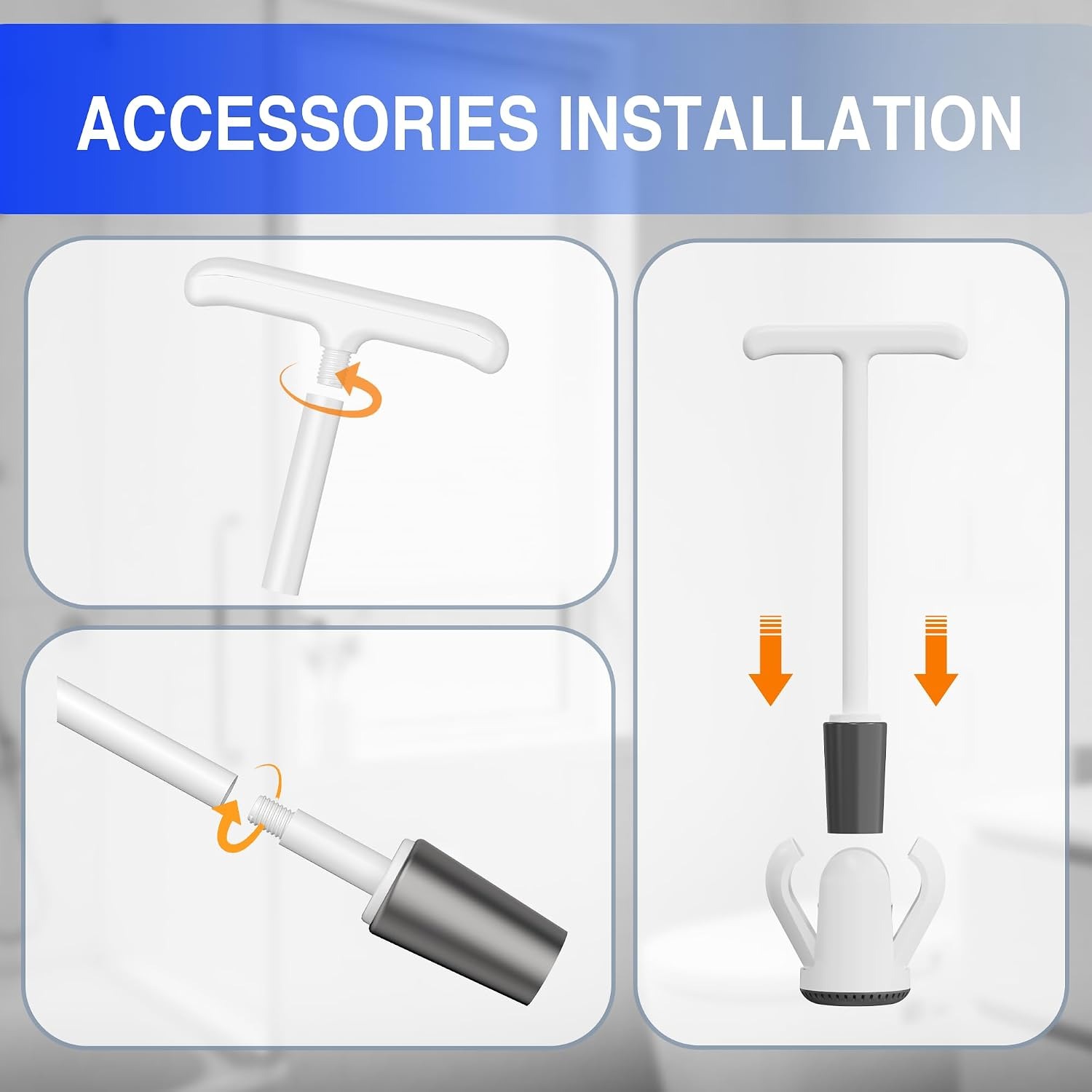
A T-shaped dual grip changes the mechanics. Both hands go on, your arms stay roughly straight, and you press down through your shoulders and body weight. It is less effort for more force, and it is far easier to go slowly. That speed control is the whole trick to avoiding splash-back. Push in gently at around a forty five degree angle, pull back just as gently, and the water that is doing the work stays inside the bowl.
Technique, briefly
Fill the bowl to about three quarters full before you start. If the water is low, the column you need to push simply is not there. If the water is to the rim, bail some out first.
Then work in a steady rhythm rather than in frustrated jabs. Some blockages give way on the first push. Others need a long run of slow, firm pressure before anything shifts, and the temptation is to give up two pushes before it would have cleared. Watch the water level. If it starts dropping, you are winning. If twenty or thirty slow pushes produce nothing at all, the problem is probably not something a plunger can move, and you are looking at an auger or a call to a plumber.
Who this suits
Households with one bathroom get the most out of it. When there is no spare toilet, a blockage goes from annoying to urgent fast, and having the tool to hand in the room matters.
It also suits people with small bathrooms where there is nowhere discreet to stash a bare plunger. The enclosed caddy is about the size of a small bin and the lid closes over the head, so visitors are not confronted with it.
Renters do well here too, because you are not forced to drill. The adhesive hook is an option, not a requirement, and the unit stands fine on its own. Anyone searching for the best compact bathroom plunger or the best guest bathroom plunger is usually solving the same problem, which is visibility rather than performance.
Finally, it helps anyone who finds a single-stick plunger physically awkward. Two hands and straight-down pressure is a kinder motion for wrists and shoulders.
How to choose between storage options
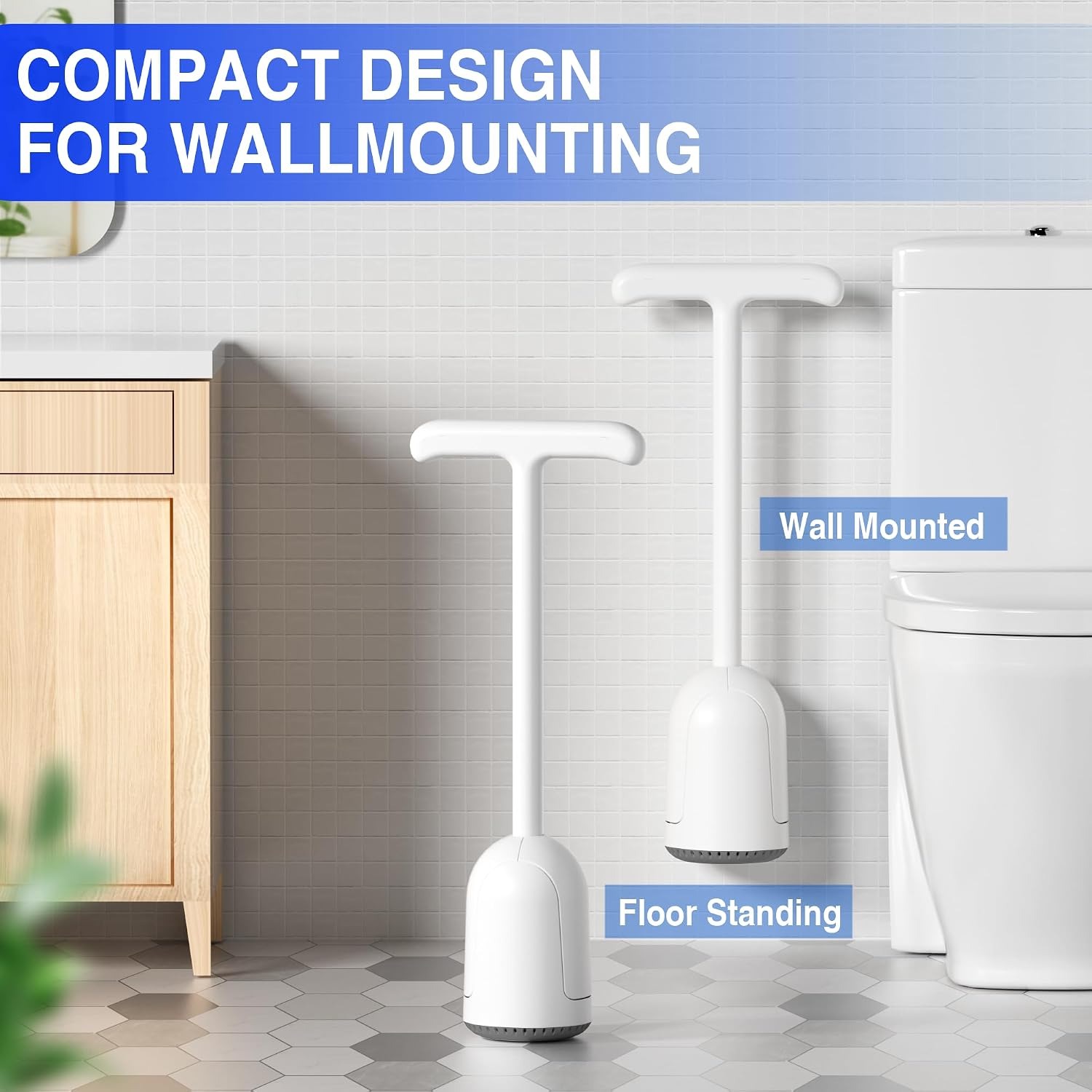
Wall mounting keeps the floor clear and makes mopping easier. Nothing sits in a wet corner. Clean the mounting spot with rubbing alcohol first, press the hook firmly, and leave it alone for a while before hanging anything on it. Smooth tile and sealed surfaces hold best. Textured paint and old plasterboard are less reliable, and if you rent, the risk of pulling paint off later is real.
Standing it on the floor avoids all of that. The footprint is small enough to tuck beside a cistern or into a corner, and the drip tray means the floor underneath stays dry anyway. Plenty of people stand it for a few weeks, work out where it naturally belongs, and only then decide whether to stick the hook up.
There is no wrong answer. Just pick the one that means the unit ends up somewhere you can reach without moving three other things.
Keeping it clean
The cleaning routine is short enough that you will actually do it. Rinse the head under the tap or flush clean water over it in the bowl. Let it drip for a moment. Drop it back in, and the lid closes behind it. The inside of the holder is smooth, so hair and paper have nothing to catch on.
The tray is the part people forget. Pull it out, tip it into the toilet, rinse it, slide it back. Do that each time and the unit never develops a smell. Leave water standing in it for a month and it will, as any closed container of still water eventually does.
A mild bathroom cleaner or a diluted disinfectant is fine on all the plastic parts. Avoid long soaks in neat bleach, which hardens plastics and rubber over time, and keep the whole thing out of the dishwasher. Let everything dry before you close the lid for storage. A damp head in a sealed box is the one thing that will undo the benefit of having a lid at all.
What it will not do
Worth being clear. A plunger of any kind moves soft blockages. Too much paper, a build-up in the trap, that sort of thing. It will not retrieve a toy, break through a root intrusion, or fix a problem in the main line beyond your toilet. If the water in the bowl barely moves and other fixtures in the house are also draining badly, the issue is further down and no amount of plunging will reach it.
It is also a toilet tool. Sinks and shower drains need a flat cup that can seal over a small flat opening, which is a different shape entirely.
The short version
This is a plunger that works by pressure rather than suction, which makes it far less fussy about the shape of your toilet bowl. The two-handed grip means less effort and better control, and slow strokes keep the water where it belongs. Where it really earns its place is the holder: a lid that closes itself, a smooth interior that does not trap debris, and a pull-out tray that stops drips reaching your floor.
If the only thing stopping you owning a decent plunger is that you do not want to look at one, this is the version that solves that.