
The complete guide
Shower Drain Hair Catchers, A Practical Buyer's Guide
The problem nobody deals with until it is too late
A blocked shower drain never arrives suddenly. It builds quietly over weeks. Every wash sends a handful of loose strands down the plughole, and each one grabs onto the next. Soap, conditioner, shaving gel, and skin cells stick to that tangle, and before long there is a soft, grey plug sitting in the trap below the floor.
The first sign is usually a shallow puddle around your feet that takes a minute to clear after you turn the water off. Then it is two minutes. Then the water sits for the whole shower and you are standing in it. By that point you are either buying caustic drain cleaner, pulling the trap apart, or calling someone who charges a call-out fee for ten minutes of work.
All of that is avoidable. The hair causing the problem is visible and easy to intercept at the surface. It only becomes a job once you let it get past the grate.
How a chain mesh hair trap works
A standard drain grate has a few wide slots. Those slots let water through quickly, which is what they are designed for, but they are also exactly the right shape for a long hair to slide through or loop around. Once a strand is hanging half in and half out, it starts collecting everything else that comes down.
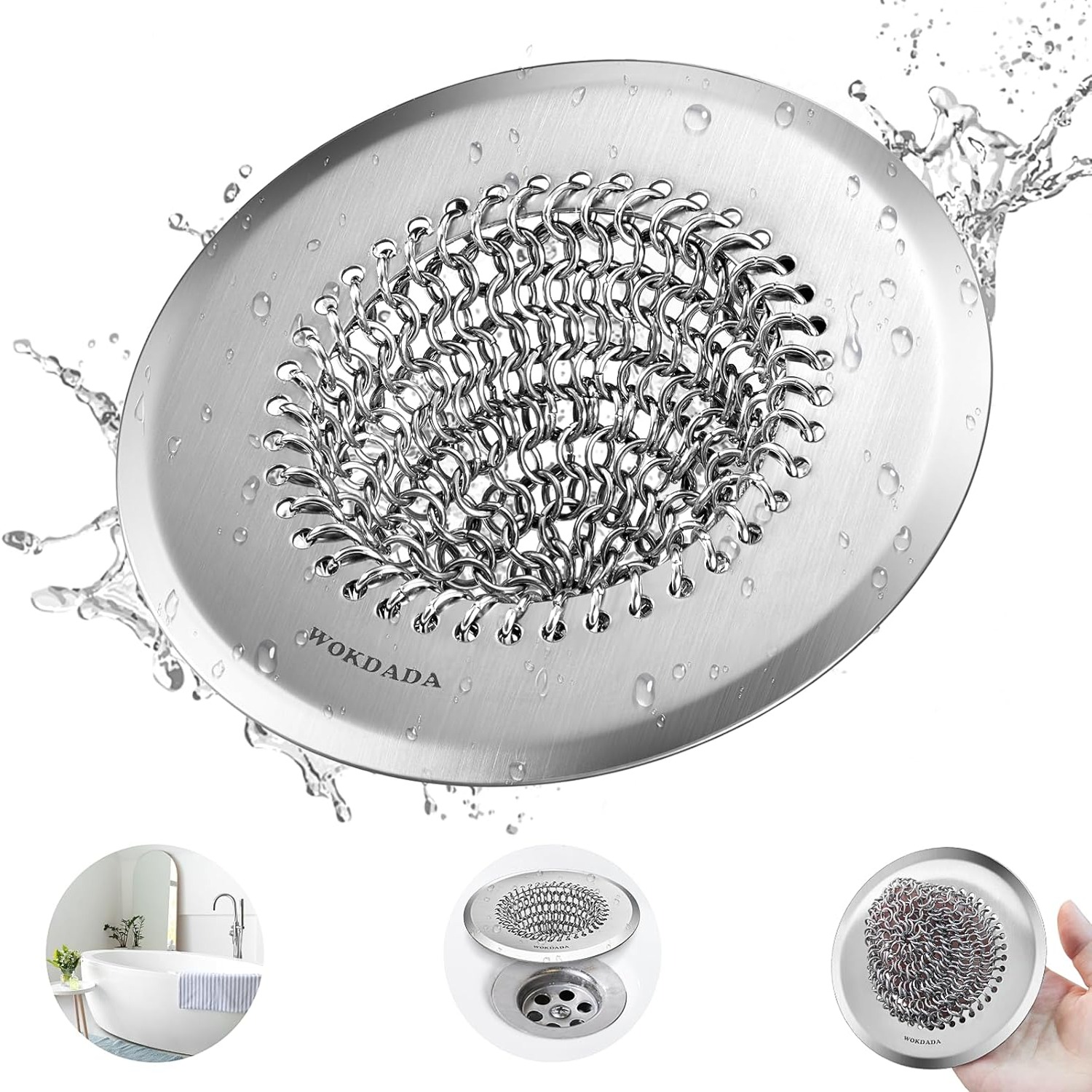
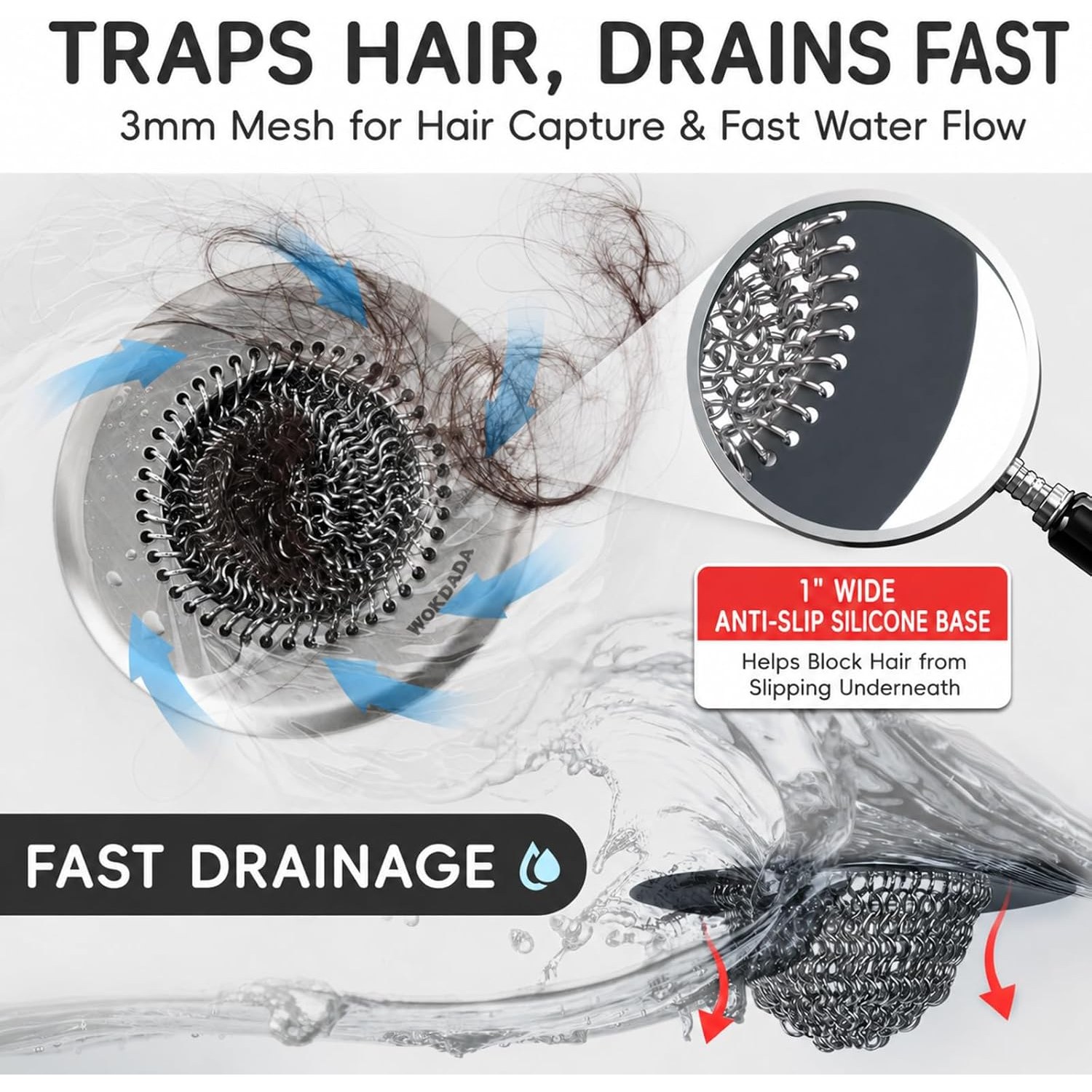
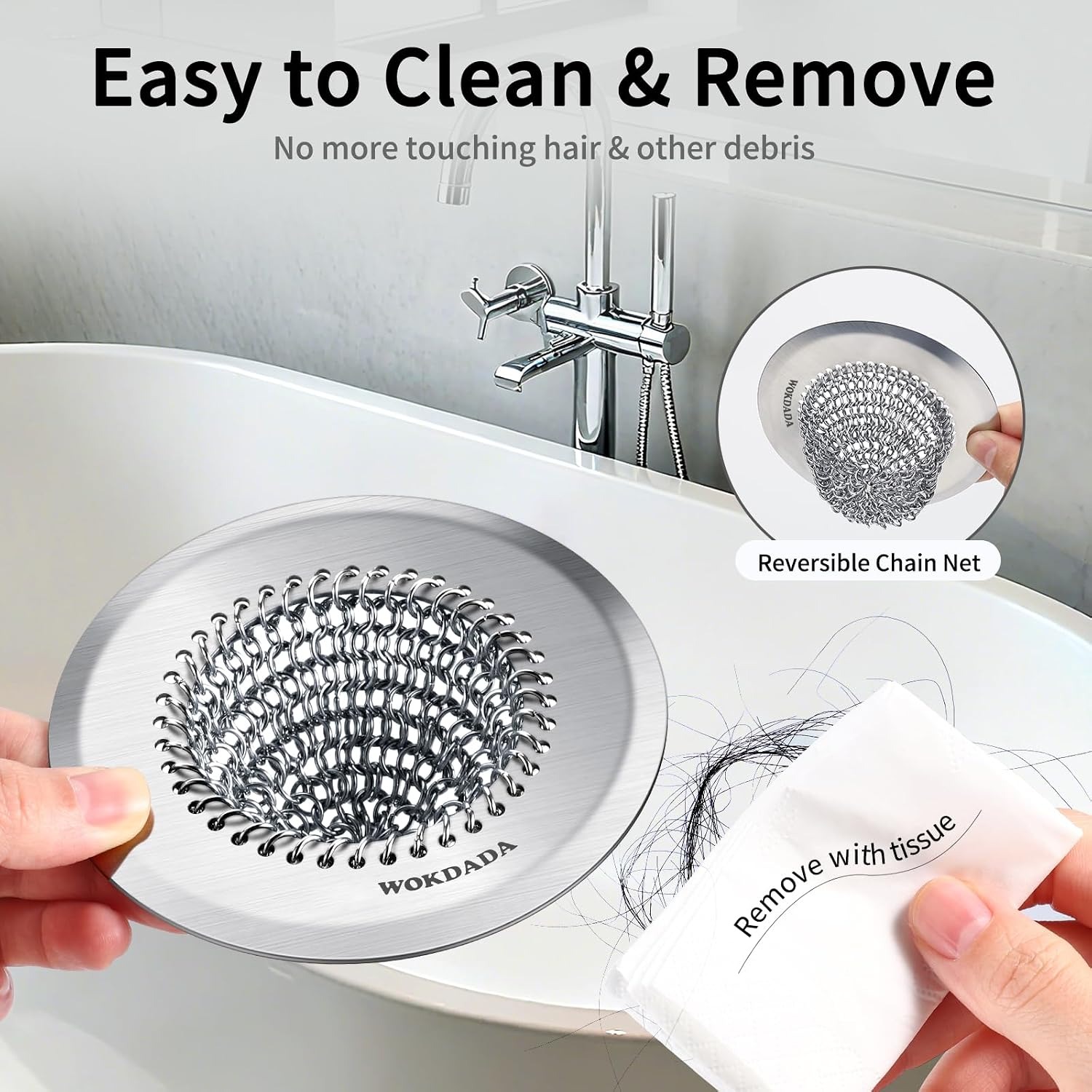
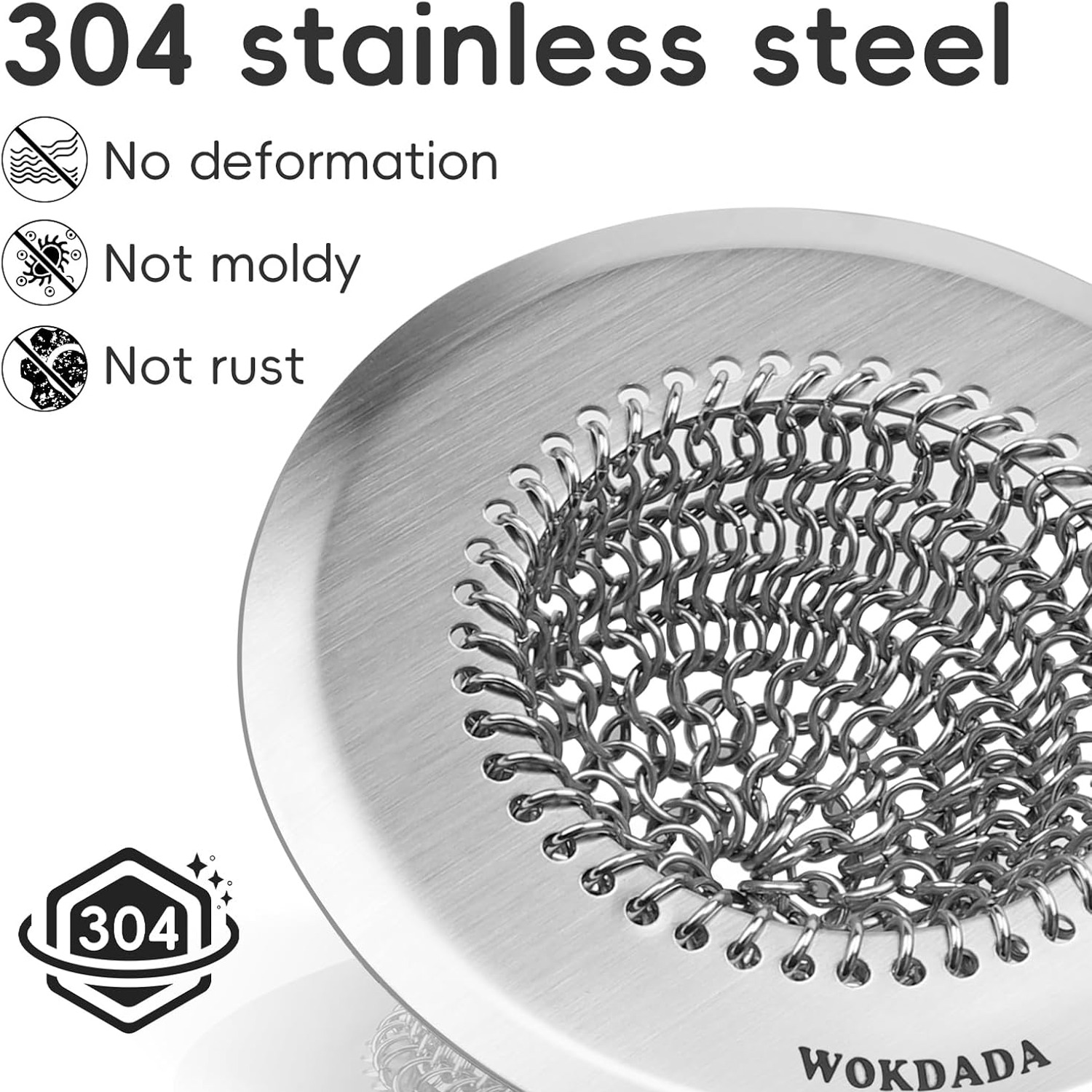
A chain mesh drain cover changes the geometry. Instead of a few wide slots, you get a dense field of small openings. Water finds plenty of routes through, but a hair cannot thread itself into a small aperture and dangle into the pipe. It lands on top and stays there, where you can see it and deal with it.
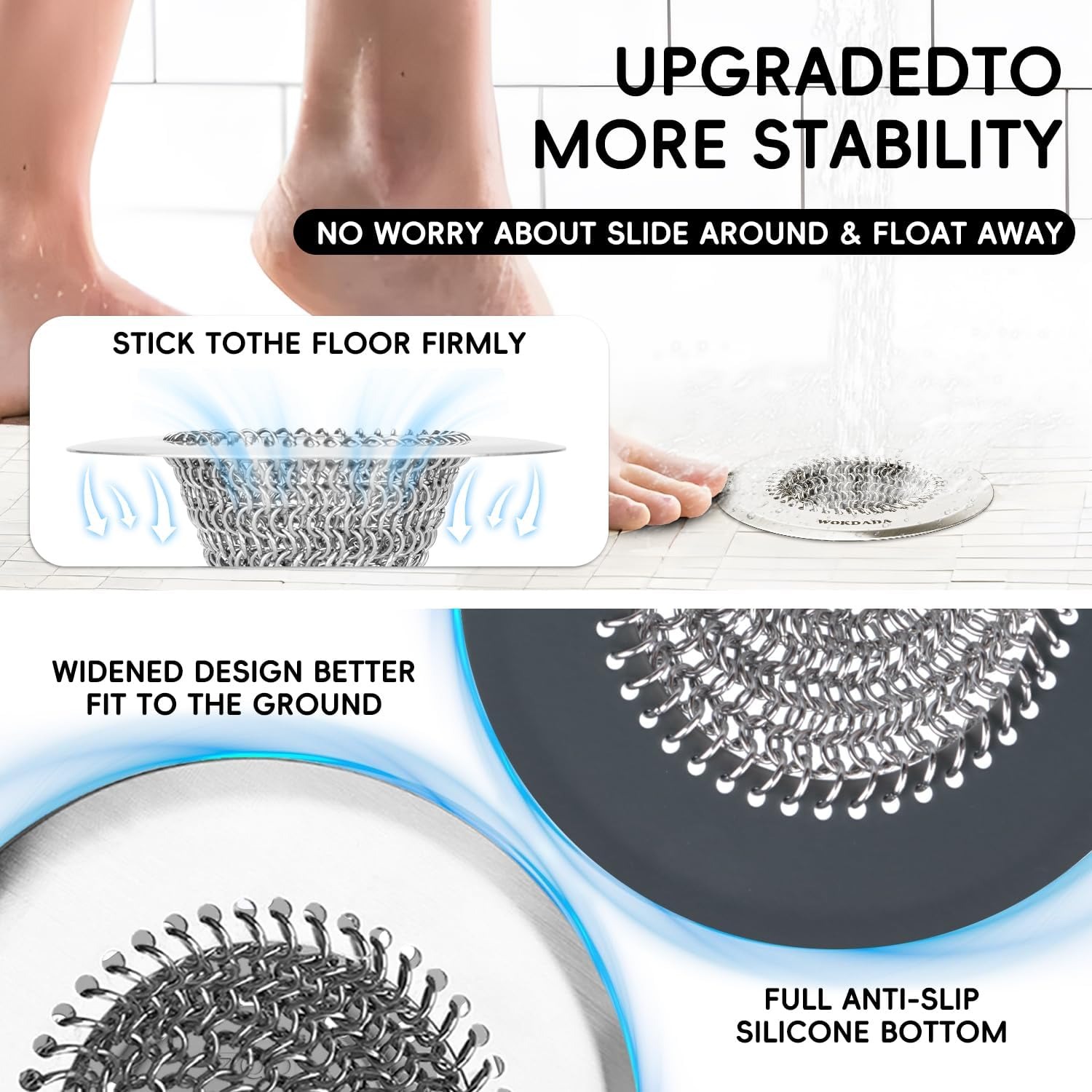
The flexible chain construction has a second advantage over a rigid stamped plate. Shower trays are rarely perfectly flat, and tiled floors have grout lines and slight falls. A rigid cover can rock on a high point and leave a gap at one edge, which is the gap the hair goes through. Mesh drapes. It follows the shape under it and sits closer to the surface all the way around.
The flip is the part that matters
Plenty of people buy a drain strainer, use it for a fortnight, then quietly stop. The reason is almost always the cleaning. If emptying it means scraping wet hair out of a cup or picking strands off a plastic grid, you will put it off, and a hair catcher you do not empty is just a slower drain.
This one empties by turning over. Lift it out, hold it upside down over the bin, and the collected hair drops away from the mesh. Your hands stay out of it. A rinse under the tap takes a few more seconds and it goes back over the drain.
That sounds like a small thing. In practice it is the difference between a tool you keep using and one that ends up in the cupboard under the sink.
Why stainless steel instead of plastic or silicone
Bathrooms are hard on materials. There is constant moisture, regular hot water, and a steady film of surfactants from shampoo and body wash. Plastic strainers handle that badly. They go yellow, they stain where they touch the tray, and the thin sections eventually crack. Silicone stays soft but attracts a sticky film that needs scrubbing.
Stainless steel is the practical choice. It resists rust, it does not stain the way plastic does, and it will not become brittle after a year of hot showers. It also looks like part of the bathroom rather than an afterthought, which matters more than you would expect when the thing sits in plain view.
This catcher weighs 96 grams. That is a deliberate middle ground. Heavy enough that a fast flow of water does not lift or shift it, light enough that lifting it out one-handed with wet fingers is easy.
Working out whether it will fit
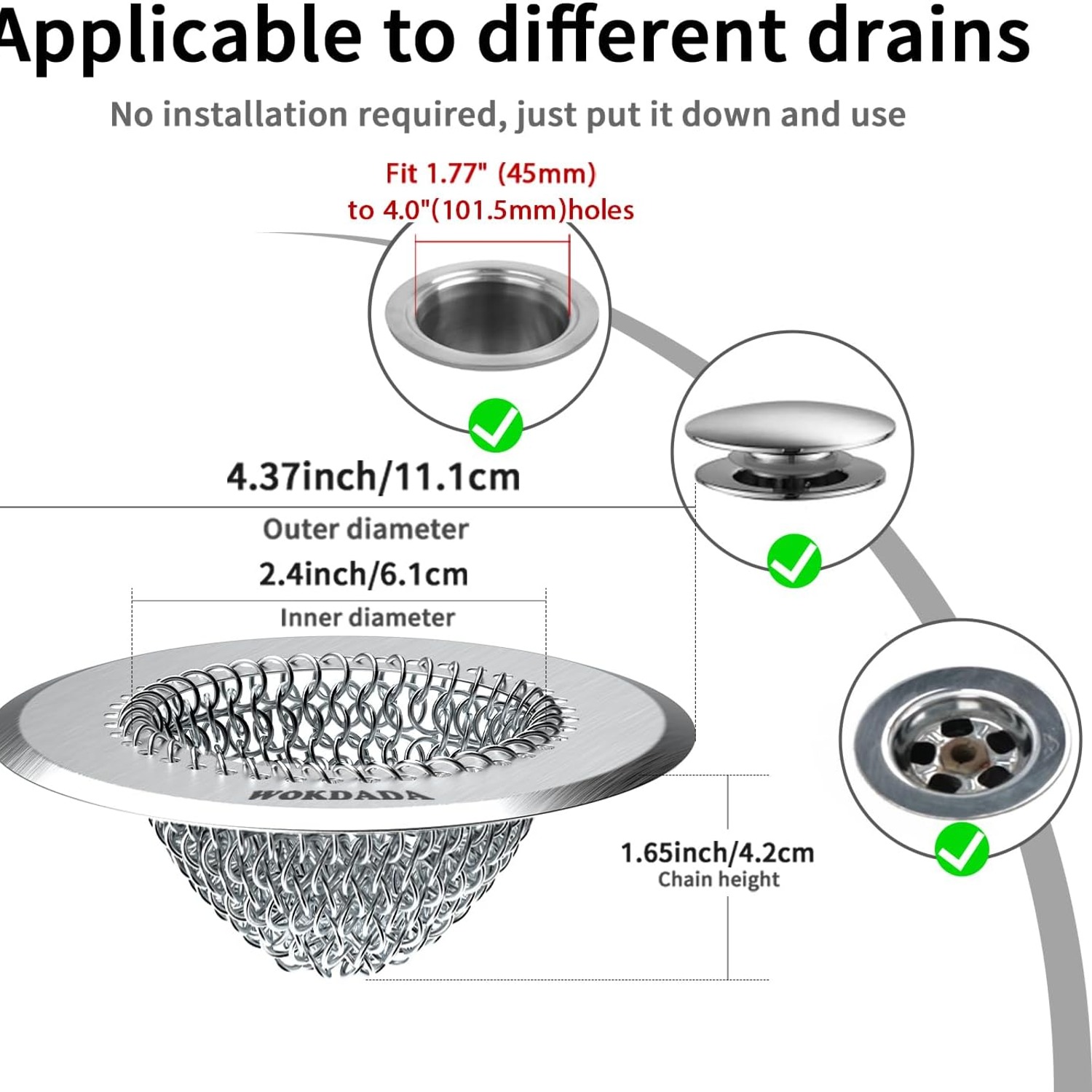
The measurement to check is 11.1cm across. Take a tape measure to your shower and measure the flat area around the waste outlet, not just the grate itself. You want enough level space for the full footprint to settle without hanging over a lip or riding up a tiled edge.
Most standard round shower wastes sit comfortably under that figure. The catcher stands 4cm high, so it sits proud of the floor rather than flush. Keep that in mind if the drain is in the middle of the tray where you usually stand.
It works in more places than a shower. A bath drain with a flush or recessed plug is fine. A laundry tub or utility sink is a good use too, especially if you rinse pet bedding or brushes in there. If your drain plug stands well above the surface, the catcher will perch on top of it and will not sit evenly, so a flush outlet is what you want.
Square or rectangular grates are the one case to think about. The catcher is round. It will cover a square grate smaller than 11.1cm, but a long linear channel drain needs a different shape of cover entirely.
Getting the routine right
The best shower hair catcher is still only as good as the habit around it. The routine that works is simple. Empty it after you shower, every time. It takes about five seconds and keeps the mesh clear for the next person.
If you let it sit for a week, two things happen. The mesh fills up and water starts pooling, which makes people think the catcher is faulty when it is just full. And the soap residue dries, which glues the hair into the mesh and turns a flip into a scrub.
Once a week, give it a proper clean. Warm water, a squeeze of dish soap, and a soft brush will lift the film that builds up in the links. Rinse it well and let it dry before it goes back. Avoid steel wool and gritty cleaning pastes, which will dull the finish for no benefit.
One more thing worth knowing. If you ever pour a chemical drain cleaner down the plughole, take the catcher out first and rinse it separately. There is no sense leaving strong product sitting on the mesh.
Who gets the most out of it
Anyone with long hair in the house is the obvious candidate, because long strands are the ones that wrap and anchor. Share houses benefit too, since nobody wants to be the person dealing with a communal blockage.
It is also worth having if you are renting. A blocked drain is an awkward conversation with a landlord, and a stainless steel drain cover that costs less than a single plumber call-out is cheap insurance. It needs no tools, no adhesive, and no permanent change to the fitting, so it comes with you when you move.
Pet owners find a use for it as well. If you wash a dog in the bath or the laundry tub, the amount of fur that goes down the drain in one session can be startling. Catching it at the surface saves a much bigger problem later.
The short version
Hair is what blocks shower drains, and it is much easier to catch at the top than to dig out of the trap. This catcher is a stainless steel chain mesh cover, 11.1cm across and 4cm high, that sits over the drain and collects strands while water passes through.
The flexible mesh settles against uneven surfaces better than a rigid plate. Steel holds up in a wet bathroom where plastic fails. And the flip-to-empty design keeps the whole job to a few seconds, which is the only reason people actually stick with it.
Measure your drain, drop it in place, and empty it after each shower. That is the entire job.